
The Metallurgical Challenge of Stainless Steel Soldering
Soldering stainless steel is fundamentally different from soldering copper or brass. The primary obstacle is the passive chromium oxide (Cr2O3) layer that gives stainless steel its corrosion resistance. This microscopic layer is self-healing, chemically stable, and completely impervious to standard rosin-based (RMA) fluxes. If you attempt stainless steel soldering with electronics-grade flux, the solder will simply ball up and roll off the surface.
To achieve a hermetic, mechanically sound joint, technicians must employ a rigorous decision framework covering surface preparation, aggressive chemical fluxes, specialized filler alloys, and precise thermal management. According to guidelines from the British Stainless Steel Association, failure to manage these variables results in cold joints, flux entrapment, and catastrophic intergranular corrosion.
Critical Safety Warning: The acid fluxes required for stainless steel soldering emit highly toxic and corrosive fumes when heated. Always operate in a fume extraction environment or outdoors, and wear ANSI-approved splash goggles and nitrile gloves.Decision Node 1: Surface Preparation and Flux Selection
Before any chemical flux can work, the physical surface must be optimized. Stainless steel workpieces must be mechanically abraded to break the initial oxide layer, but the choice of abrasive is critical.
Mechanical Preparation Rules
- DO USE: 120-grit to 220-grit aluminum oxide sandpaper, Scotch-Brite pads (specifically the maroon or grey non-woven variants), or dedicated stainless steel wire brushes.
- NEVER USE: Standard carbon steel wire brushes or steel wool. These will embed microscopic iron particles into the stainless surface, leading to rapid 'tea-staining' and localized galvanic corrosion within weeks.
Chemical Flux Selection Matrix
Standard electronics fluxes are useless here. You need highly active, inorganic acid fluxes. The IPC standards for wire and terminal soldering dictate that while these fluxes provide the necessary oxide removal, they leave behind corrosive residues that mandate post-solder cleaning.
| Flux Type | Active Ingredient | Best Application | 2026 Est. Cost |
|---|---|---|---|
| Zinc Chloride Paste | ZnCl2, Ammonium Chloride | Heavy structural joints, HVAC, thick gauge wire | $15 - $22 / pint |
| Rubyfluid / Liquid Acid | Zinc Chloride solution | General purpose SS sheet metal, wire terminals | $12 - $18 / pint |
| Phosphoric Acid Gel | H3PO4 thickened | Vertical surfaces, delicate instruments, 316L marine | $25 - $35 / 2oz |
Expert Recommendation: For general 304 and 316 stainless steel soldering, Superior No. 30 or a high-quality Rubyfluid remains the industry benchmark. Apply the flux immediately after mechanical abrasion to prevent the chromium oxide layer from reforming.
Decision Node 2: Filler Metal (Alloy) Selection
The filler alloy must wet the stainless steel while maintaining compatibility with the base metal's thermal expansion and corrosion profile. As of 2026, global supply chain stabilization has normalized the pricing of silver-bearing and indium-based solders, making them more accessible for specialized applications.
The Filler Alloy Decision Matrix
| Alloy Composition | Melting Range | Tensile Strength | Primary Use Case |
|---|---|---|---|
| Sn63/Pb37 (Tin/Lead) | 361°F (183°C) | 7,500 psi | Prototyping, non-RoHS industrial repairs |
| Sn96.5/Ag3.5 (Tin/Silver) | 430°F (221°C) | 11,000 psi | RoHS compliant structural, food-grade equipment |
| Sn95/Sb5 (Tin/Antimony) | 473°F (245°C) | 12,500 psi | High-temp plumbing, HVAC refrigerant lines |
| In97/Ag3 (Indium/Silver) | 280°F (138°C) | 7,000 psi | Cryogenic seals (304L/316L), thermal cycling |
For structural joints subject to vibration, the American Welding Society (AWS) recommends silver-bearing alloys like Sn96.5/Ag3.5. The silver improves the wetting action on difficult-to-solder metals and increases the overall shear strength of the joint.
Decision Node 3: Thermal Management & Heat Sources
Stainless steel has remarkably low thermal conductivity—approximately 16.2 W/m·K for 304SS at room temperature, compared to ~400 W/m·K for copper. This means heat does not travel quickly through the metal. If you apply a small iron to a large stainless workpiece, the heat will dissipate into the surrounding mass faster than the iron can supply it, resulting in a cold joint.
Choosing the Right Heat Source
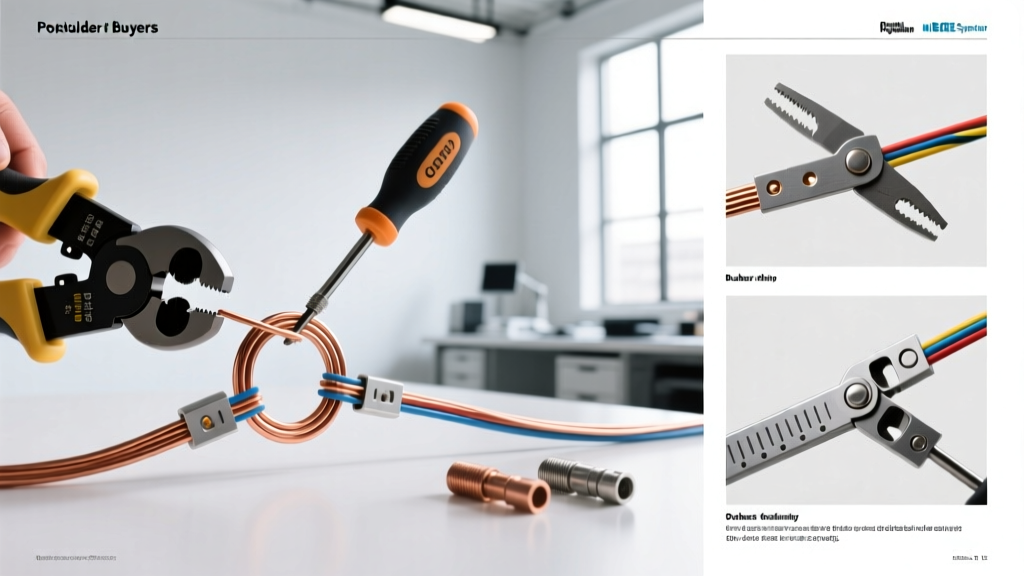
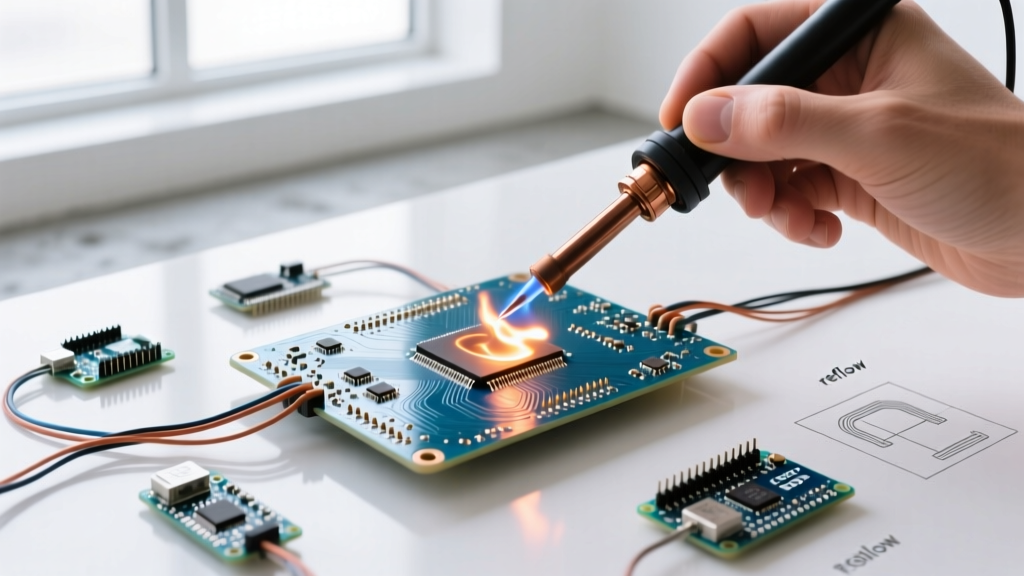
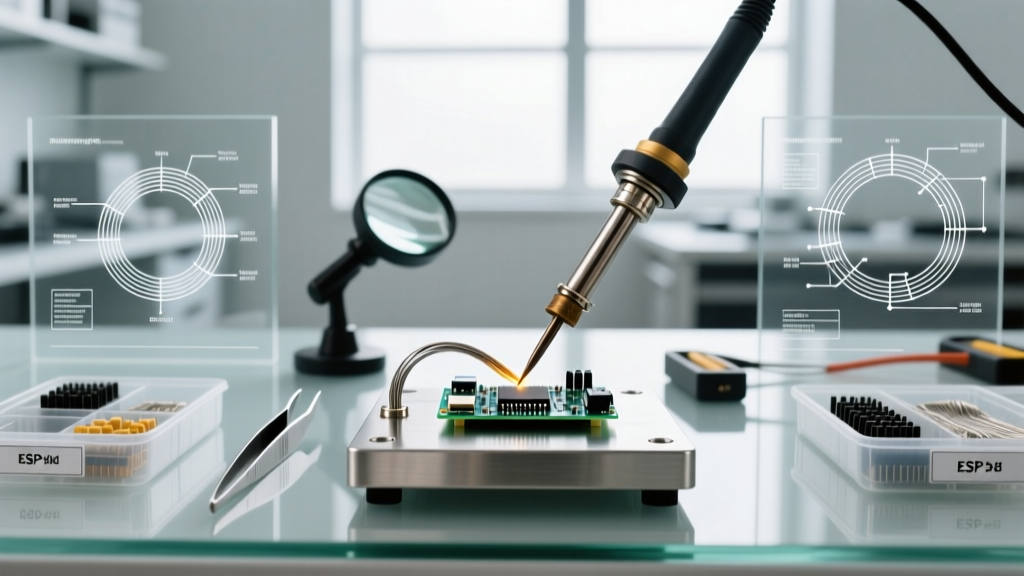
- High-Wattage Soldering Stations (For wire-to-terminal & thin sheet): Use a station capable of delivering sustained thermal mass. The Weller WXD2 (120W) paired with an RT4 chisel tip is ideal. Avoid pencil-point tips; you need maximum surface area contact to transfer heat into the low-conductivity steel.
- Propane/MAP-Pro Torches (For pipes, thick gauges, & structural): For anything thicker than 14 AWG wire or 1/8" sheet metal, an iron will fail. Use a MAP-Pro torch like the Bernzomatic TS8000 ($60-$75). Apply the flame to the *base metal*, not the solder wire. Let the base metal melt the solder.
- Induction Heating (For production environments): In high-volume 2026 manufacturing, localized induction heaters are increasingly used to bring specific stainless steel joints to temperature in under 3 seconds without heating the surrounding assembly.
The Sensitization Trap: A Critical Failure Mode
The most common catastrophic failure in stainless steel soldering is sensitization. When austenitic stainless steels (like 304 and 316) are held in the temperature range of 800°F to 1500°F (425°C to 815°C) for extended periods, carbon in the steel migrates to the grain boundaries and combines with chromium to form chromium carbides.
Expert Insight: This process depletes the surrounding matrix of chromium, destroying the local corrosion resistance. The joint will suffer from intergranular corrosion and may physically crumble under stress. To prevent this, keep your heat cycles as short as possible (under 45 seconds). If extended heating is unavoidable, switch to 'L' grade stainless steels (304L or 316L), which have ultra-low carbon content specifically designed to resist sensitization.
Post-Solder Neutralization and Cleaning
Because inorganic acid fluxes are mandatory for stainless steel soldering, leaving the residue on the joint guarantees long-term corrosive failure. The flux will literally eat through the solder joint and the base metal over time.
The 3-Step Cleaning Protocol
- Step 1: Hot Water Quench. While the joint is still warm (but not hot enough to flash-boil), scrub it with a stiff nylon brush under hot running water to remove the bulk of the water-soluble zinc chloride salts.
- Step 2: Alkaline Neutralization. Mix a solution of baking soda (sodium bicarbonate) and warm water (approx. 2 tablespoons per cup). Apply to the joint. It will fizz as it neutralizes the residual hydrochloric and phosphoric acids. Scrub with a toothbrush.
- Step 3: Isopropyl Alcohol Rinse. Flush the area with 99% IPA to displace the water and accelerate drying, preventing immediate flash-rusting on any exposed carbon steel tooling marks.
Frequently Asked Questions (FAQ)
Can I use standard plumbing solder (95/5) on stainless steel?
No. Standard 95/5 (Tin/Antimony) plumbing solder is designed for copper. Without the correct aggressive acid flux, it will not wet stainless steel. Furthermore, antimony-based solders can become brittle when subjected to the thermal expansion mismatches inherent in stainless steel assemblies.
Why is my solder turning black and crumbling?
This is a classic symptom of overheating and flux burnout. If the acid flux boils off and carbonizes before the solder flows, the oxide layer instantly reforms, and the solder oxidizes. Reduce your torch flame size, use a larger chisel tip if using an iron, and apply fresh flux immediately before introducing the heat.
Is brazing a better alternative to soldering for stainless steel?
It depends on the thermal limits of your assembly. Brazing (using silver-based filler metals melting above 840°F/450°C) provides significantly higher tensile strength than soldering. However, the high heat required for brazing vastly increases the risk of sensitization, warping, and destroying the temper of the surrounding metal. Soldering is preferred for electrical connections, delicate instruments, and thin-gauge sheet metal where thermal distortion must be minimized.