
The True Cost of Soldering Fume Extraction
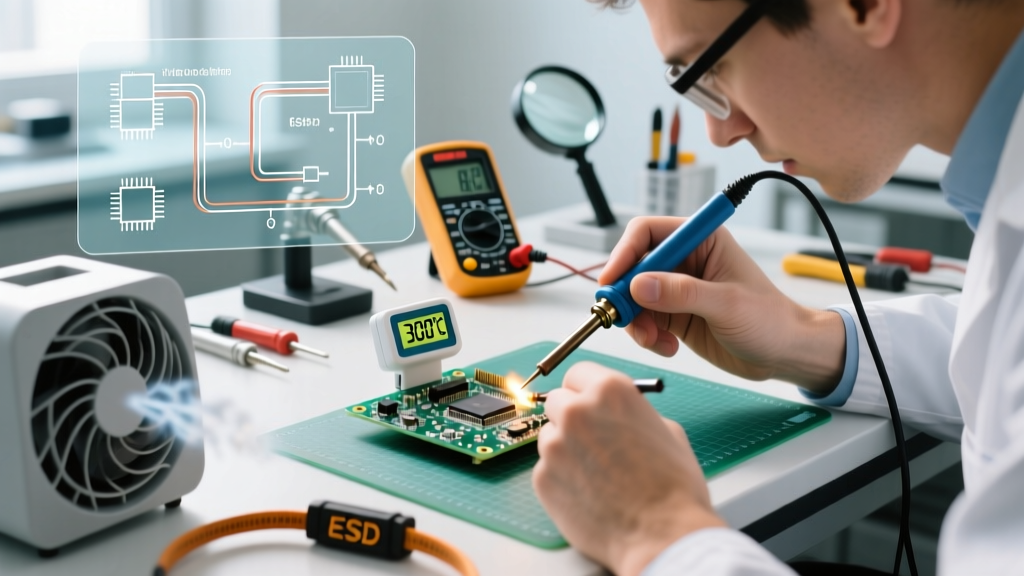
When you melt solder wire, you are not just melting metal; you are vaporizing flux cores. This process releases volatile organic compounds (VOCs), colophony (rosin), and microscopic particulate matter into your breathing zone. According to the Environmental Protection Agency (EPA), indoor air pollutants from DIY and industrial processes can reach concentrations up to five times higher than outdoor air. For electronics hobbyists and professional technicians alike, a reliable fume extractor is not a luxury—it is a medical necessity to prevent occupational asthma and respiratory sensitization.
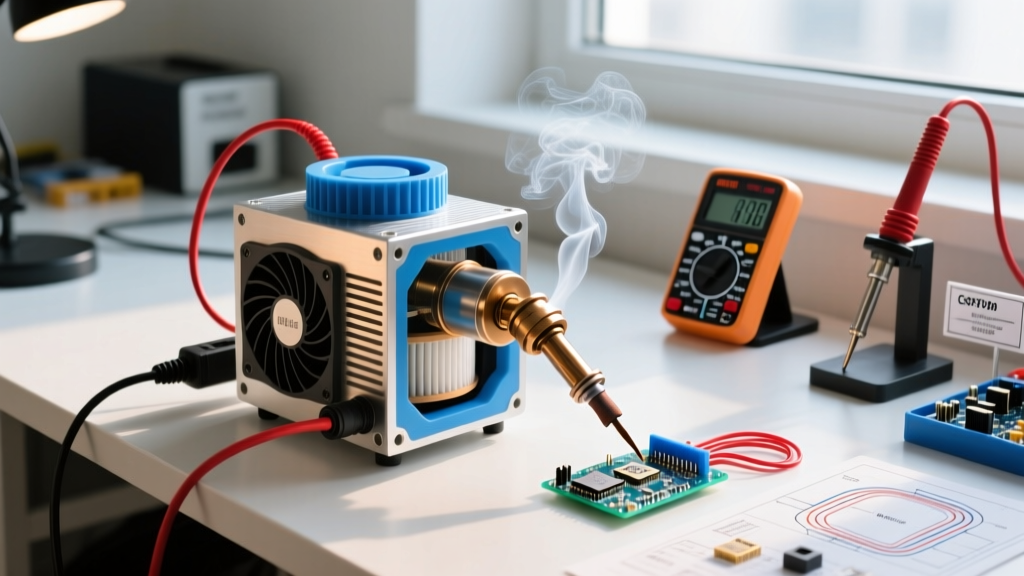
However, commercial extraction units carry a premium price tag. This has driven a massive surge in the DIY community toward designing and manufacturing a 3D printed soldering fume extractor. But is the DIY route actually cheaper when you factor in material science, aerodynamics, and long-term maintenance? In this 2026 cost analysis, we deconstruct the exact bill of materials (BOM), compare it against industry-standard commercial units, and reveal the hidden failure modes that can turn a budget build into an expensive paperweight.
Commercial vs. 3D Printed: The Baseline Comparison
Before diving into the DIY build, we must establish the market baseline. Commercial extractors are priced based on brand reliability, ESD (Electrostatic Discharge) safety certifications, and proprietary filter ecosystems. Below is a cost and performance matrix comparing leading commercial units against a high-end DIY 3D printed build.
| Feature / Metric | Hakko FA-430 (Commercial) | Weller WFE-4D (Commercial) | Premium 3D Printed DIY Build |
|---|---|---|---|
| Upfront Hardware Cost | $285.00 | $640.00 | $78.00 |
| Replacement Filter Cost | $45.00 (Proprietary) | $110.00 (Proprietary) | $22.00 (Universal Pellet) |
| Airflow (CFM) | 70 CFM | 185 CFM | 65 - 85 CFM (Fan Dependent) |
| ESD Safe Chassis? | Yes | Yes | No (Requires conductive filament) |
| Filter Media Type | Carbon Impregnated Foam | HEPA + Carbon Combo | Activated Carbon Pellets + HEPA |
As the table illustrates, the upfront cost savings of a 3D printed soldering fume extractor are massive—often 70% to 85% cheaper than commercial equivalents. However, the true ROI depends entirely on your component selection. A poorly designed DIY unit will fail to capture fumes, rendering the cost savings irrelevant if your health is compromised.
Itemized Cost Breakdown: Building Your 3D Printed Extractor
To achieve a functional, high-static-pressure extraction system in 2026, you cannot simply strap a cheap PC case fan to a PLA plastic box. Here is the exact Bill of Materials (BOM) for a premium, high-performance DIY build.
1. Filament and Material Costs: The Thermal Reality
The most common mistake beginners make is printing their extractor nozzle and chassis in standard PLA (Polylactic Acid). PLA has a glass transition temperature of roughly 60°C (140°F). If your extraction nozzle sits within four inches of a soldering iron operating at 350°C, the ambient radiant heat will warp and collapse the PLA ducting within weeks.
- PLA ($20/kg): Not recommended. High risk of thermal deformation near the soldering zone.
- PETG ($22/kg): Minimum viable material. Glass transition at ~80°C. Excellent chemical resistance to flux vapors. A typical extractor requires 200g of filament, costing roughly $4.40 in raw material.
- ABS/ASA ($25/kg): Best for thermal resistance. Glass transition at ~105°C. ASA also offers UV resistance if your bench is near a window. Material cost for 200g: $5.00.
2. The Airflow Engine: Static Pressure Over CFM
Fume extraction relies on capture velocity—the speed at which air is pulled into the hood to overcome the thermal updraft of the soldering plume. To pull air through a dense activated carbon filter, you need high static pressure (measured in mmH2O), not just high volumetric flow (CFM).
A standard $8 PC case fan moves air well in open space but will choke and stall against the resistance of a carbon filter. For our premium 2026 build, we specify the Noctua NF-F12 industrialPPC-2000 PWM. It generates an exceptional 3.94 mmH2O of static pressure and costs approximately $25.00. Pair this with a 12V 5A power supply ($12.00) and a basic PWM dial controller ($8.00) for variable speed control.
3. Filtration: Where You Cannot Compromise
The Occupational Safety and Health Administration (OSHA) strictly regulates exposure to lead and rosin-based fluxes. Thin, carbon-impregnated foam pads (often sold for $10 on generic marketplaces) do not contain enough carbon mass to adsorb VOCs; they merely trap large particulates.
For a 3D printed soldering fume extractor, you must design a filter cassette that holds activated carbon pellets. A 500g bag of high-grade coconut shell activated carbon pellets costs about $15.00 and will yield multiple custom-cut filter refills, bringing the per-filter cost down to roughly $5.00 to $8.00—a fraction of proprietary commercial replacements. Adding a pre-filter HEPA pad ($4.00) captures the microscopic tin-lead or SAC305 particulates before they clog the carbon bed.
Expert Warning: Never vent a DIY fume extractor directly outside unless you are using a properly sealed inline duct fan (like an AC Infinity S6). Standard 3D printed enclosures leak air from their layer lines and seams. If you are using a carbon filter, the unit must be airtight to force all contaminated air through the media.
Hidden Costs and Edge Case Failure Modes
While the raw BOM sits comfortably under $80, a rigorous cost analysis must account for hidden expenses and edge cases that inflate the total cost of ownership.
- Time and Design Iteration: If you are designing the CAD model yourself in Fusion 360 or SolidWorks, expect 10 to 15 hours of design, slicing, and test-printing. If you value your time at $30/hour, the "hidden" labor cost is $300+. Utilizing open-source repositories like Printables or Thingiverse eliminates this cost, provided you find a model optimized for static pressure chambers.
- Acoustic Dampening: High-static-pressure fans running at 2000 RPM generate significant noise (often exceeding 45 dB). You may need to print secondary shrouds lined with acoustic foam ($12.00) or design a muffler box with baffled air channels, which increases filament usage by 150g.
- ESD (Electrostatic Discharge) Risks: Standard PETG and ABS are electrical insulators. As air and particulates rush through the plastic ducting, they generate static charge. If you are working on sensitive, bare-die microcontrollers or RF components, an ESD strike from your extractor could destroy your work. To mitigate this, you must either ground a copper wire mesh embedded in the print, or use ESD-safe conductive filament (which costs upwards of $80/kg, drastically increasing the material cost).
- Filter Channeling: A common failure mode in 3D printed filter cassettes is "channeling." If the internal baffles do not apply even pressure across the carbon bed, the air will carve a single path of least resistance through the pellets. This leaves 80% of the carbon unused while raw fumes bypass the filter. Precision tolerances (0.2mm layer height, 0.4mm nozzle) are required to print effective internal gaskets.
Optimizing Your Build for IPC Standards
Professional electronics manufacturing adheres to strict environmental and safety standards. While hobbyists are not legally bound by the IPC standards, adopting their best practices ensures your DIY build performs at a commercial tier. IPC-A-610 and J-STD-001 emphasize the importance of maintaining a clean, contaminant-free workspace.
To align your 3D printed extractor with these principles:
- Positioning: Place the extraction hood exactly 2 to 4 inches from the solder joint. Capture velocity drops off exponentially with distance (following the inverse square law). At 8 inches away, even a 100 CFM fan will fail to capture the thermal plume.
- Lighting Integration: Use the remaining space on your 3D printed chassis to embed a 5V LED COB strip ($6.00). Proper illumination of the solder joint reduces eye strain and improves joint inspection accuracy.
- Filter Saturation Tracking: Activated carbon does not last forever; it reaches adsorption capacity. Commercial units use electronic timers. For your DIY build, integrate a simple $3.00 digital hour meter into the printed housing to track fan run-time and remind you to swap the carbon pellets every 80 to 120 hours.
Final Verdict: ROI of the DIY Approach
Is a 3D printed soldering fume extractor financially and practically viable in 2026? The answer is a resounding yes, provided you respect the physics of airflow and material science.
If you build a budget unit using PLA, a cheap $8 fan, and thin carbon foam, you will spend roughly $35 for a unit that fails to protect your lungs and melts within a month. However, if you invest $78.00 into PETG/ASA filament, a high-static-pressure Noctua fan, and a deep-bed activated carbon pellet cassette, you will achieve 90% of the performance of a $650 Weller WFE-4D. The ROI is undeniable, the filtration is vastly superior to entry-level commercial units, and the satisfaction of breathing clean air through a machine you engineered yourself is priceless.