
The Great Debate: Defining 'Lead' in Modern Soldering
When makers, technicians, and engineers search for the best lead for soldering, they are typically referring to one of two things: the physical wire leads of electronic components, or, more commonly, leaded solder wire (the consumable alloy used to form the joint). In the context of purchasing and PCB assembly, selecting the right solder wire alloy is arguably the most critical decision you will make for your workbench.
As of 2026, the electronics industry remains split. Consumer electronics are overwhelmingly manufactured using lead-free alloys to comply with the Restriction of Hazardous Substances (RoHS) directive. However, in aerospace, medical, automotive, and hobbyist prototyping, traditional leaded solder remains the undisputed king due to its superior wetting characteristics, lower melting points, and long-term joint reliability. This comprehensive guide breaks down the metallurgy, pricing, and practical applications of soldering alloys to help you choose the exact wire you need.
Industry Standard Note: According to the IPC J-STD-001 requirements for soldered electrical and electronic assemblies, the choice of alloy must match the operational environment of the end product. Leaded solders are explicitly mandated for high-reliability Class 3 products where thermal cycling and mechanical shock are severe.
Understanding Solder Metallurgy: Eutectic vs. Non-Eutectic
To choose the right lead for soldering, you must understand the phase diagram of tin-lead (Sn-Pb) alloys. The two most common leaded wires on the market are Sn60/Pb40 and Sn63/Pb37.
Sn63/Pb37 (The Eutectic Standard)
This alloy consists of 63% tin and 37% lead. It is a eutectic alloy, meaning it transitions directly from a solid to a liquid at a single, precise temperature: 183°C (361°F). Because it has no 'plastic' (semi-solid) state, it solidifies instantly upon cooling. This eliminates the risk of disturbing the joint during the cooling phase, making it the absolute best choice for hand soldering and fine-pitch SMD work.
Sn60/Pb40 (The Budget Alternative)
Comprising 60% tin and 40% lead, this is a non-eutectic alloy. It begins to melt at 183°C but does not become fully liquid until 190°C (374°F). That 7-degree 'plastic range' means the solder can be physically disturbed while cooling, leading to micro-fractures and disturbed joints. While slightly cheaper, it is generally not recommended for precision PCB work.
Comprehensive Alloy Comparison Matrix
Below is a direct comparison of the most relevant solder wires available on the market today, detailing their composition, thermal properties, and ideal use cases.
| Alloy Designation | Composition | Melting Point | Primary Use Case | Approx. Price (1lb Spool) |
|---|---|---|---|---|
| Sn63/Pb37 | 63% Sn, 37% Pb | 183°C (361°F) | Prototyping, aerospace, medical, rework | $38 - $48 |
| Sn60/Pb40 | 60% Sn, 40% Pb | 183°C - 190°C | General plumbing, heavy gauge wires | $30 - $36 |
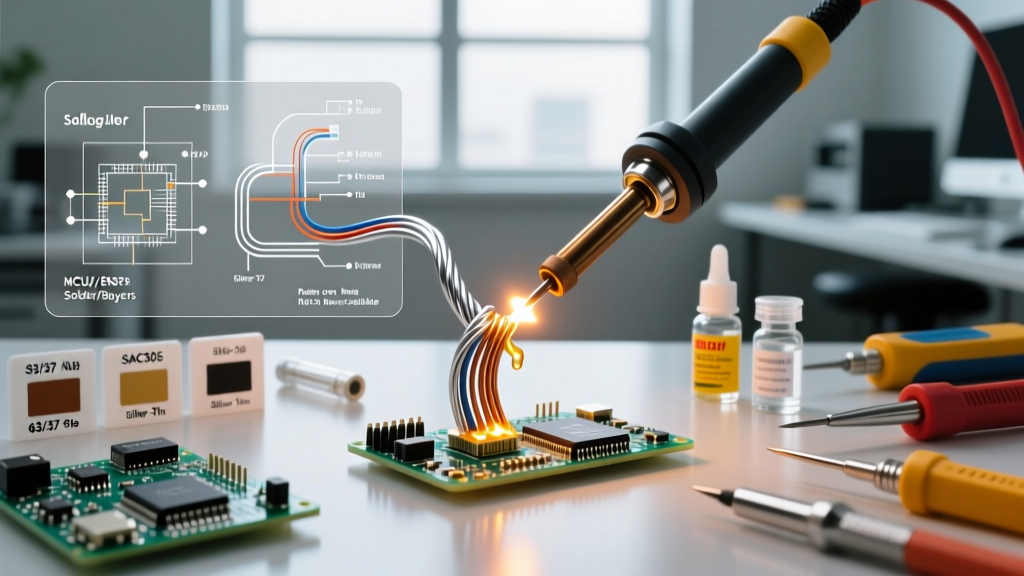
| SAC305 | 96.5% Sn, 3% Ag, 0.5% Cu | 217°C - 220°C | RoHS-compliant commercial electronics | $55 - $70 |
| Sn99.3/Cu0.7 | 99.3% Sn, 0.7% Cu | 227°C (441°F) | Budget lead-free, wave soldering | $35 - $45 |
| Sn10/Pb88/Ag2 | 10% Sn, 88% Pb, 2% Ag | 268°C - 299°C | High-temp step-soldering, die attach | $80 - $110 |
When to Use Leaded Solder (and When to Avoid It)
Choosing the right lead for soldering depends entirely on your end product's destination and regulatory requirements.
When Leaded Solder is Mandatory
- Aerospace and Defense: Satellites and avionics experience extreme thermal cycling in orbit. Lead-free alloys are prone to 'tin whiskers'—microscopic crystalline structures that grow over time and cause catastrophic short circuits. Leaded solder suppresses whisker growth.
- Medical Life-Support: Devices like pacemakers and ventilators require the highest reliability (IPC Class 3), where the ductility of lead prevents joint fatigue from dropping or vibration.
- Hobbyist Prototyping: For makers and students, Sn63/Pb37 is vastly superior. It requires less heat (saving your PCB pads from lifting), flows beautifully, and yields shiny, easy-to-inspect joints.
When Lead-Free is Required
- Consumer Electronics: If you are manufacturing a product for retail sale in the EU, California, or other regions with strict RoHS enforcement, you must use lead-free alloys like SAC305.
- Food and Water Contact: Any electronics that interface with potable water systems or food processing must avoid lead entirely to prevent heavy metal leaching.
Flux Core Chemistry: The Hidden Variable
The metal alloy is only half the equation. The flux core inside the solder wire dictates how well the alloy wets the copper pads. When buying lead for soldering, you must select the correct flux chemistry for your cleaning capabilities.
- Rosin Mildly Activated (RMA): The industry standard for leaded wire (e.g., Kester 44). It provides excellent wetting and leaves a benign, non-conductive residue. Ideal for most applications where post-soldering cleaning is optional.
- No-Clean (NC): Leaves a minimal, clear residue that is safe to leave on the board. However, no-clean fluxes require precise temperature profiles to activate fully and can be difficult to clean with standard solvents if you do choose to wash the board.
- Water-Soluble (OA): Highly aggressive organic acid flux. It provides the best wetting for difficult surfaces like oxidized nickel but must be washed with heated deionized water immediately after soldering to prevent severe corrosion.
Real-World Pricing and Top Brand Recommendations
Market prices for solder wire fluctuate based on the global commodities market for tin and silver. As of 2026, here are the top-tier recommendations for professional and serious hobbyist workbenches:
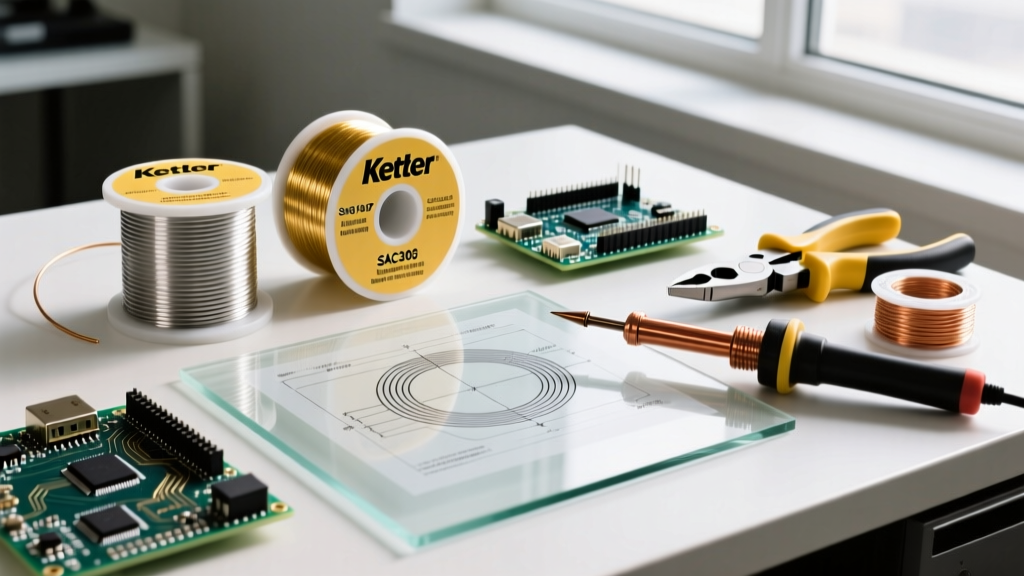
- Kester 24-6337-00278 (Sn63/Pb37, 0.031", 3.3% Flux): The gold standard for through-hole and general SMD work. Expect to pay around $42 per 1lb spool. The 0.031" diameter provides excellent feed control.
- Kester 24-6337-00086 (Sn63/Pb37, 0.020"): Essential for 0402 and 0201 SMD components. Priced at roughly $38 for a 1/2lb spool. The thinner diameter prevents bridging on fine-pitch ICs.
- Multicore 951 (Sn63/Pb37): A European favorite with a highly active rosin flux that excels on slightly oxidized vintage boards. Approximately $45 per 1lb spool.
- MG Chemicals 4888 (SAC305 Lead-Free): If you must solder RoHS, this is the premier choice. The 3% silver content drastically improves joint strength and lowers the melting point compared to Sn-Cu alloys. Costs around $62 per 1lb spool due to silver premiums.
Health, Safety, and Fume Extraction
There is a pervasive myth in the maker community that soldering fumes contain lead. This is false. Lead has a boiling point of 1,749°C (3,180°F). Your soldering iron operates between 250°C and 380°C. Lead does not vaporize at these temperatures.
The real danger of lead exposure is contact ingestion—transferring microscopic lead dust from your hands to your mouth or food. Always wash your hands with cold water and soap after handling leaded solder, and never eat at your workbench. For comprehensive safety protocols, refer to OSHA's lead standards and the NIOSH guidelines on lead exposure.
The Real Fume Hazard: Colophony
The smoke you see is vaporized flux (rosin/colophony). Inhaling rosin fumes is a known cause of occupational asthma and severe respiratory sensitization. You must use a fume extractor equipped with both a HEPA filter (for particulates) and an activated carbon filter (for VOCs).
Recommended Equipment: The Hakko FA-400 ($65) is adequate for light hobby use, but professionals should invest in the Weller WSA350 ($140) or a dedicated BOFA extraction unit for continuous bench work.
Troubleshooting Common Solder Lead Defects
Even with the best Sn63/Pb37 wire, poor technique yields bad joints. Here is how to diagnose common failures:
- Dull, Grainy Joints: You likely used Sn60/Pb40 and moved the component during the 7°C plastic cooling phase, or your iron temperature is too low, causing a cold joint. Fix: Increase iron temp by 15°C and use eutectic wire.
- Non-Wetting (Solder balls up): The flux has burned off before the pad reached flow temperature, or the pad is heavily oxidized. Fix: Apply liquid RMA flux to the pad before touching the iron.
- Solder Bridging: Using a wire diameter that is too thick for the pitch. Fix: Drop from 0.031" to 0.015" wire for TQFP and QFN packages.
Final Verdict: Which Lead Should You Buy?
If you are building prototypes, repairing vintage audio gear, or assembling aerospace hardware, Sn63/Pb37 with a Rosin Mildly Activated flux core is the undisputed best lead for soldering. It offers the lowest thermal stress on your components and the highest visual inspectability. Reserve SAC305 lead-free alloys strictly for commercial products destined for RoHS-regulated markets, and always ensure your workstation is equipped with proper carbon-activated fume extraction.