
The Evolution of Quicktip Soldering Technology
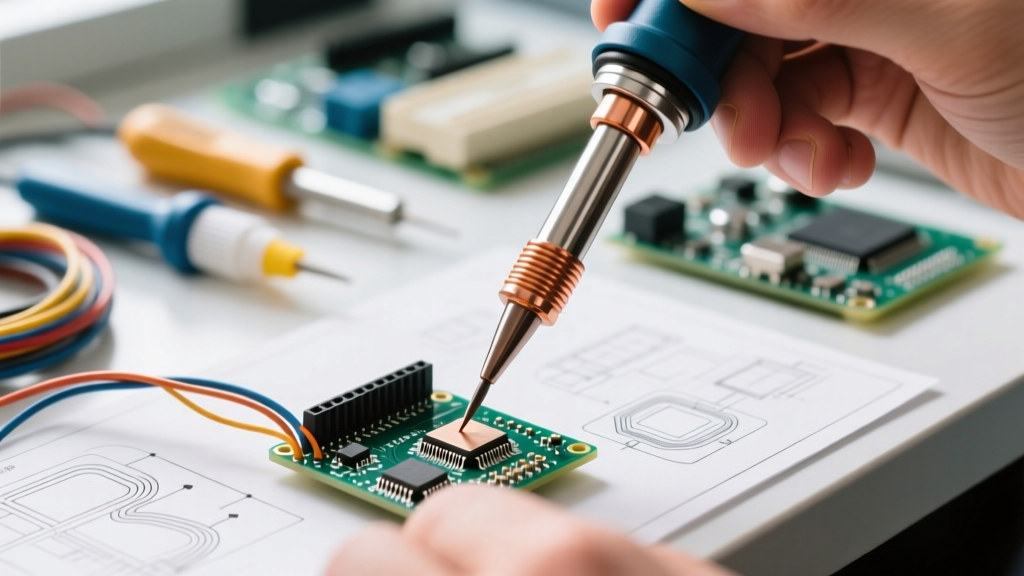
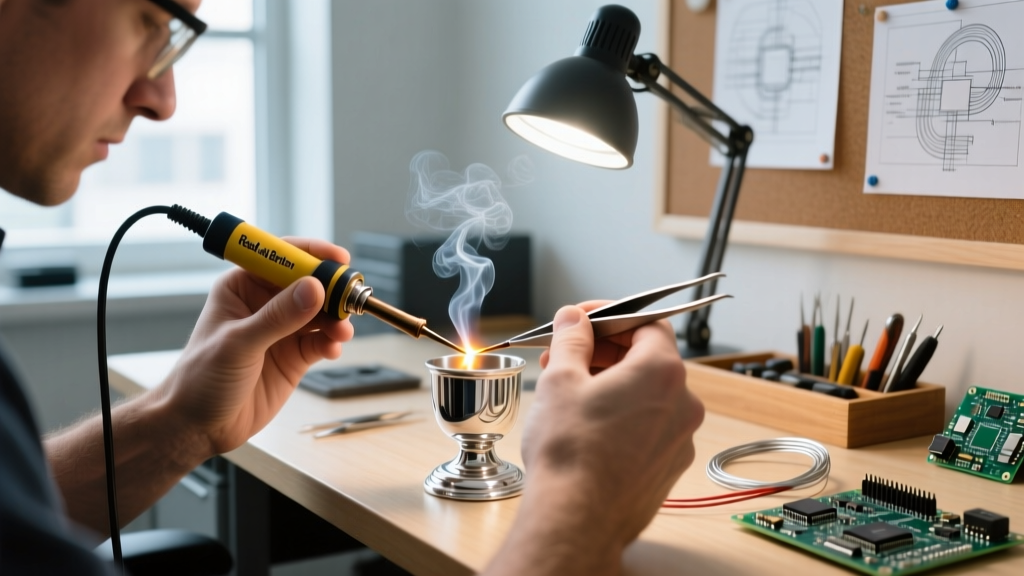
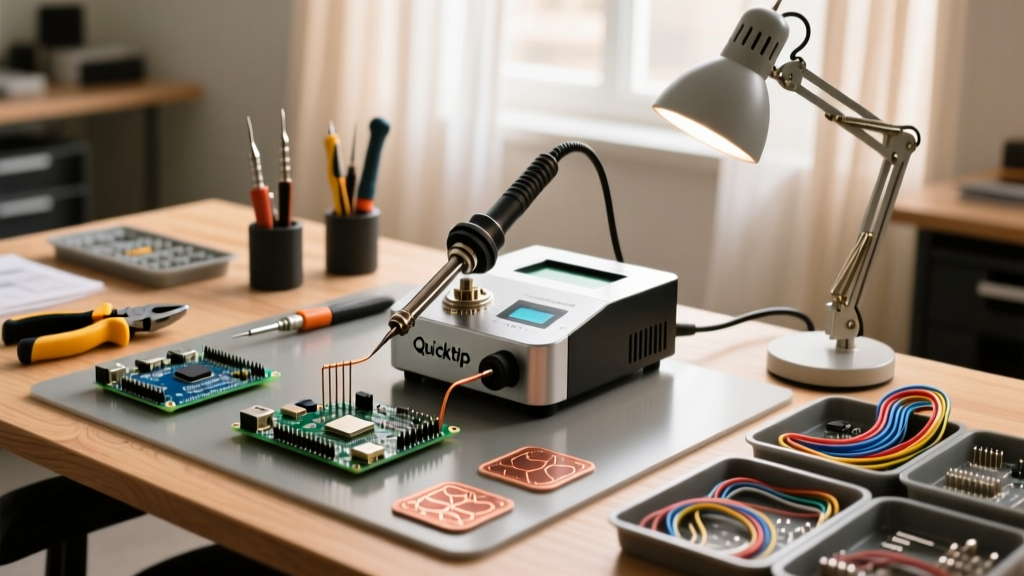
In the rapidly advancing landscape of electronics manufacturing and high-density PCB rework, thermal management is the single most critical variable. The traditional soldering iron—featuring a separate ceramic heating element and a threaded or set-screw tip—has largely been relegated to hobbyist benches and low-volume repair shops. In professional environments, Quicktip soldering systems (often referred to generically as cartridge-style or integrated heater-tip systems) have become the undisputed standard. Originally popularized by Ersa Soldering Technology with their patented Quicktip design, this architecture integrates the heating element, temperature sensor, and soldering tip into a single, easily swappable cartridge.
For 2026, the market is dominated by three primary engineering philosophies: Ersa’s Quicktip series, JBC’s integrated cartridge ecosystem, and Weller’s RT micro-cartridge lines. To help you navigate this high-stakes purchasing decision, we convened a panel of IPC-certified trainers, high-volume production floor managers, and micro-soldering rework specialists to evaluate the real-world performance, total cost of ownership (TCO), and edge-case failure modes of modern Quicktip stations.
What Defines a True Quicktip System?
Before diving into the expert roundup, it is vital to distinguish between true cartridge systems and legacy "quick-change" systems. Older quick-change designs (like early Hakko FX-series) still utilized a separate ceramic heater; the tip simply slid over it with a quick-release collar. True Quicktip and cartridge systems eliminate the air gap between the heater and the tip entirely. The thermocouple is embedded millimeters from the tip's working surface, allowing for thermal recovery times measured in milliseconds rather than seconds.
Expert Roundup: Why Production Floors Demand Cartridge Tech
We asked three industry veterans why their facilities have completely transitioned to Quicktip and cartridge-based architectures, specifically referencing the stringent requirements of IPC (Association Connecting Electronics Industries) standards for lead-free assembly.
Marcus Vance, Lead Manufacturing Engineer at a Tier-1 Automotive PCB Facility:
"When you are running high-Sn SAC305 lead-free alloys at 360°C to 380°C, thermal depletion is your enemy. If a technician solders a heavy ground plane pad with a traditional iron, the tip temperature can drop by 40°C, leading to cold joints and excessive dwell times that delaminate the FR-4 substrate. With our Ersa i-CON PICO stations utilizing Quicktip cartridges, the closed-loop sensor detects the thermal draw instantly. The recovery time is under 2 seconds. That compliance with IPC-A-610 Class 3 standards is non-negotiable for us."
Sarah Lin, Micro-Soldering Rework Specialist (Mobile & Wearable Tech):
"For 01005 and 0201 passives, thermal mass must be minimized. I use the JBC CD-2BQF station. The cartridge is so small that the heat is entirely concentrated at the microscopic bevel of the tip. There is zero thermal bleed up the shaft. Traditional irons act like heat sinks, pulling heat away from the joint. Cartridge systems push 100% of the wattage exactly where you need it, which prevents tombstoning on micro-components."
2026 Quicktip Station Comparison Matrix
To provide actionable buyer guidance, we compiled current 2026 market data, comparing the top-tier Quicktip and cartridge stations across critical performance metrics. Note that pricing reflects average authorized distributor rates for the base station plus one standard cartridge handle.
| Station Model | Tip Technology | Thermal Recovery | Avg. Tip Cost (2026) | Station Price (USD) | Best Use Case |
|---|---|---|---|---|---|
| Ersa i-CON PICO | Quicktip Cartridge | ~2.0 seconds | $12 - $18 | $480 - $530 | High-volume production, general SMD |
| JBC CD-2BQF | Integrated Cartridge | ~1.8 seconds | $38 - $45 | $560 - $610 | Precision micro-soldering, BGA rework |
| Weller WX2 | RT Micro Cartridge | ~2.5 seconds | $15 - $22 | $520 - $580 | Mixed environments, IoT prototyping |
| Pace ADS200 | TD-200 Cartridge | ~2.2 seconds | $14 - $19 | $450 - $490 | Heavy ground planes, thick multilayers |
Deep Dive: Real-World Failure Modes & Edge Cases
While Quicktip and cartridge systems are vastly superior to threaded tips, they introduce unique failure modes that buyers and technicians must understand. Our experts highlighted three specific edge cases that cause premature cartridge death or soldering defects.
1. The Counterfeit Cartridge Seating Gap
The most pervasive issue in 2026 is the influx of counterfeit Quicktip and JBC cartridges from unauthorized online marketplaces. Genuine cartridges feature precision-machined internal cavities where the station's sensor pin mates directly with the cartridge's internal thermocouple. Counterfeit tips often exhibit a 0.15mm to 0.3mm machining tolerance error. This microscopic air gap acts as a thermal insulator. The station's PID controller misreads the tip temperature, resulting in severe thermal overshoot (often exceeding 420°C) which instantly destroys the iron plating and oxidizes the flux core before it even touches the pad.
2. Sleeve Oxidation in Non-Cartridge Quick-Change
If you are using older "slide-on" quick-change systems (where the tip slides over a separate ceramic heater), flux vapors and microscopic solder wicking can infiltrate the gap between the heater and the tip sleeve. Over time, this creates a crust of oxidized flux and burnt rosin. This layer severely impedes thermal transfer, mimicking the symptoms of a failing heating element. Expert fix: Remove the tip weekly and clean the ceramic heater with a brass wire brush and isopropyl alcohol, never using abrasive pads that can snap the fragile ceramic core.
3. High-Tin Alloy Erosion (SAC305 / SAC405)
Lead-free solders containing high percentages of Tin (Sn) are highly aggressive to the iron (Fe) plating on soldering tips. When running SAC305 at 380°C continuously, the tin actively dissolves the iron plating, exposing the underlying copper core. Once the copper is exposed, the tip will pit and dissolve within hours. Quicktip systems mitigate this by allowing lower operating temperatures (340°C-350°C) due to their superior thermal transfer, but technicians must still use specialized high-Sn resistant tip geometries (often denoted by an 'S' or 'LF' suffix in Ersa and Weller catalogs).
Expert Strategies for Maximizing Cartridge Lifespan
A genuine JBC or Ersa Quicktip cartridge should last between 4 to 8 months in a daily production environment. If your facility is replacing tips every three weeks, your maintenance protocols are flawed. Follow this strict operational checklist:
- Never Use Dry Sponges: Wet cellulose sponges cause rapid thermal shock, micro-fracturing the internal ceramic and degrading the thermocouple over time. Switch to brass wire wool or specialized high-temp silicone tip cleaners.
- The "Sacrificial Tinning" Rule: Before placing the handle back into the cradle, always apply a thick bead of cheap, leaded 63/37 solder to the working end of the tip. This sacrificial layer oxidizes in the cradle instead of the factory iron plating. Wipe it clean only right before making the next joint.
- Utilize Sleep Modes: Modern stations like the Weller WX2 and Ersa i-CON feature accelerometer-based sleep modes. Ensure the standby temperature drop is configured to 150°C. Leaving a cartridge idling at 360°C for 10 minutes accelerates oxidation exponentially.
- Match Geometry to the Pad: Using a fine conical tip to solder a large ground plane forces the technician to press down harder to increase surface area contact. This physical pressure crushes the microscopic sensing elements inside the cartridge. Always use a chisel or bevel geometry that matches the pad size to rely on thermal mass, not physical pressure.
Final Verdict: Matching the Station to Your Workflow
The transition to a Quicktip or cartridge-based soldering system is an investment in yield quality and technician ergonomics. Based on our 2026 expert roundup, here is the definitive buying advice:
- Choose Ersa i-CON PICO if your primary focus is high-volume, mixed-technology SMD assembly where tip costs need to remain low ($12-$18) and thermal consistency across dozens of operators is paramount.
- Choose JBC CD-2BQF if you are running a dedicated rework station dealing with 01005 passives, micro-BGA components, or dense flex-PCBs where the absolute lowest thermal mass and fastest 1.8-second recovery are worth the premium $40+ per tip cost.
- Choose Weller WX2 if you operate a dynamic prototyping lab or IoT development hub that requires rapid switching between micro-soldering and heavy-duty through-hole connectors, leveraging Weller's broad RT cartridge ecosystem.
Ultimately, mastering Quicktip soldering is less about the hardware and more about respecting the metallurgy of modern lead-free alloys. By investing in genuine cartridges, enforcing strict tinning protocols, and leveraging the millisecond-response telemetry of modern stations, you will drastically reduce cold joint defects and elevate your PCB assembly to professional IPC standards.