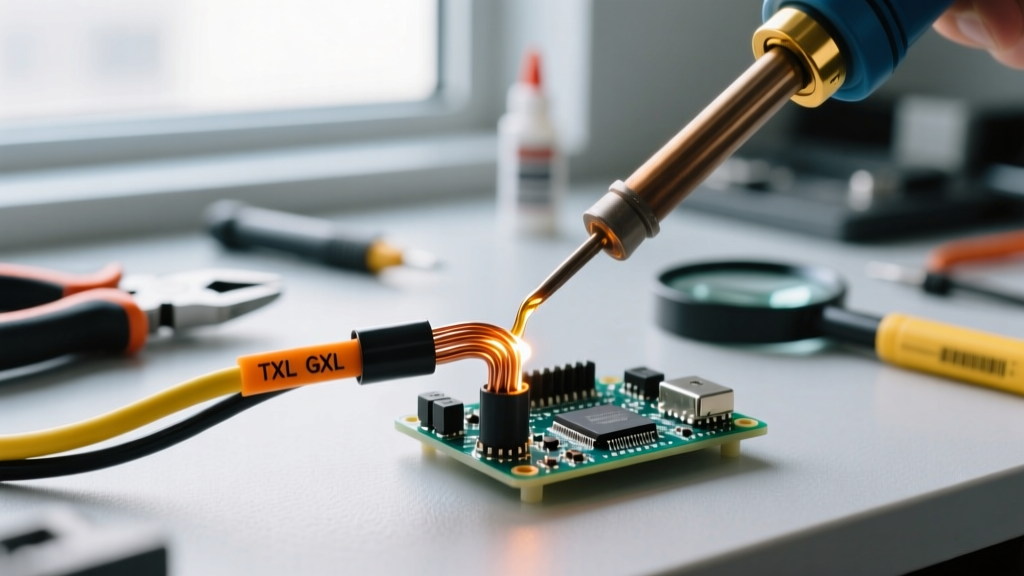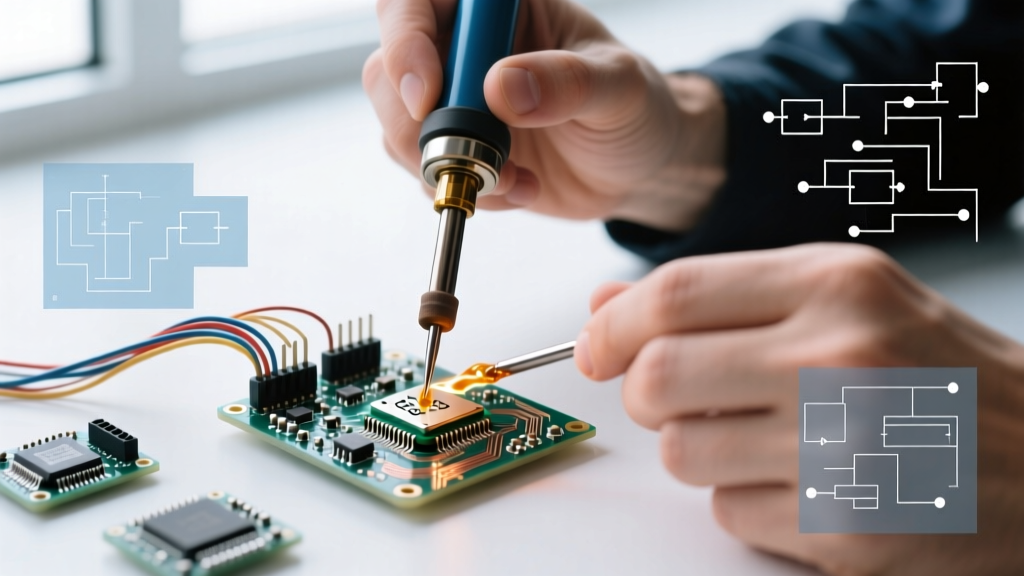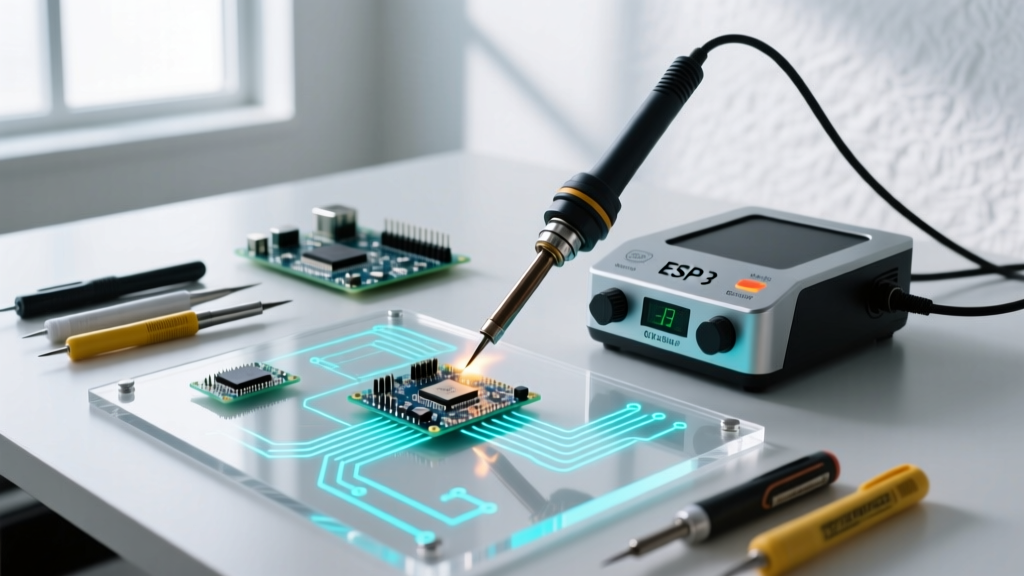

When engineers, technicians, and DIY enthusiasts search for a soldering tools definition, they typically encounter basic glossaries listing a soldering iron, solder wire, and flux. However, in 2026, this rudimentary explanation fails to capture the financial and technical realities of modern electronics assembly. A comprehensive soldering tools definition must encompass the entire thermal ecosystem, including thermal recovery rates, tip metallurgy, flux chemistry, and desoldering mechanics. More importantly, for buyers and lab managers, it must address the Total Cost of Ownership (TCO). This guide redefines the soldering tools definition through a rigorous cost analysis, breaking down the financial barriers and long-term investments across hobbyist, prosumer, and industrial tiers.
Deconstructing the Modern Soldering Tools Definition
Before analyzing costs, we must establish a functional baseline. The modern soldering tools definition comprises five interdependent pillars. Neglecting any single pillar results in poor wetting, cold joints, or damaged PCB pads.
- Thermal Delivery System: The station or iron that generates and regulates heat. Modern definitions exclude unregulated 'plug-in' irons, focusing instead on closed-loop temperature control.
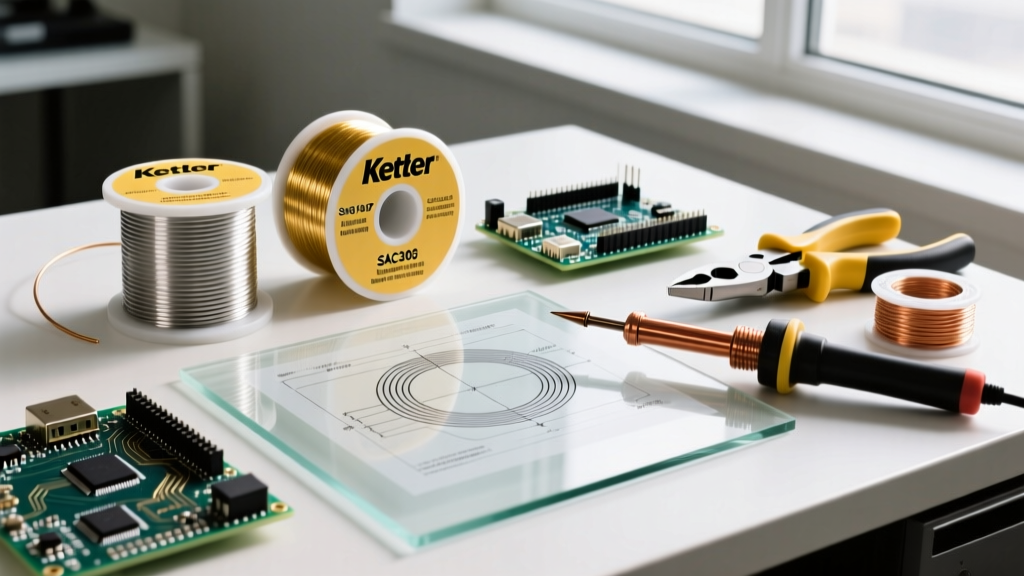
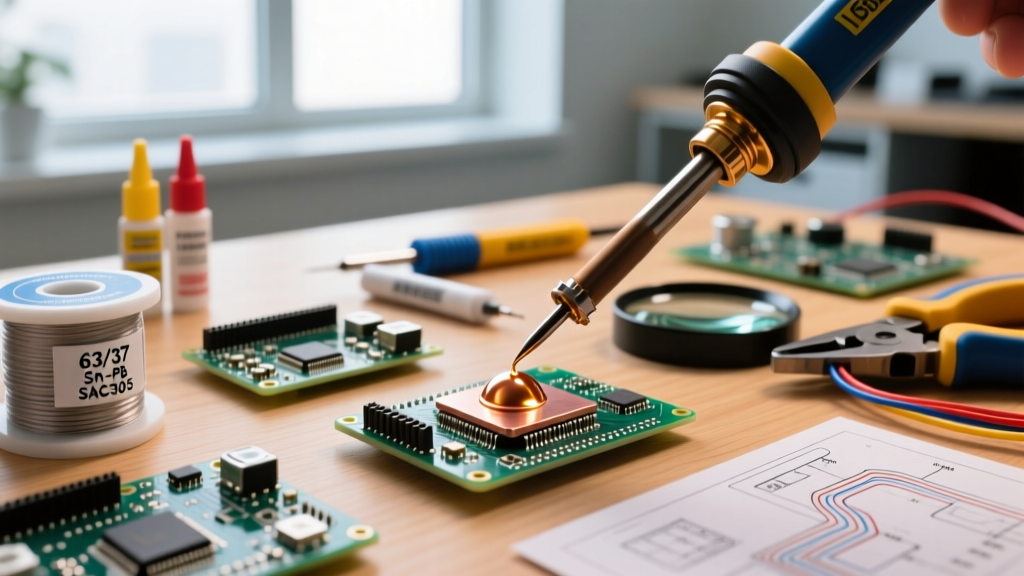
- Solder Alloy: The metallic binder. While 63/37 (tin/lead) remains the eutectic standard for hobbyists, SAC305 (lead-free) is the mandatory definition for commercial compliance.
- Flux Medium: The chemical cleaning agent that removes oxidation. This includes rosin-based (RMA), no-clean, and water-soluble formulations.
- Desoldering Apparatus: Tools for rework and error correction, ranging from manual solder suckers to motorized vacuum desoldering guns.
- Tip Maintenance: Brass wool, cellulose sponges, and tip tinner, which are critical for preserving the iron-plated copper core of the heating element.
Tiered Cost Analysis: From Garage to Lab
The cost of assembling a complete soldering ecosystem varies wildly based on the required precision and duty cycle. Below, we analyze the initial capital expenditure (CapEx) for three distinct user profiles.
Tier 1: The Hobbyist Definition (Sub-$75 CapEx)
For casual makers and students, the soldering tools definition prioritizes accessibility and basic functionality. The undisputed king of this tier in 2026 is the Pinecil V2, a smart iron powered by a RISC-V chip and PD (Power Delivery) USB-C. Priced at just $26, it requires an external 65W laptop charger ($15). A basic manual desoldering pump like the Engineer SS-02 ($15) and a standard 250g spool of 63/37 rosin-core solder ($18) complete the kit. Total Initial Cost: ~$74. While the upfront cost is minimal, the thermal mass is low, meaning the iron struggles to maintain temperature when soldering to large ground planes, leading to a higher rate of consumable waste due to burnt flux.
Tier 2: The Prosumer Definition ($150–$300 CapEx)
Serious freelancers and small repair shops require a definition of soldering tools that guarantees reliability and compliance with IPC standards for Class 2 electronics. The Hakko FX-888D remains the benchmark here, retailing for approximately $115. It utilizes a ceramic heating element with a digital PID controller. Upgrading the solder to a premium brand like Kester 245 ($28 for 1lb) and adding a dedicated tip cleaner like the Hakko 599B brass sponge ($8) ensures consistent wetting. For rework, a high-quality manual vacuum pump or a basic electric desoldering braid setup adds $25. Total Initial Cost: ~$176. This tier offers the best balance of initial investment and long-term tip longevity.
Tier 3: The Industrial Definition ($500+ CapEx)
In high-volume manufacturing and aerospace rework (IPC Class 3), the soldering tools definition shifts to absolute thermal dominance and cartridge-based efficiency. Systems like the JBC CD-2BQE station ($525) or JBC equivalents utilize a proprietary cartridge system where the heating element is integrated directly into the tip. This eliminates the thermal transfer gap found in traditional irons, allowing for instant heat recovery. Add in specialized micro-soldering tips ($42 each), high-reliability no-clean flux pens ($22), and a motorized desoldering gun like the Hakko FR-301 ($250), and the initial investment easily surpasses $800. However, the reduction in rework time and pad-lifting failures justifies the CapEx for professional labs.
Comparative Matrix: Thermal Recovery vs. Cost
To truly understand the financial implications of your chosen soldering tools definition, you must evaluate thermal recovery—the time it takes for the tip to return to its set temperature after touching a cold solder joint. Slow recovery leads to 'dwelling,' which oxidizes flux and damages PCB laminates.
| Tool Tier | Representative Model | Station Cost | Thermal Recovery | Tip Replacement Cost | Max Wattage |
|---|---|---|---|---|---|
| Entry | Pinecil V2 | $26.00 | ~8 seconds | $2.50 | 65W (PD) |
| Prosumer | Hakko FX-888D | $115.00 | ~20 seconds | $8.50 | 70W |
| Industrial | JBC CD-2BQE | $525.00 | ~2 seconds | $42.00 | 130W |
Note: Recovery times are approximate and based on a standard 2.4mm chisel tip applied to a 2oz copper ground plane at 350°C.
Hidden Variables in the Soldering Tools Definition
A common mistake buyers make is evaluating tools solely on the price of the station. A complete cost analysis must account for the hidden variables that dictate the ongoing operational expenditure (OpEx).
1. Tip Degradation and Metallurgy
Soldering tips are not solid copper; they are copper cores plated with iron, then chromium, and finally tinned. When using lead-free alloys like SAC305, the higher required temperatures (350°C–380°C) accelerate the dissolution of the iron plating into the molten tin. A cheap $3 tip from an online marketplace may degrade in a single 8-hour shift, whereas a $42 Hakko or JBC OEM tip, manufactured with precise electroplating thicknesses, can last for months. Therefore, the 'cheaper' tool often carries a significantly higher annual consumable cost.
2. The Cost of Thermal Shock
How you clean your tip directly impacts your budget. The traditional wet cellulose sponge is deeply embedded in the basic soldering tools definition. However, wiping a 380°C tip on a room-temperature wet sponge causes rapid thermal contraction. Over time, this micro-fractures the iron plating, leading to pitting and hollowed-out tips. Switching to a dry brass wool cleaner ($8) eliminates thermal shock, effectively doubling or tripling the lifespan of your tips and drastically reducing your annual OpEx.
3. Flux Residue and Cleaning Solvents
Unless you are using a verified 'no-clean' flux, post-soldering cleaning is mandatory to prevent electrochemical migration (dendrite growth). This requires high-purity Isopropyl Alcohol (IPA) or specialized aerosol flux removers. A standard prosumer kit will consume roughly $120 annually in IPA and lint-free swabs. Industrial setups often integrate ultrasonic cleaners or vapor degreasers, adding thousands to the CapEx but pennies to the per-unit OpEx.
Calculating True Cost of Ownership (TCO)
Let us project the 3-year TCO for a prosumer repair technician working 20 hours a week, compared to an industrial lab technician working 40 hours a week.
Prosumer TCO (3 Years):
Station (Hakko FX-888D): $115
Tips (12 replacements @ $8.50): $102
Solder & Flux Consumables: $350
IPA & Cleaning Supplies: $120
Total 3-Year TCO: $687
Industrial TCO (3 Years):
Station (JBC CD-2BQE): $525
Tips (8 replacements @ $42.00): $336
Premium Solder & Flux: $600
Automated Cleaning Setup: $400
Total 3-Year TCO: $1,861
While the industrial setup is nearly three times more expensive over three years, the throughput, zero-defect rate, and ability to solder complex multilayer BGA components without pad delamination provide an exponential return on investment for commercial entities. For the DIYer, the prosumer or even entry-level definition remains the most financially sound choice.
Final Verdict: Redefining Your Investment
Ultimately, the true soldering tools definition is not found in a dictionary, but in the intersection of thermal physics, material science, and financial pragmatism. If your work involves simple through-hole components or occasional wire splicing, a $75 smart-iron setup provides 90% of the utility of a $500 lab station. However, if your livelihood depends on reworking 0402 surface-mount components, repairing multilayer PCBs, or adhering to strict IPC-A-610 Class 3 visual and metallurgical standards, investing in a cartridge-based industrial system is not an expense—it is an insurance policy against catastrophic board damage. Evaluate your specific thermal mass requirements, calculate your consumable burn rate, and choose the tier that aligns with your operational reality in 2026.