
The Hidden Variables in Soldering Tool Stand Selection
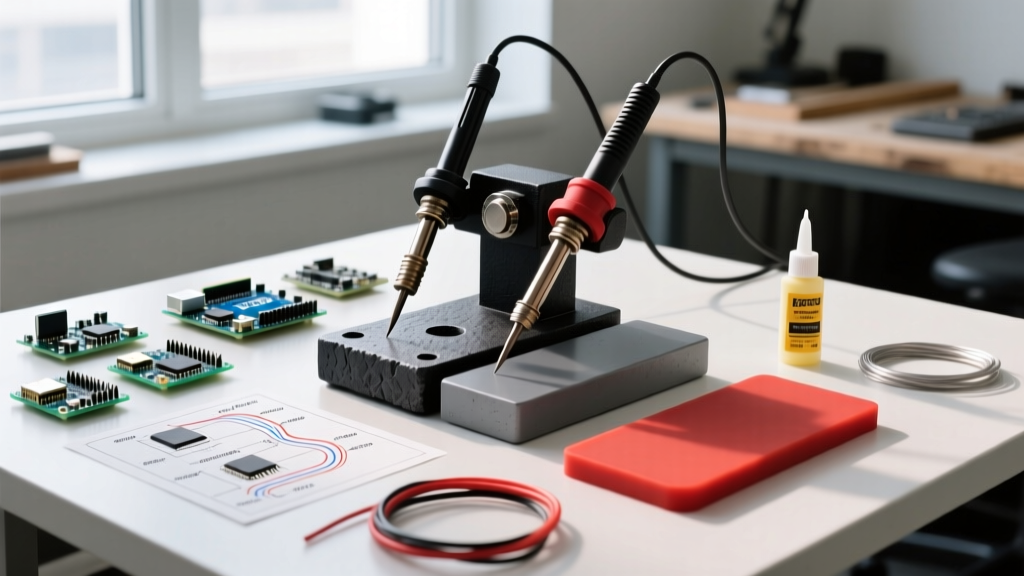
Most technicians and hobbyists treat the soldering tool stand as a mere accessory—a simple dock to park a hot iron between joints. However, as we navigate the demanding electronics landscape of 2026, the material composition of your soldering tool stand plays a critical role in benchtop safety, equipment longevity, and chemical resistance. With the industry-wide shift toward high-reliability lead-free alloys like SAC305 and SN100C, soldering irons are routinely operating at tip temperatures between 350°C and 420°C (662°F to 788°F). At these thermal extremes, the material compatibility of your stand dictates whether it will safely dissipate heat, resist corrosive flux splatter, or degrade and fail.
This comprehensive guide breaks down the metallurgy, polymers, and elastomers used in modern soldering tool stands, providing a deep-dive compatibility matrix to help you match the right stand material to your specific soldering chemistry and thermal requirements.
Thermal Dynamics and Material Thresholds
When selecting a soldering tool stand, you must evaluate two distinct thermal metrics: continuous thermal tolerance and thermal shock resistance. According to the IPC soldering standards, modern lead-free wave and hand soldering processes frequently push localized temperatures past 380°C. If an iron slips from its cradle, the stand's base material must withstand momentary contact without melting, off-gassing toxic fumes, or transferring enough heat to scorch a wooden or laminate workbench.
High thermal mass materials, such as die-cast zinc, act as heat sinks. They absorb the incidental thermal energy from a dropped iron and dissipate it slowly, protecting the benchtop. Conversely, low-mass materials like thin stamped aluminum or standard ABS plastics will rapidly transfer heat to the underlying surface or deform entirely.
Soldering Tool Stand Material Compatibility Matrix
The following matrix evaluates the most common materials used in professional and consumer soldering rests, highlighting their physical and chemical boundaries.
| Material | Max Continuous Temp | Thermal Shock Resistance | Flux & Solvent Resistance | Example Models |
|---|---|---|---|---|
| Die-Cast Zinc / Iron | 400°C+ | Excellent | High (Prone to surface oxidation) | Hakko 602, Hakko 603 |
| Stainless Steel | 800°C+ | Excellent | Superior (Highly inert) | Weller WDH10T, Pace 1010-0019 |
| Phenolic Resin (Bakelite) | 160°C (Spikes to 250°C) | Moderate (Can crack) | Superior (Chemically inert) | Generic OEM bases, vintage rests |
| High-Grade Silicone | 250°C - 300°C | Poor (Degrades over 300°C) | Moderate (Stains, swells in solvents) | Soldering mat docks, flexible rests |
| ABS / Standard Plastics | 80°C - 100°C | Poor (Melts/deforms) | Poor (Dissolves in acetone/IPA) | Budget Amazon/eBay iron kits |
Die-Cast Zinc and Cast Iron
Heavy-duty stands like the legendary Hakko 602 utilize die-cast zinc. Weighing in at over 1.2 lbs, these stands offer immense stability, preventing the iron from pulling the station off the bench via cord tension. Zinc and cast iron boast virtually limitless thermal thresholds for soldering applications. However, their Achilles' heel is chemical compatibility. Rosin-based fluxes and aggressive water-soluble organic acids (OA) can cause surface oxidation and pitting over time if not wiped down. Furthermore, if used with a wet cellulose sponge, the constant moisture can lead to localized rust on uncoated iron variants.
Stainless Steel and Aluminum Alloys
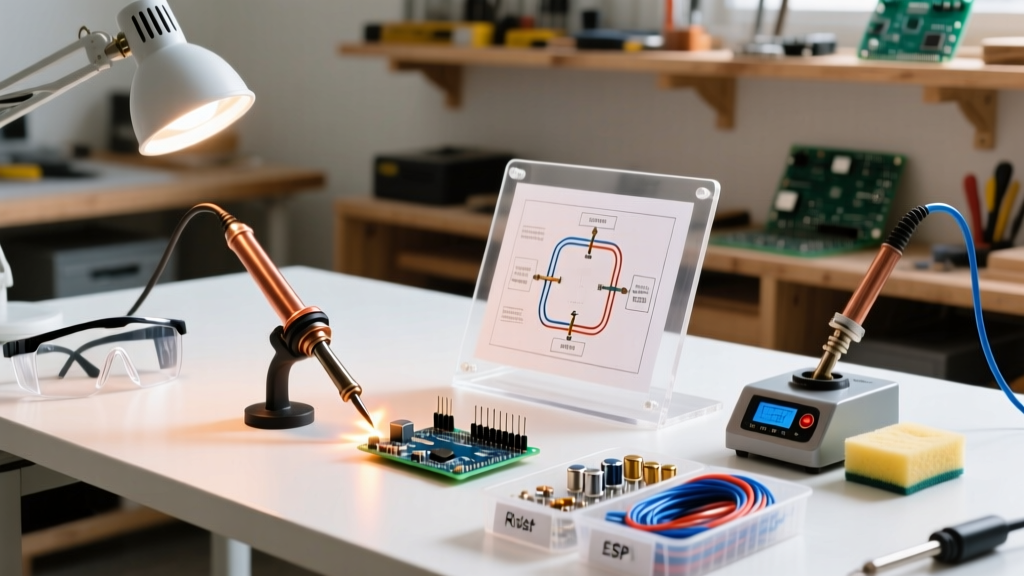
Stainless steel is the gold standard for modern professional soldering tool stands. The Weller WDH10T safety rest, for instance, uses a stamped and folded stainless steel chassis paired with a high-temp silicone base. Stainless steel is entirely impervious to soldering temperatures and highly resistant to the corrosive byproducts of activated rosin (RMA) and no-clean fluxes. It also withstands aggressive cleaning protocols, including scrubbing with Isopropyl Alcohol (IPA) or specialized flux removers, without degrading. Aluminum alloys are lighter and offer excellent heat dissipation but are softer and more prone to scratching and galvanic corrosion when exposed to certain flux chemistries.
High-Temp Phenolic Resins (Bakelite)
Phenolic resins have been a staple in electrical engineering for decades due to their non-conductive and heat-resistant properties. The British Plastics Federation notes that phenolics maintain structural integrity at continuous temperatures up to 160°C. While a 400°C iron tip resting directly on a thin phenolic base will eventually cause thermal scorching or micro-fractures, the material will not melt or drip like thermoplastics. Phenolic bases are exceptionally resistant to chemical solvents, making them ideal for environments where heavy flux washing is routine.
Silicone and Elastomeric Bases
Silicone is frequently used as the base plate or the internal cradle lining in modern stands to provide grip and benchtop protection. While high-grade silicone can withstand brief exposures to 300°C, prolonged contact with a lead-free iron tip set to 420°C will cause the silicone to calcify, crack, and leave a sticky, insulating residue on your iron tip. Silicone is also vulnerable to swelling and degradation when exposed to strong solvents like acetone or toluene, which are sometimes used to clean heavily oxidized tips.
Chemical Compatibility: Flux, Solvents, and Degradation
A soldering tool stand is constantly bathed in a micro-environment of vaporized flux and cleaning solvents. Understanding how your stand's material reacts to these chemicals is vital for long-term durability.
- Rosin and RMA Fluxes: These leave behind sticky, mildly acidic residues. On porous materials or uncoated cast iron, this residue traps moisture and accelerates oxidation. Stainless steel and phenolic resins allow for easy wipe-downs without staining.
- Water-Soluble (OA) Fluxes: Highly corrosive and designed to be washed off with water. If water pools in the base of a cheap steel or iron stand, rapid galvanic rusting will occur within 48 hours. Stands with drainage holes or elevated wire cradles are mandatory here.
- Isopropyl Alcohol (IPA) & Acetone: Technicians frequently use IPA to clean flux off their irons and stands. While IPA is safe for metals and phenolics, it will cause stress-cracking in ABS plastic stands. Acetone will aggressively melt ABS and degrade low-grade silicone cradles on contact.
Cleaning Media: Brass Wool vs. Cellulose Sponges
The material of your soldering tool stand must also be compatible with your chosen tip-cleaning media. The NASA Electronic Parts and Packaging (NEPP) guidelines frequently reference the importance of proper tip maintenance to avoid thermal shock and metallurgical degradation.
Cellulose Sponges: Require a water reservoir built into the stand. If the stand is made of stamped steel without a protective powder coat or plastic insert, the constant presence of a wet sponge will rust the reservoir tray, eventually contaminating your sponge with iron oxide, which then transfers to your soldering tip.
Brass Wool (Shavings): Preferred by professionals as it cleans without dropping the tip temperature. However, brass is an alloy of copper and zinc. If brass shavings become embedded in a wet, rusting steel stand, a galvanic cell is created, accelerating the corrosion of both the stand and the brass wool. Always pair brass wool with a dry, stainless steel or high-temp plastic reservoir.
Expert Insight: Never use a wet cellulose sponge in a carbon-steel or uncoated iron stand. The combination of water, heat, and dissolved flux acids creates a highly corrosive electrolyte. Switch to a dry brass wool insert housed in a stainless steel or phenolic cup to eliminate rust contamination entirely.
Benchtop Protection and Thermal Runaway
Thermal runaway occurs when a soldering iron fails to regulate its temperature, or when an iron is left in a stand that reflects heat back into the iron's sensor, causing the station to misread the ambient temperature. Stands with highly reflective, enclosed metal cones (often found in cheap clones) can trap radiant heat. If the iron's thermocouple is located near the handle, this trapped heat can trick the station into thinking the tip is hot enough, leading to cold solder joints.
To mitigate this, premium stands like the Pace 1010-0019 utilize an open-air, angled wire cradle design. This allows convective airflow to carry heat away from the iron handle and the stand's base. Furthermore, integrating a 3mm to 5mm thick silicone or cork base plate beneath the metal chassis ensures that even if thermal saturation occurs in the metal stand, the heat will not transfer to combustible or heat-sensitive laminate workbenches.
Final Verdict: Matching the Stand to Your Workflow
For high-volume production environments using aggressive water-soluble fluxes and lead-free profiles exceeding 380°C, a stainless steel stand with an open-air cradle and dry brass wool is the only material combination that guarantees longevity and chemical inertness. For hobbyists and light rework using no-clean rosin fluxes, a die-cast zinc stand with a phenolic base plate offers the perfect balance of thermal mass, stability, and solvent resistance. Avoid ABS plastics and enclosed metal cones entirely, as they introduce unnecessary chemical degradation risks and thermal feedback loops into your precision workflow.