
The Metallurgy of Soldering Metals: Why Base Material Matters
Joining metals via thermal processes is a cornerstone of electrical and mechanical fabrication, but the term 'soldering' encompasses a vast spectrum of metallurgical techniques. When professionals discuss soldering metals, they are generally referring to two distinct methodologies: soft soldering (below 450°C) and hard soldering or silver brazing (above 450°C). Understanding the fundamental differences between these methods is critical for ensuring joint integrity, electrical conductivity, and mechanical resilience in your DIY and professional projects.
The success of any soldered joint relies on 'wetting'—the ability of the molten filler metal to flow and adhere to the base metal. This process requires the disruption of surface oxides and the formation of an intermetallic compound (IMC) layer. For instance, when soldering copper with a tin-based alloy, a thin layer of Cu6Sn5 forms at the boundary. If the base metal's oxide layer melts at a higher temperature than the base metal itself (as is the case with aluminum), standard soldering methods will fail catastrophically. In this guide, we compare the two dominant methods for soldering metals, analyzing filler alloys, flux chemistries, and real-world edge cases.
Method 1: Soft Soldering (Below 450°C / 842°F)
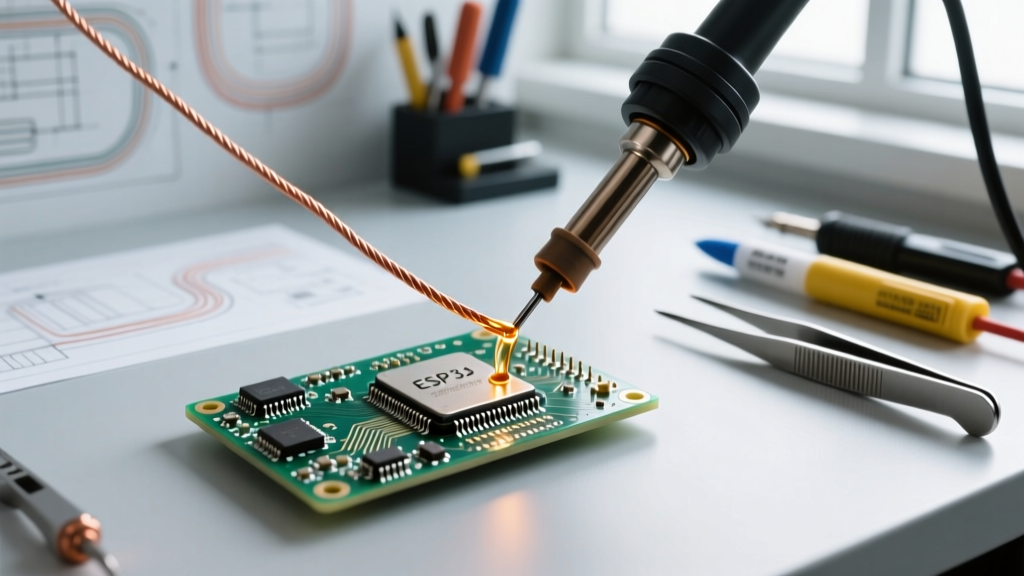
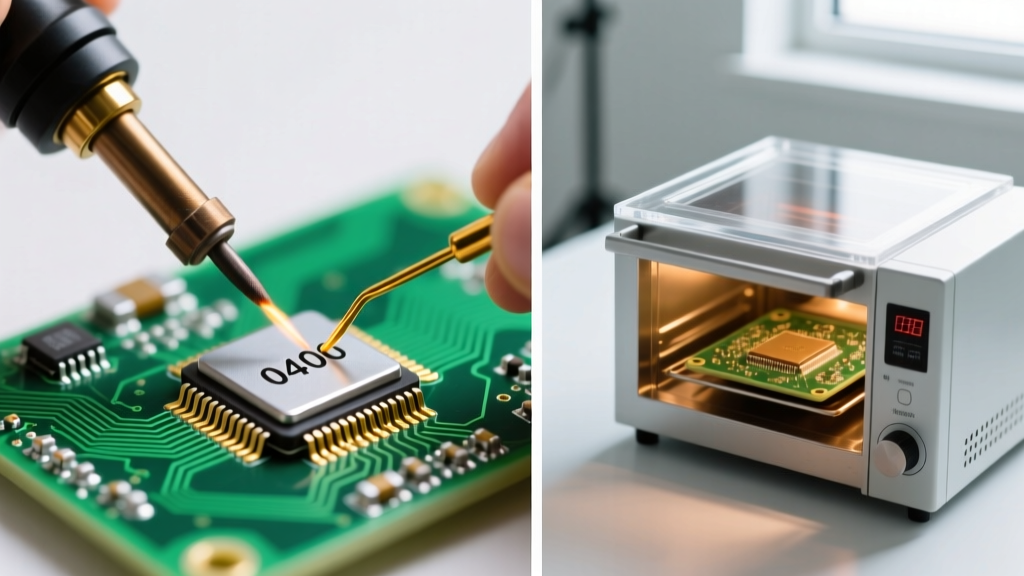
Soft soldering is the most ubiquitous method in electronics, plumbing, and light sheet metal fabrication. It relies on capillary action and low-temperature filler metals that do not melt the base workpiece. According to the IPC standards governing electronic assemblies, soft soldering is defined by its reliance on flux to chemically reduce oxides rather than mechanical abrasion or extreme heat.
Common Filler Alloys and Specifications
- SAC305 (96.5% Sn, 3% Ag, 0.5% Cu): The industry standard lead-free alloy. It features a solidus of 217°C and a liquidus of 220°C. It offers excellent tensile strength (~40 MPa) but requires higher iron tip temperatures (350°C+) to flow properly.
- Sn63/Pb37 (63% Sn, 37% Pb): A eutectic alloy with a single melting point of 183°C. While restricted in commercial electronics by RoHS directives, it remains highly favored in DIY and aerospace applications due to its superior wetting characteristics and reduced thermal stress on components.
Expert Insight: Soft soldering is strictly limited by its low shear strength. A standard SAC305 joint on a 14 AWG copper wire will fail under mechanical vibration long before the copper itself yields. It is an electrical and sealing bond, not a structural one.
Method 2: Silver Brazing / Hard Soldering (450°C - 800°C)
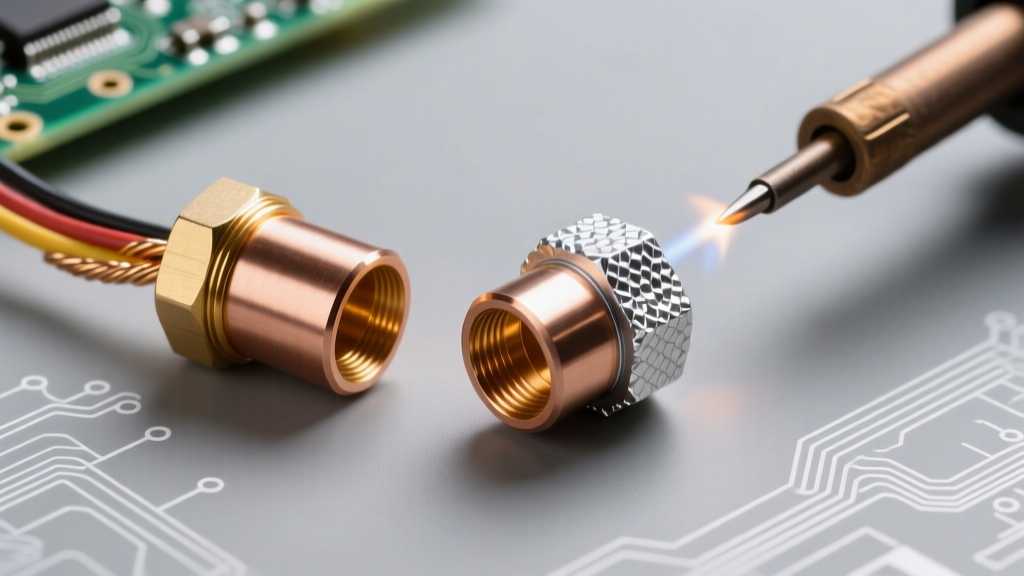
When structural integrity is required, fabricators transition to silver brazing. Often colloquially called 'hard soldering' or 'silver soldering', this method utilizes copper-phosphorus or silver-copper-zinc alloys. The brazing fundamentals outlined by Lucas-Milhaupt emphasize that brazing creates a joint that is often stronger than the base metals being joined, provided the capillary clearance is maintained between 0.001' and 0.005'.
Common Filler Alloys and Specifications
- BCuP-5 (Sil-Fos 5 / 15% Ag, 80% Cu, 5% P): The go-to alloy for copper-to-copper and copper-to-brass joints in HVAC and heavy electrical busbars. The phosphorus acts as a built-in fluxing agent, eliminating the need for external chemical fluxes on pure copper. Melting range: 643°C - 804°C.
- BAg-24 (Easy-Flo 45 / 45% Ag, 30% Cu, 25% Zn): A versatile, cadmium-free alloy used for joining dissimilar metals, including steel, stainless steel, and nickel alloys. Requires a fluoride-based brazing flux. Melting range: 621°C - 682°C.
Filler Metal Data Matrix: Soft Solder vs. Silver Brazing
| Alloy Designation | Composition | Solidus / Liquidus (°C) | Tensile Strength (MPa) | Approx. Cost (2026) |
|---|---|---|---|---|
| SAC305 | 96.5Sn / 3Ag / 0.5Cu | 217 / 220 | 40 | $0.85 / gram |
| Sn63/Pb37 | 63Sn / 37Pb | 183 / 183 | 38 | $0.50 / gram |
| BCuP-5 (Sil-Fos 5) | 15Ag / 80Cu / 5P | 643 / 804 | 345 | $3.80 / gram |
| BAg-24 (Easy-Flo 45) | 45Ag / 30Cu / 25Zn | 621 / 682 | 420 | $6.50 / gram |
Note: Pricing reflects Q1 2026 precious metal market averages for small-quantity DIY purchases. Bulk industrial pricing is significantly lower.
Head-to-Head Method Comparison
Choosing between soft soldering and silver brazing depends entirely on the operational environment of the finished assembly. Below is a direct comparison of the two methodologies across critical fabrication parameters.
- Thermal Input: Soft soldering requires 40W to 80W localized heat (soldering irons). Silver brazing requires high-BTU atmospheric torches (Oxy-Acetylene or Oxy-Propane) delivering thousands of degrees at the flame envelope.
- Flux Chemistry: Soft soldering utilizes Rosin (RMA) or No-Clean organic acid fluxes that activate below 200°C. Silver brazing requires aggressive fluoride/borate salts (e.g., Harris Black Flux) that dissolve refractory oxides at 600°C+.
- Joint Clearance: Soft soldering can bridge relatively wide gaps (up to 0.015'). Silver brazing strictly requires tight capillary clearances (0.002' - 0.005') to draw the molten alloy through the joint via capillary action.
- Post-Joint Cleaning: No-clean soft fluxes can be left on PCBs. Brazing fluxes form a hard, glassy slag that is highly corrosive if exposed to moisture and must be mechanically wire-brushed or chemically pickled post-braze.
Edge Cases: Soldering Aluminum and Cast Iron
The true test of a fabricator's metallurgical knowledge arises when dealing with 'unsolderable' metals. The American Welding Society (AWS) provides stringent guidelines for these edge cases, but practical field experience often dictates the success of the joint.
The Aluminum Oxide Problem
Aluminum base metal melts at roughly 660°C, but its surface oxide layer (Al2O3) does not melt until 2072°C. Standard rosin or water-soluble fluxes cannot penetrate this barrier. To solder aluminum using a soft-solder method, you must use a specialized zinc-based filler (like Alumi-Solder) combined with mechanical abrasion underneath the molten solder pool to scratch through the oxide layer while shielding the bare metal from oxygen. For structural aluminum joints, silver brazing is generally avoided due to the risk of melting the base workpiece; TIG welding is the correct methodology.
The Cast Iron Dilemma
Cast iron contains high levels of carbon and silicon, which prevent standard tin or silver alloys from wetting the surface. Soft soldering cast iron is virtually impossible without extensive nickel-plating of the surface prior to soldering. If you must join cast iron thermally, you must abandon soldering and utilize nickel-based braze welding (e.g., AWS RNI-CI) or mechanical fastening.
Equipment and Cost Breakdown (2026 Market Pricing)
Transitioning from soft soldering to silver brazing requires a significant upgrade in thermal delivery systems. Here is what a well-equipped DIYer or small shop should budget for in 2026:
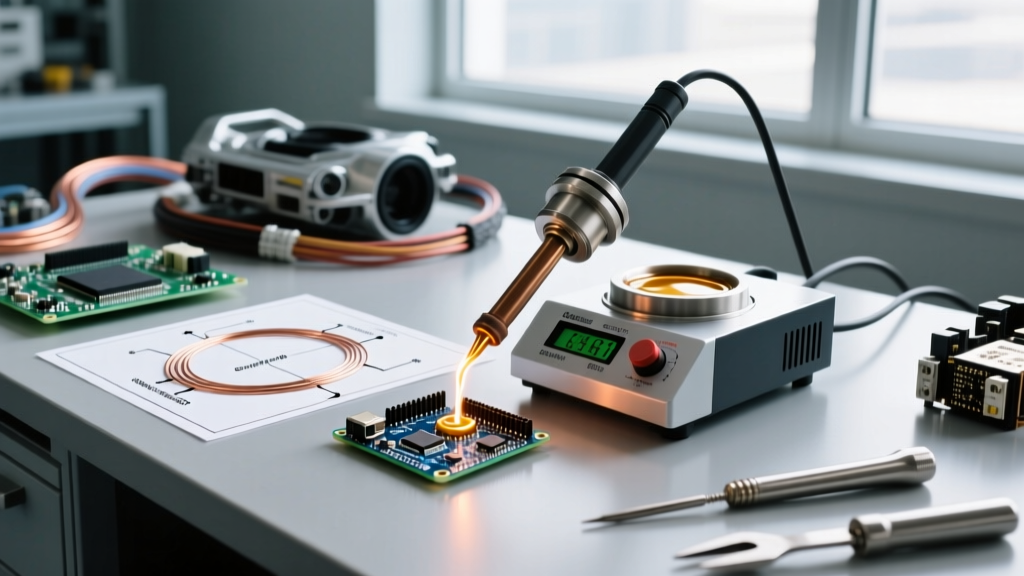
- Soft Soldering Station: The Weller WE1010NA (70W) remains the benchmark for precise thermal recovery, priced at approximately $125. It easily handles up to 10 AWG wire and heavy ground planes when paired with a chisel tip.
- Silver Brazing Torch Kit: The Smith Little Torch setup with propane/oxygen tanks is the standard for precision brazing. Expect to spend $360 for the torch and hoses, plus $150 for initial gas cylinder deposits and regulators.
- Consumables: A 1lb spool of SAC305 wire costs ~$85. A 1oz tube of BCuP-5 (Sil-Fos 5) rod costs ~$45, and a 16oz jar of Harris Black Flux is ~$35.
Expert FAQ on Soldering Dissimilar Metals
Can I soft solder stainless steel?
Yes, but not with standard rosin flux. Stainless steel's chromium oxide layer requires a highly active, corrosive water-soluble flux (often containing zinc chloride or hydrochloric acid derivatives). You must use a dedicated stainless-steel liquid flux, apply heat quickly with a high-wattage iron (80W+), and thoroughly neutralize and wash the joint with a baking soda solution immediately after cooling to prevent severe galvanic corrosion.
Why does my silver braze joint look spongy and porous?
Porosity in silver brazing is typically caused by one of three factors: overheating the flux (causing it to lose its chemical efficacy before the alloy melts), using an oxidizing flame rather than a neutral or slightly carburizing flame, or improper joint clearance. If the gap is wider than 0.005', capillary action fails, and the alloy will ball up and trap gas pockets inside the joint.
Is it safe to use leaded solder on drinking water plumbing?
No. Under the Safe Drinking Water Act and subsequent 2026 plumbing code updates, any solder used on potable water lines must be certified lead-free (typically 95/5 Sn/Sb or Sn/Cu/Ag alloys). Leaded Sn63/Pb37 is strictly reserved for electrical and non-potable mechanical applications.