
The term soldering grease evokes different images depending on who you ask. To a master plumber, it is a thick, petroleum-based paste laden with zinc chloride, essential for sweating copper pipes. To an electronics engineer, it is a historical artifact—a precursor to the highly refined, IPC-rated synthetic fluxes used in modern PCB assembly. Understanding the evolution of soldering grease is not just an exercise in historical trivia; it is a critical lesson in material science that prevents catastrophic field failures in modern electronics.
The Pre-Industrial Era: Tallow, Olive Oil, and Sal Ammoniac
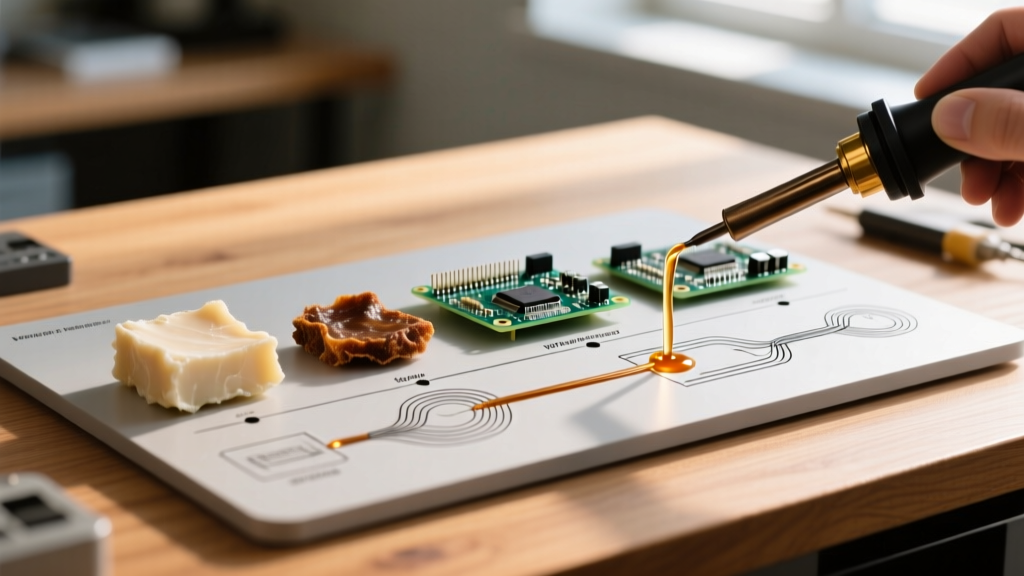
Before the advent of synthetic chemistry, early tinsmiths and metalworkers relied on organic lipids to prevent oxidation during soldering. In the 18th and 19th centuries, tallow (rendered beef or mutton fat) and olive oil were the standard "greases" applied to seams before introducing tin-lead solder. However, fats alone do not remove heavy metal oxides.
To achieve actual chemical cleaning, workers introduced sal ammoniac (ammonium chloride). When heated by a soldering iron, sal ammoniac sublimates and reacts with copper oxide to form copper chloride, which is then wiped away. While effective for roofing and tinware, tallow-based greases were highly acidic, prone to rancidity, and left conductive, corrosive residues that would destroy early electrical telegraph connections.
"The transition from organic fats to specialized chemical fluxes marked the boundary between mechanical plumbing and precision electrical engineering." — Historical Archives of the American National Standards Institute (ANSI)
The Rosin Revolution and the Birth of Electronics
As the radio and telecommunications industries boomed in the 1920s, the corrosive nature of acid-based greases became unacceptable. The industry pivoted to colophony, commonly known as pine rosin. Extracted from the sap of Pinus palustris trees, rosin is a solid form of resin that becomes liquid and mildly active at typical soldering temperatures (150°C–170°C).
Rosin was a breakthrough because it is non-conductive and non-corrosive at room temperature. Early electronic soldering grease was simply pulverized rosin mixed with petroleum jelly or heavy mineral oil to create a workable paste. This allowed technicians to tack components onto point-to-point wiring without worrying about the residue shorting out vacuum tube circuits.
The Great Divergence: Plumbing Grease vs. Electronic Flux
By the mid-20th century, the term "soldering grease" permanently fractured into two distinct categories. This divergence remains the most common trap for DIY electronics enthusiasts today.
1. Plumbing Soldering Grease (The PCB Killer)
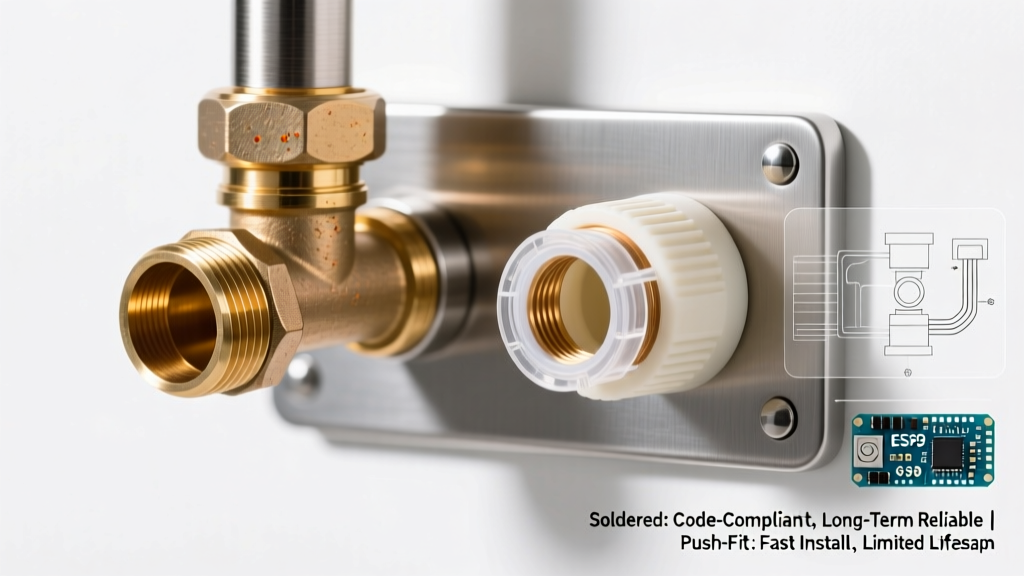
For plumbing and heavy-duty grounding, manufacturers developed petroleum jelly-based greases loaded with zinc chloride and ammonium chloride. Products like La-Co 22022 or Nokaro paste are designed to aggressively strip thick oxidation from copper pipes. Never use plumbing soldering grease on a PCB. The chloride ions remain active at room temperature, attracting moisture from the air and causing rapid galvanic corrosion, which will eat through copper traces and component leads within weeks.
2. Electronic Tacky Flux (The Modern Standard)
For electronics, the "grease" evolved into tacky flux—a highly viscous, synthetic rosin or resin-based paste designed to hold surface-mount components in place before reflow. Modern formulations use complex synthetic resins that encapsulate ionic residues, rendering them harmless.
IPC J-STD-004 and the Modern Classification Matrix
To standardize the chaotic market of fluxes and pastes, the IPC (Association Connecting Electronics Industries) introduced the J-STD-004 standard. Today, any high-quality soldering grease or flux paste must carry an IPC classification code consisting of three parts: the base material, the activity level, and the halide content.
| Code Prefix | Base Material | Activity Level (L/M/H) | Halide Content (0 or 1) | Typical Application |
|---|---|---|---|---|
| RO | Rosin (Natural) | L (Low), M (Medium), H (High) | 0 (<500 ppm), 1 (>500 ppm) | General purpose through-hole, hand soldering |
| RE | Resin (Synthetic) | L, M, H | 0 or 1 | High-reliability aerospace, fine-pitch SMD |
| OR | Organic (Water-Soluble) | L, M, H | 0 or 1 | Automotive, requires post-solder washing |
| IN | Inorganic (Acid) | L, M, H | 0 or 1 | Plumbing, heavy metals (Banned on PCBs) |
A modern, high-reliability tacky flux grease will typically be rated ROL0 (Rosin, Low activity, 0 halides) or REL0. According to guidelines published by the NASA Electronic Parts and Packaging (NEPP) Program, ROL0 and REL0 fluxes are preferred for spaceflight hardware because their residues are benign and do not require aggressive cleaning solvents that could damage sensitive components.
Failure Modes: The Cost of Using the Wrong Grease
Using an outdated or incorrect soldering grease on a modern PCB leads to specific, measurable failure modes. The most severe is Electrochemical Migration (ECM). When an inorganic or highly active organic grease residue is left on a board, it acts as an electrolyte. Under high humidity (e.g., 85% RH) and a DC voltage bias, metal ions migrate from the anode to the cathode, forming conductive anodic filaments (CAF) or dendrites.
In a 2025 reliability study, test coupons contaminated with zinc-chloride plumbing grease exhibited dendritic shorting in under 48 hours at just 3.3V bias. In contrast, coupons using a modern REL0 synthetic tacky flux showed no measurable insulation resistance drop after 1,000 hours in an 85°C/85% RH thermal chamber.
2026 Buyer’s Matrix: Selecting the Right Paste and Grease
If you are stocking your workbench in 2026, abandon the idea of a single "all-purpose" soldering grease. Instead, procure these specific formulations based on your exact use case:
- For SMD Rework and Tacking (Synthetic Tacky Flux): Chip Quik SMD291AX (approx. $24.99 for a 10g syringe). This is an ROL0 rosin-based tacky flux. Its high viscosity acts like a grease to hold 0402 and QFN components in place before hot air reflow. It leaves a clear, non-conductive residue that requires no cleaning.
- For General Through-Hole and Wire Tinning (Rosin Paste): MG Chemicals 8341 (approx. $12.50 for a 50g jar). A classic RA (Rosin Activated) paste. It flows beautifully at 350°C and is excellent for tinning heavy-gauge silicone wires or battery tabs. Requires isopropyl alcohol (IPA) cleaning for high-impedance circuits.
- For Copper Pipe and Heavy Grounding (Inorganic Grease): La-Co 22022 Soldering Paste (approx. $8.00 for a 2oz tub). A petroleum and zinc-chloride grease. Use strictly for plumbing and mechanical grounding lugs. Keep it far away from your PCB workbench to prevent cross-contamination.
Final Verdict on Soldering Grease Evolution
The journey from rancid animal tallow to engineered synthetic resins highlights the electronics industry's relentless pursuit of reliability. While the term "soldering grease" persists in hardware stores as a plumbing staple, the modern electronics engineer relies on IPC-rated tacky fluxes and rosin pastes. By understanding the chemical lineage of your flux, you ensure that your solder joints will survive not just the initial reflow, but the decades of service that follow.