
The Economics of Joining Wires: Beyond the Soldering Iron
When building custom harnesses, repairing household wiring, or prototyping control panels, the method you choose to join copper conductors dictates not just the reliability of the circuit, but the ultimate profitability of the project. For decades, soldering electrical connections was the undisputed gold standard. However, the rise of advanced crimping profiles and spring-clamp push-in connectors has fundamentally shifted the cost-benefit analysis.
In this 2026 cost analysis, we move beyond the simplistic price of a soldering iron. We will break down the fully burdened cost of soldering electrical wires—factoring in direct materials, tooling depreciation, labor time, and the hidden 'failure costs' of rework—comparing it directly against modern crimping and Wago lever-nut alternatives.
Direct Material and Tooling Costs
To accurately assess the cost of soldering electrical joints, we must first separate capital expenditure (tools) from variable costs (consumables).
The Tooling Investment
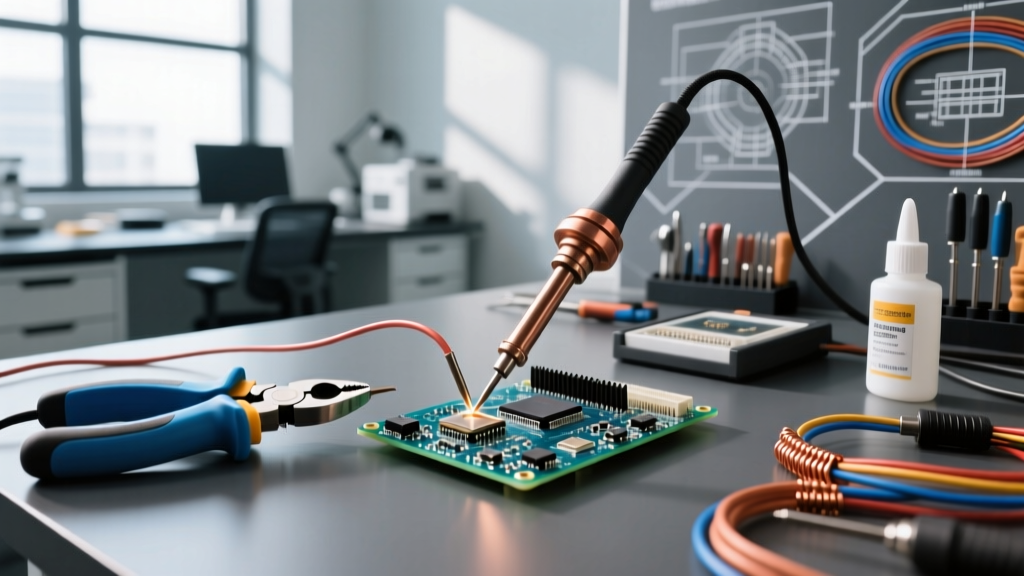
A reliable temperature-controlled station is non-negotiable for electrical work. Using an unregulated 40W wand leads to cold joints and scorched insulation. In 2026, the market is split between traditional analog/digital workhorses and modern USB-C PD smart irons:
- Hakko FX-888D: The industry standard for bench work. Priced around $115, it offers rapid thermal recovery and robust tip longevity (T18 series tips cost ~$9 each).
- Pinecil V2: A RISC-V powered, portable smart iron. At $26 (plus a $30 65W PD power supply), it delivers performance rivaling stations costing five times as much, making it the highest-ROI tool for mobile technicians.
Consumables: Solder, Flux, and Insulation
For electrical work, eutectic 63/37 (Tin/Lead) rosin-core solder remains the preferred choice for DIY and specialized industrial applications due to its sharp melting point (183°C) and superior wetting, despite RoHS restrictions in mass consumer manufacturing. A 1lb spool of Kester 44 63/37 (0.031" diameter) costs approximately $42.
Furthermore, bare solder joints are a short-circuit hazard. You must factor in adhesive-lined heat shrink tubing (e.g., 3M MDT or generic dual-wall polyolefin). A kit of assorted 3:1 shrink tubing costs about $18 and yields roughly 150 usable pieces, adding $0.12 per joint in insulation material.
The Hidden Multiplier: Labor and Time
The most significant expense in any electrical assembly is human labor. According to the U.S. Bureau of Labor Statistics, the mean base hourly wage for electricians hovers around $32.30. However, the fully burdened billing rate for a licensed journeyman or specialized technician in 2026 averages $85 to $125 per hour ($1.41 to $2.08 per minute) depending on the metropolitan market.
Let us time-study the creation of a single, insulated inline wire splice (14 AWG stranded):
- Soldering: Strip wires (5s), twist strands (5s), tin wires (10s), solder joint (15s), slide and heat-shrink tubing (25s). Total: 60 seconds.
- Heat-Shrink Crimping: Strip wires (5s), insert into crimp barrel, ratchet crimp (10s), apply heat gun to shrink seal (15s). Total: 30 seconds.
- Wago 221 Lever-Nut: Strip wires to exact gauge mark (5s), lift lever, insert, snap down (3s per wire x 2). Total: 11 seconds.
At a conservative billing rate of $90/hour ($1.50/minute), the labor cost alone for a single soldered joint is $1.50. For a Wago connector, it is just $0.27. When wiring a control cabinet with 200 splices, soldering adds nearly $250 in pure labor overhead compared to push-in connectors.
Cost Matrix: Soldering vs. Alternatives (Per Joint)
The table below illustrates the true cost per joint, combining material, tooling depreciation (amortized over 1,000 joints), and labor at $1.50/minute.
| Method | Tooling Cost | Material / Joint | Time (Seconds) | Labor Cost | Total Cost / Joint |
|---|---|---|---|---|---|
| Soldering (Heat Shrink) | $115 (Hakko) | $0.15 | 60s | $1.50 | $1.76 |
| Ratchet Crimp (Nylon) | $45 (Titan 11477) | $0.18 | 20s | $0.50 | $0.72 |
| Crimp (Adhesive Seal) | $120 (Rennsteig) | $0.35 | 30s | $0.75 | $1.22 |
| Wago 221 (2-Conductor) | $0 | $0.45 | 11s | $0.27 | $0.72 |
Note: Tooling depreciation is negligible per joint ($0.11 or less) and is excluded from the final per-joint total to reflect real-world marginal costs.
Reliability, Rework, and the 'Failure Cost'
A cheap joint is only cheap if it never fails. The true cost analysis must account for the 'Failure Cost'—the expense of diagnosing and repairing a broken connection. Soldered wires are highly susceptible to work hardening and fatigue cracking when subjected to continuous vibration or thermal cycling. The solder creates a rigid point right at the edge of the heat shrink, causing the flexible stranded wire to snap under mechanical stress.
Conversely, modern crimping creates a cold-weld, gas-tight connection that allows the wire strands to flex and absorb vibration. For mission-critical applications, the aerospace and defense sectors rely on strict crimping standards. When soldering is required in these environments, NASA-STD-8739.3 dictates rigorous requirements for soldered electrical connections, emphasizing that solder must wick completely through the wire strands and that wires must be mechanically secured before soldering to prevent stress on the joint.
Code Compliance: What the NEC Actually Says
A common and dangerous misconception among DIYers is that a blob of solder is sufficient to hold two wires together. The National Electrical Code (NEC) explicitly forbids relying on solder for mechanical strength. According to the NFPA National Electrical Code, specifically Article 110.14(B):
'Splices and terminations shall be mechanically and electrically secure without depending on solder.'
This means you must physically twist or mechanically lock the wires together (using a Western Union splice or a mechanical crimp barrel) before applying solder. If you are merely overlapping wires and melting solder over them, you are violating electrical code, creating a high-resistance fire hazard, and guaranteeing a costly failure down the line.
When is Soldering Electrical Wires Actually Worth It?
Given the higher labor and material costs, when does soldering electrical connections make financial and technical sense in 2026?
- Tinning Stranded Wires for Screw Terminals: Stranded wire tends to fray and flatten under screw terminal blocks, leading to loose connections and arcing. Tinning the tip with 63/37 solder costs pennies and prevents strand escape, ensuring a solid mechanical bite.
- High-Temperature Environments: Standard nylon crimps and Wago connectors degrade in environments exceeding 105°C. Soldered joints insulated with high-temp fiberglass or PTFE tubing are mandatory for automotive exhaust-adjacent sensors or industrial heating elements.
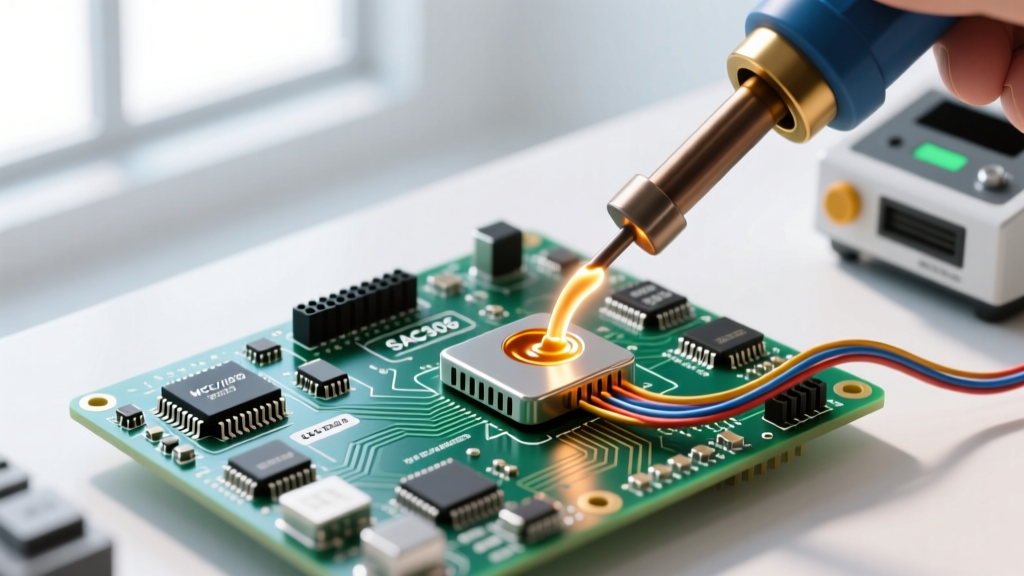
- Micro-Electronics and PCB Repair: You cannot use a Wago 221 or a ratchet crimper to attach a 24 AWG sensor lead to a printed circuit board pad. For micro-connections, micro-soldering is the only viable option.
- Hermetic Sealing: When using adhesive-lined (dual-wall) heat shrink over a soldered joint, the melting solder helps heat the tubing evenly, creating a waterproof, hermetic seal ideal for marine and off-road automotive wiring.
Frequently Asked Questions
Is it cheaper to buy pre-tinned wire or tin it myself?
For high-volume production, buying pre-tinned (tinned copper) wire is vastly cheaper. The factory process uses continuous hot-dip tinning, adding only a fraction of a cent per foot. Hand-tinning 100 feet of 14 AWG wire with a soldering iron will cost you roughly $4 in solder and over an hour of labor ($90+ value).
Can I use plumbing solder (95/5) for electrical wires?
No. Plumbing solder (often 95% Tin / 5% Antimony or Silver) lacks a rosin flux core and has a much higher melting point (approx. 227°C+). Attempting to use it on electrical wires will result in scorched PVC insulation and high-resistance, brittle joints. Always use rosin-core solder specifically formulated for electronics and electrical work.
Do Wago connectors degrade over time compared to solder?
Wago spring-clamp connectors are rated for millions of insertion cycles and maintain constant pressure on the wire, compensating for thermal expansion and contraction. In standard indoor environments, a Wago 221 connector will easily outlast a 50-year building lifecycle, whereas a poorly executed solder joint can develop micro-fractures from thermal cycling within a decade.