
The Real Culprit: Flux Vaporization vs. Metal Melting
When electronics engineers and DIYers discuss the dangers of soldering fumes, a pervasive myth often clouds the conversation: the belief that the visible smoke contains vaporized lead or tin. In reality, the melting point of a standard Sn63/Pb37 alloy is 183°C, and lead-free SAC305 melts around 217°C. The boiling points for tin (2602°C) and lead (1749°C) are exponentially higher than any soldering iron's operating temperature. Therefore, the metal alloy does not vaporize.
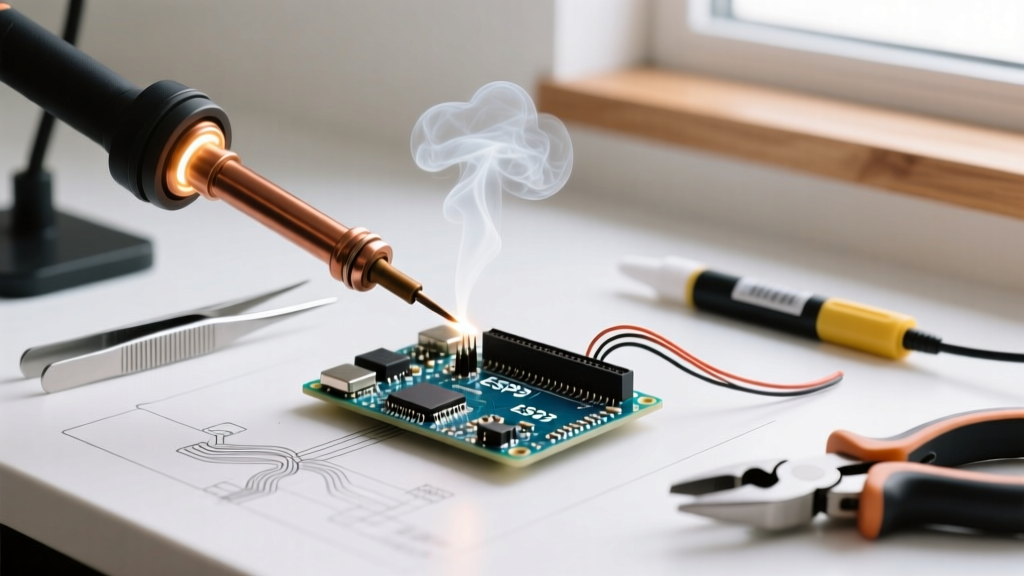
The plume you see is almost entirely vaporized flux and its thermal decomposition byproducts. According to safety guidelines published by the UK Health and Safety Executive (HSE), the primary health risks in electronics assembly stem from inhaling colophony (rosin) and synthetic chemical activators, which are known respiratory sensitizers. Understanding this chemical reality is the first step in selecting a fume extraction system that is genuinely compatible with your specific soldering materials.
Flux Chemistry and Fume Composition
To buy the right extraction equipment, you must match the filter media to the specific flux chemistry you are using. A filter designed for rosin will quickly fail—and potentially become a secondary hazard—when exposed to water-soluble organic acids.
Rosin-Based Fluxes (R, RMA, RA)
Derived from pine tree sap, rosin (colophony) contains abietic acid. When heated to typical soldering temperatures (300°C–380°C), abietic acid decomposes into aliphatic aldehydes and hydrochloric acid (if activated with chlorides). These fumes are notorious for causing occupational asthma. Standard H13 HEPA filters capture the particulate matter, while a standard activated carbon bed adsorbs the volatile organic compounds (VOCs).
Water-Soluble Fluxes (Organic Acid - OA)
Used in high-reliability and high-density interconnect (HDI) manufacturing, OA fluxes are highly active. They produce dense, corrosive, and highly acidic fumes. Standard activated carbon is insufficient here; the acid vapors will degrade standard filter housings and bypass weak carbon beds. You require deep-bed, chemically impregnated carbon filters designed specifically for acid gas neutralization.
No-Clean Fluxes
Formulated with synthetic resins and glycol ethers, no-clean fluxes produce a lower volume of visible smoke. However, they release microscopic particulate matter and specific VOCs that require broad-spectrum carbon filtration. While less immediately irritating than OA fluxes, prolonged exposure to glycol ether vapors in poorly ventilated spaces still violates OSHA ventilation standards for indoor air quality.
Material Compatibility Matrix: Matching Flux to Filtration
The following table serves as a quick-reference buyer's guide to ensure your extraction investment matches your material workflow.
| Flux Type | Primary Fume Byproduct | Health & Equipment Risk | Required Filter Media | Recommended Extractor Tier |
|---|---|---|---|---|
| Rosin (Colophony) | Abietic acid, aldehydes | Respiratory sensitization (asthma) | H13 HEPA + Standard Activated Carbon | Mid-Range Benchtop (e.g., Weller WFE) |
| Water-Soluble (OA) | Hydrochloric acid vapor, corrosive organics | Mucous membrane irritation, PCB corrosion | Pre-filter + Deep-Bed Impregnated Acid-Gas Carbon | Industrial/Heavy Duty (e.g., BOFA AD Series) |
| No-Clean (Synthetic) | Glycol ethers, synthetic VOCs | Central nervous system fatigue, mild irritation | H13 HEPA + Broad-Spectrum VOC Carbon | Mid-Range to High-End Benchtop |
| Cored Wire (Lead-Free) | Higher volume of above (due to heat) | Increased particulate velocity | High-Velocity Capture Hoods + Standard Media | Extractors with adjustable high-static fans |
Extractor Buyer Match-Up: 2026 Market Leaders
Based on material compatibility and current market pricing, here is how the top extraction systems stack up for different workshop environments.
1. Weller WFE-2D (Best for Mixed Rosin & No-Clean Environments)
- Price Range: $1,150 – $1,300
- Filter Type: H13 HEPA + Wide-spectrum carbon composite
- Compatibility: Excellent for standard rosin and no-clean fluxes. The dual-arm setup allows two operators to work simultaneously without cross-contamination of the capture zone.
- Expert Insight: The WFE-2D features an EC (electronically commutated) motor that maintains constant airflow even as the HEPA filter begins to load with particulate. However, it is not recommended for heavy, continuous water-soluble (OA) flux applications, as the acidic vapor will prematurely degrade the internal fan bearings.
2. BOFA AD360 (Best for Industrial OA & High-Volume Lead-Free)
- Price Range: $2,400 – $2,800
- Filter Type: Deep-bed activated carbon with chemical impregnation options
- Compatibility: The undisputed king of harsh chemical environments. If your facility solders with highly activated water-soluble pastes or uses aggressive liquid fluxes, the AD360's deep carbon bed neutralizes acid gases before they reach the main HEPA stage.
- Expert Insight: BOFA's iQ operating system monitors filter pressure drop in real-time. This is critical for compliance with IPC manufacturing standards, as it provides auditable data proving that extraction was functioning optimally during assembly.
3. Hakko FA-400 (Best for Occasional Hobbyist No-Clean/Rosin)
- Price Range: $320 – $380
- Filter Type: Standard HEPA + Thin activated carbon sheet
- Compatibility: Strictly limited to light, intermittent use with standard rosin-core wire or mild no-clean pastes.
- Expert Insight: Do not use the FA-400 for water-soluble fluxes or high-volume production. The thin carbon sheet saturates rapidly (often within 15–20 hours of active soldering), and once saturated, it offers zero chemical protection, merely acting as an expensive desk fan.
Thermal Dynamics: How Lead-Free Alloys Change the Game
The transition from Sn/Pb to lead-free alloys like SAC305 (Sn96.5/Ag3.0/Cu0.5) has fundamentally altered the physics of soldering fumes. Because SAC305 requires higher tip temperatures (typically 340°C–380°C compared to 300°C–320°C for leaded solder), the flux core is subjected to a more violent thermal shock.
Engineering Note: Higher tip temperatures cause the flux to vaporize faster and with greater kinetic energy. This means the fume plume travels further from the joint before dissipating. If your extraction arm is positioned more than 6 inches from the solder joint when using lead-free alloys, capture efficiency drops by up to 40%. Always utilize high-static-pressure extractors and position the capture hood within 2 to 4 inches of the workpiece when soldering lead-free.
Filter Saturation and Maintenance Protocols
A common and dangerous failure mode in fume extraction is relying on the 'smell test' to determine filter life. By the time you can smell rosin or solvent vapors escaping the exhaust, the carbon bed has been completely saturated for weeks.
- HEPA Lifespan: Typically 12 to 18 months under normal 40-hour workweek conditions. Replace when the machine's static pressure alarm triggers.
- Carbon Lifespan: Highly variable. For standard rosin, expect 3 to 6 months. For aggressive OA fluxes, saturation can occur in as little as 3 to 4 weeks.
- Disposal: Saturated carbon filters used with leaded solder should be treated as hazardous waste in many municipalities, as microscopic lead-tin particulate trapped in the HEPA pre-filter stage will be present in the combined filter cartridge.
Frequently Asked Questions
Can a standard shop vac or dust extractor handle soldering fumes?
No. Standard shop vacuums are designed for macro-particulates (sawdust, drywall dust) and lack the microscopic pore structure of an H13 HEPA filter. More importantly, they completely lack activated carbon media. A shop vac will simply capture large debris and immediately exhaust hazardous VOCs and sub-micron flux particulates back into the room, often at a higher velocity.
Do lead-free solders produce more toxic fumes than leaded solders?
The metal alloy itself does not become more toxic in fume form, as neither lead nor tin vaporizes at soldering temperatures. However, because lead-free soldering requires higher thermal energy, a greater volume of flux is vaporized in a shorter timeframe. Therefore, the total concentration of flux-derived VOCs and respiratory sensitizers in the air is often higher when soldering with lead-free alloys, demanding more robust extraction.
Is a desktop fan blowing fumes away from my face sufficient?
This is a severe safety violation. A desktop fan does not remove contaminants; it merely dilutes them and pushes them into the ambient room air, where they will settle on surfaces, be inhaled by others, or recirculate through HVAC systems. Proper extraction requires source-capture technology that pulls the fume through a multi-stage filtration matrix before exhausting clean air back into the environment.