
The Evolution of Soldering Art in 2026
Soldering is no longer confined to circuit boards and plumbing. In 2026, soldering art has emerged as a dominant medium in mixed-media sculpture, bespoke jewelry, and the modern revival of the Tiffany copper-foil stained glass technique. However, the transition from functional electrical soldering to aesthetic artistry requires a fundamental shift in metallurgy, thermal management, and tool selection. To bridge this gap, we convened insights from professional glass artists, jewelers, and metallurgists to create this definitive expert roundup.
Whether you are building intricate geometric terrariums or fusing precious metals, the margin for error in artistic soldering is razor-thin. A cold joint on a PCB is a functional failure; a cold joint on a stained glass suncatcher is a visual disaster. Below, we break down the exact tools, alloys, and techniques the pros use to achieve flawless, gallery-ready results.
Expert Panel Insights: Iron vs. Torch
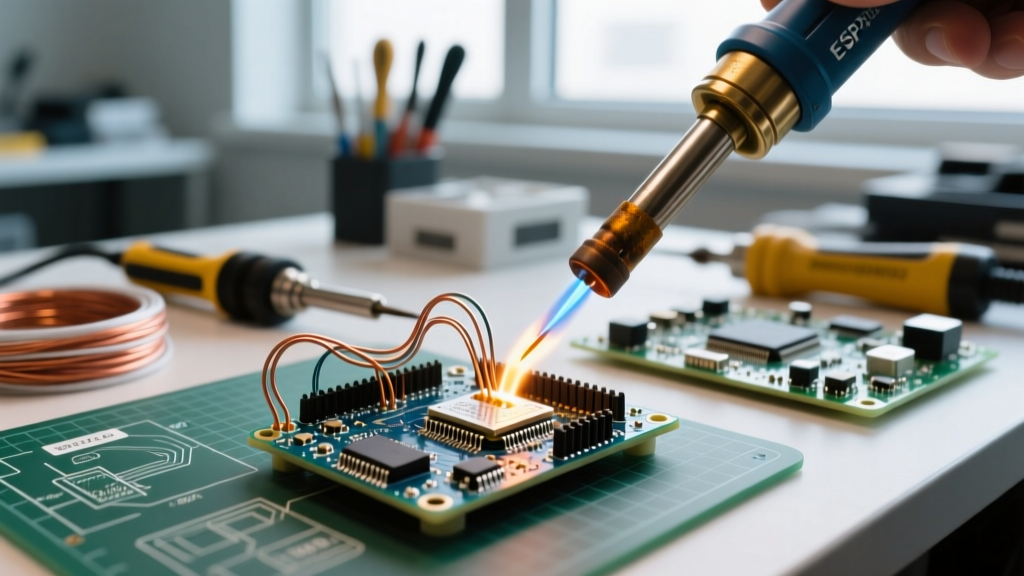
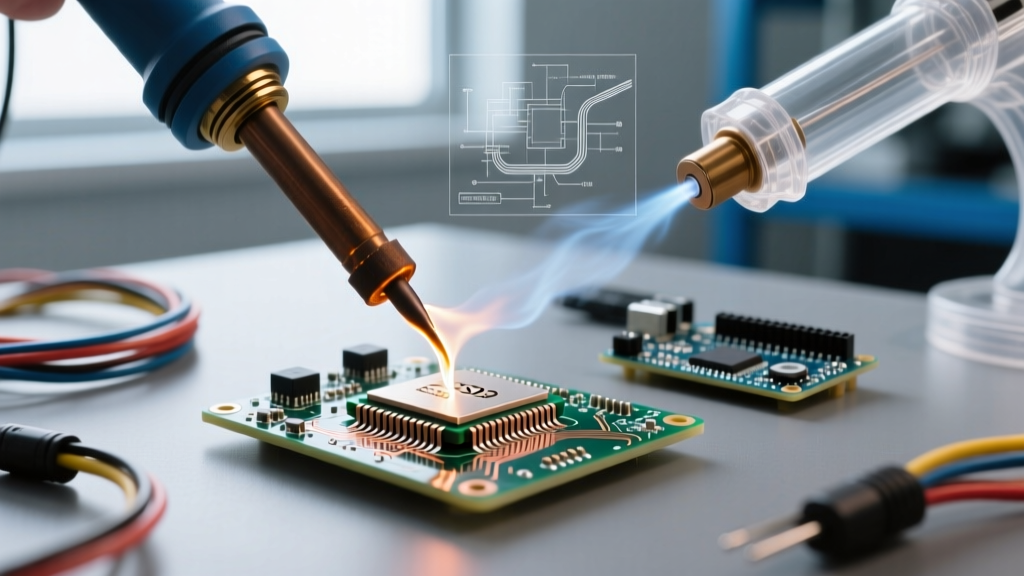
The first decision any soldering artist must make is choosing the right heat delivery system. According to master artisans featured in The Ganoksin Project, the dividing line between irons and torches is dictated by the melting point of your chosen alloy and the thermal mass of your workpiece.
The Copper Foil (Tiffany) Method
For stained glass and copper-foil sculpture, artists rely on high-wattage soldering irons. The goal is to create a smooth, convex 'bead' of solder that encapsulates the copper tape. This requires maintaining a continuous temperature between 360°F and 400°F while moving across heat-sinking glass. Using a standard 40W electronics iron will result in immediate heat dissipation, causing the tip to freeze to the copper foil.
Fine Jewelry & Metal Sculpture
Jewelry artists rarely use soldering irons. Instead, they utilize micro-torches to flow hard, medium, or easy silver solders, which require temperatures exceeding 1,300°F. The Stained Glass Association of America (SGAA) and various jewelry guilds emphasize that attempting to use soft lead/tin solders for wearable jewelry results in brittle joints that fail under mechanical stress.
2026 Soldering Art Tool Comparison Matrix
Based on current market availability and professional consensus, here is how the top-tier tools for soft-solder art stack up this year.
| Tool Model | Type | Wattage / Output | Temp Range | Approx. Price | Best Artistic Application |
|---|---|---|---|---|---|
| Hakko FX-601 | Iron | 67W | 200°F - 900°F | $75 - $85 | Stained glass, terrariums, detailed copper foil work. |
| Weller SP80US | Iron | 80W | Fixed (~900°F) | $45 - $55 | Heavy structural glass, large sculpture base joints. |
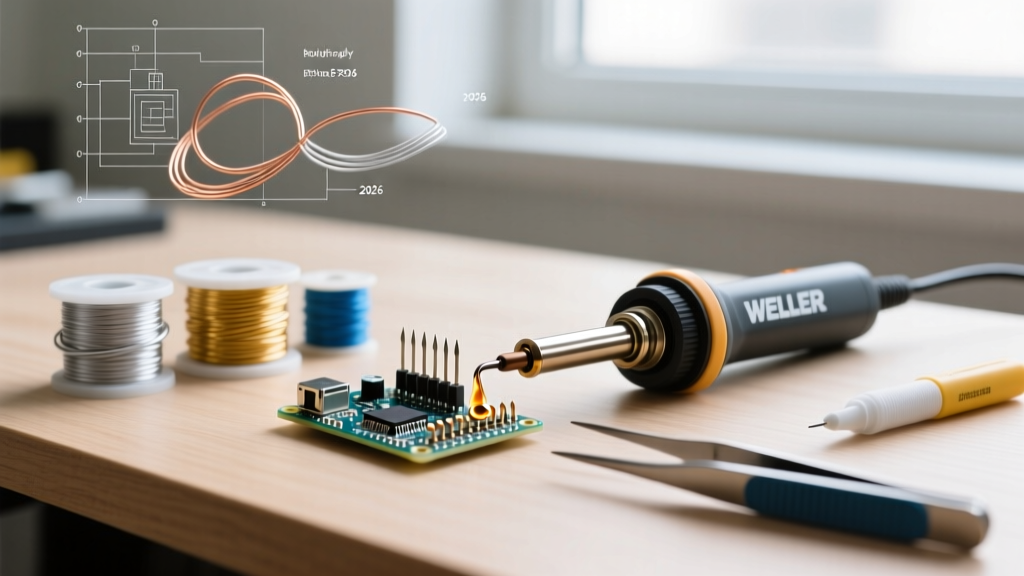
| Pine64 Pinecil V2 | Smart Iron | 65W (via USB-C PD) | Up to 842°F | $26 - $30 | Small mixed-media crafts, quick repairs, travel art kits. |
| Smith Little Torch | Micro-Torch | Oxy-Acetylene | Up to 6,300°F | $130 - $150 | Silver/gold jewelry, high-temp metal sculpting. |
Expert Tip: For the Hakko FX-601, professionals universally recommend swapping the stock conical tip for a 900M-T-D24 (2.4mm Chisel). The chisel shape increases surface area contact with the copper foil, drastically improving thermal transfer and preventing the 'stuck tip' phenomenon.
Metallurgy & Alloys: What the Pros Use
The aesthetic outcome of your art is entirely dependent on your solder alloy. In 2026, environmental regulations have pushed many studios toward lead-free options, but traditionalists still swear by specific leaded alloys for their superior flow characteristics.
- 60/40 (Sn60/Pb40): The undisputed king of stained glass art. It melts at 361°F (183°C) and has a wide 'plastic range' (the semi-solid phase between solidus and liquidus). This allows artists to 'iron' the solder bead smooth before it hardens. Warning: Never use 60/40 for jewelry that will contact the skin, due to lead toxicity and poor shear strength.
- Lead-Free Silver (Sn96.5/Ag3.0/Cu0.5): Melts at a higher 430°F (221°C). It is significantly harder and more brittle. While safe for items that might see incidental skin contact, it lacks the plastic range of 60/40, meaning it snaps from liquid to solid almost instantly. Sculptors must work faster and rely heavily on flux to prevent oxidation.
- Easy Silver Solder (Jewelry): Used exclusively with torches. Flows at roughly 1,325°F (718°C). Contains high silver content (approx. 65%) to match the color of sterling silver base metals, ensuring the joint is virtually invisible post-polishing.
The Patina Problem: A 2026 Update
One of the most closely guarded secrets in soldering art is how alloys react to chemical patinas. Artists frequently use Novacan Black Patina (selenium dioxide-based) to turn bright silver solder into an antique black or copper finish.
'If you are using modern lead-free solders for environmental compliance, standard black patina will often turn the joint a muddy, oxidized grey rather than a rich black. You must use a patina specifically formulated for high-tin/lead-free alloys, or apply a thin layer of copper foil over the solder bead before patinating.'
— Master Glass Artist Consensus, SGAA Forums
Flux Selection: The Unsung Hero of Aesthetic Joints
In electrical work, rosin-core flux is standard. In soldering art, rosin will leave a sticky, unremovable residue that ruins patinas and traps dirt. Professionals use liquid or gel acid fluxes, which must be neutralized and washed off post-soldering.
- Oleic Acid / Tallow Blends: Preferred for stained glass. It is less aggressive, reducing the risk of etching the glass surface if left uncleaned, while providing excellent wetting for 60/40 solder.
- Zinc Chloride (Liquid): Highly aggressive. Used for heavy structural joints or when soldering to brass and zinc came. Requires immediate neutralization with a baking soda and water solution to prevent long-term corrosion of the copper foil.
- Stay-Silv (Paste): A fluoride-based flux mandatory for torch-soldering silver jewelry. It dissolves the heavy oxides that form on silver at 1,300°F+, allowing the hard solder to capillary into the joint.
Troubleshooting Artistic Failure Modes
Even seasoned artists encounter metallurgical edge cases. Here is how to diagnose and fix the most common aesthetic failures:
1. The 'Lumpy' or 'Scalloped' Bead
Cause: Moving the iron too fast, or operating at too low a temperature. The solder is freezing before surface tension can pull it into a smooth convex curve.
Fix: Increase your iron temperature by 20°F increments. Slow your travel speed. Ensure your tip is tinned and making full flat contact with the foil, not just the very edge of the chisel.
2. Flux Inclusions (Pitting)
Cause: Boiling flux gets trapped under the surface of the solder bead as it freezes, leaving tiny black pits or craters.
Fix: You are using too much flux. Apply a thin, even coat. When soldering, pause briefly over the joint to allow the flux to bubble out and escape to the surface before moving on.
3. Foil Burn-Through
Cause: Excessive dwell time with a high-wattage iron on thin (1.0mm or 1.5mm) copper foil, causing the adhesive to melt and the copper to dissolve into the solder.
Fix: Upgrade to 2.0mm or 2.5mm copper foil for structural lines. Keep the iron moving; never let it rest in one spot for more than 2-3 seconds.
Final Expert Takeaways
Soldering art in 2026 is a beautiful intersection of chemistry, thermodynamics, and raw creativity. Success hinges on respecting the thermal mass of your materials and choosing the right alloy for the visual and structural demands of your piece. Invest in a high-wattage, temperature-adjustable iron like the Hakko FX-601 for glasswork, stock up on high-quality 60/40 or specialized lead-free alloys, and never underestimate the importance of proper flux management and post-solder cleaning. By applying these professional methodologies, your soldered creations will transition from DIY crafts to enduring works of art.