
The 2026 Wave Soldering Landscape: An Expert Roundup
Despite the relentless miniaturization of surface-mount technology (SMT), wave soldering remains an irreplaceable cornerstone for high-volume Through-Hole Technology (THT) and mixed-technology PCBA manufacturing in 2026. From automotive power electronics to industrial motor controllers, heavy-duty components still require the robust metallurgical bonds that only a properly tuned wave solder machine can provide.
To cut through the marketing noise, we convened a panel of three veteran PCBA process engineers to evaluate the current market. They assessed traditional inline wave systems, modern selective wave soldering platforms, and the precise thermal profiles required for today's lead-free alloys like SAC305 and SN100C.
Meet the Expert Panel
- Dr. Aris Thorne, Lead PCBA Process Engineer at a Tier-1 Automotive Electronics Manufacturer.
- Sarah Jenkins, SMT & THT Line Director for a high-mix, medium-volume contract manufacturer (CM).
- Marcus Vance, Independent Soldering Metallurgist and IPC-A-610 Certified Trainer.
Top Wave Soldering Machines Compared (2026 Market Data)
Capital expenditure for wave soldering equipment varies wildly based on throughput requirements and the shift toward selective soldering. Below is our expert-verified comparison of the top platforms dominating factory floors this year.
| Manufacturer & Model | System Type | Est. Price Range (USD) | Key 2026 Features | Best Application |
|---|---|---|---|---|
| ERSA POWERFLOW e N2 | Traditional Inline | $65,000 - $78,000 | Full nitrogen inerting, 400mm max width, low-dross pump | High-volume consumer & industrial THT |
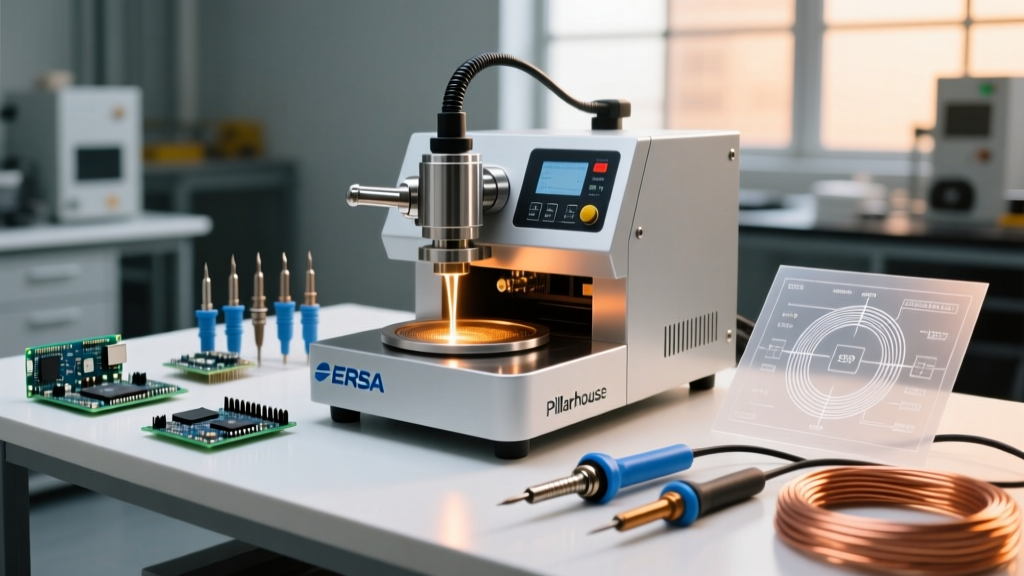
| Pillarhouse Jade MKII | Selective Wave | $95,000 - $115,000 | Drop-jet fluxing, multi-axis mini-wave, integrated fiducial correction | High-mix, complex mixed-tech boards |
| SEHO PowerSelective | Selective/Inline Hybrid | $88,000 - $105,000 | High-speed jet, automated nozzle cleaning, inline AOI integration | Automotive & aerospace mixed-tech |
| ACE Kismet Pro | Traditional Inline | $45,000 - $55,000 | Compact footprint, basic convection preheat, air-only operation | Low-budget, legacy THT production |
'The biggest shift we are seeing in 2026 is the migration from traditional inline wave to selective wave soldering, even in medium-volume shops. The Pillarhouse Jade MKII pays for itself in under 18 months simply by eliminating the need for custom pallets and reducing manual touch-up labor by 80%.' - Sarah Jenkins, SMT Line Director
Critical Process Parameters: Expert Insights
Buying the right machine is only 20% of the battle. The remaining 80% relies on dialing in the fluid dynamics and thermal profiles. Our panel outlined the exact parameters they use for standard 1.6mm FR4 boards with SAC305 alloy.
1. Flux Application and Density
For traditional inline systems using VOC-free water-based fluxes, maintaining a specific gravity between 0.98 and 1.02 g/cm³ is critical. 'Drop-jet fluxing in selective machines has revolutionized this,' notes Dr. Thorne. 'We program the Pillarhouse to deposit exactly 15-20 micrograms of flux per square millimeter, eliminating the overspray that plagues foam and ultrasonic fluxers.'
2. Preheat Thermal Profiling
The goal of preheating is to activate the flux and evaporate solvents without shocking the PCB.
- Top-side Target: 90°C to 110°C (measured via thermocouple on the component side).
- Bottom-side Target: 110°C to 130°C.
- Ramp Rate: Do not exceed 2°C to 3°C per second to prevent micro-cracking in multi-layer ceramic capacitors (MLCCs).
3. Wave Dynamics and Immersion
For traditional wave soldering, the board should immerse into the chip and lambda waves to a depth of 1/2 to 2/3 of the PCB thickness. 'If you are seeing solder wash over the top of the board, your wave height is miscalibrated, or your conveyor speed is too slow,' warns Marcus Vance. For selective mini-waves, the immersion depth is typically fixed at 1.5mm to 2.0mm above the nozzle lip.
Alloy Selection: SAC305 vs. SN100C in 2026
While SAC305 (96.5% Sn, 3.0% Ag, 0.5% Cu) remains the industry standard, experts are increasingly advocating for SN100C (Sn99.3Cu0.7NiGe) in wave soldering applications.
According to metallurgical data referenced by the IPC-A-610 Standard guidelines, SN100C significantly reduces copper leaching from plated through-holes (PTH) and generates up to 40% less dross than SAC305. At current 2026 commodity pricing, SN100C costs approximately $35-$45 per kilogram, compared to $85-$110 per kilogram for SAC305, yielding massive savings in high-volume solder pots that hold 300kg+ of alloy.
Troubleshooting Common Defect Modes
Even with a $100,000 ERSA or Pillarhouse machine, poor parameter tuning will yield catastrophic defect rates. Our experts compiled this rapid-response matrix for the most common wave soldering failures.
| Defect | Primary Root Cause | Expert Corrective Action |
|---|---|---|
| Bridging (Shorts) | Incorrect conveyor speed, poor pad design, or insufficient flux. | Increase conveyor speed by 0.2m/min. Verify flux density. Ensure board exits the wave at a slight angle if using a traditional inline system. |
| Icicles / Flags | Solder pot temperature too low, or flux solvents not fully evaporated. | Increase pot temp to 260°C-265°C. Extend preheat zone or lower conveyor speed to ensure top-side temp reaches 100°C before wave contact. |
| Blowholes / Voids | Moisture trapped in PTH barrels or contaminated component leads. | Bake PCBs at 105°C for 4 hours prior to assembly. Check for copper plating voids in the bare board fabrication process. |
| Solder Balls | Flux spattering due to rapid solvent boiling upon wave contact. | Optimize preheat ramp. Switch to a low-VOC or alcohol-based flux if water-based fluxes continue to spatter. |
Selective vs. Traditional Wave: Making the Capital Decision
When should a factory invest in selective wave soldering over a traditional inline machine? Dr. Thorne provides a clear decision framework:
- Choose Traditional Inline If: Your boards are 90%+ THT components, you run the same 3-5 SKUs in massive batches (10,000+ units), and board dimensions are under 400mm width.
- Choose Selective Wave If: You run high-mix (50+ SKUs), your boards feature dense SMT components on the bottom side that cannot withstand the thermal mass of a full wave, or you want to eliminate the recurring cost and maintenance of custom wave pallets.
For deeper insights into line integration and automated optical inspection (AOI) pairing, industry publications like Assembly Magazine frequently publish case studies on selective wave ROI calculations.
Maintenance and Dross Management
A frequently overlooked cost in wave soldering is dross generation. In an air-operated traditional wave machine, a 300kg solder pot can generate 15-20kg of dross per week. 'Implementing nitrogen inerting (N2) is no longer optional for high-volume shops,' states Vance. Systems like the ERSA POWERFLOW e N2 reduce dross generation by up to 85%, keeping the solder bath pure and reducing annual alloy replenishment costs by tens of thousands of dollars. Furthermore, automated dross removal robots should be scheduled to skim the bath every 4 hours to prevent dross accumulation from disrupting the laminar flow of the wave pump.
Frequently Asked Questions (FAQ)
Can wave soldering be used for flexible PCBs (FPC)?
Generally, no. The high thermal mass and mechanical tension of the wave will warp or melt standard polyimide flex circuits. Selective soldering with specialized holding fixtures or manual hand soldering is required for flex-to-board interconnects.
How often should the solder bath be completely replaced?
With proper nitrogen inerting and regular dross skimming, a lead-free bath should be fully drained, cleaned of intermetallic compounds (IMCs), and refilled every 12 to 18 months. If copper contamination exceeds 0.9% by weight (verified via monthly lab spectroscopy), an immediate bath replacement is required to prevent brittle joints.
What is the ideal conveyor speed for a traditional wave?
For standard 1.6mm FR4 with SAC305, the sweet spot is typically between 1.0 and 1.4 meters per minute. Speeds below 0.8m/min risk thermal damage to components, while speeds above 1.6m/min often result in insufficient hole fill and severe icicle formation.