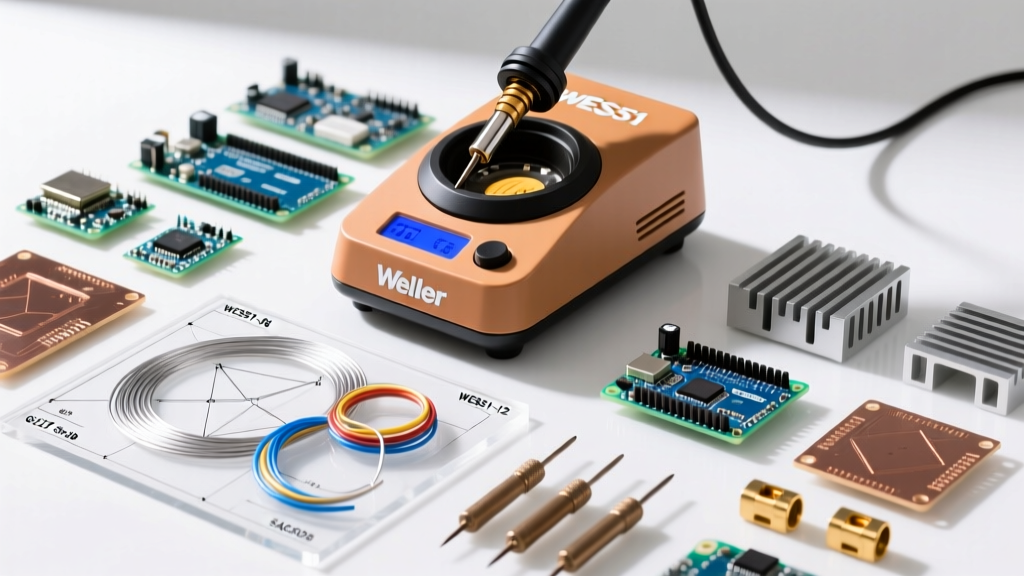

The Weller WES51 in 2026: Analog Legacy and Thermal Reality
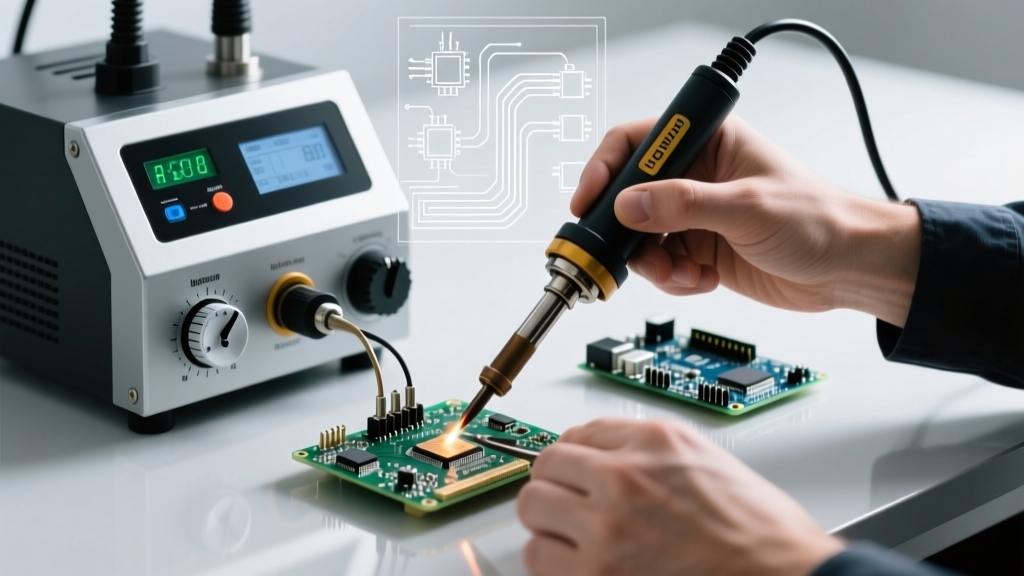
Even in 2026, the Weller WES51 remains a ubiquitous presence on electronics workbenches worldwide. Originally introduced as a robust, analog 50-watt soldering station, it has largely been superseded in retail channels by digital successors like the WE1010NA. However, its legendary reliability, simple potentiometer-based temperature control, and the widespread availability of ET-series tips keep it highly relevant. For technicians and DIYers operating a WES51 today—whether purchased new-old-stock or refurbished from the secondary market for $60 to $90—understanding its precise material compatibility is critical. The WES51 is not a universal tool; its 50W thermal recovery rate and specific tip metallurgy dictate strict boundaries regarding which solder alloys, PCB substrates, and component leads it can handle effectively.
This guide provides a deep-dive material compatibility matrix for the WES51 and its PES51 pencil, ensuring you avoid cold joints, pad delamination, and premature tip degradation.
Core Material Compatibility Matrix for the PES51 Pencil
The PES51 soldering pencil utilizes the ET series of tips, which feature a copper core plated with iron, nickel, and chromium. Selecting the correct tip geometry and temperature for your specific substrate is the first step in material compatibility. Below is a practical decision matrix based on IPC J-STD-001 requirements for soldered electrical assemblies.
| Substrate / Finish | Recommended ET Tip | Target Temp (°F) | Compatibility & Thermal Notes |
|---|---|---|---|
| Standard FR-4 / HASL | ETC (Conical) or ETB | 600 - 650 | Excellent heat transfer. Conical tip provides precision for through-hole and standard SMD. |
| ENIG (Gold Plated) | ETA (Chisel) | 625 - 675 | Chisel edge maximizes surface contact to quickly melt solder and prevent gold embrittlement. |
| Heavy Ground Planes | ETD (Heavy Chisel) | 700 - 750 | Poor compatibility without external preheating. The 50W heater will stall, causing cold joints. |
| 0402 / 0603 SMD | ETAA (Micro Conical) | 550 - 600 | Low thermal mass requirements. High precision, but highly susceptible to flux carbon buildup. |
| Silver-Palladium Pads | ETB (Small Chisel) | 600 - 650 | Requires Sn62/Pb36/Ag2 alloy to prevent silver leaching from the substrate pad. |
Solder Alloy Metallurgy: What the WES51 Can Actually Melt
The WES51 dial is calibrated in Fahrenheit, ranging from 350°F to 850°F (177°C to 454°C). While the dial suggests the station can handle any alloy, the reality of the PES51's thermal recovery curve tells a different story.
Standard Leaded Alloys (Sn63/Pb37 and Sn60/Pb40)
The WES51 was engineered during the peak of leaded solder dominance. Eutectic Sn63/Pb37 melts at a precise 361°F (183°C). When NASA workmanship standards dictate a soldering iron tip temperature 150°F to 200°F above the alloy's liquidus point, the WES51 performs flawlessly at a dial setting of 550°F to 600°F. The 50W transformer provides rapid recovery when the iron-plated tip contacts a room-temperature copper lead, ensuring a shiny, concave fillet without prolonged dwell times that could lift FR-4 pads.
Lead-Free and High-Temp Alloys (SAC305 and Sn96.5)
Transitioning to RoHS-compliant lead-free alloys introduces severe material compatibility friction. SAC305 (Sn96.5/Ag3.0/Cu0.5) has a liquidus temperature of 422°F (217°C). To achieve proper wetting, the WES51 dial must be pushed to 700°F - 750°F.
The Failure Mode: Operating the WES51 continuously above 700°F accelerates the dissolution of the iron plating on ET-series tips. Furthermore, the aggressive fluxes required for lead-free soldering (often high-solids no-clean or water-soluble) become highly corrosive at these elevated temperatures, leading to tip pitting within 15 to 20 hours of active use. If your primary workflow in 2026 involves heavy SAC305 multilayer board assembly, the WES51 is technically compatible but economically inefficient due to rapid tip consumption.
Substrate Sensitivities and Pad Finishes
Material compatibility extends beyond the solder alloy to the PCB surface finish itself. Different finishes interact uniquely with the thermal profile of the WES51.
- ENIG (Electroless Nickel Immersion Gold): Gold dissolves rapidly into molten tin. If the WES51 is set too low (e.g., 550°F), the dwell time required to form a joint increases. This prolonged exposure allows the gold to fully dissolve into the solder joint, leading to brittle intermetallic compounds and potential pad lifting. Use an ETA chisel tip at 650°F to flash-melt the joint.
- Immersion Silver: Highly sensitive to sulfur and aggressive flux residues. The WES51's analog dial can suffer from potentiometer drift over time. If the dial reads 600°F but the internal thermocouple is actually outputting 680°F due to carbon track wear, you risk scorching the delicate immersion silver finish. Always verify tip temperature with a K-type thermocouple meter before working on silver-finished aerospace or medical boards.
- Bare Copper / OSP: Requires immediate wetting. The WES51's 50W output is perfectly matched for OSP, provided you use a fresh blob of Sn63 solder to tin the tip immediately before contacting the pad, acting as a thermal bridge.
Thermal Mass Limitations: When to Abandon the WES51
The most common misuse of the Weller WES51 is attempting to solder high-thermal-mass components. According to Weller Tools official documentation, the PES51 pencil is designed for general-purpose PCB assembly, not heavy mechanical lugs or thick ground planes.
Expert Insight: If you are soldering a 10 AWG wire to a large brass lug or a multi-layer PCB with 4oz copper pours, the WES51's 50W heater will stall. The internal thermocouple will detect a massive temperature drop, maxing out the nichrome heater. The result is a classic 'cold joint'—the solder melts against the tip but fails to flow onto the substrate because the substrate never reached the alloy's liquidus temperature. For these materials, you must upgrade to a higher wattage station (like the Weller W1000) or utilize a bottom-side PCB preheater to bring the ambient board temperature to 120°C before applying the WES51.
Tip Degradation and Flux Chemistry
Material compatibility also encompasses the chemical interaction between your flux and the tip's metallurgy. ET-series tips are plated with a microscopic layer of iron to prevent the molten solder from dissolving the copper core.
When using heavily activated rosin fluxes (RMA or RA), the chemical activators remain relatively benign at standard 600°F leaded temperatures. However, if you are using water-soluble organic acid (OA) fluxes for plumbing or heavy-duty electrical grounding, the OA flux will aggressively attack the iron plating if the WES51 is left idling in its metal holder. The metal holder acts as a heat sink, but the localized chemical reaction at the tip apex will cause micro-fractures, eventually exposing the copper core. Once the copper is exposed, the tip will develop a deep crater and must be discarded.
Expert Maintenance Protocol for Longevity
To maintain material compatibility and thermal accuracy on a legacy WES51 unit in 2026, adhere to this strict maintenance protocol:
- Calibrate the Dial: Annually, use a digital soldering iron thermometer (like the Hakko FG-100B) to verify the dial's output. If the 600°F mark reads 650°F, adjust the internal trim potentiometer on the WTCPT control board.
- Never Use Abrasives: Never clean an ET tip with sandpaper, a file, or a brass wire brush. This instantly removes the iron plating, destroying the tip's compatibility with any solder alloy.
- Thermal Bridging: When transitioning from lead-free to leaded solder on the same tip, always apply a sacrificial bridge of Sn63 solder to lower the tip's surface tension and flush out lead-free residues before the iron returns to the holder.
- Storage Tinning: Before powering down the WES51, apply a massive, oversized blob of Sn63/Pb37 solder to the tip. This sacrificial layer will oxidize instead of the iron plating, ensuring perfect wetting the next time you power on the station.
Frequently Asked Questions
Can I use the Weller WES51 for soldering aluminum?
No. Aluminum requires specialized zinc-based or tin-zinc alloys and aggressive fluoride fluxes that operate at different thermal profiles. Furthermore, the fluoride fluxes will rapidly corrode the iron plating on standard ET-series tips, ruining them for standard electronics work.
Is the WES51 compatible with modern SMT rework?
Yes, but with limitations. For 0805 and 0603 components, the ETAA or ETA tips work beautifully. However, for modern micro-BGA or 0201 components, the analog temperature drift and lack of fine-tuned thermal profiling make the WES51 less ideal compared to modern JBC or Metcal RF-driven stations.