
The Core Dilemma: Performance vs. Right to Repair
In 2026, the laptop memory landscape is strictly divided. Ultrabooks and AI-focused thin-and-lights have almost universally adopted soldered RAM (specifically LPDDR5X), while mobile workstations and gaming rigs cling to socketed DDR5 SO-DIMMs. Meanwhile, the CAMM2 standard has emerged as a bridge between the two. For hardware enthusiasts, DIY repair technicians, and enterprise fleet buyers, choosing between these memory architectures is no longer just about capacity—it is a complex trade-off involving signal integrity, power delivery networks (PDN), and long-term repairability.
This decision framework cuts through the marketing noise, providing a technical and financial evaluation of soldered RAM versus upgradable alternatives to help you make an informed hardware investment.
The Physics of Soldered RAM: Why Manufacturers Do It
To understand the decision framework, you must first understand the physics driving the industry toward soldered memory. The shift is not purely anti-consumer; it is rooted in the electrical engineering challenges of high-frequency signaling.
Signal Integrity and Trace Length
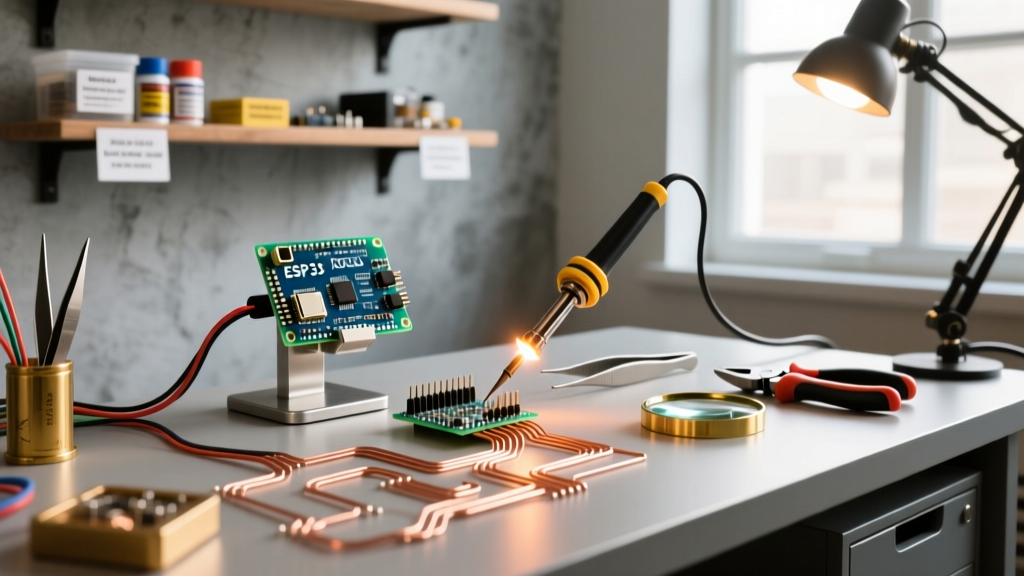
Modern LPDDR5X memory operates at staggering speeds of up to 8533 MT/s. At these frequencies, the electrical signals are highly susceptible to interference, crosstalk, and timing skew. A traditional SO-DIMM connector introduces a physical gap and requires longer PCB traces, which act as antennas for electromagnetic interference (EMI). By soldering the RAM chips directly to the motherboard, engineers can keep trace lengths under 20 millimeters. This direct BGA (Ball Grid Array) connection ensures the tight timing margins required for high-bandwidth AI workloads and integrated graphics.
Power Delivery and Efficiency
Soldered LPDDR5X chips operate at significantly lower voltages (often around 1.05V to 1.1V) compared to standard DDR5 SO-DIMMs (1.1V to 1.35V under load). Furthermore, eliminating the SO-DIMM connector removes a source of contact resistance and allows for a more optimized, localized Power Delivery Network (PDN) on the motherboard. This translates to a 10% to 15% improvement in memory subsystem power efficiency, directly extending battery life in ultrabooks.
2026 Architecture Comparison Matrix
Before applying the decision framework, review the hard specifications and practical implications of the three dominant memory architectures available today.
| Feature | LPDDR5X (Soldered BGA) | DDR5 SO-DIMM (Socketed) | CAMM2 (Compression Attached) |
|---|---|---|---|
| Max Standardized Speed (2026) | 8533 MT/s | 5600 MT/s (6400 MT/s XMP) | 6400 MT/s (DDR5) / 8533 MT/s (LPDDR5X) |
| User Upgradeability | None (Fixed at purchase) | High (Standard 262-pin slot) | Moderate (Proprietary but removable module) |
| Motherboard Z-Height Impact | Lowest (Flat BGA profile) | Highest (Requires vertical clearance) | Low (Flat connector, modular PCB) |
| Out-of-Warranty Repair Cost | $150 - $350 (Microsoldering) | $40 - $120 (Plug-and-play swap) | $80 - $150 (Module replacement) |
| Primary Use Case | Ultrabooks, AI Edge Devices | Gaming, Mobile Workstations | Premium Thin-and-Lights, Creator Laptops |
The Repairability Reality Check: BGA Rework vs. SO-DIMM Swaps
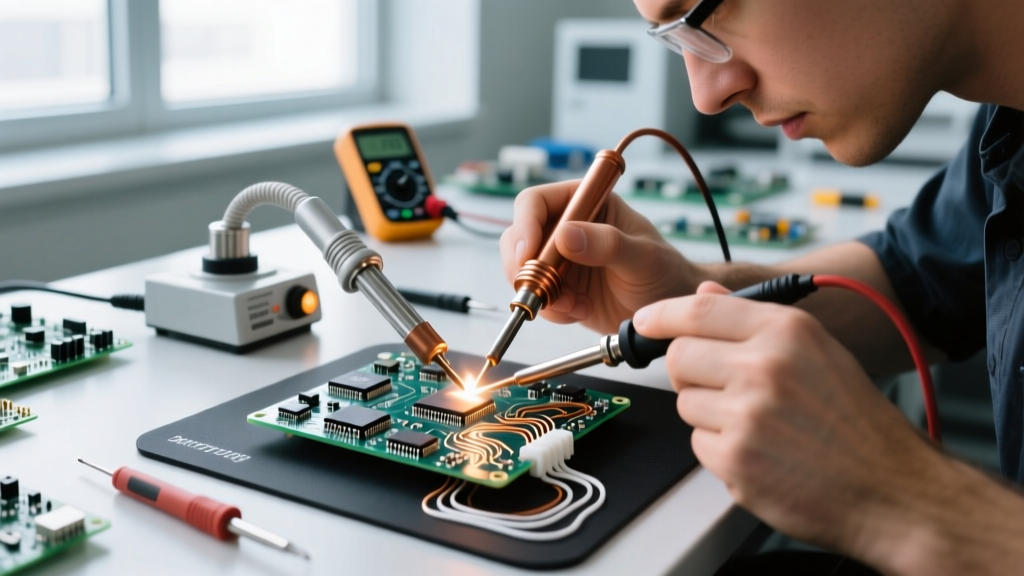
From a DIY and repair perspective, soldered RAM represents a massive shift in required skill sets and equipment costs. If a single LPDDR5X chip fails on a soldered motherboard, you cannot simply swap a stick. You must perform a BGA rework.
The True Cost of BGA Memory Replacement
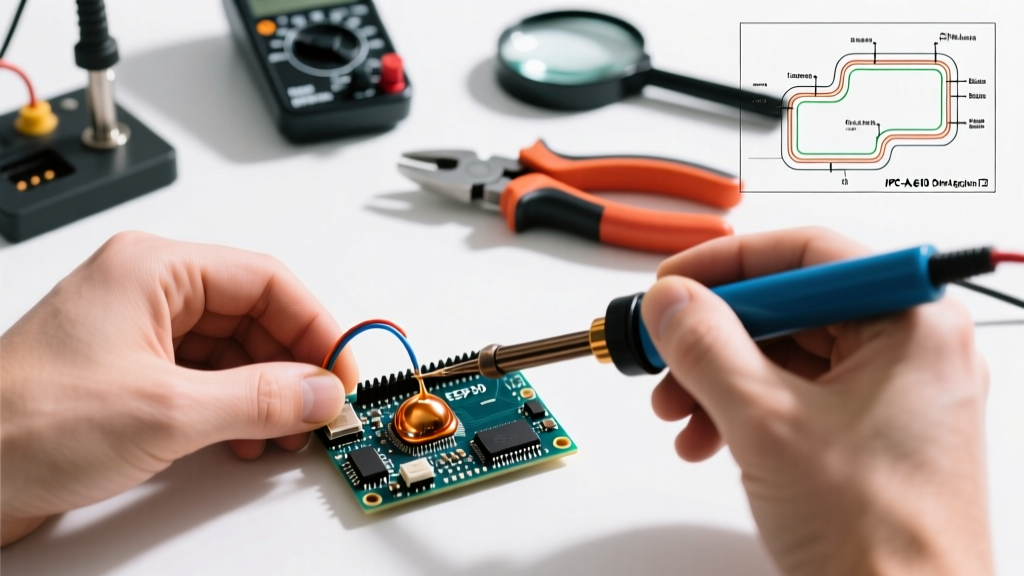
Replacing a soldered RAM chip requires adherence to IPC-7711/7721 standards for BGA rework. The process involves:
- Preheating: Bringing the entire motherboard to ~150°C to prevent thermal shock and warping.
- Desoldering: Using a localized hot air rework station (e.g., Quick 861DW) at ~245°C with precision nozzles to melt the solder balls without damaging adjacent SMD components or the CPU.
- Site Dressing: Cleaning the pads with high-quality flux and desoldering braid to ensure perfect planarity.
- Reballing and Reflow: Applying new SAC305 (Tin-Silver-Copper) solder spheres to the replacement memory chip and reflowing it into place.
While a 32GB DDR5-5600 SO-DIMM kit costs roughly $85 and takes two minutes to install, a professional BGA rework service for a soldered RAM chip typically costs between $150 and $350 in labor alone, assuming the specialized technician can source the exact OEM LPDDR5X binning.
The CAMM2 Wildcard: The Best of Both Worlds?
Recognizing the limitations of both SO-DIMM (speed/size limits) and soldered BGA (zero upgradeability), JEDEC finalized the CAMM2 standard. As detailed in the official JEDEC CAMM2 press release, this Compression Attached Memory Module uses a zero-insertion-force (ZIF) style land grid array (LGA) connector.
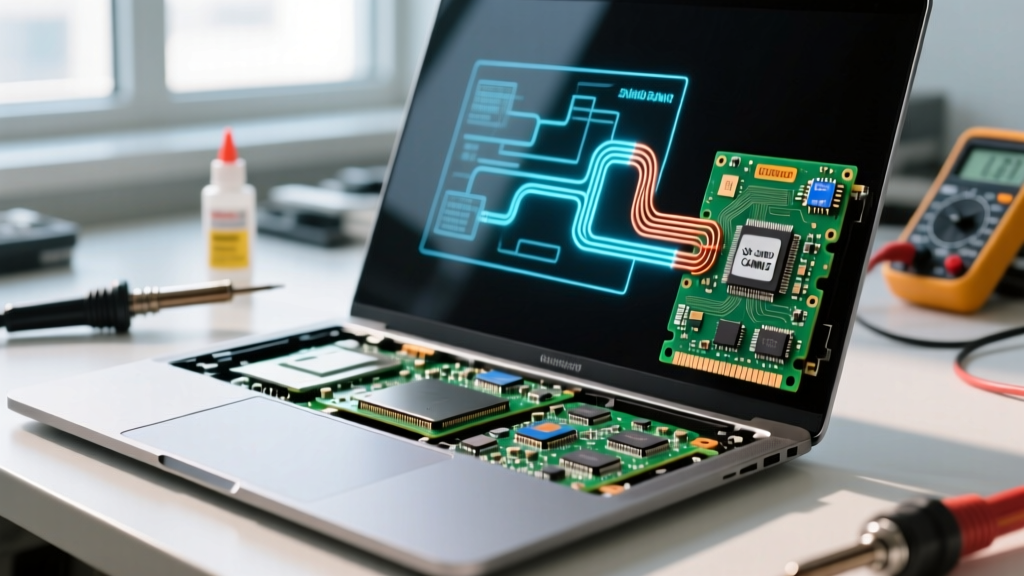
Expert Insight: CAMM2 effectively mimics the short trace lengths of soldered RAM by placing the connector directly beneath the memory module, minimizing the electrical distance to the CPU. This allows CAMM2 to support LPDDR5X speeds while remaining physically removable by the end-user with just a few standard Phillips screws.
For buyers in 2026, a laptop utilizing CAMM2 offers the high bandwidth and battery efficiency of soldered RAM, while preserving the right to repair and upgrade memory post-purchase.
The 3-Step Decision Framework
Use this sequential flowchart to determine which memory architecture aligns with your specific operational needs and risk tolerance.
Step 1: Define Your Hardware Lifecycle and Upgrade Cadence
- 3-Year Replacement Cycle: If you upgrade your hardware every 36 months for tax or performance reasons, choose Soldered LPDDR5X. You will maximize battery life and AI throughput, and you will hand off the device before the statistical likelihood of memory failure peaks.
- 5-to-7-Year Lifecycle: If you plan to keep the machine until it physically fails, demand SO-DIMM or CAMM2. Your memory requirements will inevitably outgrow your initial purchase, and you need the ability to upgrade from 16GB to 64GB without buying a new motherboard.
Step 2: Evaluate Your Workload Profile
- Local LLM / AI Inference: Prioritize Soldered LPDDR5X. Integrated GPUs and NPUs rely heavily on memory bandwidth. The 8533 MT/s speed of LPDDR5X will drastically reduce token-generation latency compared to a 5600 MT/s SO-DIMM.
- Virtualization / Heavy Docker Containers: Prioritize SO-DIMM / CAMM2 Capacity. AI models need speed, but VMs need sheer capacity. Being able to slot in two 48GB DDR5 SO-DIMMs (96GB total) is impossible on most soldered ultrabook designs, which cap out at 32GB or 64GB.
Step 3: Assess Your Repair Risk Tolerance
Are you in an environment where dust, humidity, or physical shocks are common? Soldered RAM is inherently more resistant to physical vibration and connector corrosion than SO-DIMMs. However, if a single memory chip suffers a silicon-level defect, a soldered board requires a $300 microsoldering repair or a total motherboard replacement ($600+). If you lack access to advanced BGA rework technicians, socketed RAM is the only logical choice for long-term survivability.
Final Verdict: Navigating the 2026 Market
The era of the universal SO-DIMM slot is over, but the era of user-serviceable memory is not. Soldered RAM is an engineering necessity for ultra-thin, high-efficiency AI laptops, offering unmatched bandwidth and battery life. However, it demands that buyers accurately predict their memory needs at the point of purchase.
For those who refuse to compromise between cutting-edge speeds and the right to repair, seek out laptops adopting the CAMM2 standard. It is the definitive 2026 solution that respects both the laws of high-frequency electrical engineering and the principles of hardware longevity.