
The Invisible Threat: Solder Fumes and Rosin Asthma
When most hobbyists and technicians think of soldering hazards, they immediately picture thermal burns. However, the most insidious danger in electronics assembly is invisible. The smoke generated when heating rosin-core (colophony) flux is a known respiratory sensitizer. Prolonged exposure without proper ventilation can lead to occupational asthma, chronic bronchitis, and severe allergic reactions. According to the UK Health and Safety Executive (HSE), rosin fume is one of the most common causes of occupational asthma in the manufacturing sector.
Furthermore, lead-free solder alloys (like SAC305), which are standard in 2026, require higher melting temperatures (217°C to 225°C) compared to legacy tin-lead solders (183°C). These elevated temperatures cause flux to vaporize more aggressively, increasing the concentration of volatile organic compounds (VOCs) and sub-micron particulate matter in your immediate breathing zone. Understanding and mitigating these airborne hazards is the foundational pillar of safe soldering.
Fume Extraction Systems: A Buyer's Comparison Matrix
Relying on a standard desk fan to blow smoke away is not a safe soldering practice; it merely disperses the hazard across the room. Effective capture requires source extraction. Below is a comparison of the three primary extraction tiers available for electronics workbenches.
| Extractor Type | Model Example | Price Range (USD) | Airflow (CFM) | Filtration & Ideal Use Case |
|---|---|---|---|---|
| Benchtop Fan Filter | Hakko FA-400 | $60 - $85 | 35 CFM | Activated carbon mat. Best for hobbyists soldering < 2 hours/week. |
| Arm-Mounted HEPA Unit | Weller WSA350D | $280 - $350 | 110 CFM | HEPA + Gas filter. Ideal for prosumers and daily repair technicians. |
| Overhead Capture Hood | Metcal BTX-2000 | $900 - $1,250 | 250+ CFM | Multi-stage industrial. Required for continuous production lines. |
Expert Tip: For arm-mounted extractors, position the capture nozzle exactly 2 to 4 inches from the solder joint. Beyond 6 inches, the capture velocity drops exponentially, allowing flux plumes to escape into your breathing zone.
Thermal and Electrical Hazard Mitigation
While fume extraction protects your lungs, your workbench setup must protect your skin and your components. Modern soldering stations can reach 450°C (842°F). A momentary lapse in attention can result in second-degree burns or catastrophic damage to sensitive microcontrollers.
The Brass Sponge vs. Wet Sponge Debate
For decades, the damp cellulose sponge was the standard for cleaning soldering iron tips. However, from a safety and metallurgical perspective, the brass wire sponge is vastly superior. Plunging a 350°C tip into a wet sponge causes rapid thermal shock, which micro-fractures the iron plating on the tip, leading to premature pitting and failure. More importantly, it generates a violent burst of steam that can scald your knuckles. A dry brass sponge (like the Edsyn BR-1) cleans the tip effectively via friction without altering its temperature or generating steam.
ESD Grounding and Electrical Safety
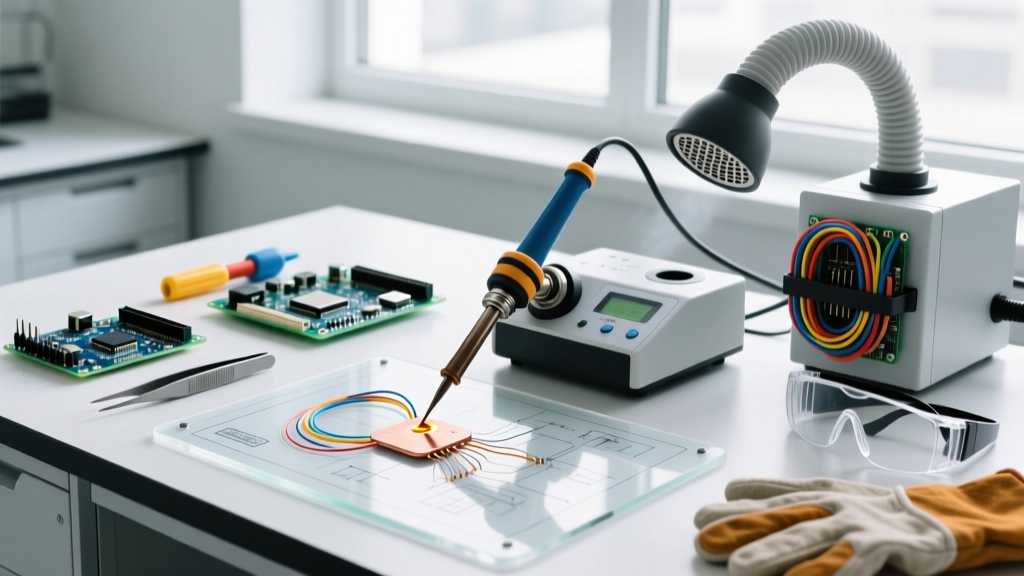
Safe soldering also means protecting the circuitry. As outlined in Cornell University's Environmental Health and Safety guidelines, proper grounding is non-negotiable. Ensure your soldering station is connected to a verified earth ground. Use an ESD-safe silicone mat (such as the Kaisi 14x18 inch heat-resistant mat, approx. $18) grounded via a 1-megohm resistor wire. This prevents electrostatic discharge (ESD) from destroying MOSFETs and ICs while providing a thermal barrier that won't melt if a hot iron is accidentally dropped.
Personal Protective Equipment (PPE) Requirements
Even with an excellent fume extractor, localized eddies can push trace amounts of flux smoke toward your face. Implementing a strict PPE protocol bridges the gap between engineering controls and personal safety.
- Respiratory Protection: For high-volume soldering or when working with specialized fluxes (like ammonia-based or highly acidic plumbing fluxes), a half-facepiece respirator like the 3M 6200 (approx. $25) equipped with P100 and Organic Vapor (OV) cartridges (approx. $15) is the gold standard. The P100 catches 99.97% of airborne rosin particulates, while the OV layer adsorbs harmful VOCs.
- Ocular Protection: Molten solder can spit, and clipped component leads can become high-velocity projectiles. Always wear ANSI Z87.1-rated polycarbonate safety glasses. The Uvex Genesis XC (approx. $16) offers excellent wraparound coverage and adjustable ratchet temples to prevent fogging when leaning over a hot board.
- Hand Protection: Avoid bulky leather gloves, which reduce dexterity and can catch fire. If you must handle hot components, use form-fitting, heat-resistant Kevlar/Nylon blend finger cots or ESD-safe nitrile gloves for handling bare PCBs to prevent skin oils from degrading solderability.
Ergonomic Workspace Layout for Long-Term Health
Safe soldering extends beyond acute injuries; it encompasses the prevention of repetitive strain injuries (RSI) and visual fatigue. Micro-soldering 0402 components or reworking BGA chips requires intense visual focus, often leading to severe neck and eye strain.
- Illumination: Standard room lighting (usually 300 lux) is insufficient. Install a magnifying ring light or an articulated LED bench lamp to deliver 500 to 1,000 lux directly onto the workpiece. Ensure the color rendering index (CRI) is above 90 for accurate flux color identification.
- Visual Magnification: Ditch the traditional heavy glass magnifying visors. Opt for a digital microscope (like the Andonstar AD246S, approx. $130) or high-quality optical stereo microscopes (AmScope SE400-Z). This allows you to maintain a neutral, upright neck posture while viewing the board on an adjustable monitor.
- Seating and Arm Support: Your chair should allow your feet to rest flat on the floor with your knees at 90 degrees. Crucially, use armrests or a padded bench edge to support your forearms. Unsupported arms transfer micro-tremors to your hands and accelerate shoulder fatigue.
FAQ: Troubleshooting Safe Soldering Environments
Why do my eyes water even when my fume extractor is on?
This usually indicates that the extractor's airflow is being disrupted by cross-drafts from HVAC vents, ceiling fans, or open windows. It can also mean your activated carbon filter is saturated. Carbon filters typically need replacement every 40 to 60 hours of active soldering time. If the filter smells sweet or acidic, it is completely spent and is off-gassing trapped VOCs back into the air.
Is lead-free solder actually safer to work with?
From an environmental and ingestion standpoint, yes. However, from an inhalation perspective, lead-free solder requires higher heat, which generates more flux fume, not less. The EPA notes that VOCs from heated chemicals can cause severe mucosal irritation. Therefore, safe soldering with lead-free alloys actually demands more rigorous fume extraction than legacy leaded solders.
How often should I clean my soldering iron tip to maintain safety?
A heavily oxidized tip requires you to apply excessive physical pressure and increase the station temperature to achieve wetting. This increases the risk of slipping and burning yourself or gouging the PCB. Tin your tip with fresh solder before placing it in the holder, and wipe it on your brass sponge every 3 to 4 joints. Never leave a tip bare and heated; it will oxidize within minutes, creating a hazardous, inefficient working condition.