
The True Cost of Scaling: Beyond the Sticker Price
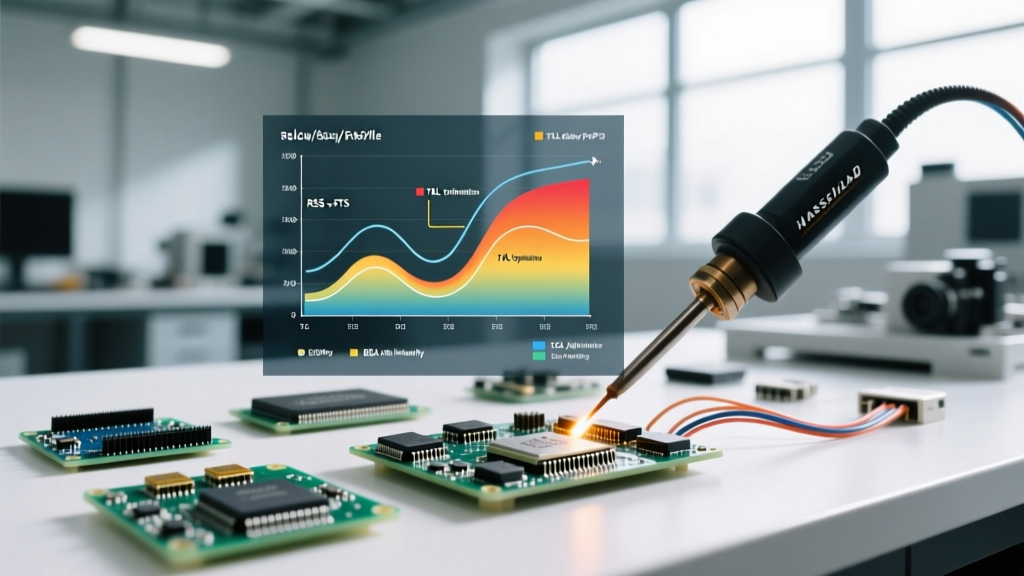
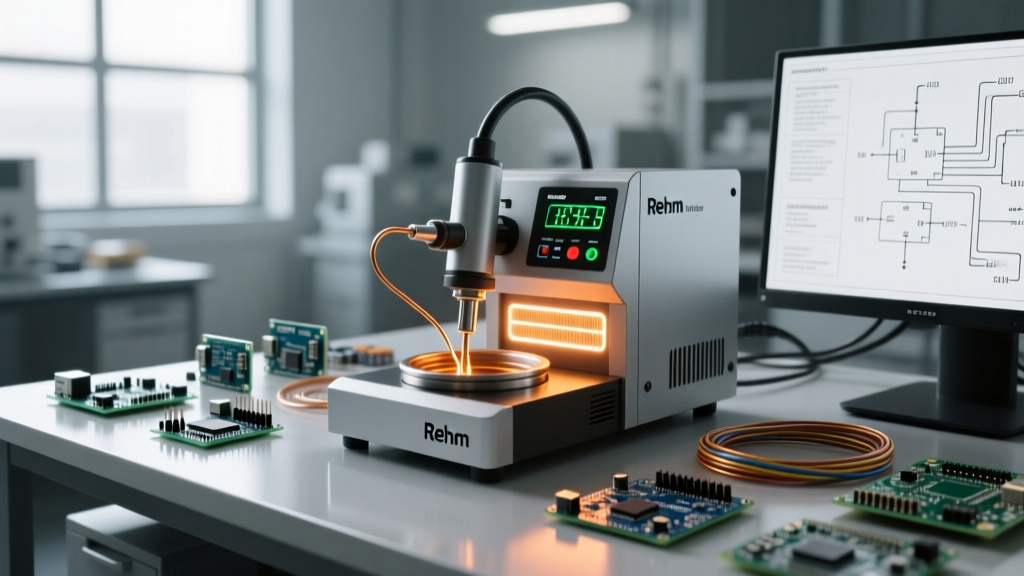
For Electronics Manufacturing Services (EMS) providers and high-volume hardware startups, selecting a reflow oven is one of the most capital-intensive decisions on the SMT line. While entry-level convection ovens might suffice for prototyping, scaling to 24/7 production requires industrial-grade thermal profiling. Rehm Thermal Systems has positioned itself as a premium European manufacturer, heavily favored for its energy-efficient designs and advanced nitrogen (N2) management. But does the premium capital expenditure (CapEx) justify the operational savings?
In this 2026 cost analysis, we dissect the financial realities of deploying Rehm reflow soldering equipment—specifically the VisionXP and Nexus platforms. We will evaluate CapEx, operational expenditure (OpEx), hidden maintenance costs, and calculate a realistic 3-year Return on Investment (ROI) compared to industry alternatives.
The TCO Rule of Thumb: In modern SMT assembly, the initial purchase price of a reflow oven typically accounts for only 30% to 40% of its Total Cost of Ownership (TCO) over a 7-year lifespan. Energy, nitrogen, and flux management dictate the remaining 60%.
Capital Expenditure (CapEx): Pricing the Hardware
Rehm's product lineup is segmented by throughput, thermal zone count, and process flexibility. Pricing fluctuates based on conveyor width, dual-lane configurations, and integrated vacuum chambers for void reduction.
Rehm VisionXP Series
The VisionXP is the workhorse for mid-to-high volume EMS facilities. It features optimized thermal insulation and a highly efficient blower motor design.
- Base Configuration (8-10 Zones, Single Lane): $85,000 – $105,000
- High-Throughput (12-14 Zones, N2 Ready, Dual Lane): $120,000 – $145,000
- Best For: Standard consumer electronics, automotive ECUs, and high-mix/medium-volume production runs.
Rehm Nexus Series
The Nexus line is engineered for advanced packaging, featuring integrated vacuum reflow capabilities to achieve void rates below 2%—a strict requirement for power electronics and IGBT modules.
- Standard Vacuum Configuration: $160,000 – $190,000
- Fully Loaded (Dual Lane, Vacuum, Advanced SCADA): $210,000+
- Best For: EV battery management systems, aerospace, and high-reliability medical devices.
Operational Expenditure (OpEx): Where Rehm Wins (and Loses)
To understand the true cost of Rehm reflow soldering, we must analyze the daily consum is a significant cost-saver over a 5-year period.
2. Nitrogen (N2) Consumption
Running a nitrogen atmosphere is mandatory for modern SAC305 and low-temperature alloys (e.g., SN100C) to prevent oxidation and reduce head-in-pillow (HiP) defects, as outlined in IPC soldering standards. Older or cheaper oven designs bleed N2 continuously, requiring massive generator capacity.
Rehm utilizes a patented N2 recycling and labyrinth sealing system. While a standard competitor oven might consume 25–35 Nm³/h to maintain an O2 level of <20 ppm, the Rehm VisionXP typically achieves the same ppm threshold using only 12 to 16 Nm³/h. At an industrial N2 generation cost of $0.18 per Nm³, this represents a savings of roughly $10,000 annually on a 2-shift schedule.
3. Flux Management and Maintenance
Flux spatter and condensation inside the cooling zone degrade heat transfer and require costly line stoppages for manual scraping. Rehm’s integrated pyrolysis and water-cooled flux condensation units trap flux before it reaches the blowers.
- Filter Replacement:SMTA technical guidelines on thermal profiling, maintaining strict N2 and thermal uniformity directly correlates to a 15% reduction in post-reflow X-ray inspection failures and rework labor.
Hidden Costs and Edge Cases to Budget For
When procuring Rehm equipment, facility managers often overlook secondary infrastructure costs. Ensure your 2026 budget accounts for the following:
- Extraction and HVAC Integration: Rehm’s flux condensation units still require an external exhaust tie-in. Upgrading your facility’s localized exhaust ventilation (LEV) can cost $3,000–$6,000.
- Water Cooling Infrastructure: The advanced cooling zones and flux condensers on the Nexus line require a closed-loop chilled water system (typically 15°C–20°C). If your facility lacks this, installing a dedicated chiller unit will add $8,000–$12,000 to your CapEx.
- Software and SCADA Licensing: While basic machine control is included, integrating the oven into a smart factory MES (Manufacturing Execution System) via Rehm’s advanced SCADA package may incur a one-time software licensing fee of $2,500–$4,000.
Frequently Asked Questions (FAQ)
What is the typical lead time for a Rehm VisionXP in 2026?
Due to stabilized global supply chains for industrial heating elements and PLCs, lead times for standard VisionXP configurations have normalized to 10 to 14 weeks. Custom Nexus configurations with vacuum chambers may extend to 18 weeks.
Is Rehm more expensive to repair out-of-warranty?
Yes, slightly. Rehm uses high-grade European components (e.g., Siemens PLCs, specialized frequency inverters). While these components last significantly longer than budget alternatives, out-of-warranty replacement parts carry a 15-20% premium compared to generic Asian-manufactured ovens. However, the extended Mean Time Between Failures (MTBF) usually offsets this.
Does the vacuum feature on the Nexus pay for itself?
If you are manufacturing standard IoT devices, no. The vacuum module is only financially justifiable if you are producing power electronics (IGBTs, SiC MOSFETs) where voiding must remain strictly below 2-5%, and where a single scrapped high-voltage module costs upwards of $200.
Final Verdict
Choosing a Rehm reflow soldering system is an exercise in long-term operational strategy. If your facility runs single-shift, low-complexity boards, the CapEx premium of a Rehm oven will be difficult to justify against budget alternatives. However, for 24/7 EMS environments running complex, high-density boards under strict nitrogen atmospheres, the TCO advantages in N2 savings, energy efficiency, and flux management make Rehm one of the most financially sound investments on the SMT floor.