
The Evolution of Small-Batch SMT Assembly
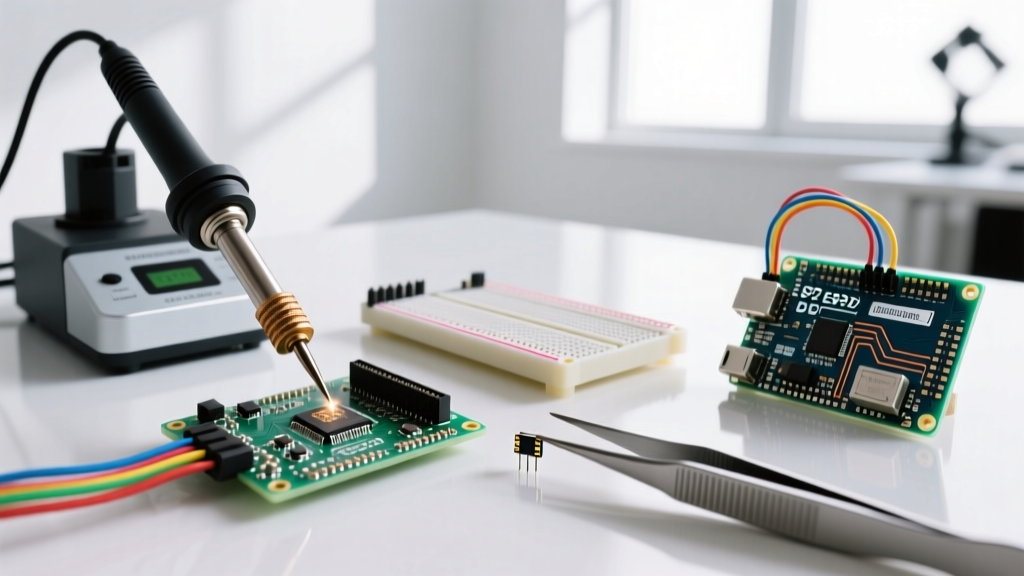
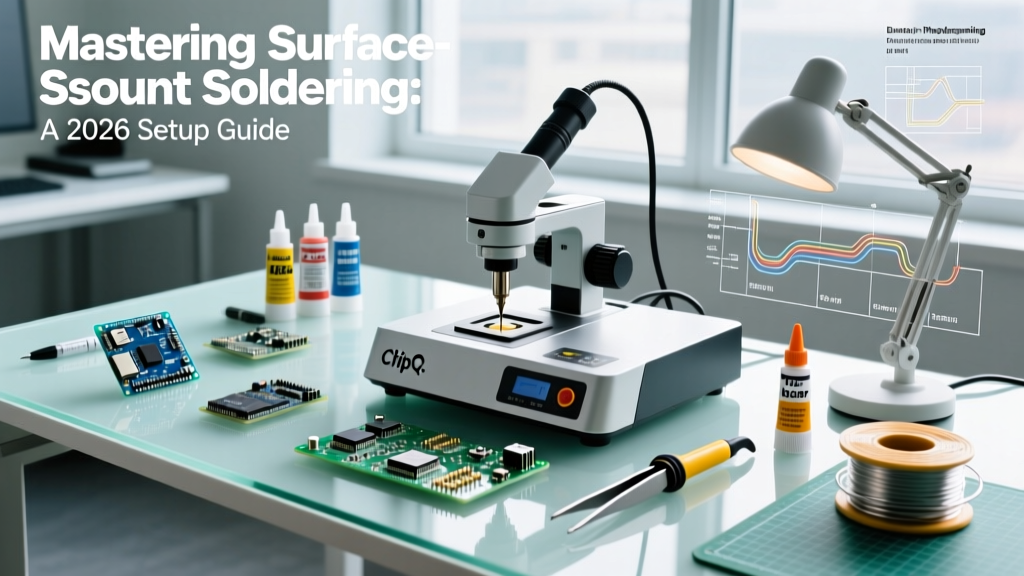
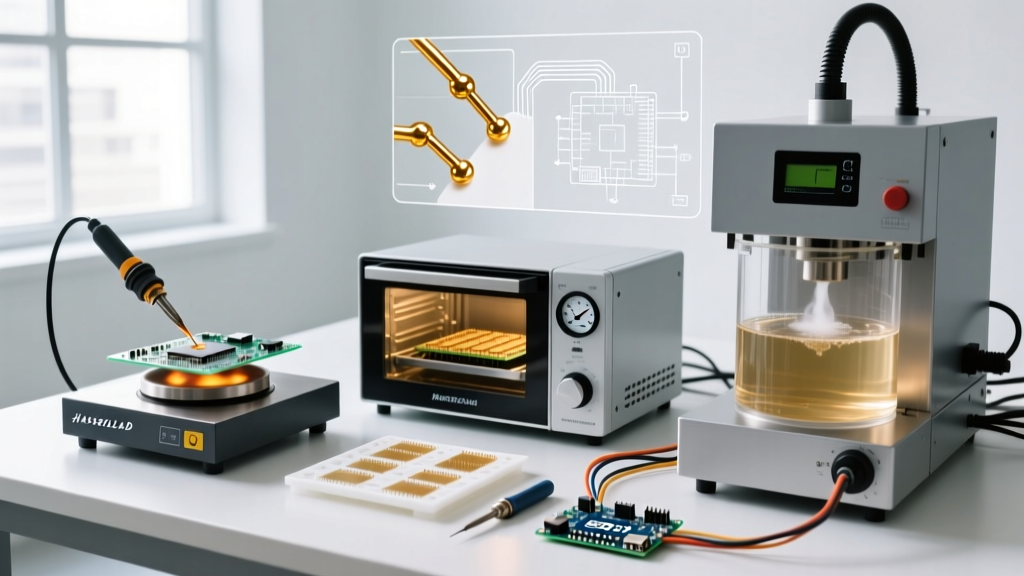
As surface mount technology (SMT) components shrink to 0201 imperial sizes and ball grid arrays (BGAs) become standard on custom microcontroller boards, hand soldering is no longer viable for prototyping or small-batch production. Enter reflow soldering: the process of applying solder paste to pads, placing components, and heating the entire assembly to melt the solder simultaneously. However, choosing the right thermal delivery method for a home lab or low-volume contract manufacturing setup is complex. In 2026, makers and small studios primarily choose between three reflow soldering methods: PID-controlled hotplates, desktop convection ovens, and vapor phase systems. Each approach dictates your thermal profile capabilities, solder paste compatibility, and defect rates.
Method Comparison Matrix
Before diving into the physics and failure modes of each technique, review this high-level comparison of small-batch reflow soldering systems based on current market pricing and performance metrics.
| Parameter | PID Hotplate / Skillet | Desktop Convection Oven | Vapor Phase Soldering |
|---|---|---|---|
| Capital Cost (2026) | $50 - $120 | $150 - $2,500 | $800 (DIY) - $4,500+ |
| Thermal Uniformity | Poor (Directional heat) | Good (Forced air) | Excellent (Isothermal) |
| Max Board Size | 100mm x 100mm | 200mm x 300mm (T962/P20) | 150mm x 150mm (Desktop) |
| Best Paste Type | Leaded (Sn63/Pb37) | Both (Leaded & SAC305) | Lead-Free (SAC305/SAC405) |
| Primary Defect Risk | Tombstoning | Cold Joints / Scorching | Voiding in Thermal Pads |
Deep Dive: Hotplate and Skillet Reflow
The most accessible entry point into reflow soldering is modifying a standard PTC heating element, aluminum skillet, or dedicated lab hotplate using a PID (Proportional-Integral-Derivative) controller. By attaching a K-type thermocouple directly to a sacrificial PCB, the PID controller modulates power to the heating element to follow a precise thermal curve.
The PID Controller Advantage and Setup
A standard setup involves an Inkbird ITC-1000VH or ITC-100VH PID controller (approximately $35), a solid-state relay (SSR-25DA), and a cast-aluminum hotplate. The total BOM cost rarely exceeds $80. To achieve a reliable Ramp-to-Max (RTM) profile for leaded solder paste (liquidus at 183°C), you must tune the PID parameters. A baseline starting point for a 500W aluminum plate is P=20, I=40, D=10. This prevents aggressive overshoot that could delaminate FR4 fiberglass substrates.
Edge Cases and Failure Modes
- Tombstoning: Because heat transfers from the bottom up, components with asymmetric thermal mass on their pads (e.g., a trace connected to a ground plane on one side) will heat unevenly. The pad that reaches 183°C first will pull the component upright, causing a tombstone defect.
- Ceramic Capacitor Cracking: Rapid bottom-up heating creates a thermal gradient across the Z-axis of multilayer ceramic capacitors (MLCCs). Always use a pre-heat soak of 90 seconds at 150°C to minimize thermal shock.
Desktop Convection Ovens: Beyond the T962
For years, the generic T962A reflow oven was the default choice for makers. Priced around $150, it uses infrared lamps and rudimentary blower fans. However, the T962A is notorious in the engineering community for its flawed thermal dynamics: the IR lamps scorch dark-colored ICs while reflective aluminum shields block heat from smaller passives, and the stock firmware frequently bakes paper tape feeders into a fire hazard.
Modern Alternatives: Mypov and LPKF
In 2026, serious prototypers have moved toward true forced-convection desktop ovens. The Mypov P20 (priced around $650) utilizes a closed-loop thermocouple system and ceramic heating elements with high-static-pressure centrifugal fans. This ensures that hot air envelops the components uniformly, eliminating the shadowing effect seen in IR ovens. For professional low-volume labs, the LPKF ProtoFlow S ($4,500) offers nitrogen-purge capabilities, which drastically reduces oxidation and prevents the formation of solder beads (solder balling) when using no-clean flux chemistries.
Airflow Dynamics and Cold Joints
The primary failure mode in budget convection ovens is the cold joint, characterized by a dull, grainy solder fillet. This occurs when the oven's fan CFM (cubic feet per minute) is insufficient to push hot air into the tight gaps beneath QFN (Quad Flat No-lead) packages. According to guidelines published by the Surface Mount Technology Association (SMTA), forced convection systems must maintain a temperature delta of less than 5°C across the entire PCB surface during the liquidus phase to ensure reliable intermetallic compound (IMC) formation.
Vapor Phase Soldering: The Isothermal Gold Standard
Vapor phase reflow soldering relies on the physics of phase-change heat transfer rather than convective air. A specialized inert fluorocarbon fluid (commonly Galden HT230) is heated in a sealed chamber until it boils. The boiling point of Galden HT230 is exactly 230°C. When a room-temperature PCB is lowered into the vapor blanket, the vapor condenses on the cooler surfaces of the board, releasing its latent heat of vaporization directly into the components and pads.
Why Vapor Phase Dominates Lead-Free Assembly
Lead-free SAC305 paste requires a peak temperature of 235°C to 245°C to ensure proper wetting, which pushes the absolute maximum ratings of many electrolytic capacitors and plastic connectors. Because the vapor blanket cannot physically exceed 230°C, it is impossible to scorch components or warp the PCB, regardless of how long the board remains in the chamber. This makes vapor phase the ultimate method for complex, high-density boards with mixed thermal masses.
Fluid Economics and Voiding Risks
The barrier to entry is the cost of the dielectric fluid. As of 2026, Galden HT230 costs approximately $180 per liter, and even with condensation coils, some fluid loss is inevitable. Furthermore, the rapid, uniform heating can cause severe outgassing from the flux chemistry trapped under large thermal pads (like those on D2PAK transistors or QFN grounds), leading to >30% voiding ratios. To mitigate this, designers must implement via-in-pad tenting or use vacuum-assisted vapor phase chambers, which are currently priced well above $8,000.
Choosing the Right Solder Paste and Stencil
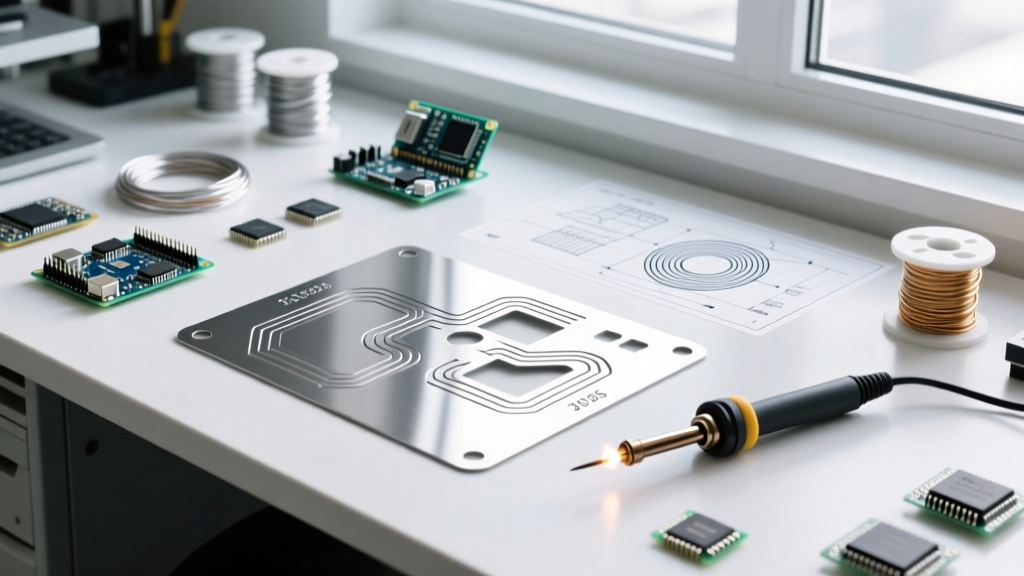
Your reflow method is only as good as your paste deposition. The IPC (Association Connecting Electronics Industries) standards dictate strict volume requirements for reliable solder joints. For DIY and small-batch reflow, stencil design is your primary control variable.
- 4-Mil (0.1mm) Stencils: Mandatory for 0402 components and fine-pitch (0.4mm) QFPs. Prevents solder bridging but requires a high-tack, Type 4 or Type 5 solder powder to ensure the paste releases from the stencil apertures.
- 5-Mil (0.127mm) Stencils: Ideal for 0805 passives, SOICs, and standard QFNs. Provides sufficient solder volume to prevent head-in-pillow (HiP) defects on BGA spheres.
When using a hotplate, select a water-soluble or rosin-based leaded paste (e.g., Kester 245) with a wide process window. For convection ovens and vapor phase systems targeting SAC305, use a Type 4 no-clean paste (e.g., Indium 8.9HF) to minimize flux spatter and eliminate the need for aggressive post-reflow cleaning solvents.
Final Verdict for Makers and Prototypers
If you are assembling simple breakout boards with 0805 passives and SOIC microcontrollers, a PID-controlled hotplate using leaded paste offers the highest ROI and lowest learning curve. If your designs feature 0402s, dense BGAs, and you require lead-free compliance for commercial sale, investing in a true forced-convection oven like the Mypov P20 is non-negotiable. Finally, if you are tackling extreme thermal mass discrepancies or aerospace-grade reliability where component scorching is unacceptable, vapor phase soldering remains the undisputed champion of SMT assembly.
Expert Tip: Always store your solder paste in a dedicated refrigerator at 0°C to 5°C to prevent the flux activators from degrading. Before reflow, allow the jar to acclimate to room temperature for at least two hours. Opening a cold jar introduces condensation, which will cause violent flux spattering and solder balling during the pre-heat phase of your thermal profile.