
The Core Question: Is Soldering the Same as Welding?
When working with electronics, plumbing, or structural metalwork, beginners often ask: is soldering the same as welding? The short answer is an emphatic no. While both are metal-joining techniques that utilize heat and filler materials, their underlying metallurgical mechanics, operating temperatures, and—most importantly—their safety profiles are fundamentally different.
Confusing the two processes can lead to catastrophic safety oversights. Treating a welding environment with the casual safety approach of a desktop soldering station exposes you to severe ultraviolet radiation and toxic metal fumes. Conversely, applying heavy welding PPE to a micro-soldering task introduces unnecessary ergonomic hazards and restricts visibility. In this guide, we break down the exact differences between soldering and welding, focusing heavily on the safety best practices and hazard mitigation strategies required for each in 2026.
Metallurgical Mechanics: Fusion vs. Capillary Adhesion
To understand the safety hazards, you must first understand the physics of the joint. The distinction lies in whether the base metal melts.
Welding: Base Metal Fusion
Welding involves melting the base metals being joined, often adding a filler metal to create a molten pool that fuses the pieces together at a molecular level upon cooling. Processes like MIG, TIG, and Stick welding operate at extreme temperatures. For example, welding mild steel requires temperatures exceeding 1,370°C (2,500°F), while the electrical arc itself can reach upwards of 3,300°C (6,000°F). This extreme thermal energy is what generates the secondary hazards of welding: intense UV/IR radiation, ozone, and vaporized base metals.
Soldering: Capillary Action and Adhesion
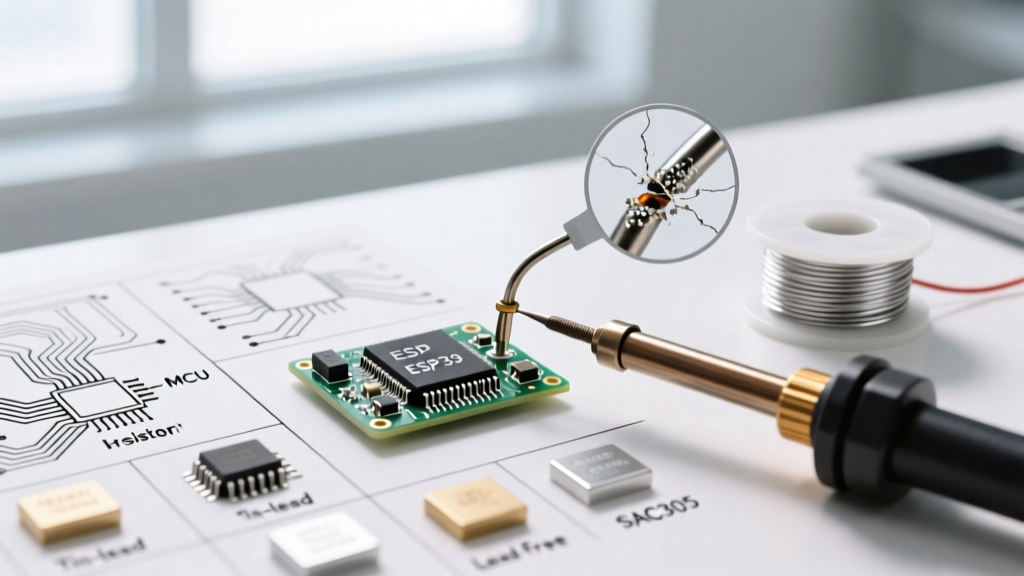
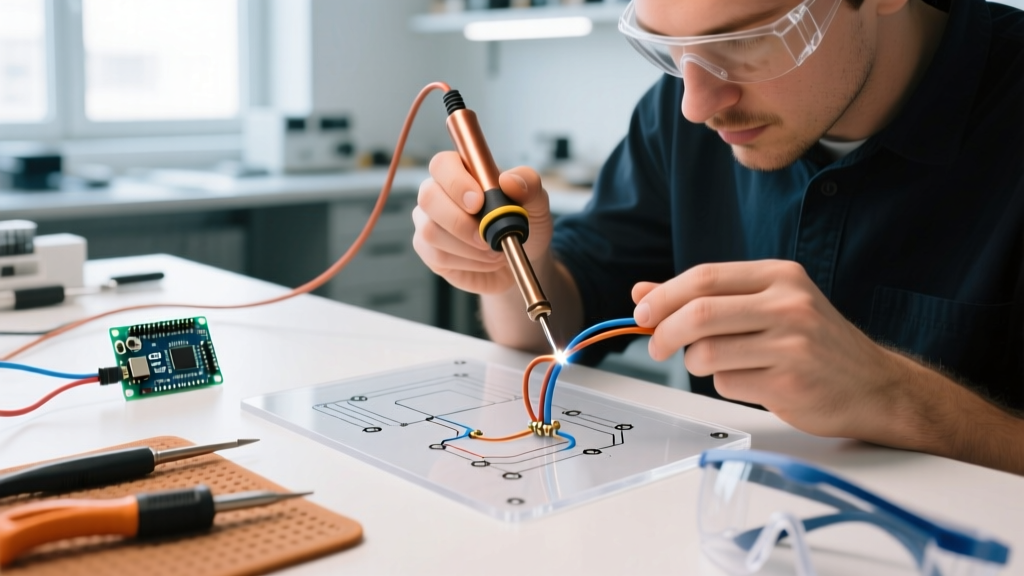
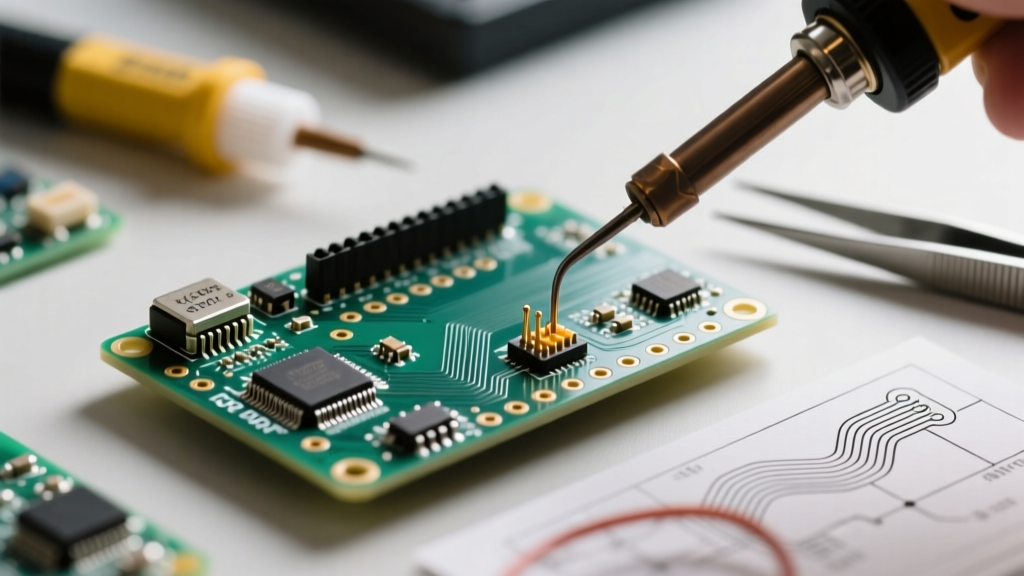
Soldering, by definition, occurs at temperatures below 450°C (840°F). The base metals (like copper traces on a PCB or copper pipes) never melt. Instead, a low-melting-point filler metal (solder) is liquefied and drawn into the joint via capillary action, forming a metallurgical bond through intermetallic compound (IMC) formation at the surface boundary. Standard Sn63/Pb37 eutectic solder melts at a mere 183°C (361°F), while modern lead-free SAC305 alloys melt around 217°C (423°F).
Process & Hazard Comparison Matrix
| Feature | Soldering (Electronics/Plumbing) | Welding (MIG/TIG/Stick) |
|---|---|---|
| Base Metal State | Solid (Never Melts) | Liquid (Fused into Molten Pool) |
| Operating Temperature | 183°C - 400°C (361°F - 752°F) | 1,500°C - 3,300°C+ (2,700°F - 6,000°F+) |
| Primary Respiratory Hazard | Rosin/Colophony Flux Fumes (Asthma sensitizer) | Hexavalent Chromium, Ozone, Vaporized Base Metals |
| Primary Optical Hazard | Splatter (Minor thermal/chemical burn risk) | Intense UV/IR Radiation (Arc Eye, Retinal Damage) |
| Standard PPE Requirement | ANSI Z87.1 Safety Glasses, Fume Extractor | Shade 10-13 Auto-Darkening Helmet, FR Jacket, Respirator |
Soldering Safety: The Invisible Chemical Threats
Because soldering lacks the blinding arc and extreme sparks of welding, it is frequently underestimated. However, soldering presents insidious, long-term chemical hazards that require strict adherence to IPC J-STD-001H safety guidelines and proper ventilation.
The Rosin Flux Fallacy and Occupational Asthma
The most significant respiratory danger in electronics soldering is not the metal, but the flux. Rosin-based (colophony) fluxes, when heated to 350°C, vaporize and create complex aliphatic aldehydes and gases. According to the CDC and NIOSH, repeated inhalation of rosin flux fumes is a known occupational asthma sensitizer. Once sensitized, even microscopic exposures can trigger severe asthmatic attacks.
Actionable Mitigation: Never rely on a simple desk fan to blow fumes away from your face; this merely disperses them into the room's ambient air. You must use a localized fume extraction system equipped with both a HEPA filter (for particulates) and an activated carbon bed (for VOCs and aldehydes). Units like the Hakko FA-400 or industrial BOFA extraction systems are mandatory for continuous bench work.
The Lead Inhalation Myth vs. Ingestion Reality
A common misconception is that soldering with leaded alloys (like 63/37) causes lead poisoning via inhalation. Lead has a boiling point of 1,749°C (3,180°F). Since soldering irons max out around 450°C, lead does not vaporize during standard soldering. The true hazard is ingestion via the hand-to-mouth pathway. Lead dust transfers from the solder wire to your hands, and subsequently to food, beverages, or cigarettes.
Safety Rule: Never eat, drink, or apply cosmetics at a soldering workstation. Always wash hands with cold water and a dedicated lead-removal soap (like D-Lead) immediately after handling solder wire. Hot water opens the pores, potentially increasing dermal absorption of heavy metals.
Welding Safety: Thermal, Radiant, and Particulate Extremes
Welding is a high-energy process governed by strict OSHA 1910.252 standards. The hazards here are immediate, violent, and potentially lethal without proper PPE.
Optical Hazards: Arc Eye and IR Retinal Damage
The electric arc in TIG or MIG welding emits massive amounts of Ultraviolet (UV) and Infrared (IR) radiation. Looking at an arc without protection for even a fraction of a second can cause photokeratitis (commonly known as 'arc eye' or welder's flash), which feels like having sand rubbed into your corneas. Long-term IR exposure can cause cataracts and retinal burns.
Actionable Mitigation: Standard sunglasses or clear safety glasses are entirely useless against welding arcs. You must use an auto-darkening welding helmet rated between Shade 10 and Shade 13 (depending on the amperage). For precision TIG welding, invest in a helmet with a 1/1/1/1 optical clarity rating and a 1/25,000-second switching speed to prevent flash exposure during arc strikes.
Hexavalent Chromium and Toxic Fumes
When welding stainless steel, the extreme heat vaporizes chromium in the base metal, which oxidizes in the air to form Hexavalent Chromium (Cr(VI)). Cr(VI) is a highly toxic, known human carcinogen linked to lung cancer and severe respiratory tract irritation. Furthermore, the UV radiation from the arc interacts with atmospheric oxygen to generate ozone, a severe lung irritant.
Actionable Mitigation: General room ventilation is insufficient for stainless steel welding. You must use source-capture fume extraction arms positioned within 6 to 8 inches of the weld puddle. In confined spaces or when welding highly toxic alloys (like galvanized steel, which releases zinc oxide causing 'metal fume fever'), a NIOSH-approved PAPR (Powered Air-Purifying Respirator) integrated into the welding helmet is legally and medically required.
The 'Silver Soldering' Confusion: Where the Lines Blur
The confusion regarding whether soldering is the same as welding often stems from the term 'silver soldering'. In HVAC, jewelry making, and heavy electrical lug termination, technicians frequently use silver-bearing alloys that melt between 600°C and 800°C (1,100°F - 1,470°F).
Technically, this process is brazing, not soldering. Because the temperature exceeds the 450°C threshold that defines soldering, the flux chemistry changes (often requiring highly corrosive fluoride-based fluxes), and the thermal radiation becomes significant enough to require Shade 3 to Shade 5 didymium or welding glasses to protect against infrared glare and sodium flare. If you are using an oxy-acetylene torch to join copper pipes with a 15% silver alloy, you are brazing, and you must adopt brazing safety protocols, including fire-retardant clothing and specialized eye protection.
Mandatory PPE Requirements by Process
To ensure absolute safety in your workshop, adhere to this strict PPE matrix based on the process you are executing:
- Electronics Soldering (PCB/Wire): ANSI Z87.1 clear safety glasses (splash protection), nitrile gloves (if handling leaded wire), localized HEPA/Carbon fume extractor, ESD-safe wrist strap.
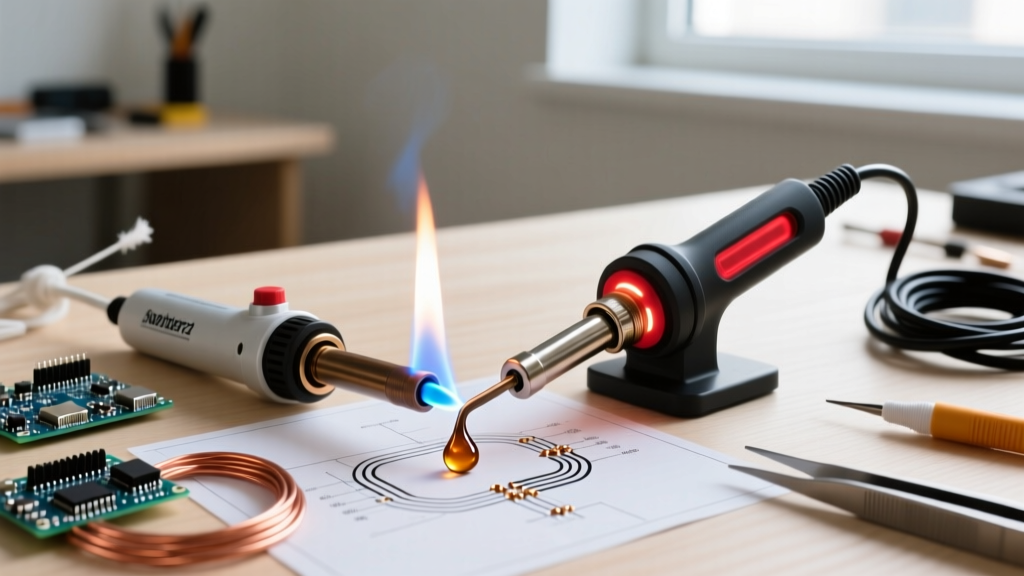
- Plumbing Soldering (Propane/MAPP Gas): ANSI Z87.1 safety glasses, heavy leather work gloves, fire-retardant welding blanket to protect surrounding structures, Class B fire extinguisher within 10 feet.
- Brazing / Silver Soldering: Shade 4 or 5 gas welding goggles (IR protection), leather apron, respirator if using fluoride fluxes in poorly ventilated areas.
- MIG/TIG/Stick Welding: Auto-darkening helmet (Shade 10-13), ANSI Z87.1 safety glasses worn underneath the helmet, flame-resistant (FR) cotton or leather jacket, heavy insulated welding gauntlets, steel-toed metatarsal boots, and PAPR or N95/P100 respirator for fume mitigation.
Expert Verdict & Final Safety Takeaways
So, is soldering the same as welding? Absolutely not. Soldering is a low-temperature chemical adhesion process where the primary threats are chronic respiratory issues from flux vaporization and heavy metal ingestion. Welding is a high-temperature fusion process where the threats are immediate and severe: blinding radiation, catastrophic thermal burns, and carcinogenic metal vaporization.
As a best practice for 2026 and beyond, always assess the temperature threshold and the base metal chemistry before striking an arc or heating an iron. Equip your workspace with process-specific extraction and PPE, and never assume that the safety gear designed for a soldering bench will protect you in a welding bay, or vice versa.