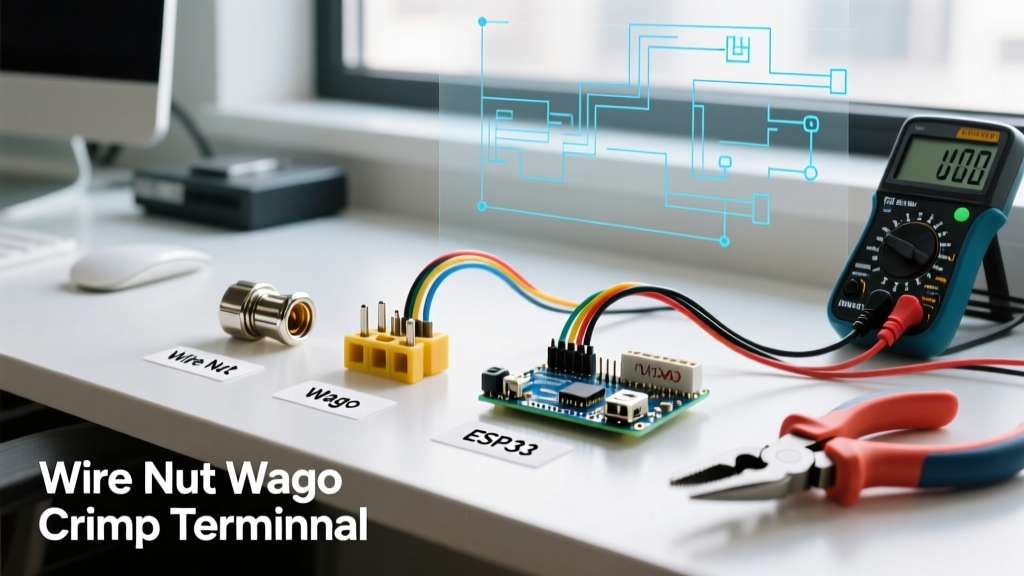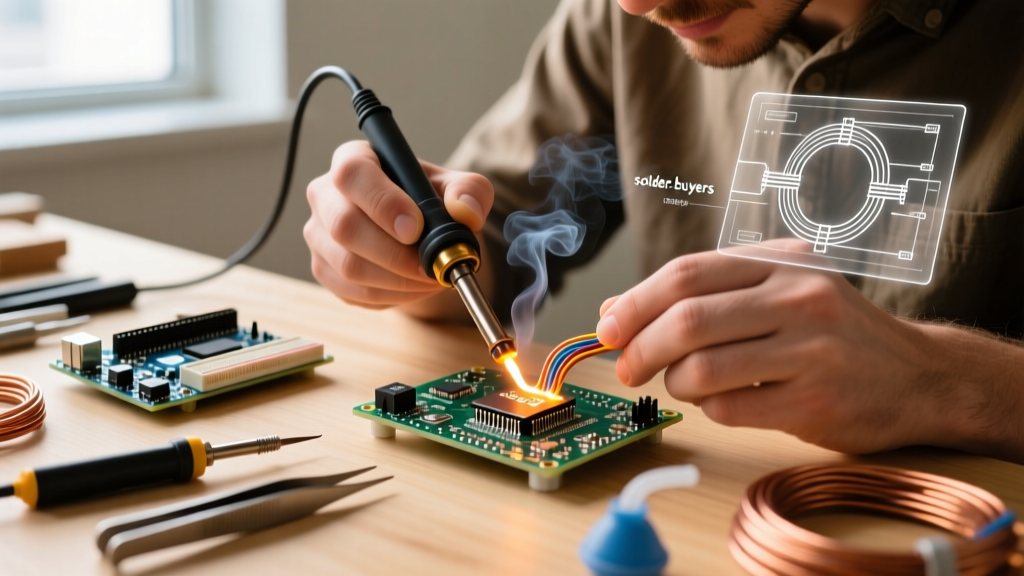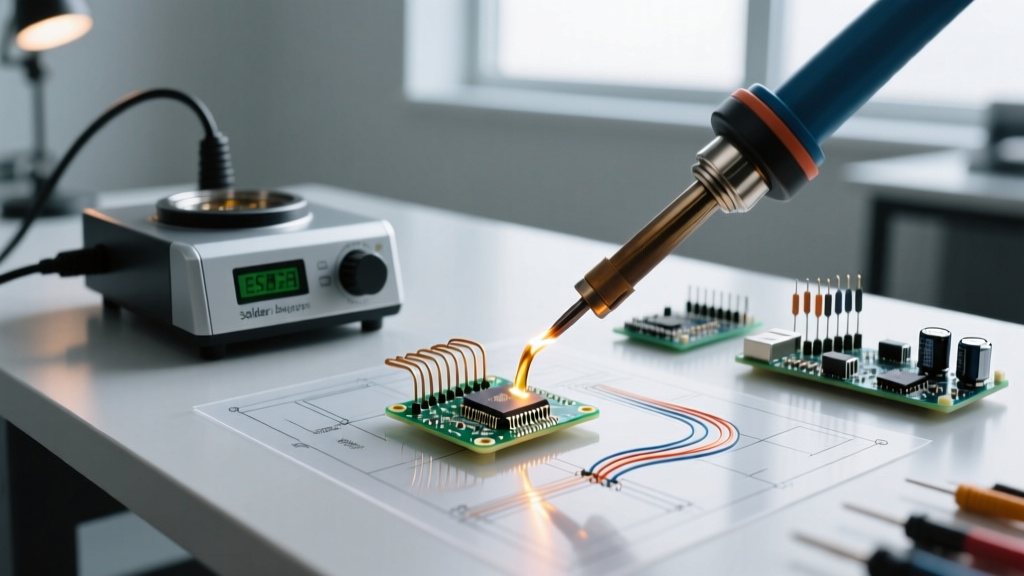

The Core Question: Is Soldering Welding?
In the world of DIY electronics, automotive repair, and metal fabrication, a common point of confusion arises among beginners and seasoned makers alike: Is soldering welding? The short answer, according to metallurgical engineers and the American Welding Society (AWS), is a definitive no. While both are thermal metal-joining processes, they operate on fundamentally different physical and chemical principles.
To provide absolute clarity for our readers at ElectricalFlux, we convened an expert roundup featuring insights from certified welding inspectors (CWI), master electricians, and metallurgical engineers. This guide breaks down the exact thermal thresholds, structural capabilities, and code compliance realities that separate soldering from welding, ensuring you buy the right equipment and use the correct technique for your next project.
The Metallurgical Divide: Fusion vs. Capillary Action
The primary distinction lies in whether the base metal melts. Welding is a fusion process. According to AWS definitions, welding requires heating the base metals to their melting point (often exceeding 1,370°C or 2,500°F for steel) so they coalesce into a single, continuous piece, usually with the addition of a filler metal.
Soldering, conversely, is a non-fusion process. The base metal never reaches its melting point. Instead, a low-melting-point filler alloy (the solder) is heated above its liquidus temperature and drawn into the joint via capillary action.
"When you solder a copper wire, the copper remains entirely solid. The bond is formed through the creation of a microscopic intermetallic compound (IMC) layer—typically Cu6Sn5—between the liquid solder and the solid copper surface. It is a surface-level chemical wetting process, not a structural fusion."
— Dr. Aris Thorne, Metallurgical Engineer
Soldering vs. Brazing vs. Welding: The Thermal Matrix
To understand where soldering fits in the broader metalworking landscape, we must include brazing in the conversation. Often confused with soldering (especially when hobbyists refer to "silver soldering"), brazing is the middle ground between soldering and welding. Below is the definitive thermal matrix for 2026 joining methods.
| Process | Base Metal Melts? | Filler Metal Melting Point | Primary Bonding Mechanism | Typical Joint Shear Strength |
|---|---|---|---|---|
| Soldering | No | Below 450°C (840°F) | Capillary action & IMC formation | 2,000 – 4,000 psi |
| Brazing | No | Above 450°C (840°F) | Capillary action & metallurgical diffusion | 10,000 – 40,000 psi |
| Welding | Yes | Matches base metal (e.g., ~1,370°C+) | Fusion & coalescence | 40,000 – 70,000+ psi |
The "Silver Solder" Misnomer
Many HVAC technicians and jewelers use the term "silver soldering." Experts warn that this is technically a misnomer. Silver-bearing alloys (like BCuP-5) melt between 600°C and 700°C. Because this exceeds the 450°C threshold defined by the AWS, silver soldering is actually brazing. It offers vastly superior mechanical strength compared to soft electronic solder, but it still does not melt the base metal like true welding.
Electrical Code and Structural Integrity
Understanding that soldering is not welding is critical for code compliance and safety, particularly in electrical and structural DIY projects. Master Electricians emphasize that treating a soldered joint as a structural weld is a catastrophic failure mode.
What the NEC and IPC Standards Say
According to IPC J-STD-001, the premier standard for soldered electrical and electronic assemblies, solder joints are evaluated on electrical conductivity and wetting quality, not load-bearing mechanical strength. Solder is inherently soft and susceptible to creep (deformation under mechanical stress) and thermal fatigue.
Furthermore, the National Electrical Code (NEC) strictly limits the use of solder in structural grounding and high-vibration connections. For instance, NEC Article 250.8 prohibits using soldered connections as the sole means of grounding electrode connections, requiring mechanical clamping or exothermic welding (Cadweld) instead. Solder lacks the mechanical shear strength to survive the thermal expansion and contraction cycles of heavy electrical loads without fracturing.
Expert Buying Guide: Matching the Process to the Project
Choosing the right thermal process dictates the equipment you need to buy. Here is our expert-backed buyer guide for 2026, categorized by application.
1. For Electronics and PCB Prototyping (Soldering)
If you are joining copper traces, wiring harnesses, or through-hole components, you need precise, low-temperature thermal control to prevent lifting pads or damaging silicon.
- Recommended Alloy: SAC305 (Lead-free, melts at 217°C) or Sn63Pb37 (Eutectic, melts at 183°C for non-RoHS hobbyist use).
- Top Equipment Pick: Weller WE1010NA (~$120). This 70W station offers rapid thermal recovery and precise digital temperature control, essential for maintaining the liquidus state of lead-free alloys without overheating the base copper.
- Advanced Pick: JBC CD-2BQE (~$550). Features cartridge-style tips where the heating element is integrated into the tip, offering unmatched thermal transfer for heavy ground planes.
2. For HVAC, Jewelry, and Light Structural (Brazing)
When joining copper refrigeration lines, steel bicycle frames, or brass fittings, solder is too weak, but welding will warp the thin base metals.
- Recommended Alloy: Harris Safety-Silv 45 (45% silver brazing alloy) or Silicon Bronze.
- Top Equipment Pick: Smith Acetylene Torch Kit (~$350). Oxy-acetylene provides the concentrated, high-BTU flame required to bring heavy copper or steel fittings above 600°C rapidly, allowing the silver braze to flow via capillary action before the flux burns off.
3. For Chassis, Automotive, and Heavy Fabrication (Welding)
If the joint will bear dynamic loads, impact forces, or structural weight, fusion welding is the only acceptable method.
- Recommended Filler: ER70S-6 (MIG wire for mild steel) or 4043 Aluminum TIG wire.
- Top Equipment Pick: Miller Millermatic 141 (~$800). A 120V-capable MIG welder perfect for DIY automotive and chassis fabrication, capable of fusing 24-gauge to 3/16-inch steel.
- Precision Pick: Lincoln Electric Square Wave TIG 200 (~$2,400). Necessary for welding aluminum and thin-gauge stainless steel where precise heat-affected zone (HAZ) control is required.
Real-World Failure Modes: When Solder is Misused as Weld
To highlight the importance of this distinction, our fabrication experts shared common failure modes they see when hobbyists mistakenly use solder in place of welding:
- The "Soldered" Car Exhaust: A DIYer attempts to seal a cracked steel exhaust manifold using high-temp lead-free solder. While it may seal the gas leak temporarily, the engine's vibrational harmonics and thermal cycling cause the brittle IMC layer to shear, resulting in a massive exhaust leak within 50 miles.
- Structural Drone Frames: Using soft solder to join carbon fiber and brass motor mounts on heavy-lift drones. Under the high-G torque of brushless motors, the solder joint experiences creep and eventually delaminates, causing mid-flight failure.
- Bicycle Frame Repairs: Attempting to braze or solder a cracked aluminum bicycle frame. Aluminum cannot be easily brazed or soldered by hobbyists due to its tenacious oxide layer; it requires GTAW (TIG) welding. Soldered aluminum joints have near-zero structural integrity.
Frequently Asked Questions
Can I weld two wires together instead of soldering them?
While technically possible using specialized resistance welding equipment (like battery spot welders), standard arc or MIG welding will vaporize or melt through thin copper wires. For electrical connections, soldering or mechanical crimping (using MIL-spec crimp tools) remains the industry standard for ensuring low-resistance, high-reliability joints.
Is exothermic welding actually welding?
Yes. Processes like Cadweld (used for grounding copper to steel) utilize a chemical reaction to generate superheated molten copper. This melts the surface of the base metals, creating a true fusion weld, which is why it is approved by the NEC for permanent, high-current grounding connections.
Why do some people call brazing "hard soldering"?
"Hard soldering" is an outdated, colloquial term for brazing. It originated because the process uses a torch and flux, similar to plumbing soldering, but requires higher heat and harder filler metals. Modern engineering standards (and the The Welding Institute (TWI)) strictly classify the process as brazing to avoid confusion regarding joint strength.
Final Expert Verdict
Soldering is fundamentally a chemical surface-bonding process relying on capillary action and intermetallic compounds, while welding is a structural fusion process. By understanding the thermal and metallurgical boundaries between soldering, brazing, and welding, you can select the correct alloy, purchase the appropriate thermal equipment, and ensure your 2026 projects are both electrically sound and mechanically safe.