
The Problem with Pre-Packaged Soldering Tool Kits
If you have ever searched for a soldering tool kit on major e-commerce platforms, you have likely encountered the infamous "100-in-1" bundles. Priced around $35 to $50, these kits promise everything from a soldering iron to tweezers, wire strippers, and a multimeter. From a professional electrical engineering perspective, these kits are largely e-waste. They typically feature ungrounded, transformer-based irons with massive thermal lag, toxic unregulated flux, and wire strippers that crush rather than slice AWG 24 copper.
Building a reliable, safe, and efficient toolkit requires abandoning the all-in-one marketing gimmick. Instead, we utilize a modular soldering tool kit decision framework that aligns your specific use case—whether through-hole prototyping, heavy-gauge automotive wiring, or micro-SMD rework—with precise thermal and mechanical requirements.
Phase 1: The Application Decision Matrix
Before selecting hardware, you must define your primary soldering environment. The thermal mass of your target joint dictates the wattage and tip geometry required to achieve proper wetting without damaging sensitive components.
| Application | Required Wattage | Ideal Tip Geometry | Recommended Solder Alloy |
|---|---|---|---|
| Micro-SMD / 0402 Components | 20W - 40W (Fast recovery) | Micro Pencil / I-Type | Sn63Pb37 (0.3mm) or SAC305 |
| Standard Through-Hole / DIP ICs | 45W - 65W | Chisel (1.6mm - 2.4mm) | Sn63Pb37 (0.8mm) with RMA Flux |
| Heavy Wiring / XT60 Connectors | 80W - 150W+ | Wide Chisel / Bevel (4mm+) | Sn60Pb40 (1.5mm+) High-Flux |
Phase 2: Core Station Selection (Tiered Framework)
The soldering iron is the heart of your kit. Modern stations utilize PID (Proportional-Integral-Derivative) temperature controllers to maintain thermal stability. Here is how to allocate your budget based on your operational tier.
Tier 1: The Modern Budget-Conscious Hobbyist
Recommendation: Pinecil V2 (Approx. $26 - $30)
Forget the cheap 60W dial irons. The Pinecil V2 is a RISC-V powered, open-source smart iron that runs on IronOS. It requires a separate USB-C PD (Power Delivery) 65W laptop charger, which brings the total kit cost to around $50. It boasts a 320x240 IPS screen, 0-to-300°C heat-up in under 15 seconds, and uses widely available Hakko T12 compatible tips. Failure Mode Warning: Do not use cheap, unbranded USB-C cables; they lack the E-Marker chip required to safely negotiate 20V/3.25A, which can result in voltage drops and erratic heating.
Tier 2: The Serious Prototyper & Repair Tech
Recommendation: Hakko FX-888D (Approx. $115)
The undisputed workhorse of electronics labs. It uses the T18 tip series and a ceramic heater. While its thermal recovery is slightly slower than cartridge-based systems, its durability and low cost of ownership make it a staple. Pro-Tip: Replace the stock damp cellulose sponge with a brass wire sponge. Damp sponges cause rapid thermal shock, leading to micro-fractures in the tip’s iron plating over time.
Tier 3: High-Volume Production & Advanced Rework
Recommendation: JBC CD-2BQE (Approx. $495+)
JBC stations integrate the heating element directly into the tip cartridge (C245 series). This eliminates the thermal transfer gap found in traditional ceramic heaters, allowing the tip to recover from a massive heat-sink joint (like a multi-layer ground plane) in under 2 seconds. This is mandatory for lead-free SMD rework and strict adherence to high-reliability standards.
Expert Insight: The Grounding Imperative
Never use an ungrounded soldering iron on MOSFETs, CMOS logic, or bare microcontrollers. Stray AC voltages and static buildup can instantly blow the gate oxide of sensitive semiconductors. Always verify your station’s tip-to-ground resistance is under 2 ohms using a multimeter.
Phase 3: Peripheral Toolkit Assembly
A soldering tool kit is only as good as its mechanical prep tools. Pre-packaged kits fail spectacularly here. Build your peripheral kit with these specific, industry-proven models.
1. Precision Wire Strippers
- Knipex 12 62 180 ($45): Features precision-machined blades that score the insulation without nicking the copper conductor. Nicked copper creates stress risers that lead to wire fatigue and catastrophic failure in high-vibration environments.
- Jokari 20050 ($12): The best budget automatic stripper for standard AWG 24 to 10 hookup wire.
2. Flush Cutters
- Hakko CHP-170 ($12): The industry standard for flushing component leads. The 15-degree angled jaw allows for true flush cuts on PCB pads. Avoid the $3 Amazon clones; their pivot pins loosen within a week, and the soft steel jaws dent when cutting anything thicker than AWG 22.
3. Flux and Solder Chemistry
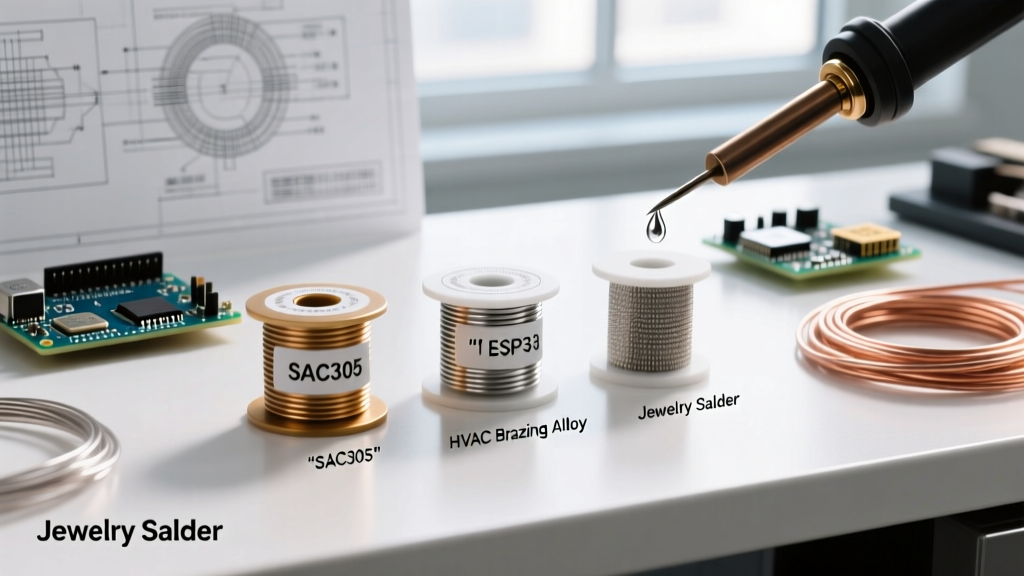
The metallurgical bond of a solder joint relies entirely on flux to remove oxidation. According to the specifications detailed by Kester’s wire solder documentation, selecting the right flux core is critical for joint reliability.
- Rosin Mildly Activated (RMA): Excellent wetting, but leaves a sticky residue that must be cleaned with 99% Isopropyl Alcohol to prevent long-term corrosion.
- No-Clean: Leaves a hard, benign residue. Ideal for quick prototypes, but can cause parasitic capacitance in high-frequency RF circuits if left under BGA components.
- Water-Soluble (OA): Highly aggressive. Used for heavily oxidized pads but must be washed with distilled water immediately, or it will cause dendritic growth and short circuits.
Phase 4: Cost Breakdown & The Anti-Kit Strategy
Building a curated, high-reliability kit costs more upfront than an Amazon bundle, but it eliminates the hidden costs of ruined PCBs, wasted solder, and tool replacement.
| Component | Generic "100-in-1" Kit | Curated Pro-Hobbyist Kit |
|---|---|---|
| Core Iron / Station | $25 (Ungrounded, 60W) | $115 (Hakko FX-888D) |
| Wire Strippers | $3 (Crushes AWG 24) | $12 (Jokari Automatic) |
| Flush Cutters | $2 (Soft steel, dents) | $12 (Hakko CHP-170) |
| Solder (63/37) | $8 (Unknown origin, high dross) | $28 (Kester 245, 0.8mm) |
| Flux / Wick | $4 (Acidic, corrosive) | $15 (MG Chemicals No-Clean) |
| Total Investment | $42 | $182 |
Industry Standards and Reliability
When assembling your kit and refining your technique, your goal should be to produce joints that meet professional reliability standards. The IPC J-STD-001 standard outlines the exact requirements for soldered electrical and electronic assemblies, including proper wetting angles, fillet formation, and the prohibition of disturbed joints.
Furthermore, for aerospace or high-vibration applications, referencing NASA’s high-reliability soldering standards (NASA-STD-8739.3) provides rigorous guidelines on wire preparation, terminal wrapping, and insulation clearance. A properly curated soldering tool kit is the foundational requirement for achieving these exacting tolerances. Investing in precision thermal control and high-purity metallurgy today ensures your electronic assemblies survive the demands of tomorrow.