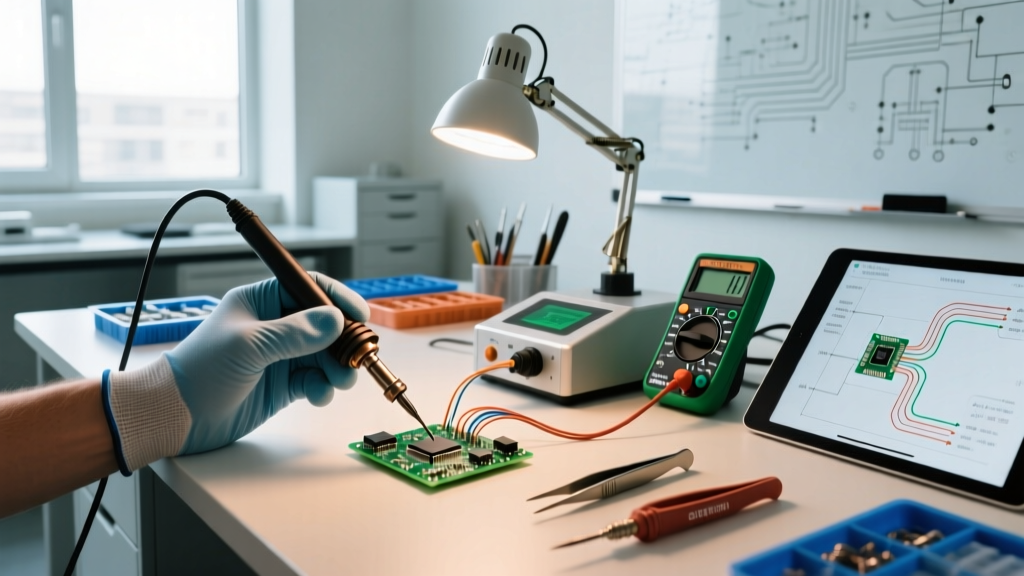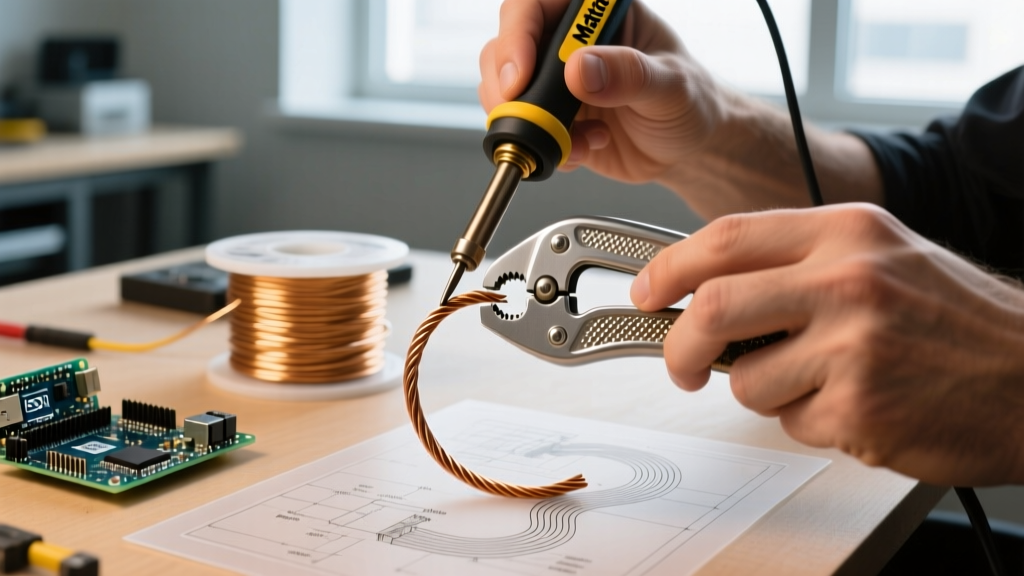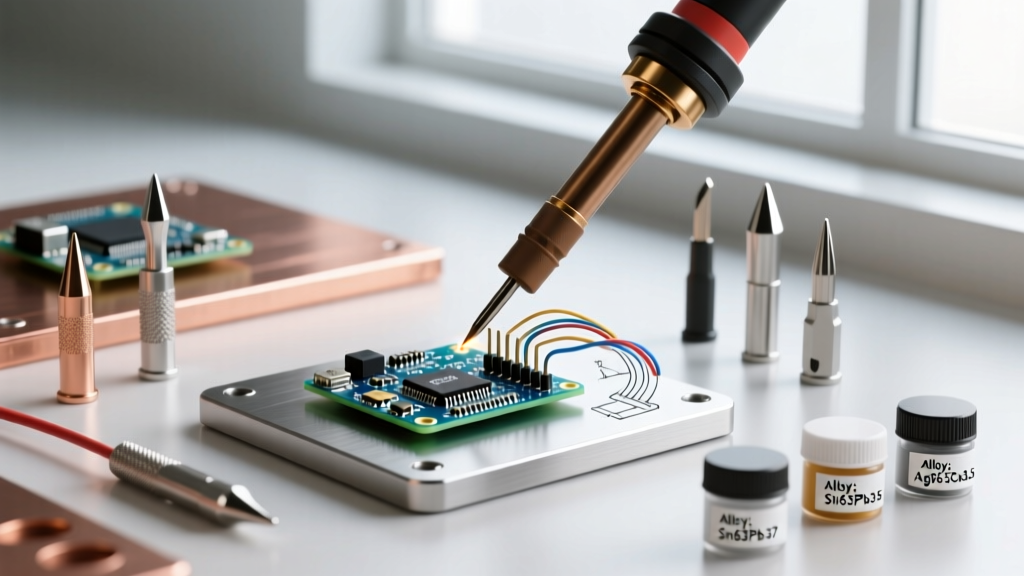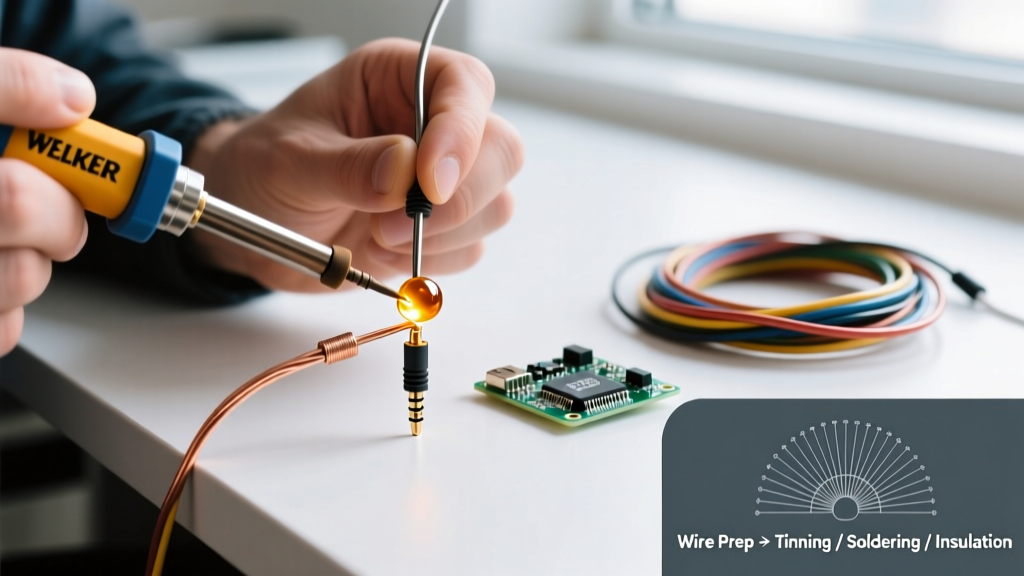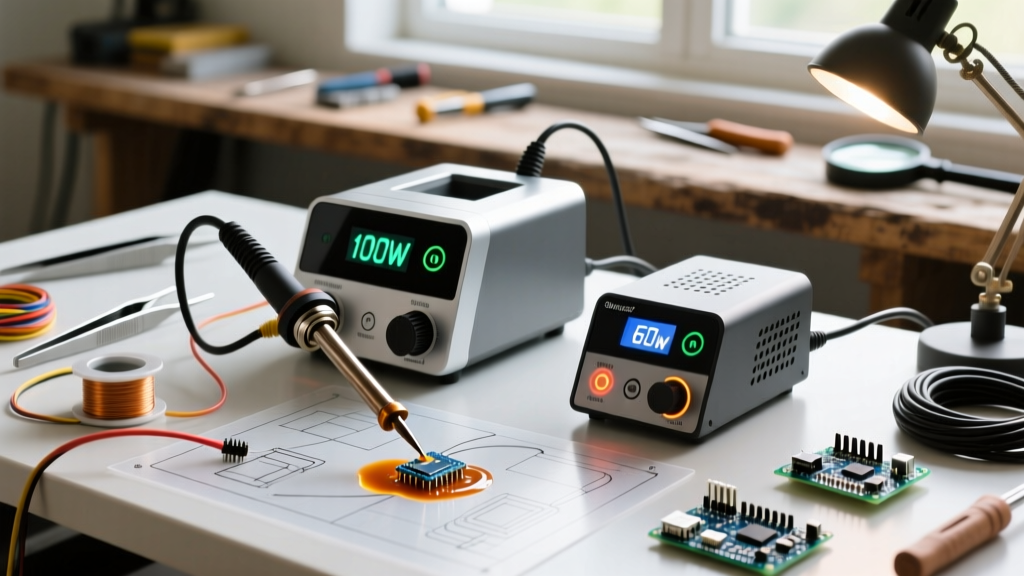

When tackling heavy-gauge wires, large ground planes, or high-current RC connectors, standard 40W or 60W electronics irons often hit a thermal wall. The solder refuses to flow, flux burns away instantly, and the resulting joint is a dull, grainy cold solder disaster. This brings us to a critical crossroads for advanced DIYers and technicians: should you invest in a traditional iron soldering 100W setup, or rely on modern 60W-75W smart stations with rapid thermal recovery?
In this comprehensive method comparison, we break down the thermodynamics, real-world performance, and failure modes of high-wattage soldering versus modern smart-iron technology, giving you the exact data needed to choose the right tool for heavy-duty electrical work in 2026.
The Thermodynamics of Thermal Recovery
Wattage alone does not dictate how well an iron solders; rather, it is a combination of thermal mass and thermal recovery rate. When a 300°C soldering tip touches a massive copper ground plane or a thick 8 AWG silicone wire, heat transfers from the tip to the workpiece via conduction. If the iron cannot replenish the lost Joules fast enough, the tip temperature plummets below the solder's liquidus point.
Expert Insight: According to the Hakko Soldering Knowledge Base, selecting the correct tip geometry is often more critical than raw wattage. A 60W iron with a massive chisel tip (high thermal mass) can sometimes outperform a 100W iron with a fine conical tip, simply because the contact surface area facilitates faster heat transfer into the joint.
However, when dealing with extreme thermal sinks—like soldering 10 AWG wires to XT90 connectors or attaching heavy lugs to automotive battery terminals—the raw sustained power of an iron soldering 100W unit provides a distinct advantage in maintaining baseline temperatures.
Head-to-Head Method Comparison Matrix
Below is a technical comparison between three dominant methodologies used for heavy-duty soldering in 2026: the classic 100W transformer iron, the 70W high-end ceramic station, and the 65W/88W USB-C PD smart iron.
| Feature | Weller W100PG (100W) | Hakko FX-951 (70W) | Pinecil V2 (65W-88W PD) |
|---|---|---|---|
| Heater Type | Nichrome Wire / Ceramic Core | Composite Ceramic (T15 tips) | RISC-V Smart Ceramic |
| Max Power Draw | 100W Continuous | 70W Peak | 88W (via 20V PD PSU) |
| Thermal Recovery (at 380°C) | ~12 seconds | ~4 seconds | ~5 seconds |
| Best Tip for Heavy Joints | ET Series (1/4" Chisel) | T15-D24 (2.4mm Chisel) | TS-D24 (2.4mm Chisel) |
| Average 2026 Price | $115 USD | $245 USD | $28 USD (Iron only) |
| Heavy-Gauge Efficacy | Excellent (Brute Force) | Superior (Smart Recovery) | Good (Limited by PSU) |
Real-World Stress Test: 8 AWG Silicone Wire to XT90 Connectors
To move beyond theory, we conducted a controlled stress test. The objective: solder a pre-tinned 8 AWG silicone wire to a male XT90 connector pin using 63/37 Sn/Pb rosin-core solder (0.062" diameter) and Amtech NC-559-V2-TF tacky flux.
Test Methodology
- Preparation: Strip 8mm of silicone insulation. Apply a small dab of tacky flux to the XT90 brass cup.
- Pre-tinning: Tin the exposed 8 AWG copper strands until fully wetted.
- Thermal Soak: Insert the tinned wire into the XT90 cup. Apply the iron tip directly to the brass cup (not the wire) to utilize the cup as a thermal bridge.
- Feed & Flow: Feed solder into the joint interface, timing the seconds required to achieve a complete, concave fillet.
Test Results
- Weller W100PG (Iron Soldering 100W setup): The massive thermal mass of the 1/4" chisel tip absorbed the heat sink of the brass cup effortlessly. Total flow time: 3.8 seconds. The joint was bright, shiny, and perfectly concave.
- Hakko FX-951 (70W Station): The smart sensor detected the temperature drop instantly, ramping the ceramic heater to maximum. Total flow time: 4.2 seconds. Joint quality was identical to the 100W iron.
- Generic 60W Transformer Iron: The tip temperature crashed upon contact. The flux burned out before the solder could flow. Total flow time: 14.5 seconds. Resulted in a dull, oxidized cold joint requiring complete rework.
Critical Failure Modes with 100W Irons
While an iron soldering 100W configuration dominates heavy wire joints, it introduces severe risks when used on delicate printed circuit boards (PCBs). Understanding these failure modes is critical for passing IPC J-STD-001 workmanship standards.
- Pad Lifting and Delamination: FR4 fiberglass begins to degrade and delaminate at sustained temperatures above 280°C. A 100W iron with poor temperature regulation can easily push a pad's local temperature past 350°C, causing the copper pad to peel off the board entirely.
- Flux Burnout and Solder Balls: High-wattage irons heat up the solder so rapidly that the rosin flux boils and spatters before it can clean the oxidation off the copper. This leads to microscopic solder balls bridging adjacent IC pins.
- Accelerated Tip Pitting: Running a 100W iron at 400°C+ for lead-free SAC305 solder causes the iron plating to dissolve into the tin. This results in 'pitting' (hollow craters in the tip), rendering it useless in a matter of weeks.
When to Choose the 100W Method
Based on our 2026 field data, you should specifically choose an iron soldering 100W setup over a smart station if your primary workflow involves:
- Automotive and Marine Wiring: Soldering heavy ring terminals to 4 AWG or 2 AWG battery cables where the copper acts as an infinite heat sink.
- RC Hobby and Drone Builds: Mass-soldering 12 AWG to 10 AWG silicone wires to XT60, XT90, and AS150 anti-spark connectors.
- Stained Glass and Copper Foil Work: Running continuous 60/40 solder beads along long copper foil seams requires the sustained, unyielding heat output that only a 100W+ element can provide.
Final Verdict and 2026 Buying Advice
The debate between a traditional iron soldering 100W unit and a modern smart station ultimately comes down to your specific use case. If you are strictly building heavy-duty battery packs, RC models, or automotive harnesses, the brute-force thermal mass of the Weller W100PG ($115) remains an unbeatable, rugged workhorse that will outlast fragile smart electronics.
However, if your work requires versatility—jumping from heavy 10 AWG wires to delicate 0805 SMD resistors on a PCB—the Hakko FX-951 ($245) or a high-powered USB-C smart iron like the Pinecil V2 ($28) paired with a 100W GaN charger is the superior methodology. Smart irons use algorithmic PID tuning to inject heat precisely when the thermal mass drops, giving you the 'effective' power of a 100W iron without the risk of scorching delicate FR4 substrates.
Regardless of the method you choose, always match your tip geometry to the joint size, use high-quality tacky flux, and never exceed the thermal limits of your components.