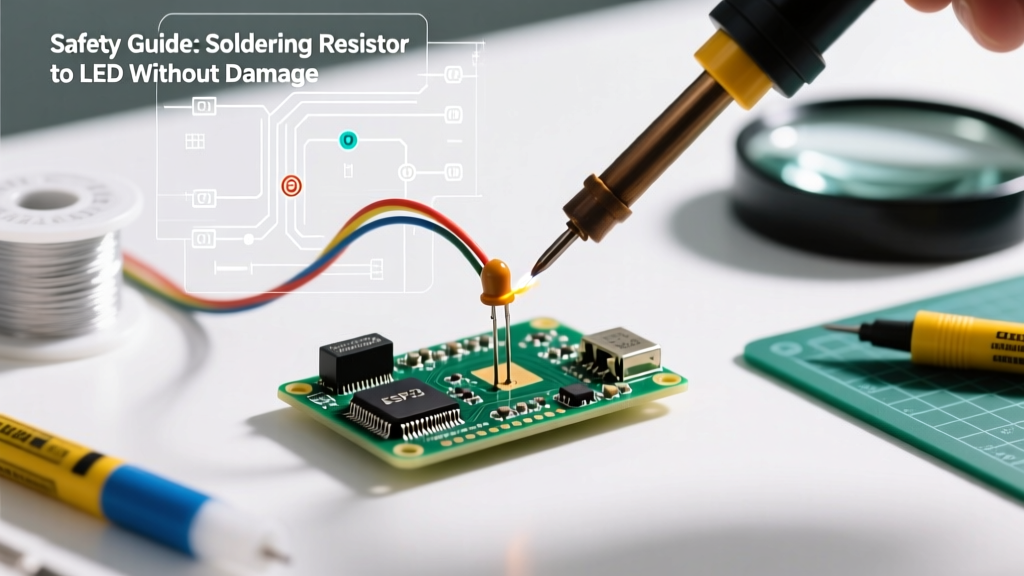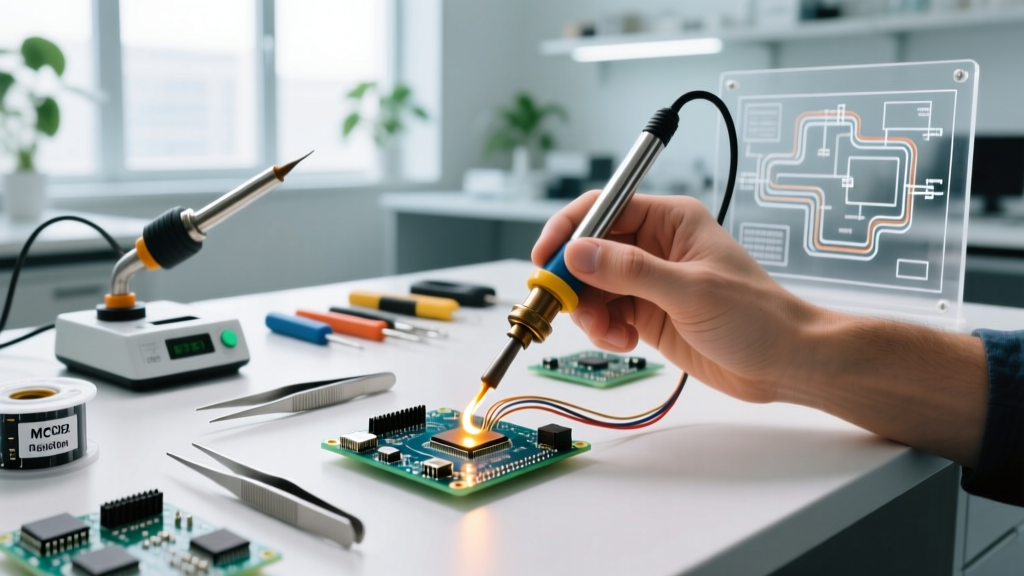

The Reality Check: Is Soldering Actually Easy?
If you have ever stared at a tangled mess of copper wire and a hot iron, you have likely asked yourself: is soldering easy? The honest answer is that soldering is not inherently difficult, but it is deeply unforgiving of poor technique. Unlike mechanical connections where you can visually verify a tight screw or a ratcheted crimp, soldering relies on hidden metallurgical bonds. A joint can look perfectly shiny and smooth on the outside while harboring a catastrophic 'cold joint' or flux inclusion on the inside.
To truly answer whether soldering is easy, we must compare it against modern mechanical alternatives like crimping, Wago lever nuts, and traditional wire nuts. In 2026, the landscape of electrical and electronics joining has evolved, and soldering is no longer the default choice for every scenario. Let us break down the learning curve, the tools, and the exact scenarios where soldering reigns supreme versus when you should put the iron down.
Method Comparison Matrix: Soldering vs. Mechanical Alternatives
Before diving into the metallurgy, let us look at the hard data comparing soldering to its primary competitors for wire-to-wire and wire-to-board connections.
| Method | Tool Cost (Entry) | Learning Curve | Time per Joint | Vibration Resistance | Best Application |
|---|---|---|---|---|---|
| Hand Soldering | $26 - $115 | Moderate to High | 15 - 45 seconds | Excellent (with strain relief) | PCBs, electronics, RC hobbies |
| Hand Crimping | $45 - $150 | Low to Moderate | 5 - 10 seconds | Superior (Aerospace standard) | Automotive, aerospace, Molex/JST |
| Wago 221 Lever Nuts | $0.30 / unit | Very Low | 3 - 5 seconds | Good (Building wire) | Residential wiring, junction boxes |
| Twist-on Wire Nuts | $0.10 / unit | Low | 10 - 20 seconds | Poor (Prone to backing out) | Basic residential, low-voltage |
Why Soldering Feels 'Hard': The Metallurgy of Wetting
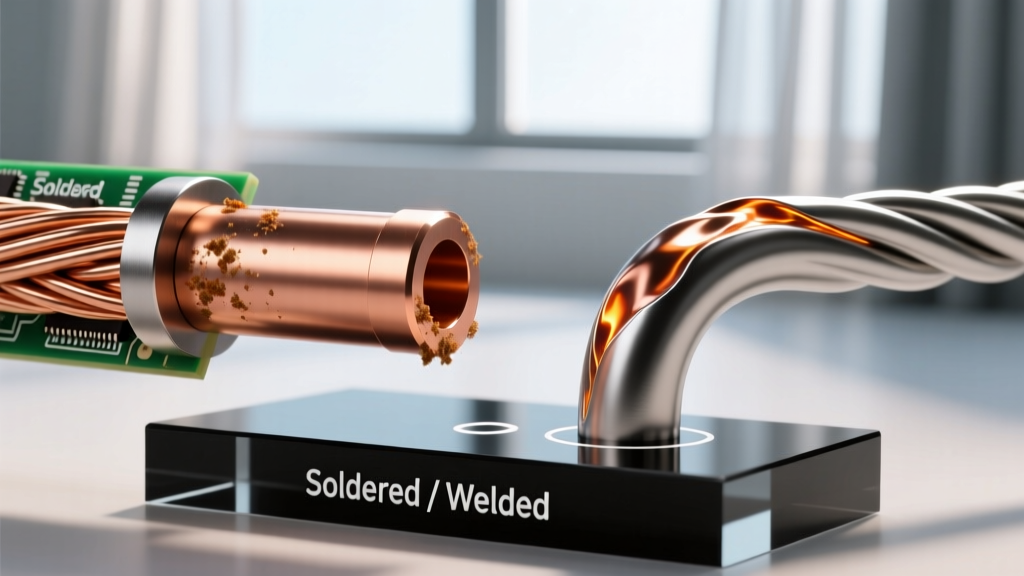
The primary reason beginners struggle with soldering is a misunderstanding of what is actually happening at the molecular level. Soldering is not 'gluing' metals together with molten lead; it is an alloying process called wetting. The molten solder must dissolve a microscopic layer of the base copper to form an Intermetallic Compound (IMC) layer.
The Eutectic Advantage vs. Lead-Free Frustration
If you are learning to solder, the alloy you choose dictates your difficulty level. Traditional 63/37 Tin-Lead (Sn/Pb) is a eutectic alloy. It melts and freezes at exactly 183°C (361°F) with zero 'plastic' (semi-solid) phase. This makes it incredibly easy for beginners because it snaps from liquid to solid instantly, preventing disturbed joints.
Conversely, modern lead-free alloys like SAC305 (96.5% Sn, 3% Ag, 0.5% Cu) melt around 217°C to 220°C and have a pasty, plastic phase. If you bump the wire while SAC305 is cooling through its plastic phase, you will fracture the crystalline structure, resulting in a grainy, high-resistance cold joint. For a beginner asking 'is soldering easy?', starting with 63/37 rosin-core solder (like the industry-standard Kester 44) is the single best way to reduce the learning curve.
When Soldering is the Undisputed Champion
Despite the rise of mechanical connectors, soldering remains mandatory in specific fields. According to the IPC-A-610 Acceptability of Electronic Assemblies standard, soldering is the only acceptable method for creating reliable, gas-tight connections on printed circuit boards (PCBs).
- Printed Circuit Boards (PCBs): You cannot crimp a wire to a surface-mount pad. Soldering is mandatory.
- High-Density Wire Harnesses: In RC models, drones, and custom robotics, soldering XT60 or XT90 connectors saves massive amounts of space and weight compared to bulky crimp housings.
- High-Current Battery Packs: Spot welding is preferred for 18650/21700 cells, but heavy-gauge silicone wire (10 AWG to 8 AWG) to massive copper bus bars requires a high-wattage iron (like a 200W Weller WSP80 or a Hakko FX-951) and excellent flux management.
When You Should Skip Soldering Entirely
There are scenarios where soldering is not just 'hard,' but technically incorrect and legally non-compliant.
Residential In-Wall Wiring (NEC Compliance)
If you are wiring a house, do not solder your splices. The National Fire Protection Association (NFPA) outlines in the National Electrical Code (NEC) Article 110.14(B) that splices must be mechanically and electrically secure before soldering, or you must use identified (listed) devices. Soldering a Western Union splice and wrapping it in electrical tape is a relic of the 1950s and is a fire hazard today. Instead, use Wago 221 Lever Nuts. They utilize a cage-clamp spring mechanism that maintains constant pressure on the wire, accommodating thermal expansion and contraction without loosening over decades.
Aerospace and High-Vibration Automotive
Counterintuitively, soldering is often banned in high-vibration environments like aircraft and motorsports. Solder wicks into the copper strands via capillary action, creating a rigid point where the flexible wire transitions into a solid block. Under intense vibration, this rigid boundary acts as a stress concentrator, causing the copper strands to fatigue and snap just outside the solder joint. In these fields, indent crimping using Mil-spec tools (like the M22520/2-01) is the standard, a fact heavily documented in the NASA Workmanship Standards for high-reliability soldering and crimping.
Tooling Up: What Makes the Process Easier?
If you are committed to learning, your hardware will dictate your frustration levels. The era of the $15 wall-wart soldering iron with a massive, ungrounded tip is over.
Pro Tip: Heat capacity matters more than peak temperature. A massive copper ground plane on a PCB will suck the heat out of a cheap iron, causing you to dwell on the pad for 10+ seconds, which will lift the pad and destroy the board. You need thermal recovery, not just a high dial setting.
- The Budget King ($26): The Pine64 Pinecil V2. Powered by a RISC-V chip and USB-C (up to 24V/4A), it heats to 300°C in under 10 seconds and offers incredible thermal recovery for the price.
- The Workhorse ($115): Hakko FX-888D. A staple in 2026 repair shops. It uses the T18 tip series, which are cheap, abundant, and offer massive thermal mass for heavy-duty through-hole work.
- The Flux Factor ($8): Buy a syringe of Amtech NC-559-V2-TF tacky flux. Applying extra flux to a joint before heating it lowers the surface tension of the molten solder, making it flow effortlessly and preventing bridging on tight IC pins.
Troubleshooting the 'Hard' Parts: Common Failure Modes
When beginners ask why soldering is hard, they are usually experiencing one of three specific failure modes:
- The Ball-Up (De-wetting): The solder forms a perfect sphere on the iron tip and refuses to flow onto the wire. Cause: Oxidation. The tip or wire is dirty. Fix: Clean the tip on a damp brass sponge, apply fresh flux to the wire, and tin the wire before attempting the joint.
- The Frosty/Grainy Joint: The joint looks dull and crystalline instead of shiny. Cause: A disturbed joint during the plastic cooling phase, or insufficient heat. Fix: Reheat the joint with fresh flux and hold the components perfectly still until the solder snaps solid.
- Lifted Pads: The copper trace rips off the fiberglass PCB. Cause: Dwell time exceeding 3-5 seconds. Fix: Use a higher wattage iron with a wider tip to transfer heat faster, reducing the time the iron touches the board.
Frequently Asked Questions
Can I teach myself to solder in one day?
Yes, for basic through-hole components and thick wire splices. You can learn the fundamentals of tinning, flux application, and heat management in an afternoon. However, surface-mount (SMD) soldering under a microscope requires weeks of muscle memory development.
Is soldering wire to wire stronger than crimping?
In terms of pure tensile pull-strength, a properly executed crimp using a ratcheting tool is actually stronger than a soldered joint. A crimp cold-welds the metals together under thousands of pounds of pressure, whereas solder relies on the tensile strength of the softer tin/lead or tin/silver alloy.
Do I need ventilation for soldering?
Absolutely. The smoke you see is not melting metal; it is vaporized rosin flux. Inhaling colophony (rosin) fumes is a known occupational asthma trigger. At a minimum, use a small desktop HEPA/carbon fume extractor, or work in a room with active cross-ventilation.