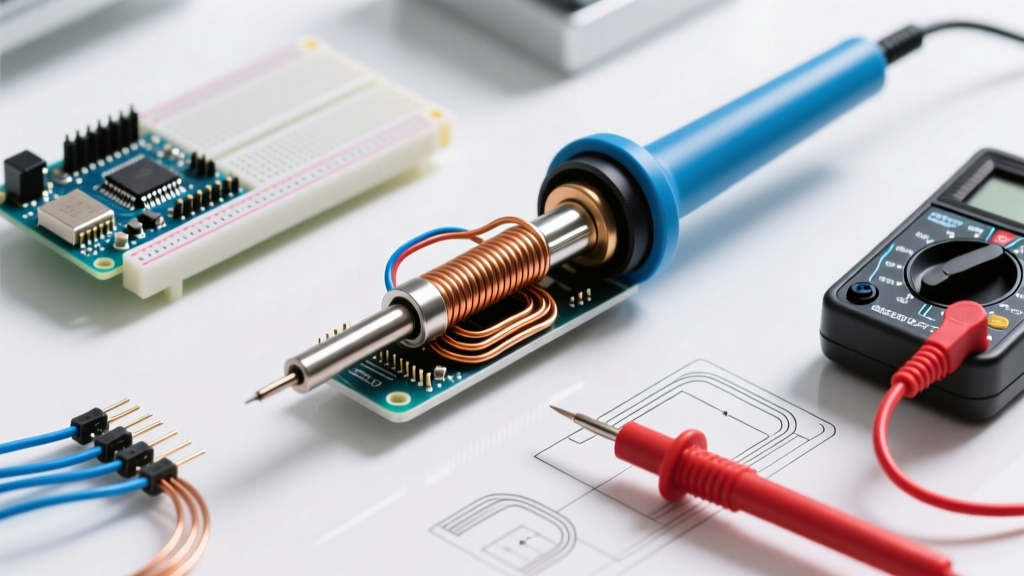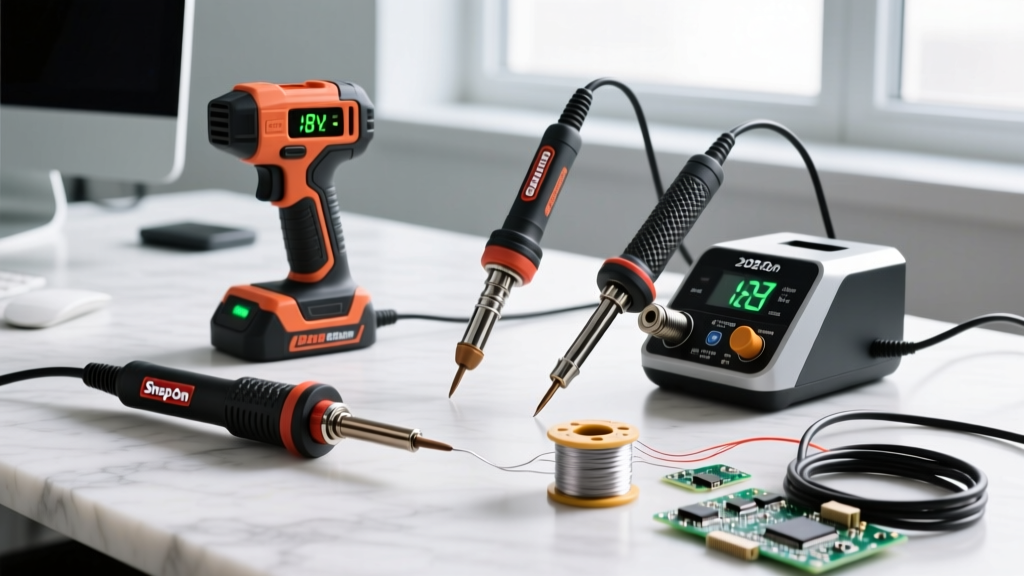

The Allure of the Snap-On Ecosystem for Soldering
When the Snap-on tool truck rolls into an automotive shop or an aerospace maintenance hangar, technicians are conditioned to equate the brand's premium pricing with unmatched durability and precision. From ratchets to diagnostic scanners, the Snap-on name carries serious weight. But what happens when you apply that same premium expectation to thermal tools? Specifically, is a Snap On soldering tool worth the investment in 2026, or are you simply paying for the logo on a rebranded generic iron?
Unlike benchtop stations dominated by specialized brands like Weller, Hakko, and JBC, Snap-on targets the mobile technician. Their soldering lineup primarily consists of 18V lithium-ion cordless irons and butane-powered catalytic soldering torches. To determine if these tools hold up to rigorous professional standards, we convened a panel of industry veterans to dissect the thermal recovery, tip ecosystems, and real-world failure modes of Snap-on's soldering gear.
Meet the Expert Panel
- Marcus Vance: IPC-A-610 Certified Trainer and Avionics Technician with 15 years of experience in high-reliability aerospace wiring.
- Elena Rostova: Master Automotive Electrician specializing in EV battery management systems and complex under-dash harness repairs.
- David Chen: Industrial Maintenance Lead for agricultural and heavy machinery fleets, focusing on field-expedient sensor repairs.
Deep Dive: The Snap-On 18V Cordless Soldering Iron
The flagship of Snap-on's electric soldering lineup is their 18V Lithium-Ion Cordless Soldering Iron. Retailing between $285 and $320 in 2026 (depending on battery inclusion), it promises benchtop-level heat in a completely untethered package. But how does it perform when faced with demanding automotive and industrial applications?
Automotive Harness Repairs and Thermal Sag
Elena Rostova tested the 18V cordless iron on a mix of 14 AWG sensor wires and 8 AWG ground straps commonly found in modern EV platforms. 'The portability is genuinely unmatched when you are buried under a dashboard or working in a tight engine bay where dragging an extension cord is a safety hazard,' Elena explains. 'For 14 to 18 AWG wires using standard 63/37 leaded solder, the iron performs beautifully, holding a steady 340°C.'
However, the tool's limitations become apparent when dealing with high-thermal-mass components. 'If you try to flow lead-free SAC305 solder onto a thick 8 AWG ground strap, the battery voltage sags under the load of the 90W peak draw. The tip temperature drops below the 350°C threshold required by IPC J-STD-001 standards, leading to cold, grainy joints that will eventually fail under vehicular vibration,' she warns.
'The Snap-on 18V cordless iron is a specialist, not a generalist. It excels at quick, low-to-medium mass splices in the field. If you are soldering heavy-gauge battery cables, you still need a high-wattage benchtop station or a dedicated crimping setup.' - Elena Rostova
The Butane Alternative: MT100 and Catalytic Heating
For technicians working in environments where batteries die and electricity is scarce, Snap-on offers butane-powered soldering irons, such as the MT100 and SI100 series kits (priced around $95 to $130). These tools use a flameless catalytic reaction once ignited, heating the tip to over 400°C in roughly 30 seconds.
Altitude, Pressure, and Avionics Edge Cases
Marcus Vance, our avionics expert, points out that while butane irons are a staple in field repair kits, they introduce severe variables when precision is required. 'The Snap-on butane irons are fantastic for splicing a broken thermocouple wire on a combine harvester out in a field,' Vance notes. 'But in avionics, thermal profiling is critical. According to guidelines from the NASA Electronic Parts and Packaging Program, uncontrolled thermal excursions can delaminate PCB pads and damage heat-sensitive micro-components.'
Vance highlights a specific edge case: altitude. 'Because these tools rely on butane gas pressure to feed the catalytic heater, working at high altitudes—like repairing wind farm sensors or high-elevation radar arrays—causes a drop in gas density. Your tip temperature will fluctuate wildly, and you risk either under-heating the joint or scorching the flux and oxidizing the pad.'
Head-to-Head Matrix: Snap-On vs. Industry Benchmarks
To provide a clear buying framework, we compared the core Snap-On offerings against the industry-standard Weller WE1010 benchtop station.
| Feature | Snap-On 18V Cordless Iron | Snap-On MT100 Butane Kit | Weller WE1010 (Benchmark) |
|---|---|---|---|
| Power Source | 18V Lithium-Ion Battery | Refined Butane Gas | 120V AC Mains |
| Peak Wattage/Output | 90W (Peak) | Equivalent to ~75W | 70W (Continuous) |
| Temp Stability | Moderate (Sags on high mass) | Low (Altitude/Wind dependent) | High (Closed-loop sensor) |
| Tip Ecosystem Cost | $35 - $45 per tip | $15 - $20 per tip | $12 - $18 (ETA Series) |
| 2026 Street Price | $285 - $320 | $95 - $130 | $110 - $135 |
Critical Failure Modes & Maintenance Realities
Every tool has an Achilles heel. Our experts identified three specific failure modes and maintenance realities that buyers must consider before purchasing a Snap On soldering tool from the truck.
- Cordless Auto-Shutoff and Tip Baking: The 18V cordless iron features an auto-shutoff mechanism when placed in its magnetic holster. However, David Chen reports that the sensor delay sometimes allows the tip to sit at 380°C for up to 45 seconds before powering down. 'In that window, residual flux bakes onto the iron-plated copper tip, accelerating oxidation. Given that Snap-on replacement tips cost upwards of $40 each, failing to use a high-quality brass wool cleaner and tip tinner after every use will destroy your operating budget.'
- Butane O-Ring Degradation: The internal seals on the MT100 series require proactive maintenance. 'If you use the butane iron daily, the internal O-rings dry out and shrink within 18 to 24 months,' Vance explains. 'Once that happens, butane leaks into the grip housing. It is a massive safety hazard if you are working near open solvents or in confined automotive interiors.' Snap-on offers rebuild kits, but they require careful teardown.
- Battery BMS Limitations: The 18V cordless iron draws heavily on the battery's Battery Management System (BMS). Using older, degraded Snap-on 18V batteries (3.0Ah or smaller) will result in premature thermal cutoffs. For consistent thermal recovery, Elena Rostova mandates using a fresh 5.0Ah or larger high-output battery, which adds significant weight to an already heavy hand tool.
Tip Availability and the Ecosystem Tax
One of the most critical factors in choosing a soldering platform is the availability and variety of tips. According to the Snap-on official catalog, their proprietary tip connections are designed to prevent cross-compatibility with cheaper alternatives. While this ensures quality control, it severely limits your geometry options.
If you need a highly specialized micro-conical tip for 0402 surface-mount components or a heavy-duty bevel tip for large ground planes, you are at the mercy of the Snap-on truck's inventory. Unlike the Hakko T18 or Weller ETA ecosystems, where dozens of geometries are available online for next-day delivery at low cost, Snap-on's specialized tips must often be special-ordered, leading to downtime for mobile technicians.
The Final Verdict: Who Actually Needs a Snap-On Soldering Tool?
So, is a Snap On soldering tool worth the premium price tag in 2026? The answer depends entirely on your working environment and your tolerance for the 'tool truck tax.'
Buy the Snap-On 18V Cordless Iron If:
- You are an automotive technician or heavy machinery mechanic who frequently solders sensor pigtails, 14-20 AWG harnesses, and relay connectors in the field.
- You already have a deep investment in the Snap-on 18V battery platform and can utilize high-capacity 5.0Ah+ batteries.
- You value the convenience of a single vendor and the warranty support of the local tool truck franchise.
Buy the Snap-On Butane Iron If:
- You work in agriculture, marine, or off-grid environments where electricity is entirely unavailable.
- Your primary use case is heat-shrinking tubing and soldering heavy-gauge wires where pinpoint thermal accuracy is secondary to raw heat output.
Skip Snap-On and Buy a Benchtop Station If:
- You work in electronics manufacturing, drone repair, or avionics where IPC J-STD-001 compliance and closed-loop thermal profiling are mandatory.
- You primarily solder surface-mount components (SMD) and require a wide variety of affordable, specialized tip geometries.
Ultimately, Snap-on manufactures exceptional mobile thermal tools that solve specific logistical problems for field technicians. However, for bench-bound precision work, traditional soldering brands continue to offer superior thermal stability and lower long-term consumable costs.