
The Metallurgical Divide: Electronics vs. Precious Metals
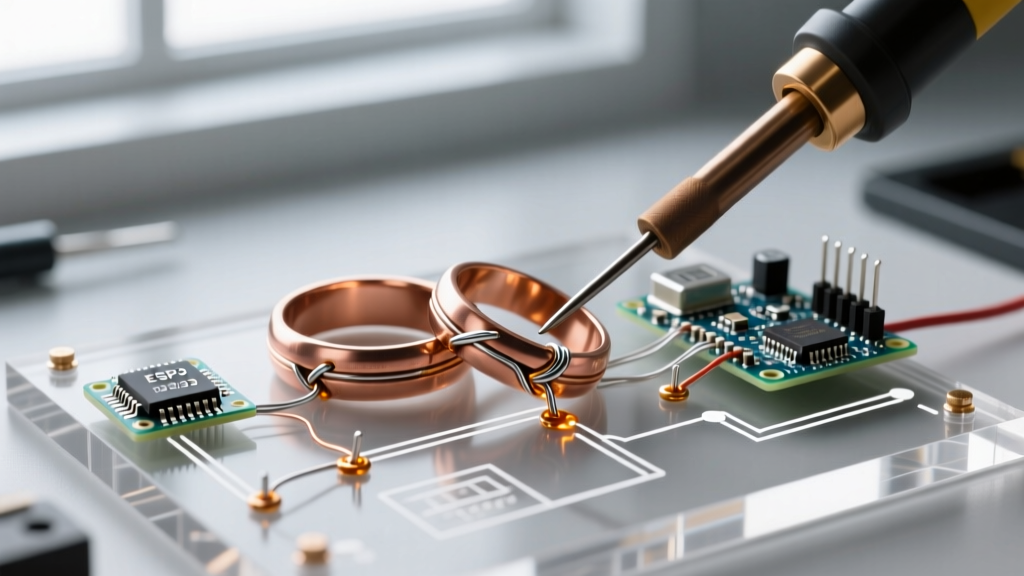
While ElectricalFlux primarily focuses on printed circuit boards, microcontrollers, and low-temperature electronic assembly, the fundamental physics of soldering—joining two base metals using a lower-melting-point filler alloy—extends far beyond the workbench. One of the most common and culturally significant consumer applications of this metallurgical science is soldering wedding bands together. This process permanently joins an engagement ring and a wedding band so they sit flush, act as a single structural unit, and prevent the abrasive wear caused by two independent rings spinning and grinding against each other.
For the DIY electronics enthusiast, understanding the history and evolution of jewelry soldering provides a fascinating masterclass in thermal dynamics, alloy chemistry, and flux mechanics. The techniques used to solder gold and platinum have evolved dramatically from ancient sweat soldering to the precision laser welding used in 2026. However, the core principle remains: manipulating the liquidus and solidus temperatures of alloys to achieve a seamless bond without compromising the integrity of the base metal.
Ancient Origins: Sweat Soldering and Early Alloys
Long before the invention of the modern oxy-acetylene torch, ancient Egyptian and Roman goldsmiths faced a critical challenge: how to join intricate gold components without melting the primary workpiece. According to historical metallurgical records documented by institutions like the Smithsonian and Wikipedia's archives on ancient metallurgy, early artisans developed a technique known as 'sweat soldering' or 'granulation'.
Rather than using a distinct, pre-manufactured solder wire, ancient jewelers created their own joining alloys. They discovered that by alloying pure gold (melting point 1,948°F / 1,064°C) with small amounts of copper or silver, they could create a filler metal with a significantly lower melting point. The artisan would paint a mixture of copper salts and organic glue onto the joint. When heated over a charcoal fire using a blowpipe, the organic material burned away, the copper reduced to a metallic state, and it alloyed with the surface gold to form a localized, lower-melting-point joint. This was the earliest form of soldering wedding bands and jewelry components together, relying entirely on surface diffusion rather than a distinct filler wire.
The Historical Role of Flux
In modern electronics, we rely on rosin (colophony) or water-soluble organic fluxes to clean copper and tin at relatively low temperatures (under 300°C). However, these organic fluxes would instantly vaporize and burn to useless ash at the temperatures required to melt gold alloys. Ancient and medieval goldsmiths utilized borax (sodium tetraborate), often ground from a natural borax cone with water. Borax melts into a glassy, viscous liquid at high temperatures, effectively dissolving copper oxides and shielding the precious metal from atmospheric oxygen. This high-temperature flux chemistry remains a staple in traditional jewelry benches even in 2026.
The 20th Century Shift: Standardized Karat Solders and Torch Control
The industrial revolution brought standardized gas torches and precisely formulated solder alloys to the jeweler's bench. Soldering wedding bands together transitioned from an unpredictable art to a highly controlled science. Jewelers began using graded 'karat solders' that were specifically formulated to match the color and purity of the base metal (e.g., 14k yellow gold, 18k white gold, or 950 platinum).
To manage complex assemblies, the industry developed a tiered melting-point system. When soldering multiple joints on a single piece, jewelers use 'Hard' solder first, followed by 'Medium', and finally 'Easy', ensuring previously soldered joints do not reflow during subsequent heating steps.
- Hard Solder: Melts at approximately 1,450°F (788°C). Used for primary structural joints.
- Medium Solder: Melts at approximately 1,390°F (754°C). Used for secondary attachments.
- Easy Solder: Melts at approximately 1,325°F (718°C). Used for final sizing and joining bands together.
Expert Insight: When soldering wedding bands together, a master jeweler will typically use 'Easy' or 'Medium' solder. The goal is to flow the solder precisely into the microscopic gap between the two shanks via capillary action, without allowing the solder to pool visibly on the outer edges, which would require aggressive filing and ruin the ring's finish.
Step-by-Step Traditional Torch Soldering Flow
The introduction of the micro-torch, specifically the legendary Smith Little Torch, revolutionized precision. Operating at low pressures (typically 5 PSI oxygen and 3 PSI acetylene), it allows for a pinpoint flame. The modern traditional workflow for joining two bands involves:
- Preparation: The inner shanks of both rings are lightly sanded with 400-grit abrasive to remove oils and oxidation.
- Binding: The rings are clamped together using titanium cross-locking tweezers or bound tightly with iron binding wire.
- Fluxing: A high-temperature liquid flux (such as Stay-Silv or Batterns) is applied to the seam.
- Heating: The jeweler uses a broad, bushy flame to heat the entire mass of both rings evenly. Heating only the seam directly will cause the solder to ball up and fail to flow.
- Flowing the Solder: Once the flux turns clear and glassy (around 1,100°F), a tiny chip of gold solder is touched to the seam. Capillary action instantly pulls the liquid solder through the entire joint.
- Quenching and Pickling: The rings are quenched in water and dropped into a warm sulfuric acid or sodium bisulfate 'pickle' solution to dissolve the borax glass and surface oxides.
Modern 2026 Techniques: Laser Welding vs. Traditional Soldering
As we navigate 2026, the jewelry industry has seen a massive shift toward pulse laser welding for joining rings, particularly when the wedding bands feature heat-sensitive gemstones (like emeralds, opals, tanzanite, or channel-set diamonds). Traditional torch soldering requires heating the entire ring mass to over 1,300°F, which can easily shatter heat-sensitive stones or melt the internal resin used in fracture-filled diamonds.
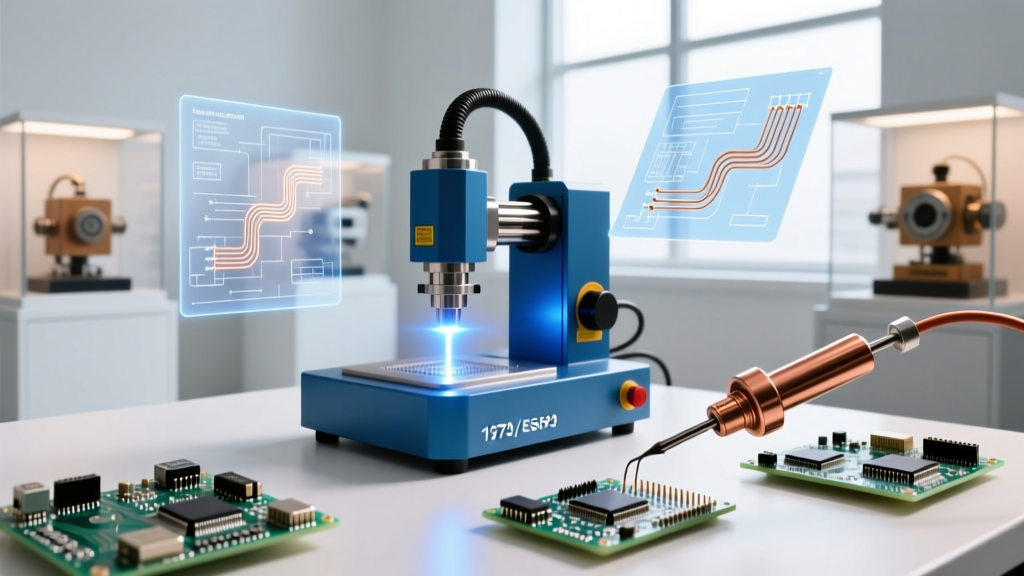
Laser welders, such as the Sunstone Orion mPulse or similar Nd:YAG fiber systems, use concentrated bursts of light energy to melt a microscopic spot of metal in milliseconds. The heat-affected zone is so small that a jeweler can weld a joint just millimeters away from a gemstone without damaging it. While traditional torch soldering remains the most cost-effective method for plain metal bands, laser welding has become the premium standard for complex, stone-set bridal sets.
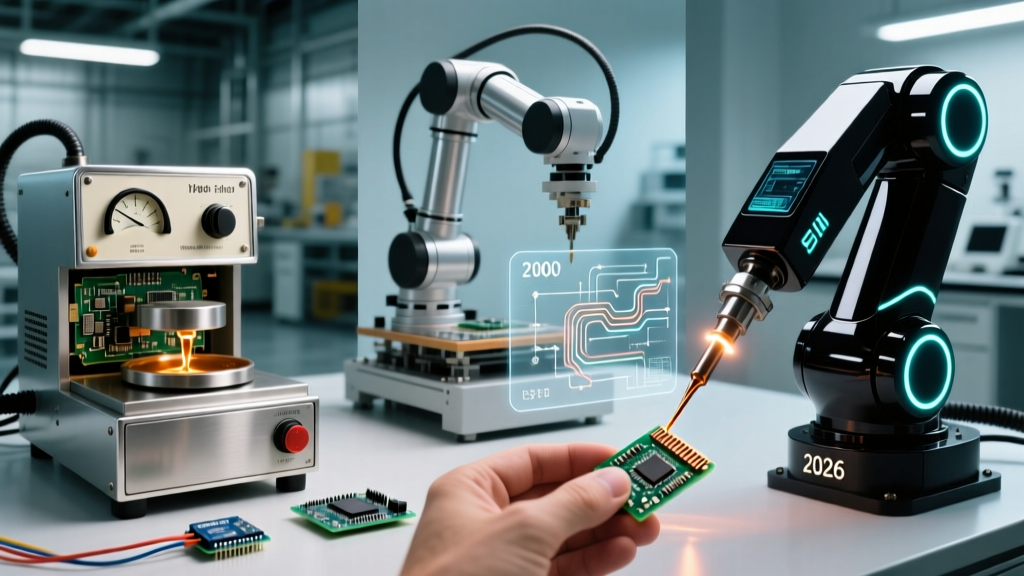
Method Comparison: Historical vs. Modern Band Soldering
| Feature | Ancient Sweat Soldering | Traditional Torch (20th C.) | Laser Pulse Welding (2026) |
|---|---|---|---|
| Heat Source | Charcoal fire & blowpipe | Oxy-acetylene micro-torch | Nd:YAG / Fiber Laser Pulse |
| Peak Temp | Variable (approx. 900°C) | 718°C - 788°C (Alloy dependent) | Localized >1064°C (Gold melting point) |
| Flux Required? | Yes (Borax / Copper salts) | Yes (Borax / Fluoride compounds) | No (Argon gas shielding used instead) |
| Risk to Gemstones | Extreme (Total destruction) | High (Requires stone removal or heat shielding) | Very Low (Can weld near sensitive stones) |
| 2026 Service Cost | N/A (Historical only) | $50 - $90 per joint | $100 - $160 per joint |
Critical Warning: Why Electronic Solder Fails on Wedding Bands
A frequent question from DIY electronics hobbyists is whether they can use their Weller WES51, Hakko FX-888D, or a standard butane iron to solder a gold or silver ring at home. The answer from both the Gemological Institute of America (GIA) and electronic standards bodies like the IPC is a resounding no. Attempting to use electronic solder on precious metal jewelry will result in catastrophic failure for three distinct metallurgical reasons:
1. The Thermal Mismatch
Standard electronic solder (Sn63/Pb37) melts at 361°F (183°C), and lead-free SAC305 melts at 430°F (221°C). Gold and silver jewelry solders do not even begin to soften until 1,300°F (704°C). If you apply electronic solder to a gold ring, it will simply bead up and roll off. Gold does not alloy with tin/lead at these low temperatures, meaning zero metallurgical bond is formed. Furthermore, standard soldering irons lack the thermal mass to heat a thick gold band, acting instead as a heat sink that draws energy away from the joint.
2. Flux Incompatibility
Electronic fluxes (rosin, RMA, or water-soluble organics) are designed to reduce mild copper and tin oxides at 250°C. They are completely ineffective against the heavy oxidation that occurs on gold, silver, and platinum alloys at high temperatures. Without a high-temperature fluoride or borax-based flux, the precious metal surface remains oxidized, preventing any filler metal from wetting the surface.
3. Galvanic Corrosion and Skin Toxicity
Even if you managed to mechanically glue electronic solder to a ring using aggressive mechanical abrasion, the resulting joint would be a galvanic nightmare. When dissimilar metals (tin, lead, copper from the electronic solder) come into contact with gold or silver in the presence of an electrolyte (human sweat and skin oils), a galvanic cell is created. The less noble metal (the electronic solder) will rapidly corrode, turning green or black, and potentially leaching toxic lead or heavy metals directly into the wearer's skin. Jewelry solders are 'plumb' or 'flash' alloys, meaning they contain the exact same precious metal content as the ring itself, ensuring electrochemical stability and preventing skin irritation.
Conclusion
The evolution of soldering wedding bands together is a testament to humanity's mastery over metallurgy. What began as an unpredictable process of painting copper salts onto gold over a charcoal fire has evolved into a highly precise science utilizing graded karat alloys, micro-torches, and eventually, concentrated laser pulses. For the electronics enthusiast, studying jewelry soldering offers a profound appreciation for the limits of thermal dynamics and alloy chemistry. While your 60-watt soldering iron is perfect for bridging copper traces on a PCB, joining precious metals requires an entirely different arsenal of high-temperature physics, specialized fluxes, and metallurgical compatibility. Whether you are examining ancient artifacts or pricing a modern laser weld in 2026, the core objective remains unchanged: creating a seamless, enduring bond that stands the test of time.