
The Genesis of the Solder Joint: How We Learned to Weld Metal
If you ask a veteran electronics engineer how they learned to solder, you will rarely hear about purpose-built training kits or temperature-controlled smart irons. For decades, practice soldering was not a commercial product category; it was a gritty byproduct of repair, scavenging, and necessity. The journey from blowing on hot point-to-point tube amplifier joints to programming a RISC-V smart iron via a smartphone app represents one of the most fascinating evolutions in DIY electronics. Understanding this history not only provides context for the tools we use today but also reveals timeless metallurgical truths that every modern hobbyist must master.
The Scavenger Era: Phenolic Boards and Solder Guns (1950s–1980s)
In the mid-20th century, the barrier to entry for electronics was high, and components were expensive. Aspiring hobbyists and junior technicians did not buy 'practice boards.' Instead, they scavenged. Discarded AM radios, black-and-white televisions, and early telephone switching equipment became the de facto practice grounds. The primary tool of this era was the solder gun, most notably the legendary Weller 8200PK. Weighing over a pound, this transformer-based gun featured a 100W/140W trigger and a thick copper loop tip. While excellent for heavy point-to-point wiring and lug terminals, it was a blunt instrument for printed circuit boards (PCBs).
The PCBs of this era were predominantly FR-2 (phenolic resin reinforced with paper). From a practice soldering perspective, FR-2 was notoriously unforgiving. Its glass transition temperature (Tg) is relatively low, and the copper cladding was bonded with adhesives that degraded rapidly under prolonged heat. Beginners practicing desoldering on scrap FR-2 boards quickly learned a harsh lesson about thermal mass and dwell time: leave the Weller gun on a pad for more than three seconds, and the copper trace would lift entirely off the board, accompanied by the acrid smell of burning phenolic. This destructive practice environment forged a generation of technicians who were masters of speed and heat management.
The solder of choice was Kester 44, a 60/40 Tin/Lead alloy with a highly active rosin core. It melted at a forgiving 183°C–190°C, flowing beautifully even with the uneven heat distribution of early irons.
The Standardization Era: Temperature Control and Purpose-Built Kits (1990s–2000s)
As consumer electronics miniaturized and the personal computer boom took hold, the scavenging model became obsolete. Components shrank, and multilayer FR-4 fiberglass boards replaced phenolic scrap. The 1990s introduced the gold standard of the hobbyist workbench: the Hakko 936 analog soldering station. Priced around $70 to $90, it featured a ceramic heating element (the A1321) and an analog potentiometer dial that allowed users to dial in specific temperatures, a massive leap from the unregulated thermal runaway of cheap plug-in irons.
Simultaneously, the concept of 'constructive practice' replaced 'destructive scavenging.' Companies like Velleman, Dick Smith, and Ramsey Electronics began selling purpose-built through-hole kits. The Velleman MK100 FM transmitter and various blinking LED kits became the universal rite of passage. These kits provided pre-punched, high-quality FR-4 boards with silk-screened component outlines, teaching beginners not just how to melt solder, but how to read schematics, orient polarized capacitors, and inspect cold joints.
'The shift from the 1980s to the 1990s transformed practice soldering from an exercise in salvage and repair into an exercise in precision assembly and schematic literacy.'
The RoHS Disruption and the SMD Revolution (2006–Present)
The most significant disruption to soldering in the 21st century was not a new tool, but a piece of legislation. The European Union's Restriction of Hazardous Substances (RoHS) directive, enacted in 2006, forced the global electronics industry to abandon leaded solder. According to the Environmental Protection Agency (EPA), the shift to lead-free alloys was driven by the need to reduce toxic e-waste in landfills.
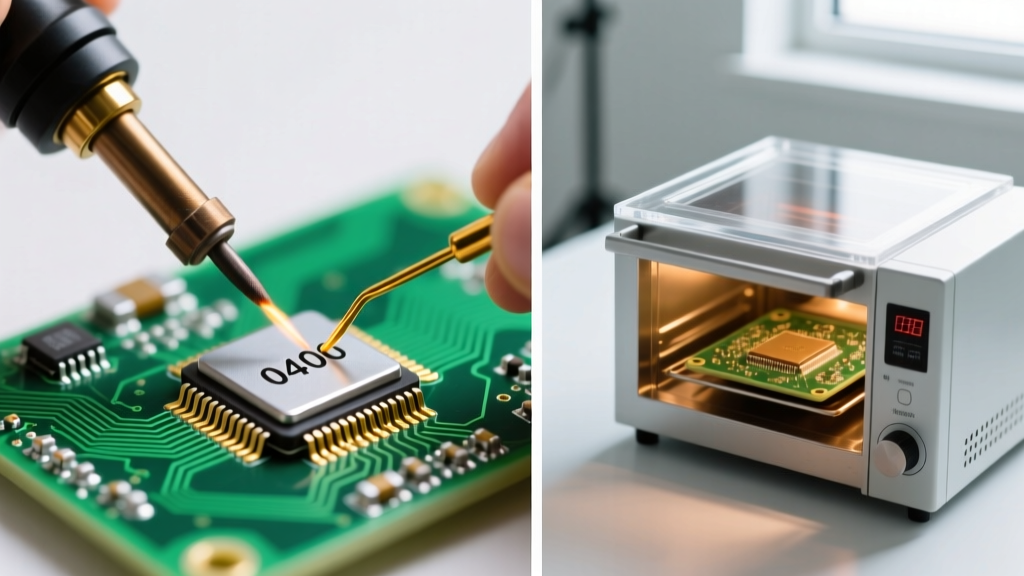
The industry standard became SAC305 (96.5% Tin, 3% Silver, 0.5% Copper). For hobbyists practicing soldering, this was a nightmare. SAC305 has a melting point of 217°C–220°C, requiring hotter irons, longer dwell times, and vastly more flux. Furthermore, lead-free joints naturally appear dull and grainy, confusing beginners who were taught that a 'good' joint must be shiny. Concurrently, the miniaturization of components meant that through-hole practice was no longer sufficient. Surface Mount Devices (SMD) like 0805 and 0603 resistors required entirely new techniques: drag soldering, hot air rework, and the use of solder paste and stencils.
Evolution of Practice Soldering: A Technical Comparison
| Era | Primary Tool | Solder Alloy | Practice Medium | Key Challenge |
|---|---|---|---|---|
| 1950s–1980s | Weller 8200PK Solder Gun | 60/40 Sn/Pb (Leaded) | Scavenged AM Radios (FR-2) | Pad delamination, thermal shock |
| 1990s–2000s | Hakko 936 Analog Station | 60/40 Sn/Pb (Leaded) | Velleman Through-Hole Kits | Tip oxidation, analog temp drift |
| 2010s–Present | Pinecil V2 / TS101 Smart Iron | SAC305 (Lead-Free) | SMD Practice Boards (FR-4) | High melting point, tombstoning |
Modern Practice Soldering: The Smart Iron Era
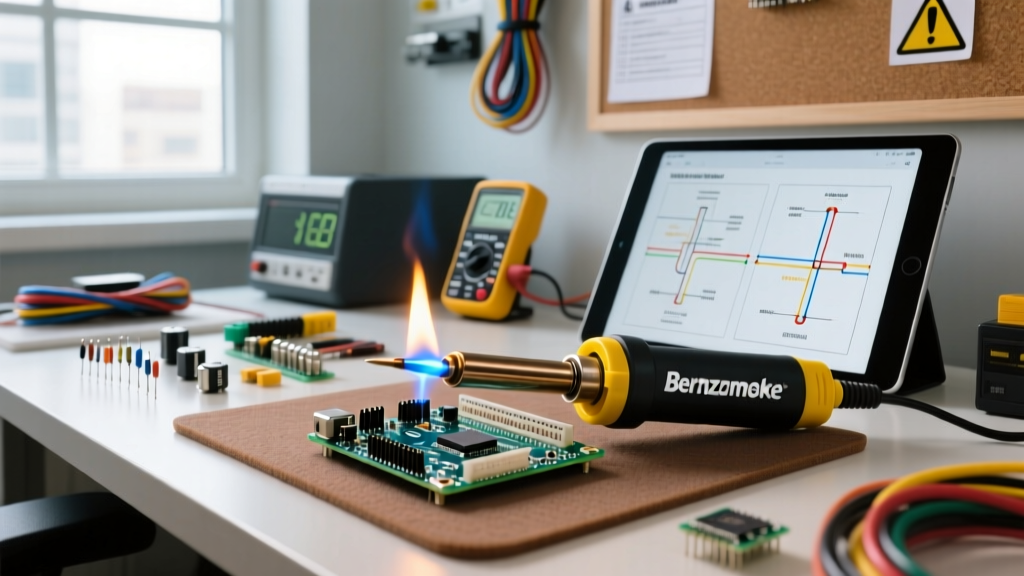
Today, the workbench looks radically different. The advent of 'smart irons' like the Pinecil V2 and the Miniware TS101 has democratized high-end thermal performance. Powered by USB-C Power Delivery (PD) or DC barrel jacks, these irons use microcontrollers (often RISC-V architecture) to sample the tip temperature dozens of times per second, applying PID algorithms to maintain exact thermal stability. A Pinecil V2 costs roughly $26, offering performance that rivals $200+ benchtop stations from a decade ago.
A 2026 Actionable Regimen for Beginners
If you are starting your practice soldering journey today, do not repeat the mistakes of the past. Follow this optimized, modern progression:
- Procure a Smart Iron: Skip the cheap, unregulated 40W plug-in irons. Purchase a Pinecil V2 or TS101 and pair it with a 65W USB-C PD laptop charger. This ensures rapid heat recovery when soldering large ground planes.
- Ignore RoHS for Initial Practice: While commercial manufacturing must use lead-free solder, hobbyists are exempt. For your first 500 joints, use 63/37 Eutectic Leaded Solder (such as Kester 245 or MG Chemicals 4900). Eutectic alloys transition from liquid to solid instantly at exactly 183°C. This eliminates the 'plastic phase' found in 60/40 alloys, completely preventing disturbed joints if your hand shakes while the solder cools. Always follow OSHA Lead Safety Guidelines by washing hands thoroughly and using a fume extractor.
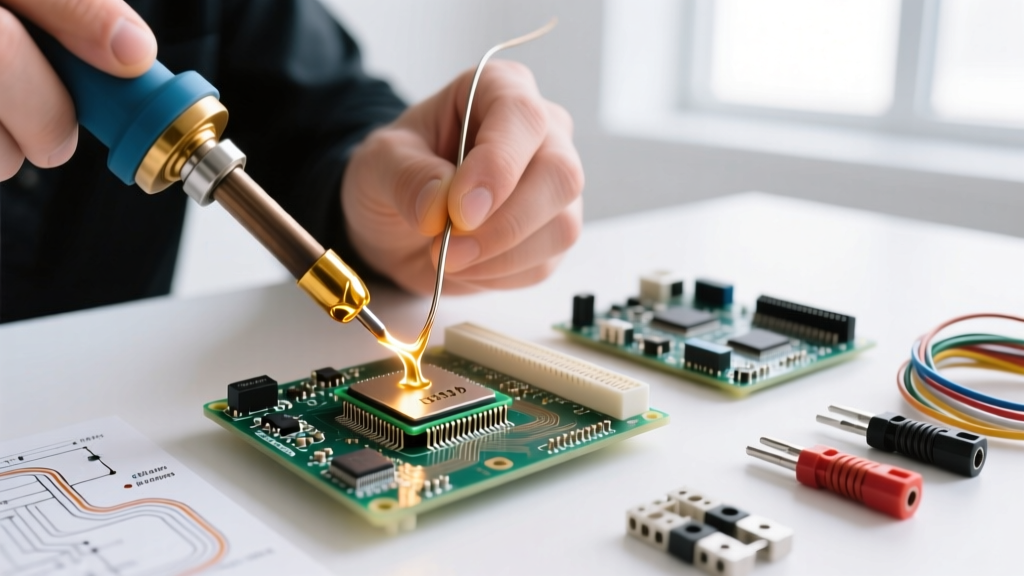
- Master Flux Application: The rosin core inside your solder wire is rarely enough for SMD work. Invest in a high-quality tacky flux like Amtech NC-559-V2-TF in a syringe. Flux lowers the surface tension of the molten solder, preventing bridging on fine-pitch IC pins.
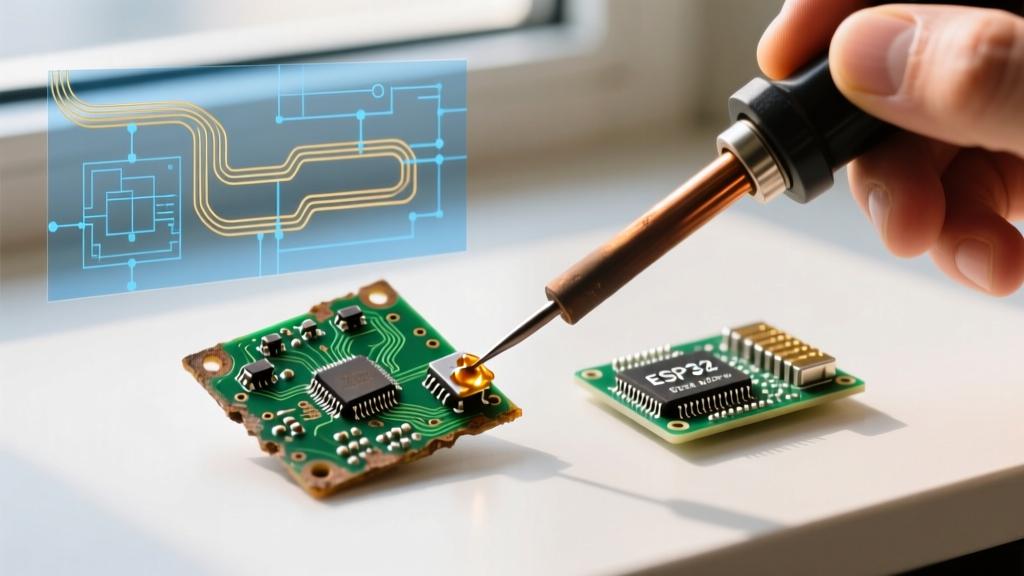
- Graduate to SMD Practice Boards: Once through-hole is mastered, purchase dedicated SMD practice boards (widely available from brands like AiXun or generic suppliers). These FR-4 boards feature progressively smaller footprints—from 1206 down to 0402—allowing you to practice tweezers manipulation, drag soldering, and hot-air reflow without risking expensive microcontrollers.
Why the Fundamentals Remain Unchanged
Despite the leap from heavy solder guns to firmware-updatable smart irons, the physics of metallurgical wetting remain identical. The IPC (Association Connecting Electronics Industries) sets the global standards for electronic assemblies, and the IPC-A-610 criteria for a perfect solder fillet have barely changed in fifty years. A proper joint still requires the correct wetting angle, complete capillary penetration, and appropriate thermal management. The tools we use to practice soldering have evolved from scavenged scrap to precision-engineered kits, but the fundamental discipline of respecting the heat, the flux, and the alloy remains the true hallmark of an expert.