
The Hidden Economics of Soldering Stainless Steel Wire
Soldering stainless steel wire is notoriously one of the most frustrating tasks in electrical and mechanical DIY projects. Unlike copper or brass, stainless steel forms a tenacious, self-healing chromium oxide layer that actively repels standard rosin-based fluxes and tin-lead solders. When builders attempt to join 304 or 316 grade stainless wires using conventional methods, the result is almost always a cold, brittle joint that fails under minimal mechanical stress.
From a cost analysis perspective, the expense of soldering stainless steel extends far beyond the price of the wire itself. It requires specialized, highly active chemical fluxes, silver-bearing or specialized eutectic filler metals, and high-wattage thermal equipment capable of overcoming the alloy's unique thermal properties. In this comprehensive 2026 guide, we break down the exact consumable costs, equipment investments, and hidden labor expenses associated with soldering stainless steel wire, while comparing it against alternative joining methods like micro-spot welding and crimping.
Key Takeaway: The primary cost driver in soldering stainless steel is not the filler metal, but the specialized flux required to break the chromium oxide layer, combined with the high thermal recovery equipment needed to maintain joint temperature above 300°C.
Consumable Cost Breakdown: Flux and Filler Metals
Flux Selection and Pricing
Standard RMA (Rosin Mildly Activated) fluxes are entirely ineffective on stainless steel. To achieve metallurgical wetting, you must use highly corrosive inorganic acid fluxes, typically based on zinc chloride, ammonium chloride, or phosphoric acid. According to the IPC standards registry, these fall under highly active (H) flux classifications, which mandate strict post-solder cleaning protocols.
| Flux Type | Popular Brand/Model | Avg. Cost (2026) | Effectiveness on 304 SS | Effectiveness on 316 SS |
|---|---|---|---|---|
| Zinc Chloride Liquid | Superior Flux #30 | $14.00 / 2 oz | Excellent | Good |
| Ammonium/Zinc Chloride | Harris Stay-Clean | $12.50 / 1.5 oz | Excellent | Good |
| Phosphoric Acid Paste | Rubyfluid SS Paste | $22.00 / 1 oz | Good | Excellent |
| Rosin (RMA) | Kester 186 | $9.00 / 2 oz | Fails Completely | Fails Completely |
While the upfront cost of a 2 oz bottle of Superior Flux #30 is minimal, the cost per joint is higher than standard electronics soldering because stainless steel requires liberal flux application to prevent the oxide layer from reforming during the heating process. Furthermore, 316 stainless steel (which contains molybdenum for corrosion resistance) requires even more aggressive phosphoric acid pastes, driving consumable costs up by roughly 40% compared to 304 grade.
Filler Metal (Solder) Costs
Once the flux has etched the surface, the filler metal must wet the steel. Standard Sn60/Pb40 (Tin/Lead) can work if the flux is aggressive enough, but it forms a brittle intermetallic compound with the iron in the steel. For reliable joints, silver-bearing solders are the industry standard. The American Welding Society notes that silver additions significantly improve the wetting action and tensile strength of soldered ferrous joints.
- Standard Eutectic (Kester 245 - Sn63/Pb37): ~$38 per pound. Acceptable for low-stress, low-vibration static wire joints.
- Silver-Bearing (Kester 282 - Sn62/Pb36/Ag2): ~$85 per pound. The 2% silver prevents silver leaching and dramatically improves shear strength on stainless substrates.
- Lead-Free Silver (Indalloy 121 - Sn96.5/Ag3.5): ~$110 per pound. Required for RoHS-compliant 2026 commercial projects, but requires much higher iron temperatures (350°C+), increasing thermal stress on the wire insulation.
Equipment Costs: Thermal Mass and Wattage Requirements
Stainless steel has a thermal conductivity of approximately 16 W/m·K, which is roughly 1/25th that of pure copper. While this means heat does not rapidly dissipate down the length of the wire, it also means the metal acts as a localized heat sink at the exact point of contact. A standard 40W electronics soldering iron will experience immediate tip temperature drop-off when touching a thick stainless wire, resulting in a cold joint.
To maintain the 300°C+ interface temperature required for the zinc chloride flux to activate and the silver-solder to flow, you need high-wattage irons with massive thermal recovery rates.
Recommended Equipment Tiers
- Entry-Level High-Wattage (Hakko FX-601): Priced around $75. This adjustable iron peaks at 500°C and features a 135W equivalent thermal recovery due to its specialized ceramic heater. It is the absolute minimum viable tool for wires larger than 18 AWG.
- Professional Station (Weller W100PG / WE1010NA with 100W iron): Priced between $180 and $250. The heavy thermal mass of the Weller ETA or SMT tips ensures the temperature does not drop below the solder's liquidus point when applied to the stainless substrate.
- Tip Geometry Costs: Conical tips fail on stainless steel due to low surface area contact. You must purchase heavy chisel or bevel tips (e.g., Hakko T18-D24 or Weller SMT8), which cost $8 to $14 each and degrade faster when used with highly acidic stainless fluxes.
Alternative Joining Methods: A Cost-Benefit Matrix
Because the consumable and equipment costs for soldering stainless steel are high—and the toxic fume output requires expensive ventilation—many fabricators in 2026 are pivoting to alternative joining methods. Below is a cost-benefit analysis comparing soldering against micro-spot welding and mechanical crimping for stainless steel wire.
| Method | Initial CapEx | Cost Per Joint | Joint Tensile Strength | Best Use Case |
|---|---|---|---|---|
| Acid Flux Soldering | $150 - $250 | $0.15 - $0.30 | Moderate (Brittle if overheated) | Field repairs, complex 3D wire meshes |
| Micro-Spot Welding | $250 - $600 | < $0.01 (No consumables) | Very High (Metallurgical fusion) | Battery tabs, high-volume production |
| Mechanical Crimping | $80 - $150 | $0.10 - $0.25 (Terminal cost) | High (Depends on terminal grip) | Wire-to-board, harness terminations |
For high-volume production, investing in a pulse-arc spot welder (like the Sunkko 788A or Orion mPulse) eliminates the need for corrosive fluxes entirely, dropping the per-joint cost to near zero. However, for low-volume DIY or field repairs where a $400 welder is unjustifiable, soldering remains the most accessible option despite the higher consumable costs.
Hidden Costs: Rework, Cleaning, and Compliance
The most frequently overlooked expense in soldering stainless steel is the post-solder cleanup and safety compliance. The zinc chloride and phosphoric acid fluxes required to etch the chromium oxide layer are highly corrosive. If left on the joint, they will rapidly corrode the surrounding stainless steel and create conductive dendrites that can short out low-voltage circuits.
The Labor Cost of Neutralization
Cleaning these joints requires more than a simple isopropyl alcohol wipe. The process demands hot water scrubbing, often followed by a mild alkaline neutralization bath (such as a baking soda solution) to halt the acidic etching. In a professional environment, this adds 2 to 3 minutes of labor per joint, significantly inflating the total cost of assembly.
Ventilation and Safety Compliance
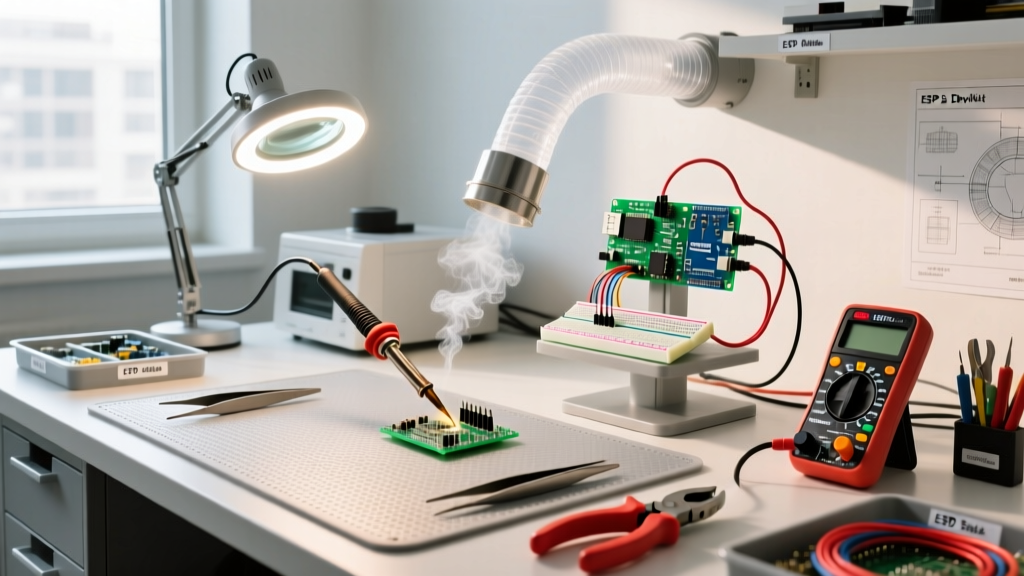
Heating zinc chloride flux generates toxic, acrid fumes that are severe respiratory irritants. The OSHA hazardous chemical guidelines strictly regulate exposure limits to zinc chloride fume. Proper compliance requires a dedicated fume extraction system with HEPA and activated carbon filtration (e.g., Hakko FA-400 or Weller WFE 2DX), adding $150 to $400 to your initial equipment setup. Attempting to solder stainless steel in an unventilated room is not only dangerous but can lead to severe health liabilities in a commercial workshop.
Final Verdict: When is Soldering Stainless Steel Worth the Cost?
Soldering stainless steel wire is inherently more expensive and labor-intensive than working with copper or nickel alloys. The true cost is driven by the mandatory use of aggressive, highly active inorganic fluxes, silver-bearing filler metals, and high-wattage thermal equipment. When you factor in the mandatory post-solder neutralization and fume extraction, the cost per joint can easily exceed $0.50 in a professional setting.
However, for low-volume prototyping, intricate wire mesh fabrication, or field repairs where spot welding is physically impossible, soldering remains the only viable metallurgical joining method. To keep costs under control, always default to 304 grade stainless steel (which solders much easier than 316), use a high-recovery 100W iron with a heavy chisel tip, and apply Superior Flux #30 sparingly but precisely to minimize cleanup labor.