
The Democratization of Electronics Repair: A Big-Box History
When modern hobbyists and repair technicians search for a soldering machine walmart offers, they are often met with a confusing dichotomy: physical store shelves lined with basic, unregulated hardware irons, and an expansive online marketplace featuring cutting-edge, digitally controlled smart stations. This divide is not an accident; it is the result of three decades of evolution in consumer electronics manufacturing, supply chain shifts, and the maker movement.
To understand how to navigate the current catalog, we must examine the historical trajectory of mass-market soldering equipment. From the rudimentary mica-heater irons of the 1990s to the RISC-V powered smart irons available on Walmart.com today, the evolution of the big-box soldering station reflects the broader shift from heavy electrical wiring to microscopic surface-mount device (SMD) repair.
Era 1: The Unregulated Mica Age (1990–2005)
In the 1990s and early 2000s, the concept of a 'soldering machine' at a mass-market retailer like Walmart was almost exclusively limited to the hardware and automotive aisles. The dominant products were unregulated, fixed-wattage irons, most notably the Weller WP25 and various generic 40W blister-pack models.
The Physics of Failure on PCBs
These early irons relied on wire-wound nichrome heating elements wrapped around a mica insulator. They lacked a thermal feedback loop. When plugged into a 120V outlet, they would heat up until they reached a thermal equilibrium, often exceeding 450°C (842°F) at the tip. While this brute-force heat was sufficient for melting thick rosin-core solder on 12 AWG automotive wires or stained glass copper foil, it was catastrophic for printed circuit boards (PCBs).
- Thermal Runaway: Without a thermostat, the tip would overheat during idle periods, instantly vaporizing flux and oxidizing the iron plating.
- Thermal Crash: When touching a large copper ground plane, the tip temperature would plummet below the 183°C melting point of Sn63/Pb37 eutectic solder, resulting in cold, grainy joints.
- Delamination Risk: Prolonged contact to achieve thermal mass transfer frequently lifted copper pads off early FR-4 fiberglass substrates.
During this era, if a consumer needed precision temperature control, they had to visit specialized electronics retailers like RadioShack (which carried the early analog-controlled stations) or order from specialized industrial catalogs. Walmart's physical inventory simply did not cater to the micro-electronics hobbyist.
Era 2: The Analog Shift and Ceramic Heaters (2006–2015)
As consumer electronics shrank and the DIY Arduino movement began to take root around 2008, the demand for better tools surged. According to Hakko's corporate history, the proliferation of affordable ceramic heating elements revolutionized the entry-level market. Walmart responded by expanding its in-store and early online offerings to include analog temperature-controlled stations.
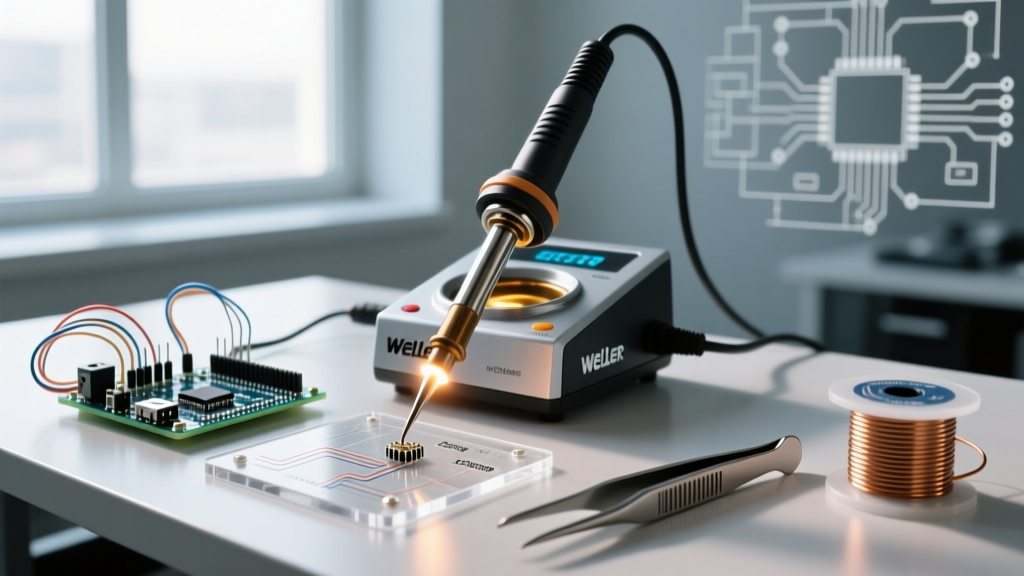
The undisputed king of this era on big-box shelves was the Weller WLC100. Priced around $45 to $55, it featured a 40W ceramic heater and a basic analog dial. While it lacked digital precision, the internal thermocouple provided a closed-loop feedback system. If the tip temperature dropped when touching a component lead, the station would pulse power to the ceramic core to recover the heat.
Expert Insight: The transition from mica to ceramic cores in the late 2000s reduced tip heat-up time from over 90 seconds to roughly 30 seconds, a massive leap in workflow efficiency for early maker-space enthusiasts sourcing tools locally.
However, these analog stations still utilized the older 900M-style tip architecture, where the heating element was a separate rod that slid into a hollow copper tip. This created an air gap that acted as a thermal insulator, limiting thermal recovery speeds during heavy continuous soldering.
Era 3: Digital Precision & The Smart Iron Revolution (2016–2026)
Today, the landscape of the soldering machine walmart stocks is split between legacy in-store hardware tools and a highly advanced online marketplace. The modern era is defined by PID (Proportional-Integral-Derivative) digital controllers, cartridge-style tips, and USB-C power delivery.
The Cartridge Tip Paradigm
Influenced by industrial standards outlined by the IPC standards body for lead-free SAC305 soldering (which requires higher thermal stability due to its 217°C melting point), modern stations integrate the heater, sensor, and tip into a single cartridge. The Weller WE1010NA (70W), widely available via Walmart's online catalog, utilizes this ETA tip technology. Because the sensor is embedded directly inside the tip's copper core, thermal recovery happens in under 5 seconds, eliminating the air-gap inefficiencies of the 2010s analog era.
The Open-Source Smart Iron
Perhaps the most significant evolution in the 2020s is the rise of open-source hardware. The Pine64 Pinecil V2, frequently stocked by third-party electronics sellers on Walmart.com, represents the current zenith of portable soldering. Powered by a RISC-V microcontroller and negotiating up to 65W via USB-C Power Delivery, it offers firmware-level customization, sleep modes via motion sensors, and precise temperature stepping—all for under $30. This level of technology was unimaginable in a big-box retail context just a decade ago.
Data Matrix: Evolution of Big-Box Soldering Specs
| Era | Dominant Retail Model | Heater Technology | Temp Control | Thermal Recovery | Avg. Retail Price |
|---|---|---|---|---|---|
| 1990–2005 | Weller WP25 / Generics | Nichrome / Mica | None (Fixed Wattage) | Poor (>45 seconds) | $12 – $18 |
| 2006–2015 | Weller WLC100 | Ceramic Rod | Analog Dial (Thermostat) | Moderate (~15 seconds) | $45 – $55 |
| 2016–2026 | Weller WE1010NA | Integrated Cartridge | Digital PID (Microprocessor) | Excellent (<5 seconds) | $109 – $119 |
| 2022–2026 | Pine64 Pinecil V2 | Thick Film Ceramic | RISC-V Smart PID | Exceptional (<3 seconds) | $26 – $32 |
Strategic Buying Guide: In-Store vs. Online Marketplace
Understanding this history is critical for making a purchasing decision today. When evaluating the current soldering machine walmart inventory, buyers must distinguish between physical retail constraints and digital marketplace breadth.
When to Buy In-Store (Physical Walmart)
Physical Walmart stores primarily cater to general home repair, automotive maintenance, and heavy-duty crafting. You should only purchase an in-store unregulated iron (typically $15–$25) if your use case involves:
- Soldering heavy-gauge automotive wires (10 AWG or thicker).
- Stained glass copper foil work requiring massive, continuous heat.
- Emergency, one-off repairs where precision SMD work is not required.
Warning: Never use an unregulated in-store iron for PCB repair, drone ESC wiring, or microcontroller pin headers. The lack of thermal regulation will destroy sensitive silicon components and lift PCB traces.
When to Buy Online (Walmart.com Marketplace)
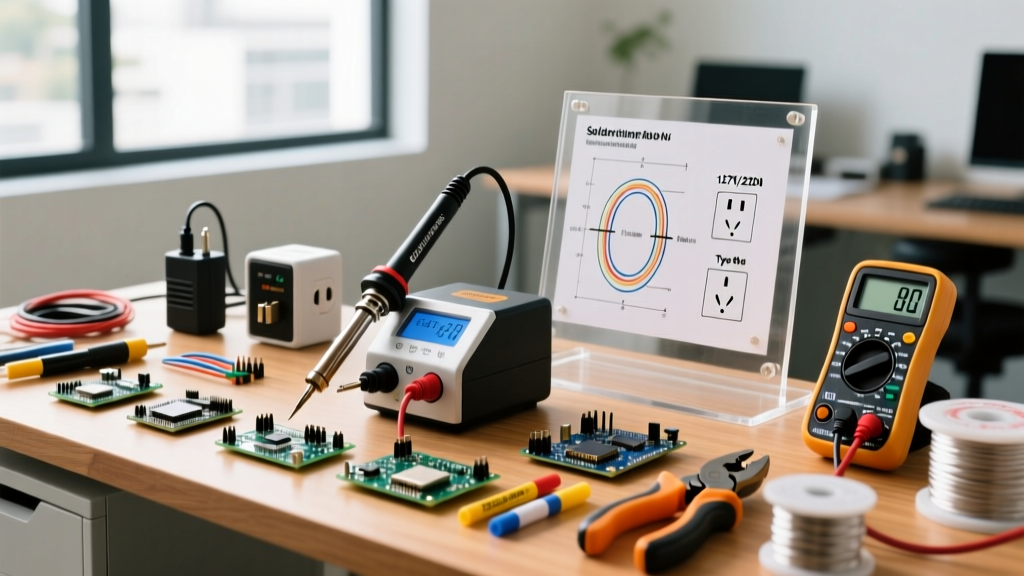
For 95% of electronics hobbyists, repair technicians, and engineering students, the Walmart.com online marketplace is the correct destination. Here, you can source digital PID stations and smart irons that adhere to modern electronics manufacturing standards. As highlighted in Adafruit's Guide to Excellent Soldering, maintaining a stable tip temperature matched to your specific solder alloy is the single most important factor in achieving reliable, shiny, and structurally sound electrical connections.
- For the Bench Builder: Order the Weller WE1010NA or Hakko FX-888D equivalent via the online portal for stable, grounded, high-mass bench work.
- For the Field Technician / Maker: Order the Pinecil V2 or FNIRSI HS-01. These USB-C irons can be powered by modern lithium-ion power banks, making them perfect for mobile drone repair or field robotics.
Frequently Asked Questions
Does Walmart sell hot air rework stations for SMD?
Physical Walmart stores rarely carry hot air rework stations. However, the Walmart.com marketplace features numerous 858D-style hot air stations from brands like Yihua and WEP, typically ranging from $40 to $60. These are essential for reflowing surface-mount ICs and shrinking heat tubing.
Are the third-party soldering brands on Walmart.com reliable?
While the marketplace hosts excellent tools like the Pinecil, it also features ultra-cheap, unbranded digital stations. Always verify that a station uses standard, replaceable tip architectures (like 900M or T12 clones) and features a grounded (3-prong) power cord to prevent electrostatic discharge (ESD) from frying sensitive MOSFETs and microcontrollers.
What solder alloy should I use with modern digital stations?
For hobbyists and general DIY, 63/37 Tin-Lead (Sn63/Pb37) eutectic solder with a rosin core remains the gold standard due to its low 183°C melting point and superior wetting characteristics. If working on commercial products or RoHS-compliant repairs, use SAC305 (Lead-Free) and set your digital station to 350°C to compensate for the higher thermal requirements.