
The Core Thermodynamic Divide: Base Metal vs. Filler Metal
When joining metals in electrical, electronics, and structural projects, understanding what's the difference between soldering and welding is critical to preventing catastrophic joint failures. While both processes utilize heat to bond materials, their thermodynamic mechanisms are fundamentally opposed.
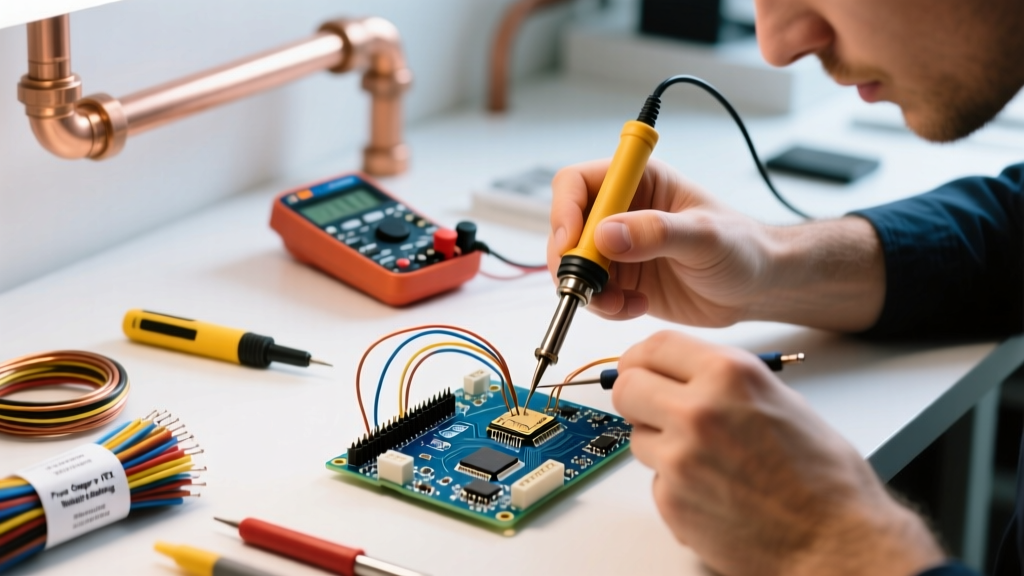
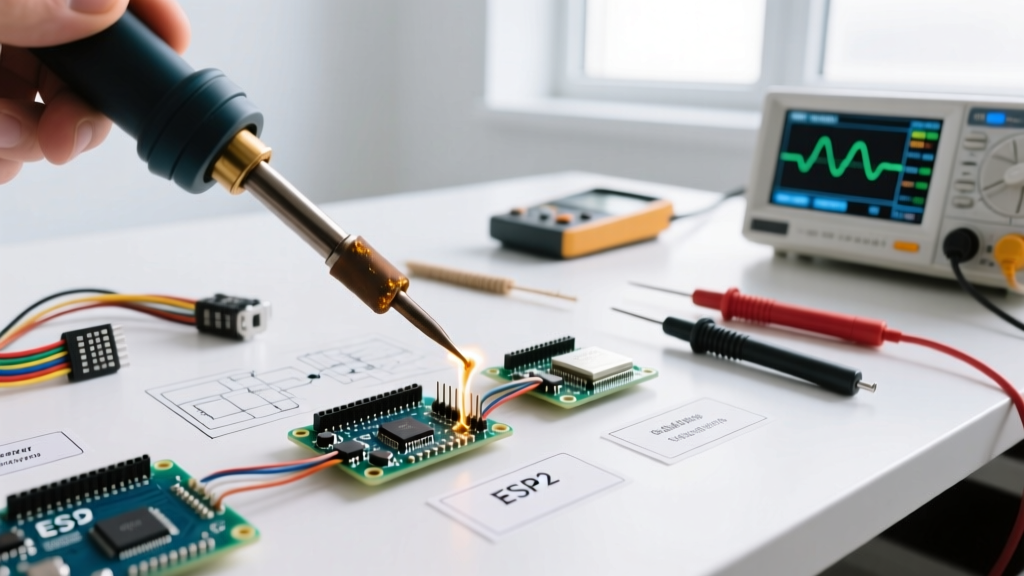
Soldering is a process where only the filler metal (the solder) is melted. The base metals being joined remain solid. The molten filler flows into the joint via capillary action, aided by a chemical cleaning agent called flux, creating a metallurgical bond at the surface level. Soldering operates at temperatures strictly below 450°C (840°F).
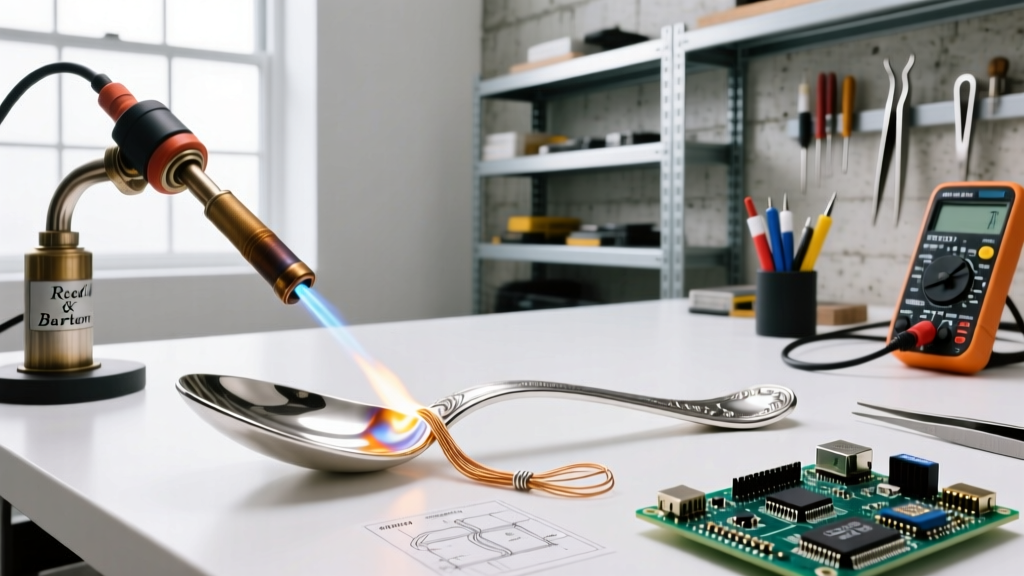
Welding, conversely, involves melting the base metals themselves, often with the addition of a filler metal. The materials fuse together into a single continuous piece as they cool, creating a coalesced joint. Welding requires extreme heat, typically exceeding 1,500°C (2,732°F), depending on the metal's melting point.
Side-by-Side Comparison Matrix
| Feature | Soldering | Welding |
|---|---|---|
| Base Metal State | Remains solid | Melts and fuses |
| Operating Temperature | 180°C – 450°C (356°F – 840°F) | 1,500°C – 6,000°C+ (2,732°F – 10,800°F) |
| Joint Strength | Low to Moderate (Electrical/Thermal) | High (Structural/Load-bearing) |
| Heat Affected Zone (HAZ) | Minimal to none | Significant (can alter metal crystalline structure) |
| Primary Electrical Use | PCBs, wire terminations, low-stress connectors | Busbars, battery packs, heavy chassis grounding |
| Reversibility | Easily reversible (desoldering) | Permanent (requires grinding/cutting) |
Deep Dive: Soldering in Electronics and PCB Assembly
In the realm of electronics, soldering is the undisputed king. Printed Circuit Boards (PCBs) feature copper traces that are typically 1oz (35µm) thick, laminated to an FR-4 fiberglass substrate. If you attempted to weld a PCB, the extreme heat would instantly vaporize the copper trace and incinerate the epoxy substrate.
Alloys and Standards
Modern electronics rely on specific solder alloys governed by the IPC-A-610 Standard for acceptability. The two most common alloys in 2026 are:
- SAC305 (Lead-Free): Composed of 96.5% Tin, 3.0% Silver, and 0.5% Copper. It melts at 217°C–220°C. It is the industry standard for commercial electronics due to RoHS compliance, though it requires higher iron temperatures (350°C+) and is prone to tin whisker growth over time.
- Sn63/Pb37 (Leaded): A eutectic alloy of 63% Tin and 37% Lead. It melts sharply at exactly 183°C. While restricted in commercial goods, it remains heavily favored in aerospace, military, and DIY hobbyist circles because it flows beautifully, requires less heat, and resists thermal fatigue cracking.
Common Soldering Failure Modes
Because soldering relies on surface wetting rather than deep fusion, it is susceptible to specific failures:
- Cold Joints: Caused by insufficient heat or movement during cooling. The solder appears dull and grainy, leading to high electrical resistance and eventual mechanical fracture.
- Tombstoning: A surface-mount (SMD) defect where unequal wetting forces on a tiny component (like a 0402 resistor) pull it upright, breaking the circuit.
- Flux Entrapment: Failing to allow flux to fully boil off can trap corrosive acids under the joint, causing long-term dendritic short circuits.
Deep Dive: Welding in Heavy Electrical and Battery Packs
When structural integrity or massive current-carrying capacity is required, welding takes over. In electrical engineering, this often manifests as TIG (GTAW) welding for aluminum busbars or resistance spot welding for lithium-ion battery assemblies.
The 18650 Battery Pack Rule: Why You Never Solder Cells
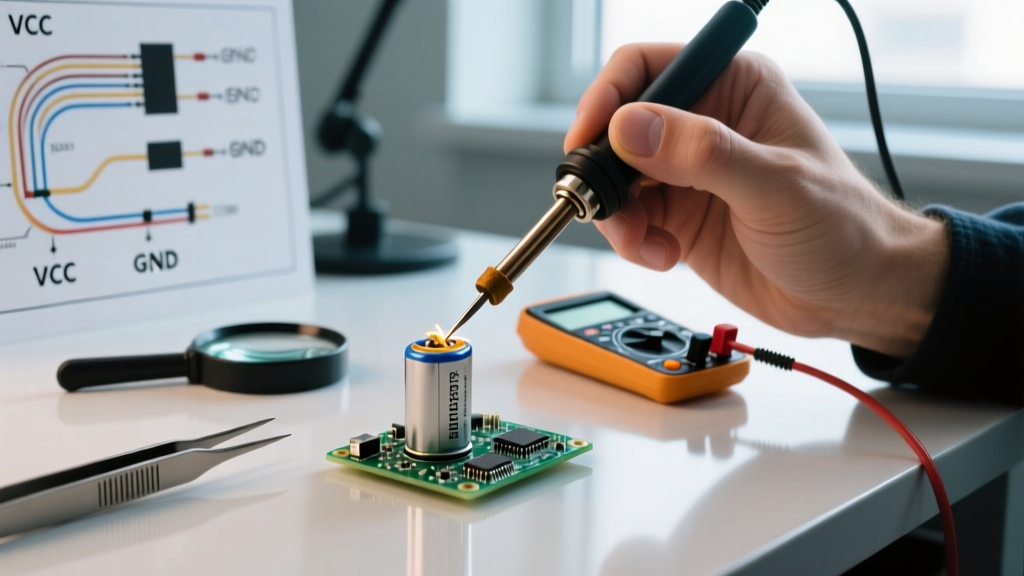
A frequent and dangerous question in DIY electronics is whether one can solder wires directly to 18650 or 21700 lithium-ion battery terminals. The answer is an absolute no. Soldering requires prolonged heat transfer (often 3–5 seconds of a 350°C iron pressing against the cell cap). This heat conducts through the steel casing, degrading the internal polymer separator and boiling the electrolyte, which frequently leads to catastrophic thermal runaway and venting.
Instead, battery packs are assembled using pulse resistance spot welding. A high-current, low-voltage pulse (often 2,000+ Amps for 2 milliseconds) is passed through a nickel strip and the battery terminal. The electrical resistance at the exact contact point generates intense, localized heat, fusing the nickel to the steel in a fraction of a second. The heat does not have time to penetrate the battery casing, keeping the internal cell temperature safe. For more on electrical safety protocols, refer to the Lincoln Electric Safety Guidelines.
Welding Failure Modes in Electrical Joints
- Porosity: Gas pockets trapped inside the weld (common in MIG welding aluminum busbars), which reduce the cross-sectional area and increase electrical resistance, leading to localized heating under high loads.
- Undercut: A groove melted into the base metal adjacent to the weld toe, creating a stress concentration point that can snap under mechanical vibration.
Brazing: The Missing Link
To fully understand what's the difference between soldering and welding, you must acknowledge the bridge between them: brazing. Brazing operates like soldering (the base metal does not melt), but at temperatures above 450°C (840°F). In electrical contexts, silver brazing (often incorrectly called "silver soldering") is used for heavy-duty HVAC contactors, joining thick copper refrigerant lines to brass valves, and connecting massive underground grounding cables where standard tin solder would melt under high fault currents.
Equipment Cost and Setup Breakdown (2026 Market)
The barrier to entry and capital expenditure for these two processes vary wildly.
Soldering Setups
- Entry-Level DIY: Pine64 Pinecil V2 (Smart soldering iron) + 65W USB-C PD power supply. Cost: ~$45.
- Prosumer/Repair: Hakko FX-888D or Weller WE1010NA digital station with interchangeable tips and ESD-safe grounding. Cost: $110 – $150.
- Industrial Rework: JBC CD-2BQF with active tip technology (heating element inside the tip for instant thermal recovery on heavy ground planes). Cost: $500+.
Welding Setups
- Battery Spot Welder: KWELD DIY spot welder kit + high-discharge LiPo battery. Cost: ~$160.
- Entry MIG/Flux-Core: YesWelder MIG-205DS (Multiprocess). Cost: ~$350.
- Pro TIG for Busbars: Lincoln Electric Power TIG 210MP or Miller Dynasty 210 (AC/DC for aluminum). Cost: $1,200 – $3,500.
Decision Framework: Which Process Should You Use?
The Golden Rule of Metal Joining: Use soldering for electrical continuity and delicate thermal management. Use welding for structural load-bearing and high-amperage mechanical permanence.
Choose Soldering When:
- You are attaching wires to PCB pads, terminal blocks, or potentiometers.
- The components involved contain heat-sensitive plastics, silicon chips, or delicate dielectrics.
- You need the ability to rework, debug, or replace a component later.
- You are joining dissimilar metals that have vastly different melting points (e.g., copper wire to a gold-plated connector).
Choose Welding When:
- You are building a custom steel or aluminum chassis for an amplifier or power supply.
- You are assembling high-current lithium-ion battery packs (using spot welding).
- You are joining thick copper or aluminum busbars in a high-voltage distribution panel.
- The joint will be subjected to heavy mechanical vibration, tensile stress, or extreme environmental heat that would melt tin-based alloys.
Frequently Asked Questions (FAQ)
Can I use a welding machine to solder wires?
No. Welding machines output extreme current and voltage designed to melt solid steel or aluminum. Applying this to copper wire will instantly vaporize the wire, creating a dangerous arc flash and destroying the copper. For heavy wire joining, use a specialized resistance soldering unit or an exothermic welding kit (like Cadweld) for underground grounding.
Is "silver solder" actually soldering or welding?
Despite the name, "silver solder" is technically brazing. It contains 15% to 45% silver and melts between 600°C and 750°C. It is much stronger than tin/lead solder and is used for high-pressure plumbing and heavy electrical contacts, but it still does not melt the base metals like true welding does. The American Welding Society (AWS) classifies processes above 450°C as brazing, not soldering.
Why do soldered wires sometimes break under a small pull?
Solder is a poor structural adhesive. Its tensile strength is remarkably low (around 30-50 MPa for Sn63/Pb37). In electrical wiring, the mechanical strength must come from a physical connection—such as a crimp, a wire-wrap, or a terminal screw. Solder should only be used to provide the electrical path and prevent corrosion, never to bear the physical weight or tension of the wire.
Conclusion
Understanding what's the difference between soldering and welding dictates the success and safety of your electrical projects. Soldering leverages low-temperature capillary action for precision electrical continuity, while welding utilizes high-temperature coalescence for structural and heavy-current permanence. By selecting the correct process, alloy, and tooling for your specific application, you ensure joints that are both electrically flawless and mechanically sound.