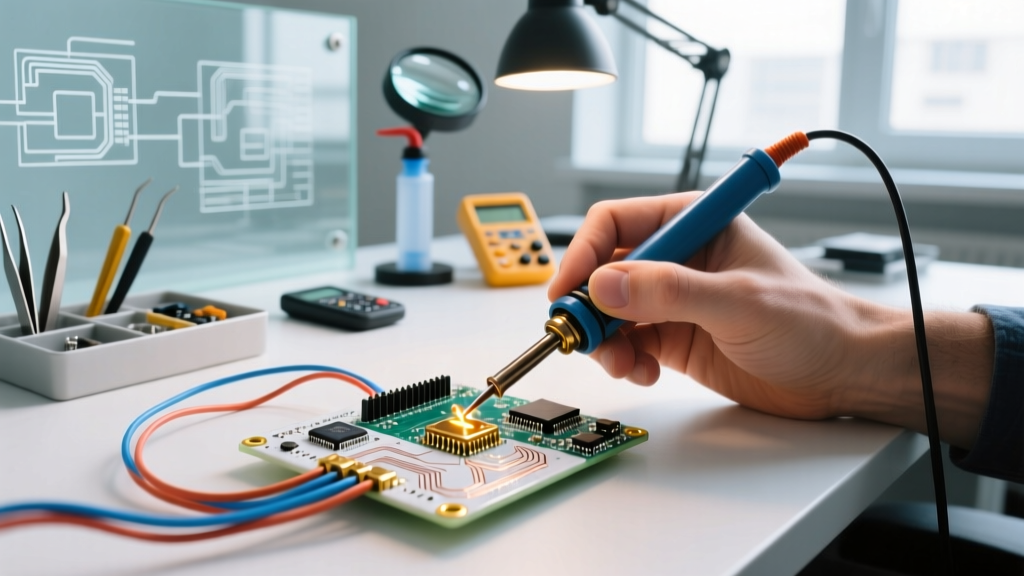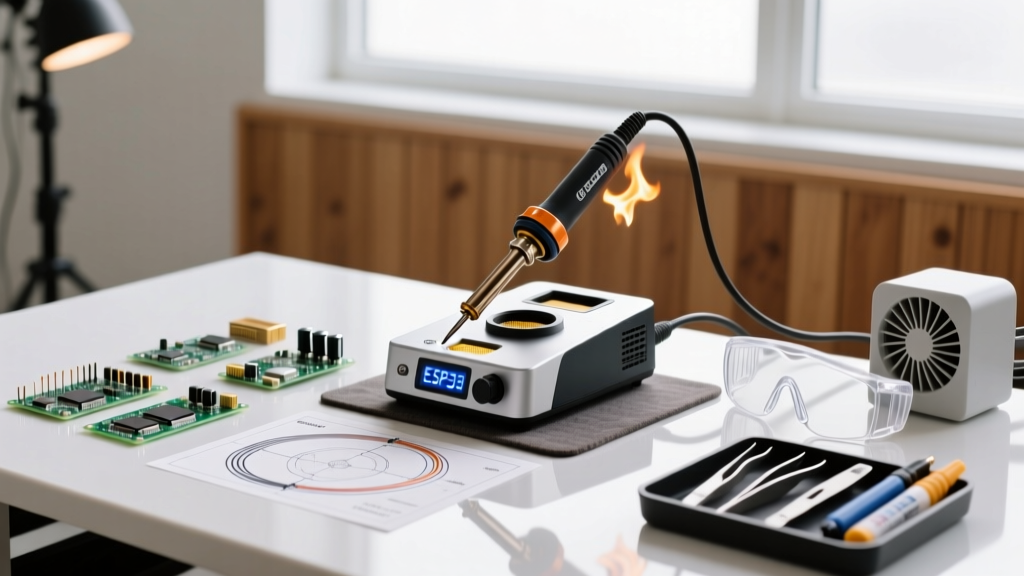

Introduction to Soldering Torches and Risk Profiles
When tackling heavy-gauge wire lugs, thick copper ground planes, or large-scale plumbing joints, standard 60W irons fall short. This is where soldering torches become indispensable. However, transitioning from a temperature-controlled ceramic heater to an open-flame, pressurized gas system introduces severe hazards: thermal burns, high-pressure gas leaks, combustible material ignition, and toxic flux off-gassing.
In 2026, the market offers highly refined torch systems—from the precision Blazer GB2001 butane micro-torch ($65) to the heavy-duty Bernzomatic TS8000 MAP-Pro setup ($75). Yet, the fundamental physics of combustion and the toxicity of vaporized rosin and zinc chloride fluxes remain unchanged. This guide provides an uncompromising, expert-level breakdown of safety best practices, workspace engineering, and emergency protocols for operating soldering torches.
CRITICAL SAFETY WARNING: Never use a soldering torch in an enclosed space without active mechanical ventilation. Vaporized flux contains colophony (rosin), a known respiratory sensitizer that can cause occupational asthma.
Fuel Selection Matrix: Butane vs. Propane vs. MAP-Pro
Choosing the correct fuel is your first line of defense. Over-fueling a small electronics joint risks melting insulation and damaging PCB traces, while under-fueling a 2/0 AWG battery lug results in cold, brittle solder joints. Below is a technical comparison of the three primary fuel gases used in soldering torches.
| Fuel Type | Max Flame Temp (Air) | Pressure at 70°F | Primary Use Case | Risk Profile |
|---|---|---|---|---|
| Butane (e.g., Worthington 331135) | 2,610°F (1,426°C) | 3.1 bar (45 psi) | Micro-torches, fine silver soldering, small PCB jumpers | Low pressure, but highly sensitive to ambient temperature drops |
| Propane (e.g., Bernzomatic 14.1oz) | 2,800°F (1,537°C) | 12.2 bar (177 psi) | 10-4 AWG wire lugs, standard copper pipe sweating | Moderate pressure, wider flame envelope increases scorch risk |
| MAP-Pro (e.g., Bernzomatic Yellow) | 3,730°F (2,054°C) | 24.8 bar (360 psi) | 2/0 AWG battery cables, thick copper busbars | High pressure, extreme heat requires heavy-duty thermal shielding |
The PPE Matrix: What You Actually Need to Wear
Standard safety glasses and cotton gloves are insufficient for torch soldering. The intense UV glare of a MAP-Pro flame and the splatter of molten lead-free solder (which melts at 422°F / 217°C) require specialized personal protective equipment.
- Eye Protection: ANSI Z87.1 certified safety glasses with a Shade 3 or Shade 5 tint. Clear lenses will not protect against the intense sodium flare and UV radiation produced by burning flux and hot copper.
- Respiratory Protection: For unventilated or high-volume sessions, use a 3M 6200 half-mask respirator equipped with 6006 Multi-Gas/Acid Gas cartridges. Standard N95 masks do not filter vaporized organic compounds or acidic zinc chloride fumes.
- Hand Protection: Kevlar-lined leather welding gloves (e.g., Lincoln Electric KH633). Avoid synthetic fabrics like nylon or polyester, which will melt directly into the skin upon contact with a stray spark or hot solder drop.
- Apparel: 100% heavyweight cotton or FR (Flame Resistant) Nomex shirts. Always keep sleeves rolled down and buttoned at the cuffs to prevent molten solder from rolling inside the sleeve.
Workspace Ventilation and Fume Extraction Standards
According to the CDC NIOSH guidelines on welding and cutting fumes, localized exhaust ventilation (LEV) is mandatory to keep airborne contaminants below the Permissible Exposure Limit (PEL). Soldering torches vaporize flux at a significantly higher rate than electric irons due to the broader thermal footprint.
Calculating CFM Requirements
For bench-top torch soldering, a standard Hakko FA-400 (rated at 55 CFM) is inadequate for MAP-Pro or Propane torches. You need a minimum of 150 to 200 CFM of localized extraction. Systems like the Weller WFE2X (approx. $1,250) or the Metcal MX-HA30 (approx. $1,400) utilize HEPA and activated carbon filters capable of capturing sub-micron particulate and adsorbing volatile organic compounds (VOCs). Position the extraction hood exactly 4 to 6 inches from the flame envelope to achieve optimal capture velocity without extinguishing the torch.
The 35-Foot Rule and Combustible Material Management
The NFPA 51B Standard for Fire Prevention During Hot Work mandates the "35-Foot Rule." All combustible materials—including paper schematics, isopropyl alcohol (IPA) cleaning supplies, and wire insulation scraps—must be moved at least 35 feet away from the torch operation zone. If moving the materials is impossible, they must be covered with fire-retardant blankets (e.g., fiberglass welding blankets rated to 1,000°F).
Specific Edge Case: Isopropyl alcohol is a common flux cleaner. Its flash point is 53°F (12°C). Never use IPA to prep a joint immediately before applying a torch flame. The residual vapors can easily flash-ignite. Always allow a minimum of 3 minutes of air-dry time, or use a non-flammable electronic contact cleaner like CRC QD Electronic Cleaner.
Step-by-Step Safe Ignition and Shutdown Protocol
Improper ignition is the leading cause of facial burns and hair singeing among hobbyists. Follow this exact sequence to prevent gas pooling.
- Inspect O-Rings: Before attaching the torch head to the cylinder, inspect the brass O-ring for micro-cracks or flattening. Replace annually or every 50 hours of use.
- Clear the Area: Ensure no flammable solvents are open on the bench.
- Open Valve Slowly: Turn the gas cylinder valve counter-clockwise exactly one-quarter turn. Listen for the hiss of gas.
- Purge the Line: Allow gas to flow for 2 to 3 seconds to clear ambient air from the torch tube before introducing a spark.
- Ignite: Use a dedicated flint striker (e.g., Bernzomatic ST2200). Never use a standard BIC lighter, as the flame can travel back up the gas stream or melt the plastic lighter body.
- Adjust Flame: Dial the torch collar to achieve a sharp, blue inner cone. A yellow, lazy flame indicates incomplete combustion and produces dangerous carbon monoxide.
- Shutdown: Turn off the torch head valve first, then close the main cylinder valve. Finally, open the torch valve briefly to bleed residual gas from the hose before storing.
Common Failure Modes and Emergency Troubleshooting
Even with premium gear, mechanical failures occur. Recognizing these failure modes early prevents catastrophic accidents.
1. Flashback (Flame Burning Inside the Tube)
Symptoms: A sharp hissing or popping sound, and the flame retreats inside the brass torch tip, turning the metal cherry red.
Cause: Gas flow velocity is lower than the flame propagation speed, often due to a partially blocked tip or running the gas pressure too low.
Action: Immediately shut off the cylinder valve. Do not attempt to blow it out. Submerge the torch head in a bucket of water to cool, then clean the tip orifice with a brass wire brush and compressed air. Never use steel tools, which can gouge the brass and alter the gas flow dynamics.
2. O-Ring Degradation and Micro-Leaks
Symptoms: Smell of mercaptan (the odorant added to propane/MAP-Pro) when the cylinder is attached but the valve is closed.
Cause: UV exposure, heat cycling, and chemical attack from flux solvents degrade the nitrile rubber O-rings over time.
Action: Shut off the main valve and detach the cylinder. Apply a soapy water solution to the regulator threads. If bubbles form, the seal is compromised. Replace the O-ring with a high-temperature Viton fluorocarbon O-ring (approx. $2 for a 10-pack), which offers superior chemical and thermal resistance compared to standard Buna-N rubber.
Compliance and Final Safety Audits
Adhering to OSHA Standard 1910.252 for welding, cutting, and brazing is not just a legal requirement for commercial shops; it is the gold standard for serious DIY electronics labs. Conduct a weekly safety audit: check your fire extinguisher pressure gauge (ensure it is in the green zone), verify your fume extractor carbon filter weight (replace when it gains 10% of its original weight due to VOC saturation), and inspect your welding blankets for burn-through holes.
Mastering soldering torches requires respecting the energy they release. By engineering your workspace with proper extraction, selecting the correct fuel matrix for your specific joint mass, and strictly adhering to ignition protocols, you transform a hazardous open-flame process into a precise, repeatable, and safe manufacturing technique.