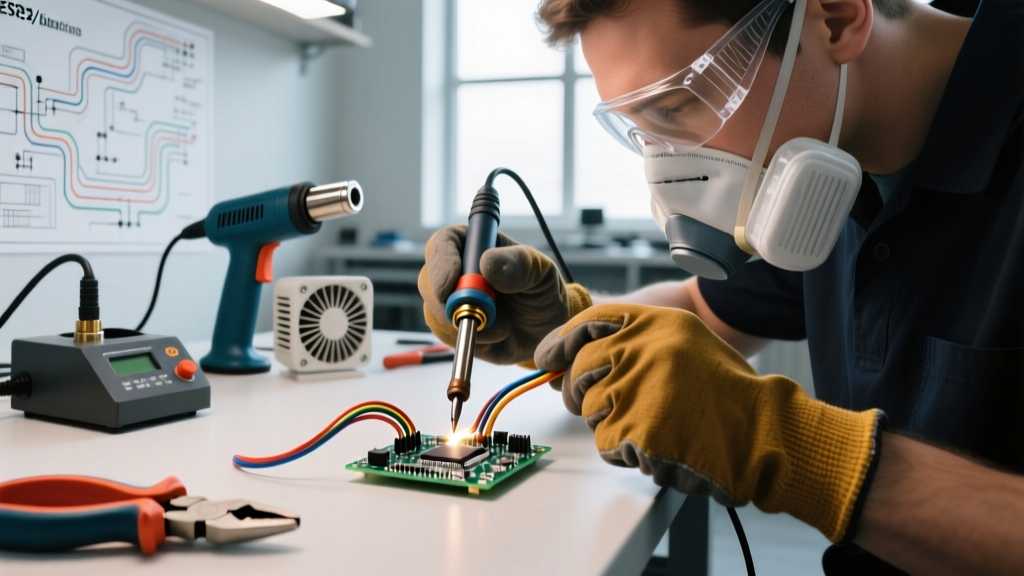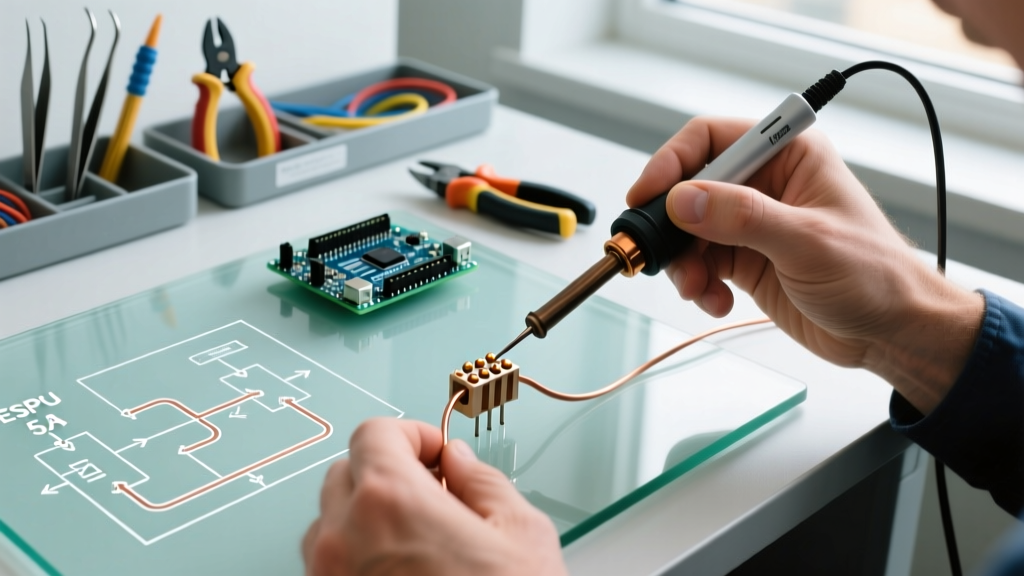

The Great Debate: Is Soldering a Fuse Safe?
In the DIY electronics, automotive, and marine communities, the practice of soldering a fuse directly into a circuit is a highly polarizing topic. While soldering provides a permanent, low-resistance electrical bond, applying high heat to a calibrated overcurrent protection device can fundamentally alter its metallurgical properties. To separate myth from empirical fact, we convened a 2026 expert panel featuring an IPC-certified soldering instructor, an ABYC-certified marine electrician, and an automotive electronics engineer. Their consensus? You should never solder directly to a fuse element or blade, but soldering to an inline fuse holder pigtail is an industry-standard best practice when executed correctly.
"The moment you apply a 350°C soldering iron tip to a fuse blade or glass end-cap, you are introducing uncontrolled thermal mass into a precisely calibrated alloy. You aren't just attaching a wire; you are potentially annealing the fuse element and changing its blow curve." — Marcus Vance, IPC J-STD-001 Certified Trainer
Expert Panel Matrix: Soldering Protocols by Fuse Category
Before picking up your iron, you must understand the thermal limits of the specific fuse type you are working with. Our panel categorized the most common fuses and their acceptable soldering protocols based on IPC J-STD-001 standards and manufacturer guidelines.
| Fuse Type | Direct Soldering Allowed? | Recommended Connection Method | Expert Verdict |
|---|---|---|---|
| Glass Tube (AGC/MDL) | Strictly No | Solder to PCB traces or use spring-clip holders | Heat shatters glass; alters zinc/copper element. |
| Automotive Blade (ATO/ATC) | Strictly No | Solder to inline pigtail fuse holder (e.g., Littelfuse FHAC) | Soldering blades melts internal plastic housing. |
| Mini/Micro Blade (ATM/APM) | Strictly No | Use sealed inline pigtail holders | Thermal mass is too low; instant element damage. |
| High-Amp ANL / MEGA | No | Bolt-down to tinned copper busbars or crimp lugs | Soldering high-current lugs creates brittle joints. |
| Thermal Cutoffs (TCO) | Conditionally Yes | Solder with aggressive heat-sinking (hemostats) | Must keep body temp below 115°C during soldering. |
The Metallurgy of Fuse Elements: Why Heat Destroys Calibration
To understand why experts forbid direct soldering, we must look at the metallurgy of the fuse element. According to Littelfuse application notes, fast-acting fuses typically utilize silver or copper alloys, while slow-blow (time-delay) fuses rely on complex eutectic alloys, often incorporating zinc or solder-like droplets engineered to melt at specific thermal thresholds.
The Thermal Migration Threat
When you touch a soldering iron to a fuse terminal, heat travels rapidly up the copper blade or brass end-cap via thermal conduction. If the internal element reaches its annealing temperature (often between 200°C and 300°C for copper/silver), the crystalline structure of the metal changes. This annealing process softens the metal, increasing its resistance and altering its thermal mass. The result? A 10A fuse might now blow at 7A under normal inrush currents, or worse, fail to blow at all during a sustained overload, creating a severe fire hazard.
Automotive Blade Fuses: The Pigtail Approach
David Cho, an automotive electronics engineer specializing in 12V and 48V DC architectures, emphasizes that the physical housing of automotive blade fuses is just as vulnerable as the element itself.
"Standard ATO/ATC fuse bodies are molded from nylon or polycarbonate, which begin to soften and deform around 120°C to 140°C. If you try to tin the exposed metal blades of an ATC fuse with a standard iron, the plastic housing will melt, potentially shifting the internal element and causing an internal short circuit before the fuse is even installed." — David Cho, Automotive Electronics Engineer
The Correct Method: Inline Fuse Holders
The only safe way to incorporate a blade fuse into a custom soldered harness is by using a sealed inline fuse holder. The Littelfuse FHAC0001SXJ (retailing around $8-$12 per unit) is a staple for this. It features pre-stripped 14 AWG pigtails designed to be soldered to your main wiring harness, completely isolating the ATO fuse from your soldering iron's heat.
Step-by-Step: Soldering an Inline Fuse Holder Pigtail
Soldering the pigtail of an inline fuse holder to your main harness requires precision to ensure a watertight, low-resistance joint. Follow this IPC-compliant workflow:
- Prep the Heat Shrink: Cut a piece of 3:1 adhesive-lined marine heat shrink (e.g., 3M FP-301, approx. $45 for a 100ft spool). Slide it over the main harness wire before stripping. For 14 AWG wire, use 1/2-inch diameter shrink.
- Strip and Interweave: Strip exactly 1/4-inch of insulation from both the harness wire and the fuse holder pigtail. Twist the bare strands together in a linear splice (Western Union style) for maximum tensile strength.
- Tin and Solder: Using a temperature-controlled station (like the Weller WE1010NA set to 350°C), apply 60/40 Sn/Pb rosin-core solder. Note: While SAC305 lead-free is standard for commercial PCBs in 2026, 60/40 remains superior for high-vibration automotive/marine DC wiring due to its lower melting point (188°C) and resistance to tin whiskers.
- Heat Sink the Joint: Clamp a pair of hemostats onto the wire near the fuse holder body. This acts as a heat sink, drawing thermal energy away from the holder's internal brass contacts.
- Seal the Connection: Slide the adhesive-lined heat shrink over the joint. Apply heat evenly with a dedicated hot air gun (not a lighter) until the adhesive oozes slightly from both ends, ensuring a fully waterproof IP67 seal.
Marine and High-Amperage Applications
When dealing with high-current circuits (50A to 300A) in marine or off-grid solar environments, the rules change entirely. Sarah Jenkins, an ABYC-certified marine electrician, warns against soldering high-amperage connections altogether.
"In a 12V marine environment, voltage drop is the enemy. Soldering massive ANL or Class-T fuse lugs often results in cold solder joints because standard DIY irons cannot overcome the thermal mass of 2/0 AWG copper. Furthermore, ABYC E-11 standards heavily favor crimping for high-current DC systems because solder wicks into the wire strands, creating a rigid, brittle point that will snap under engine vibration." — Sarah Jenkins, Marine Electrician
For high-current fuses, experts unanimously recommend using a calibrated ratcheting crimper and marine-grade tinned copper lugs, secured to the fuse via stainless steel hardware torqued to manufacturer specifications. For a deeper dive into marine overcurrent protection layouts, the BoatUS guide on fuses and circuit breakers provides excellent visual schematics for ABYC compliance.
Troubleshooting Soldered Fuse Connections
If you are diagnosing a circuit with a soldered inline fuse holder, watch for these specific failure modes:
Failure Mode 1: Premature Blowing (Nuisance Tripping)
Cause: A solder joint that is too bulky or poorly insulated can act as a localized resistor, generating ambient heat. This heat transfers down the pigtail wire into the fuse holder, raising the internal ambient temperature and causing the fuse to blow below its rated amperage.
Fix: Verify your solder joints are smooth and concave (proper wetting). Ensure the fuse holder is mounted in a location with adequate airflow, away from engine exhaust manifolds or inverters.
Failure Mode 2: High-Resistance Hotspots
Cause: Flux residue from acid-core solder (never use acid-core on electronics or automotive wire) or a 'cold' solder joint creates a high-resistance bottleneck. Under heavy load, this bottleneck generates intense heat, melting the heat shrink and potentially igniting surrounding materials.
Fix: Always use rosin-core (RMA) solder for DC electronics. If you suspect a bad joint, cut it out entirely. Do not attempt to 'reflow' a high-current automotive joint; the wire strands are likely oxidized and must be stripped fresh.
Final Verdict from the Panel
The consensus from our 2026 expert roundup is clear: Soldering a fuse directly is a critical safety violation. However, soldering a fuse holder to your wiring harness is a highly reliable, industry-accepted practice—provided you use the correct adhesive-lined heat shrink, appropriate solder alloys, and thermal management techniques to protect the holder's internal contacts. By respecting the metallurgy of overcurrent protection devices, you ensure your DIY circuits remain safe, compliant, and fire-free.