
The Heat Source Dilemma in Jewelry Fabrication
When fabricating fine jewelry, repairing chains, or setting bezels, thermal management is the single most critical variable. The transition from hobbyist to professional jeweler often hinges on selecting the correct heat delivery system. While traditional bench-mounted oxy-acetylene setups have long been the industry standard, the modern home studio and traveling artisan increasingly rely on advanced micro-torches. This guide provides an exhaustive method comparison of the butane soldering torch jewelry technique versus standard electric soldering irons and traditional bench gas systems, evaluating thermal dynamics, metallurgical compatibility, and real-world studio economics in 2026.
Method Comparison Matrix: Butane vs. Electric vs. Bench Gas
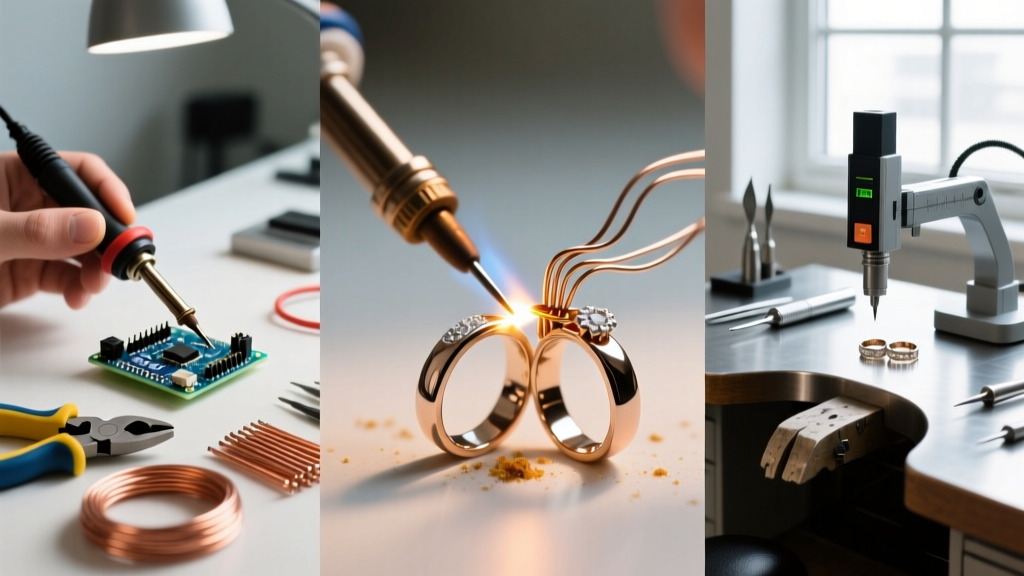
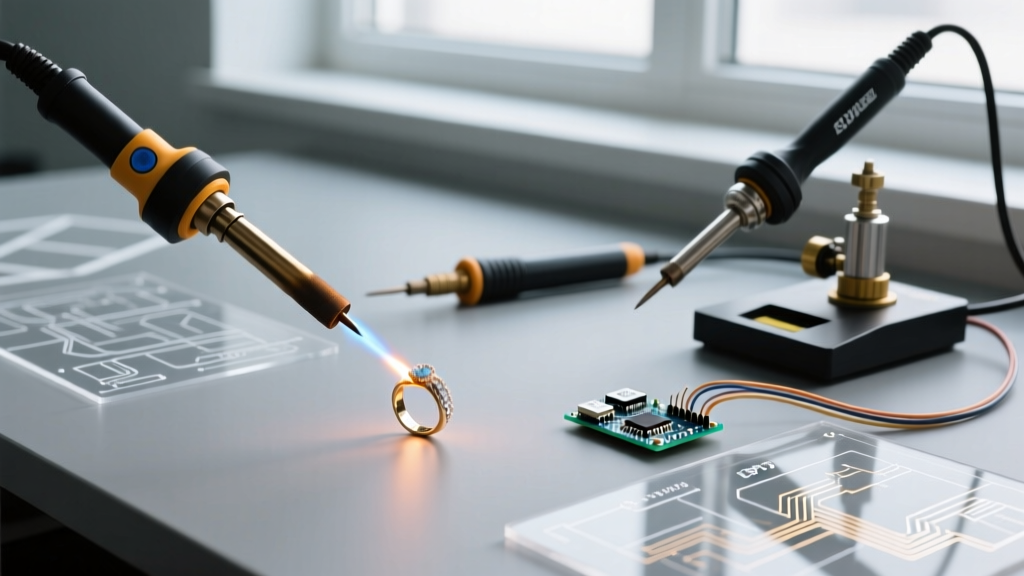
To understand why the butane micro-torch has captured significant market share in small-scale jewelry fabrication, we must compare the raw specifications and operational realities of the three primary soldering methods.
| Feature | Butane Micro-Torch (e.g., Blazer Big Shot) | Electric Soldering Iron (e.g., Weller 60W) | Bench Gas (e.g., Smith Little Torch Oxy-Acetylene) |
|---|---|---|---|
| Max Temperature | 2,500°F (1,371°C) | 900°F (482°C) at tip | 6,300°F (3,482°C) |
| Heat Delivery | Convective (Flame) | Conductive (Direct Contact) | Convective (Flame) |
| Setup Cost (2026) | $45 - $110 | $30 - $80 | $350 - $600+ (plus tank leases) |
| Precision | High (Pinpoint flame control) | Low (Tip size limits reach) | Extreme (Interchangeable micro-nozzles) |
| Best Application | Ring sizing, bezels, chain repair | Electronics, soft copper wire | Heavy casting, large platinum/gold joints |
Why Electric Soldering Irons Fail at Jewelry Soldering
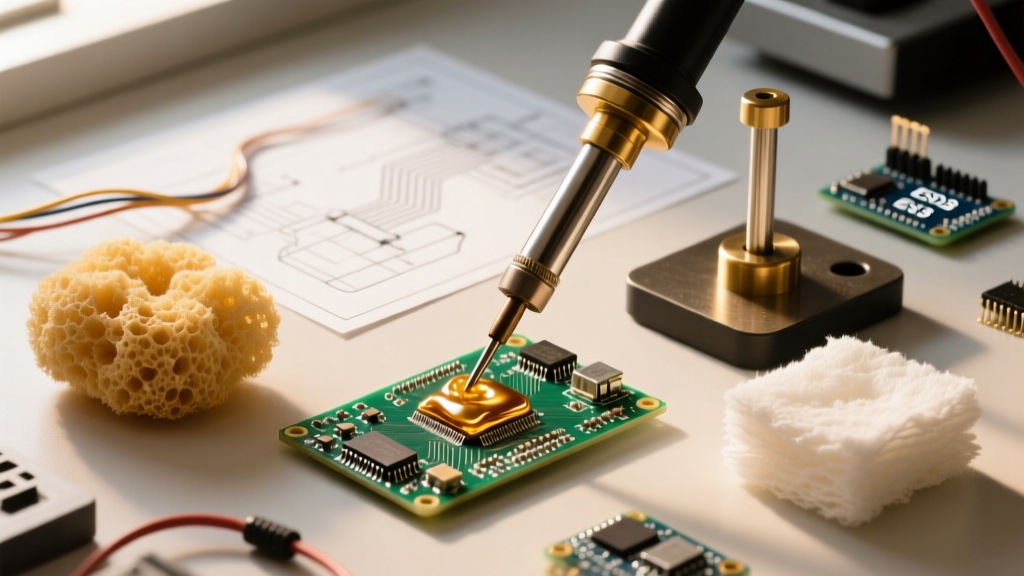
A common beginner mistake is attempting to use a standard 60W electric soldering iron for sterling silver or gold jewelry. Electric irons rely on conductive heat transfer, meaning the physical tip must touch the workpiece. According to metallurgical data from Rio Grande, standard jewelry-grade 'Easy' silver solder requires a flow temperature of approximately 1,325°F (718°C). A standard 60W iron maxes out around 900°F at the tip, and due to thermal dissipation upon contact with high-mass silver, the actual joint temperature rarely exceeds 600°F. The solder will simply ball up and fail to flow via capillary action.
Furthermore, conductive iron tips introduce severe contamination risks. Iron tips degrade when exposed to borax-based jewelry fluxes, ruining both the tip and the precious metal joint. Electric irons are strictly reserved for soft lead-free electronics solder (melting at ~430°F) and should never be used for precious metal fabrication.
The Butane Soldering Torch Jewelry Method: Deep Dive
The butane micro-torch bridges the gap between the underpowered electric iron and the expensive, space-consuming bench gas system. By utilizing a piezoelectric igniter and a pressurized liquid butane reservoir, these torches deliver a highly focused, convective flame capable of reaching 2,500°F. This is more than sufficient to bring a 4mm sterling silver band to the 1,450°F required for 'Hard' grade solder.
Top Butane Torches for Jewelers
- Blazer Big Shot GT8000 ($85 - $105): The undisputed workhorse of the micro-torch world. It features an anti-flare technology that allows it to be used at any angle without liquid butane spitting. Its brass nozzle and precise gas-flow dial offer the closest approximation to a bench torch's flame control.
- SE MT3001 Deluxe ($18 - $25): A budget-friendly entry point. While it lacks the continuous burn time and angle-tolerance of the Blazer, it is perfectly adequate for soldering jump rings and lightweight chain repairs.
- Dremel VersaFlame ($45 - $65): Offers interchangeable attachments, including a soldering iron tip and a deflector. However, for pure jewelry flame-soldering, the Blazer remains superior due to its tighter flame cone.
Metallurgy: Matching Solder Grades to Butane Heat
When executing the butane soldering torch jewelry method, understanding the melting hierarchy of your solders is non-negotiable. Jewelers use three grades of solder to allow for multiple soldering steps (e.g., sizing a ring, then adding a setting, then attaching a gallery) without melting previous joints.
| Solder Grade | Flow Temperature (Sterling) | Solidus / Liquidus Spread | Best Use Case with Butane Torch |
|---|---|---|---|
| Hard | 1,450°F (788°C) | Narrow | Initial structural joints, ring shanks, heavy bezels. |
| Medium | 1,390°F (754°C) | Medium | Adding galleries, secondary attachments. |
| Easy | 1,325°F (718°C) | Wide | Chain repair, jump rings, final assembly, sizing. |
Note: Sterling silver melts at 1,640°F (893°C). A Blazer Big Shot can easily overshoot this temperature if held too close, resulting in a melted workpiece. Convective heating requires keeping the flame 1 to 2 inches away, heating the surrounding metal to allow thermal conductivity to draw the heat into the joint.
Critical Failure Modes and Edge Cases
Even with the right equipment, the butane method introduces specific failure modes that bench-gas users rarely encounter. Recognizing these edge cases separates amateurs from professionals.
1. Nozzle Clogging and Flame Sputtering
The most frequent complaint among micro-torch users is a sputtering flame or a clogged piezoelectric igniter. This is almost exclusively caused by using low-grade, impure butane. Cheap hardware-store butane contains oils and mercaptans that carbonize inside the micro-brass nozzle. Solution: Exclusively use 5x to 11x refined butane (such as Colibri Premium or Zippo Premium). The multi-stage distillation removes impurities, ensuring a clean burn and extending the life of the torch's internal O-rings.
2. Solder Balling and Poor Capillary Action
If the solder melts into a ball on top of the seam rather than flowing into it, the joint is either contaminated with skin oils/polishing compound, or the flux has burned off. Butane torches can blow flux off the joint if the gas pressure is too high. Solution: Use Batterns Self-Pickling Flux for Hard and Medium solders, and apply it with a fine brush. Keep the flame's outer envelope (the cooler, reducing zone) on the metal, avoiding the harsh inner blue cone directly on the flux.
3. Thermal Shock and Stone Damage
Unlike a localized laser welder, a butane torch heats the entire piece. If you are sizing a ring with a heat-sensitive stone (like opal, emerald, or turquoise), the ambient heat will fracture the stone. Solution: Submerge the stone setting in a water-filled soldering dish or apply commercial heat-shield gel (like Rio Chill) to the gemstone area before applying the butane flame to the opposite shank.
Step-by-Step: Soldering a Sterling Silver Bezel with a Micro-Torch
- Preparation: File the bezel wire ends perfectly flush. Bind the seam with 0.3mm binding wire to maintain tension.
- Fluxing: Apply a thin layer of Batterns flux to the interior and exterior of the seam.
- Chip Placement: Place a 2mm pallion of Hard silver solder on a soldering pick, dip it in flux, and place it adjacent to the seam.
- Pre-Heating: Ignite the Blazer Big Shot. Set the flame to a medium, bushy profile. Move the torch in 2-inch circles around the entire bezel to evenly raise the ambient temperature. This prevents the solder from flashing prematurely.
- Targeted Heating: Once the flux turns clear and glassy (approx. 1,100°F), focus the flame on the metal adjacent to the seam, not the solder itself. Watch for the solder to flash and draw through the joint via capillary action.
- Quenching and Pickling: Allow the piece to air cool until the red glow fades, then quench in water and drop into a warm Sparex #2 pickle solution to dissolve the borax glass and copper oxides.
Safety and Ventilation Standards
Working with pressurized hydrocarbons and heavy metal fluxes requires strict adherence to safety protocols. According to OSHA Hazard Communication standards, vaporized fluxes (particularly those containing fluorides or borax) can cause severe respiratory irritation. Always operate your butane soldering torch under a dedicated fume extractor or in a heavily cross-ventilated space. Furthermore, Blazer Products explicitly warns against refilling the torch while it is hot or near an ignition source. Always purge the torch of residual gas before refilling by depressing the fill valve with a small jeweler's screwdriver in a well-ventilated area.
Expert Insight: The butane micro-torch is not a replacement for an oxy-acetylene bench torch when casting or melting large volumes of precious metal. However, for 90% of daily bench tasks—jump rings, chain soldering, bezel setting, and ring sizing—the butane method offers unparalleled portability, zero overhead tank rental costs, and sufficient thermal mass to execute flawless jewelry joints.