
The Core of Your Iron: Understanding Soldering Element Materials
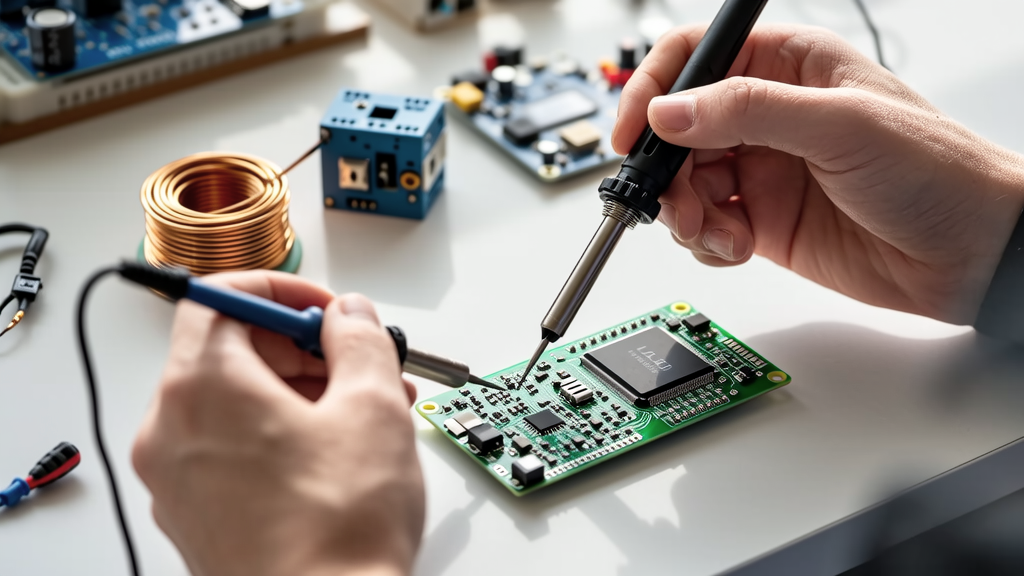
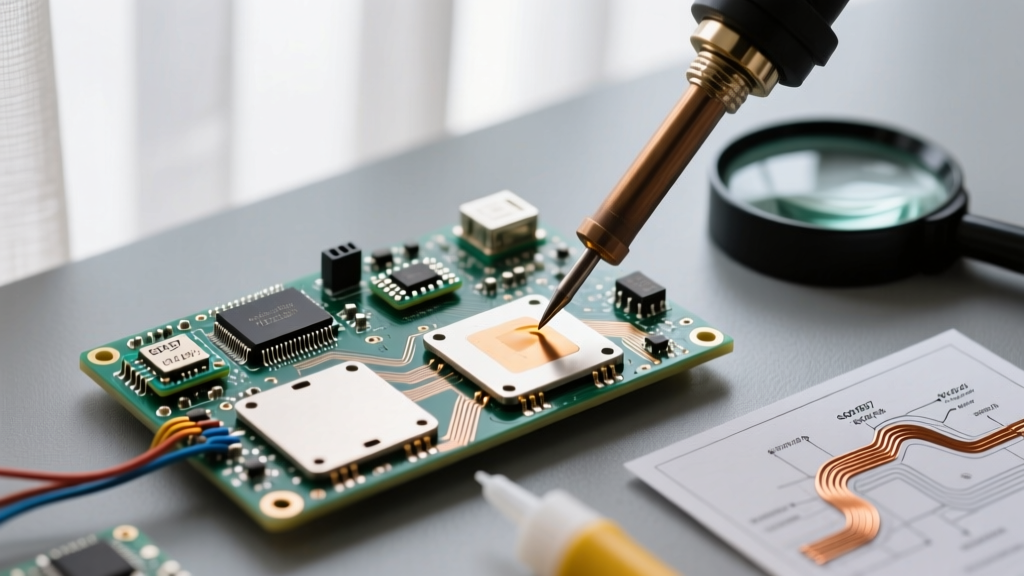
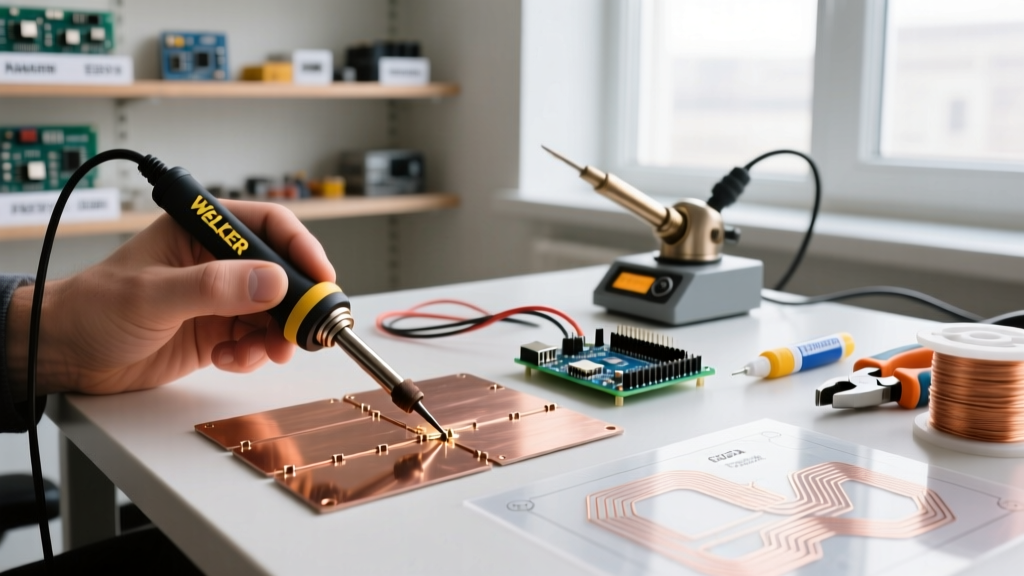
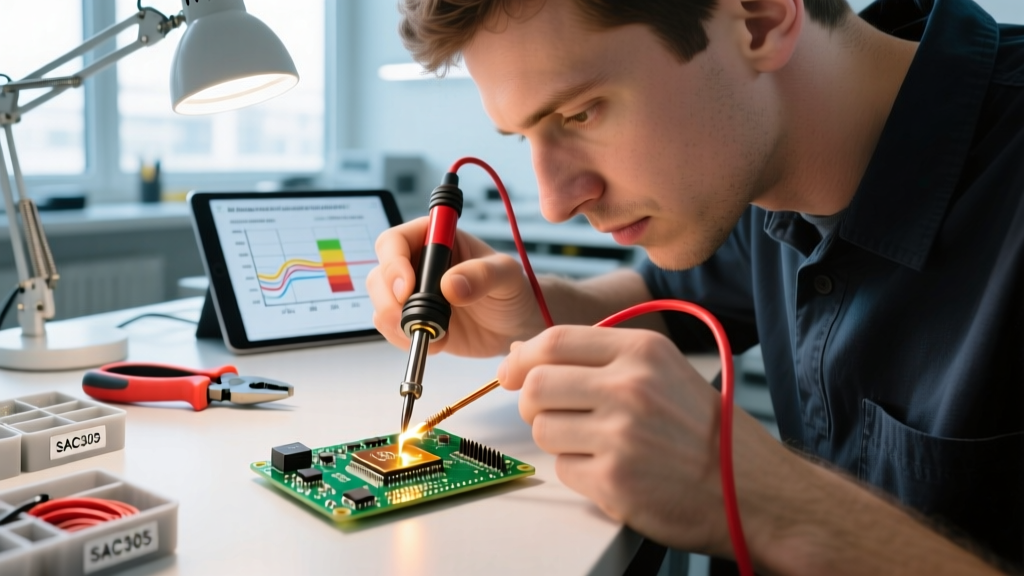
When building or repairing electronics, the focus is often placed on the solder alloy or the tip geometry. However, the true heart of your station is the soldering element—the transducer responsible for converting electrical current into precise thermal energy. In 2026, as lead-free alloys like SAC305 and SAC405 dominate both hobbyist and professional workbenches, the material composition of your heating element dictates not just how fast your iron recovers, but how well it plays with your chosen tips and PCB substrates.
Material compatibility in soldering is a triad: the element core, the tip sleeve, and the solder alloy. Mismatching these leads to catastrophic tip degradation, sensor drift, and cold joints. According to the IPC J-STD-001 standard, maintaining strict thermal profiles is critical to preventing intermetallic compound (IMC) overgrowth. Your soldering element's material is the first line of defense in maintaining that profile.
Ceramic (Alumina) Heating Elements: The Speed Demon
Ceramic elements, primarily utilizing high-purity alumina (Al2O3), are the standard in modern high-performance stations like the Hakko FX-951 (using the 1529 element) and the Weller WT series. Alumina boasts a thermal conductivity of roughly 30 W/m·K and excellent electrical insulation properties.
Material Compatibility & Alloy Matching
Ceramic elements excel with high-temperature, lead-free alloys. Because SAC305 requires a wetting temperature of 217°C (often pushing the iron to 350°C–380°C for rapid heat transfer), the ceramic core's low thermal mass allows the integrated thermocouple to detect temperature drops in milliseconds. The PID controller then floods the element with current, achieving recovery times often under 2.5 seconds.
- Best Tip Match: Iron-plated copper tips with tight inner-diameter tolerances (e.g., Hakko T18 or Weller RT series).
- Best Alloy Match: SAC305, SAC405, and Sn96.5/Ag3.0/Cu0.5.
- Substrate Compatibility: High-density multilayer PCBs with heavy ground planes, where rapid thermal injection is required before the heat dissipates into the board.
Edge Case Warning: Ceramic is inherently brittle. A common failure mode occurs when a user drops the handpiece or aggressively taps the tip against a brass wool sponge while the element is at peak temperature (380°C+). The sudden localized cooling causes thermal shock, creating micro-fractures in the alumina core that eventually lead to an open circuit.
Nichrome (Wire-Wound) Elements: The Rugged Workhorse
Nichrome (Nickel-Chromium) wire-wound elements represent the legacy architecture of soldering, still widely used in heavy-duty through-hole stations like the classic Weller WES51 (PES51 element) and various budget-friendly 60W irons. The nichrome wire is typically wound around a mica or ceramic bobbin.
Material Compatibility & Alloy Matching
Nichrome elements have a much higher thermal mass and lower thermal responsiveness compared to solid ceramic cores. Their thermal conductivity hovers around 11 W/m·K. While they struggle to keep up with the rapid heat-drain demands of modern 0402 SMD lead-free rework, they are incredibly stable for sustained thermal delivery.
- Best Tip Match: Heavy-mass, solid copper or thick-walled iron-plated tips (e.g., Weller ET series or large chisel tips).
- Best Alloy Match: Eutectic Sn63/Pb37 (183°C) and high-lead alloys (Sn10/Pb90) used in aerospace die-attach.
- Substrate Compatibility: Single or double-layer through-hole boards, large gauge wire tinning, and heavy mechanical connectors.
Thick Film & Integrated Cartridges: The 2026 Standard
The most significant shift in soldering element material compatibility is the move toward integrated thick-film heaters, pioneered by JBC (C245/C210 cartridges) and adopted by Pace (TD-200). In these systems, the heating element and the thermocouple are printed directly onto the base of the tip using thick-film ceramic paste.
This eliminates the "air gap" and thermal expansion mismatch between a separate element and a replaceable tip. The material compatibility issue of tip-seizing is entirely resolved, and thermal recovery is measured in microseconds rather than seconds. However, the trade-off is cost: while a standard Hakko 1529 ceramic element costs around $22, a JBC C245 integrated cartridge costs upwards of $45 per unit.
Material Compatibility Matrix: Element, Tip, and Alloy
| Element Type | Core Material | Thermal Response | Optimal Alloy Match | Shock Resistance | Avg. Cost (2026) |
|---|---|---|---|---|---|
| Wire-Wound | Nichrome / Mica | Slow (4-8 seconds) | Sn63/Pb37, High-Pb | High | $25 - $30 |
| Solid Ceramic | Alumina (Al2O3) | Fast (1.5-3 seconds) | SAC305, SAC405 | Low (Brittle) | $18 - $25 |
| Thick-Film Integrated | Ceramic Paste on Cu | Instant (<0.5 seconds) | All (incl. SnBi, SAC) | Medium | $40 - $55 |
The Hidden Compatibility Killer: Thermal Expansion Mismatch
One of the most overlooked aspects of soldering element maintenance is the coefficient of thermal expansion (CTE) mismatch between the heater sleeve and the tip. A standard copper-core tip has a CTE of roughly 17 µm/m·°C, while a ceramic element sleeve sits at about 8 µm/m·°C.
When you run a ceramic element at 380°C for lead-free rework, the copper tip expands at more than twice the rate of the ceramic sleeve. If flux vapors and oxidized copper particles infiltrate the gap between the tip and the element, the tip will physically seize inside the element as it cools and contracts. Forcing a seized tip out is the number one cause of snapped ceramic heating elements.
Actionable Prevention Protocol
- Clean the Sleeve: Every 40 hours of use, remove the tip and use a fiberglass scratch pen to gently clean the inner bore of the element sleeve.
- Apply Anti-Seize: Apply a microscopic dab of high-temperature copper anti-seize compound (such as MG Chemicals 8462) to the base of the tip before insertion. Do not use standard automotive grease, which will carbonize and cause a dead short.
- Respect the Cool-Down: Never attempt to change a tip while the element is above 150°C. Allow the station to power down and cool to room temperature to normalize the CTE differential.
Real-World Failure Modes and Sensor Drift
According to the NASA-STD-8739.3 workmanship requirements, soldering tools must be regularly calibrated to prevent thermal overshoot, which is directly tied to element degradation.
- Nichrome Oxidation: Over time, the nichrome wire oxidizes at sustained temperatures above 400°C. This increases the electrical resistance of the element. The station's PID controller misinterprets this resistance change, often resulting in a 10°C to 15°C overshoot at the tip, which can scorch FR-4 substrates and lift delicate SMD pads.
- Ceramic Sensor Delamination: In cheaper, off-brand ceramic elements, the embedded thermocouple wires can delaminate from the alumina matrix after repeated thermal cycling. This causes the station to display erratic temperature readings or throw an "Open Sensor" error code, even if the heater wire is intact.
Upgrading Your Station: Sourcing Genuine Elements
The market is currently flooded with counterfeit soldering elements, particularly for the Hakko 1321 and 1529 models. Counterfeit elements often use inferior mica composites instead of pure alumina, leading to dangerous electrical leakage and poor thermal transfer. When sourcing replacement elements, always verify the official manufacturer documentation and purchase from authorized industrial distributors (e.g., Mouser, Digi-Key, or Farnell) rather than unverified third-party marketplaces. A genuine $22 element protects your $300 station and your $50 prototype board.
Frequently Asked Questions
Can I use a lead-free tip on a nichrome element?
Yes, but it is not recommended for high-volume work. Nichrome elements lack the thermal recovery speed required to melt SAC305 efficiently on large ground planes. You will likely experience cold joints and be forced to raise the station temperature above 400°C, which rapidly degrades the tip's iron plating.
Why does my ceramic element keep cracking?
Ceramic elements crack due to mechanical shock or thermal shock. Tapping the iron hard against a metal stand, dropping the handpiece, or plunging a 380°C tip into cold water or wet sponges will fracture the alumina core. Always use a damp (not wet) cellulose sponge or dry brass wool gently.
Are integrated thick-film elements worth the higher cost?
For micro-soldering, 0201 components, and rapid lead-free rework, absolutely. The elimination of the air gap and the instant thermal response prevent heat damage to sensitive ICs, justifying the $45+ per-cartridge cost for professional rework environments.