
Why Material Choice Dictates Soldering Success
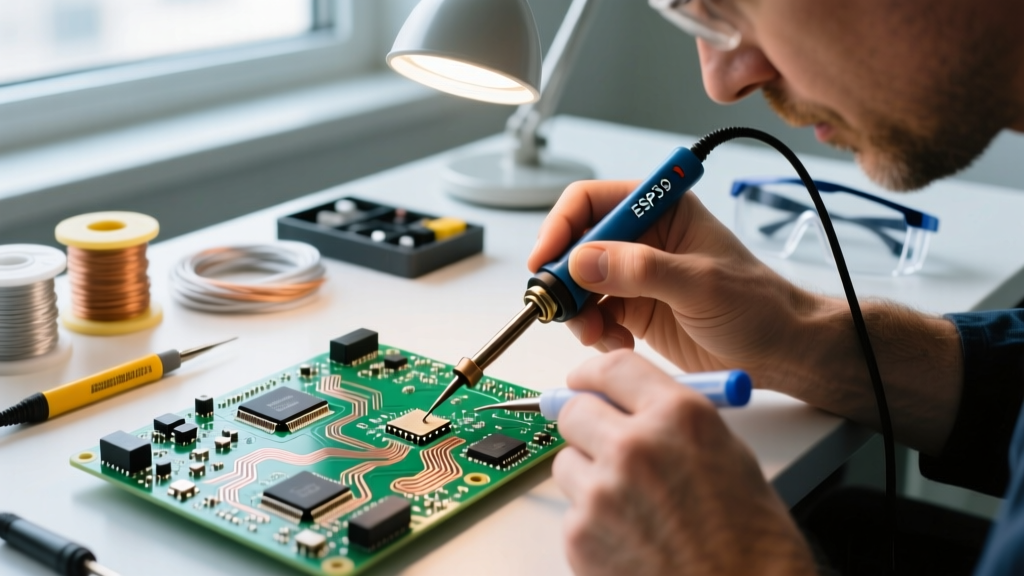
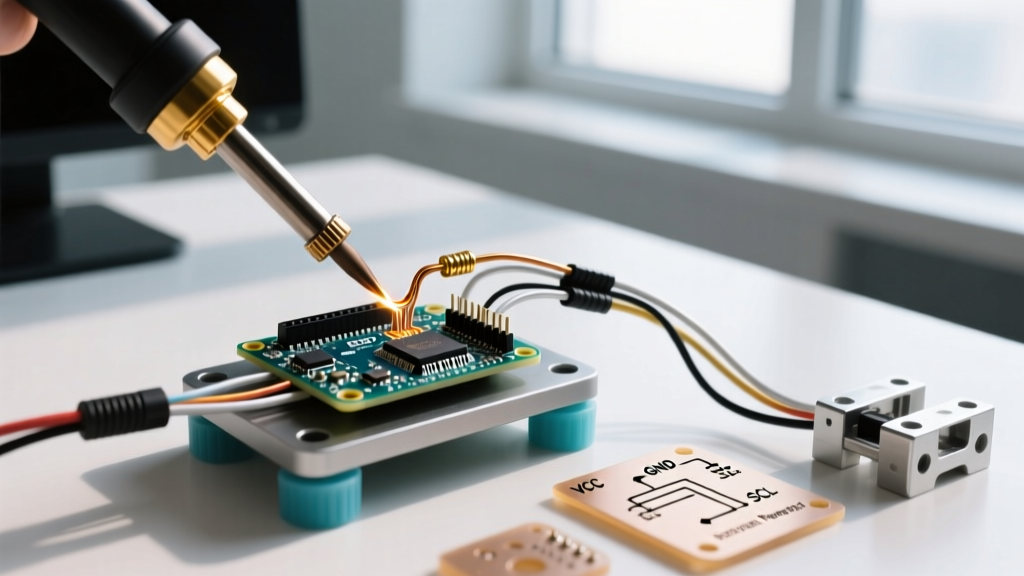
When assembling complex electronics, the pcb board holder soldering setup you choose is just as critical as the soldering iron itself. While most hobbyists and even some professionals focus entirely on tip geometry and temperature control, the material composition of the board holder introduces hidden variables that can ruin sensitive components. From triboelectric charging to thermal sinking and chemical degradation, the physical properties of your holder directly impact joint reliability and component survival.
In this comprehensive material compatibility guide, we break down the exact physics and chemistry of PCB holder materials, providing actionable frameworks to select the right jig, vise, or mat for your specific 2026 workflow.
The Hidden Dangers of Incompatible Holder Materials
Before diving into specific materials, it is vital to understand the three primary failure vectors associated with poor material selection in electronics workholding:
- Electrostatic Discharge (ESD): Standard insulative plastics (like acrylic or standard ABS) can generate surface voltages exceeding 5,000V through simple friction. According to the ESD Association, voltages as low as 30V can destroy sensitive MOSFET gates and microcontrollers.
- Thermal Sinking and Warping: Lead-free SAC305 solder requires tip temperatures of 350°C to 380°C. If a holder material has high thermal conductivity, it will pull heat away from through-hole pads, causing cold solder joints. Conversely, if the material has a low glass transition temperature, radiant heat will warp the jig mid-assembly.
- Chemical Degradation: Aggressive rosin fluxes (RMA/RA) and cleaning solvents like Isopropyl Alcohol (IPA) cause severe stress cracking in polycarbonates and standard 3D-printed filaments.
Material Breakdown: ESD, Thermal, and Chemical Profiles
Aluminum and Stainless Steel (The Heavyweights)
CNC-machined aluminum and stainless steel holders, such as the popular Quad Hands Workbench, offer unmatched mechanical rigidity. However, their high thermal conductivity (approx. 205 W/m·K for aluminum) makes them aggressive heat sinks.
Best Use Case: Heavy mechanical assembly, large ground planes, and SMD rework where localized pre-heating is used.
Edge Case Warning: When soldering small through-hole components on thin FR-4 boards, an aluminum vise clamped directly under the joint will wick heat away faster than a standard 60W iron can supply it. Always use high-temperature silicone or Kapton tape as a thermal break between the metal jaws and the PCB.
ESD-Safe Polymers and Composites (The Precision Choice)
True ESD-safe materials are not merely 'anti-static' sprays; they are bulk-doped with carbon black or specialized conductive fibers to achieve a surface resistivity between 10^5 and 10^11 ohms/square. This aligns with IPC standards for safe handling of static-sensitive devices.
Best Use Case: Bare-die handling, RF module assembly, and high-impedance analog circuit soldering.
Material Highlight: ESD-safe ABS and conductive PEEK (Polyether ether ketone) are the industry standards. PEEK can withstand continuous temperatures up to 250°C, making it virtually immune to soldering iron burns, though it is significantly more expensive.
High-Temp Silicones and Fiberglass (The Flexible Option)
Silicone work mats with magnetic pegs and fiberglass-composite jigs offer a non-marring, highly flexible approach to PCB holding. Silicone is inherently an excellent thermal and electrical insulator.
Best Use Case: Oddly shaped boards, flexible PCBs (Flex/Rigid-Flex), and rapid prototyping where jaw pressure might crack delicate ceramic capacitors.
Chemical Note: While silicone resists high heat (up to 300°C), it is highly porous to certain flux vapors and can stain permanently. Furthermore, aggressive solvents like acetone will degrade silicone over time.
3D Printed Plastics: PEI vs. PLA and PETG
Custom 3D-printed jigs are ubiquitous in modern labs, but material choice is where most engineers fail.
- PLA: Glass transition at ~60°C. Will warp and melt under radiant heat from a soldering iron. Never use for soldering jigs.
- PETG: Glass transition at ~80°C. Better, but still prone to deformation during prolonged lead-free soldering sessions.
- PEI (Ultem): Glass transition at ~217°C. Inherently flame retardant, naturally ESD-dissipative in some formulations, and highly resistant to IPA and rosin fluxes. This is the ultimate choice for custom 3D-printed soldering fixtures.
Comprehensive Material Compatibility Matrix
| Material | ESD Safety | Max Continuous Temp | Flux / IPA Resistance | Avg. Market Cost (2026) |
|---|---|---|---|---|
| Anodized Aluminum | Poor (Insulative coating) | 400°C+ | Excellent | $120 - $180 (Full Jig) |
| ESD-Safe ABS / Composite | Excellent (10^7 ohms/sq) | 110°C | Good | $35 - $60 (Vise Jaws) |
| PEI (Ultem) 3D Print | Good (Dissipative) | 217°C | Excellent | $35 / kg (Filament) |
| Standard Acrylic (PMMA) | Hazardous (High Charge) | 90°C | Poor (Stress Cracking) | $15 - $25 |
| High-Temp Silicone | Good (Insulative/Safe) | 300°C | Moderate (Staining) | $20 - $40 (Mat/Pegs) |
Real-World Failure Modes and Edge Cases
Even with the right material, improper application leads to specific failure modes recognized by SMTA and reliability engineers:
1. Magnetic Interference in Steel Holders
Stainless steel holders often contain ferritic martensitic structures that are slightly magnetic. If you are soldering Hall-effect sensors, compass modules (magnetometers), or precision inductors, the residual magnetism from a steel vise can skew calibration or alter inductance values. Solution: Use austenitic stainless steel (like 316L) or switch to PEI/Aluminum for magnetic-sensitive boards.
2. Acrylic Solvent Cracking
Many budget 'helping hands' use laser-cut acrylic. When flux splatter lands on acrylic and is later cleaned with 99% IPA, the solvent penetrates micro-fractures, causing catastrophic stress cracking. The board holder can snap mid-solder, dropping a hot PCB onto your lap or workbench.
3. Ground Loop Creation
If you use a bare aluminum holder and your soldering station's ground wire is clipped to the PCB ground plane, resting the board on a grounded metal vise can create a ground loop. This can cause erratic behavior in sensitive analog-to-digital converters (ADCs) during testing. Always isolate metal holders with high-temp Kapton or silicone sleeves.
Top Market Recommendations for 2026
Based on material science and current market availability, here are the top-tier solutions for different engineering needs:
The Professional Standard: PanaVise Model 201 (ESD-Safe)
Featuring conductive composite jaws specifically designed to safely dissipate static charges without shorting active circuits. Priced around $48, it remains the gold standard for benchtop ESD-safe workholding.
The Heavy-Duty Modular: Quad Hands Workbench (Aluminum)
At approximately $145, this CNC-machined aluminum system offers infinite articulation. Best paired with optional silicone jaw covers to prevent thermal sinking and PCB scratching.
The Custom Lab Solution: PEI Filament + Magnetic Build Plates
For production environments running the same board repeatedly, designing custom PEI bed-of-nails or edge-clamp jigs via a Bambu Lab X1-Carbon or Prusa XL is the most chemically and thermally robust method available today.
Expert Tips for Optimizing Your Setup
- Implement a Thermal Break: If you must use a metal vise, apply a 2mm layer of high-temperature RTV silicone to the clamping jaws. This preserves the mechanical grip while eliminating the heat-sink effect.
- Verify ESD Claims: Do not trust 'anti-static' pink polyethylene bags or cheap pink plastics for rigid holders. They only prevent charge generation; they do not safely dissipate existing charges. Look for 'ESD Dissipative' certifications with measured ohms/square ratings.
- Clean Holders Regularly: Flux buildup on ESD-safe polymers can actually create an insulative layer, rendering the ESD properties useless. Wipe down PanaVise or PEI jigs weekly with a mild, non-solvent electronics cleaner.
Conclusion
Upgrading your pcb board holder soldering equipment is one of the highest-ROI investments you can make in your electronics lab. By moving away from generic, thermally unstable, and ESD-hazardous materials, and instead selecting purpose-built composites, PEI, or properly isolated metals, you eliminate an entire category of hidden assembly defects. Whether you are hand-soldering 0402 SMD components or assembling high-power RF amplifiers, matching your holder material to your thermal and electrical requirements is the hallmark of true professional craftsmanship.