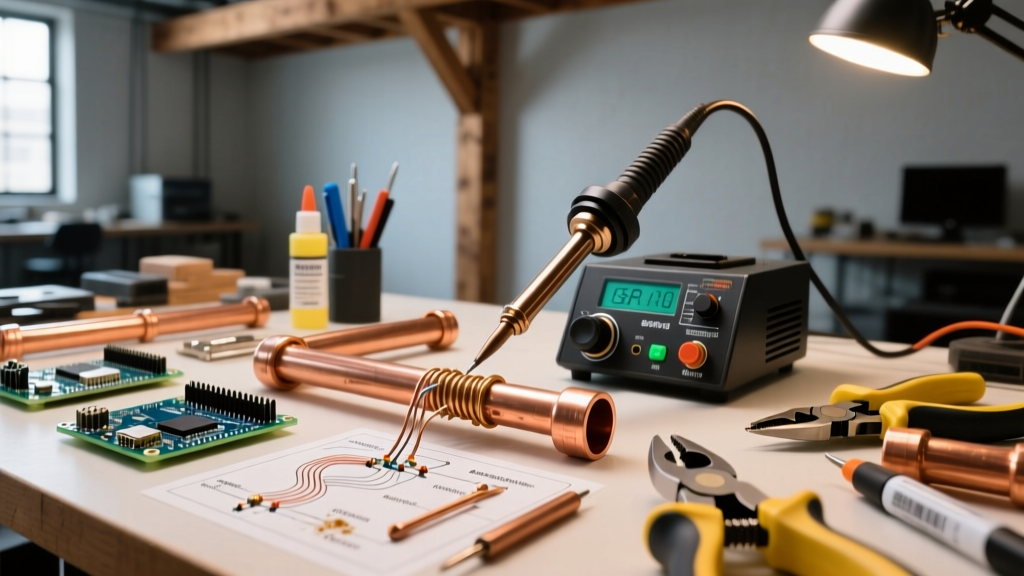

The Core Dilemma: Soldering vs. Brazing in HVAC/R
When joining copper tubing in air conditioning and refrigeration (ACR) systems, the margin for error is effectively zero. A single pinhole leak or oxidized interior scale can lead to compressor failure, refrigerant loss, and severe environmental penalties under EPA Section 608 regulations. For HVAC technicians and DIY enthusiasts tackling mini-split installations or repair work, understanding the metallurgical and mechanical decision framework for soldering refrigeration lines is critical.
The term 'soldering' is often used colloquially in the trades to describe any torch-joined pipe. However, the American Welding Society (AWS) draws a hard line: processes occurring below 840°F (450°C) are soldering, while those above 840°F are brazing. In modern 2026 HVAC/R applications, high-pressure refrigerants like R-410A and R-32 operate at pressures exceeding 600 PSI, making the distinction between a soft-soldered joint and a brazed joint a matter of system survival.
Decision Node 1: Joint Type and Pressure Tolerance
The first branch of your decision framework depends entirely on the base metals being joined and the operating pressure of the system.
The 840°F (450°C) Threshold
According to the Copper Development Association, soft soldering (using tin-antimony or tin-silver alloys) is strictly prohibited on the high-pressure side of modern ACR systems. Soft solder lacks the shear strength to withstand the vibration of a reciprocating or scroll compressor and the thermal expansion cycles of a condensing unit.
- Use Soft Soldering ONLY for: Low-pressure drain lines, condensation pumps, or non-pressurized sensor wells.
- Use Brazing for: All pressurized refrigerant lines (suction, liquid, and hot gas), regardless of whether the tubing is Type L or ACR copper.
Decision Node 2: Filler Metal Selection Matrix
Once you have established that brazing is required for pressurized lines, the next decision is selecting the correct AWS-classified filler metal. The choice hinges on the base metals and the joint clearance.
| AWS Classification | Common Trade Name | Silver (Ag) Content | Melting Range | Best Application | 2026 Est. Cost/lb |
|---|---|---|---|---|---|
| BCuP-5 | Sil-Fos 15 / Harris 15% | 15% | 1190°F - 1475°F | Copper-to-Copper (vibration prone) | $240 - $280 |
| BCuP-2 | Sil-Fos 5 / Harris 5% | 5% | 1310°F - 1495°F | Copper-to-Copper (tight gaps) | $110 - $130 |
| BAg-7 | Easy-Flo 45 | 45% | 1225°F - 1370°F | Copper-to-Steel / Copper-to-Brass | $550 - $650 |
| BCuP-3 | Stay-Brite (Non-Silver) | 0% (Tin/Phos) | 430°F - 535°F | Low-temp repair (Not for R-410A) | $60 - $80 |
Expert Insight: Never use BCuP (Copper-Phosphorus) alloys on steel, brass, or ferrous metals. The phosphorus reacts with iron to form iron phosphide, a highly brittle intermetallic compound that will cause the joint to shatter under compressor vibration. Always switch to a BAg (Silver) alloy with an active white flux when transitioning from copper to a brass service valve.
Decision Node 3: The Flux Imperative
A common point of failure for junior technicians is the misapplication of flux. The decision to use flux is dictated by the chemistry of your filler metal.
The Copper-to-Copper Exception
BCuP alloys (like Sil-Fos) contain phosphorus, which acts as a built-in fluxing agent when heated on pure copper. Do not use external paste flux on copper-to-copper joints when using BCuP. Adding paste flux to a copper-to-copper BCuP joint traps moisture and creates slag inclusions inside the pipe, which can clog the thermostatic expansion valve (TXV) or electronic expansion valve (EEV).
When Flux is Mandatory
If your decision framework leads you to a dissimilar metal joint (Copper-to-Brass or Copper-to-Steel), the phosphorus in BCuP is insufficient. You must:
- Switch to a BAg (Silver) filler metal.
- Apply an AWS A5.31 Type FB3-A or FB3-C white brazing flux.
- Clean the joint with a wet rag immediately after cooling to prevent corrosive flux residue from eating through the copper over time.
Decision Node 4: Nitrogen Purging Protocols
If you are soldering or brazing refrigeration lines without a nitrogen purge, you are actively destroying the system. Heating copper in the presence of atmospheric oxygen creates cupric oxide (black scale) and cuprous oxide (red scale) inside the tube. This scale will eventually flake off and destroy the compressor windings.
Setting Up the Purge
The decision is not whether to purge, but how much flow to apply. Too little flow leaves oxygen; too much flow creates turbulence and blows out your filler metal.
- Target Flow Rate: 2 to 3 Standard Cubic Feet per Hour (SCFH).
- Equipment: Use a dedicated nitrogen regulator with a built-in flowmeter (e.g., Harris 896 or Uniweld Nitro-Set).
- Verification: Purge for at least 15 seconds before striking the torch. Use an oxygen analyzer at the exit point if working on critical commercial VRF systems.
Decision Node 5: Traditional Torch vs. Press Fittings
In 2026, the decision framework for joining ACR lines must include press technology (like Viega ProPress or NaviPress). While traditional brazing remains the gold standard for custom fabrication, press fittings have disrupted the repair and retrofit market.
| Metric | Traditional Oxy-Acetylene Brazing | ACR Press Fittings (e.g., ProPress) |
|---|---|---|
| Time per Joint (1/2 inch) | 4 - 6 minutes (including prep & cool) | 15 - 20 seconds |
| Material Cost per Joint | $0.50 - $1.20 (Filler metal + gas) | $8.00 - $14.00 (Fitting cost) |
| Tool Investment | $300 - $600 (Torch, tanks, rigging) | $2,500 - $4,000 (Press tool & jaws) |
| Hot Work Permit | Required (Fire watch mandatory) | Not Required (Cold press) |
| Vibration Resistance d> | Excellent (Metallurgical bond) | Good (Relies on EPDM/HNBR O-ring) |
The Verdict: Use press fittings for commercial retrofits, tight spaces where torch clearance is impossible, or when hot-work permits are too costly to obtain. Stick to traditional brazing for new residential installs, high-vibration compressor discharge lines, and systems utilizing hydrocarbon refrigerants (like R-290 Propane) where O-ring compatibility is a concern.
Edge Cases and Failure Mode Analysis
Even with the correct framework, execution errors lead to callbacks. Here is how to troubleshoot the most common failure modes identified by Lucas-Milhaupt's brazing engineering team.
1. The 'Cold Joint' Illusion
A cold joint occurs when the filler metal melts from the torch flame rather than from the heat of the base metal. The alloy will sit on top of the copper like a bead of water, lacking capillary penetration.
Fix: Remove the flame from the filler rod. Heat the fitting, not the pipe. Touch the rod to the joint; if the base metal is at the correct temperature, it will instantly wick the alloy deep into the capillary space.
2. Improper Capillary Clearance
Capillary action relies on precise gaps. If the gap is too wide, the alloy won't bridge. If it's too tight, flux and oxides cannot escape.
Target Dimensions: For BCuP alloys, aim for a radial clearance of 0.002 to 0.005 inches at room temperature. Remember that copper expands when heated, which will slightly tighten this gap during the actual brazing process.
3. Flux Inclusions and 'Slag Traps'
If you are brazing copper-to-brass and fail to clean the joint, the highly corrosive white flux will absorb ambient moisture and create hydrofluoric acid, eating a pinhole through the copper within 6 to 12 months.
Fix: Always quench the joint with a damp rag while it is still warm (but below the melting point of the alloy) to flake off the glass-like flux residue, then wire-brush the exterior.
Summary Checklist for the Field
Before striking the torch on your next ACR project, run through this rapid decision matrix:
- Pressure Check: Is it a high-pressure refrigerant line? (If yes, abandon soft solder; proceed to brazing).
- Metallurgy Check: Is it Copper-to-Copper? (Use BCuP, no flux). Is it Copper-to-Brass? (Use BAg, apply white flux).
- Purge Check: Is the nitrogen regulator set to 2-3 SCFH? Is the line actively flowing?
- Heat Check: Am I heating the fitting and letting capillary action draw the alloy, rather than melting the rod directly with the flame?
By strictly adhering to this decision framework, you eliminate the guesswork from soldering refrigeration lines, ensuring joints that withstand the extreme thermal and pressure cycles of modern HVAC/R systems.