
The Metallurgical Challenge of Brass Soldering
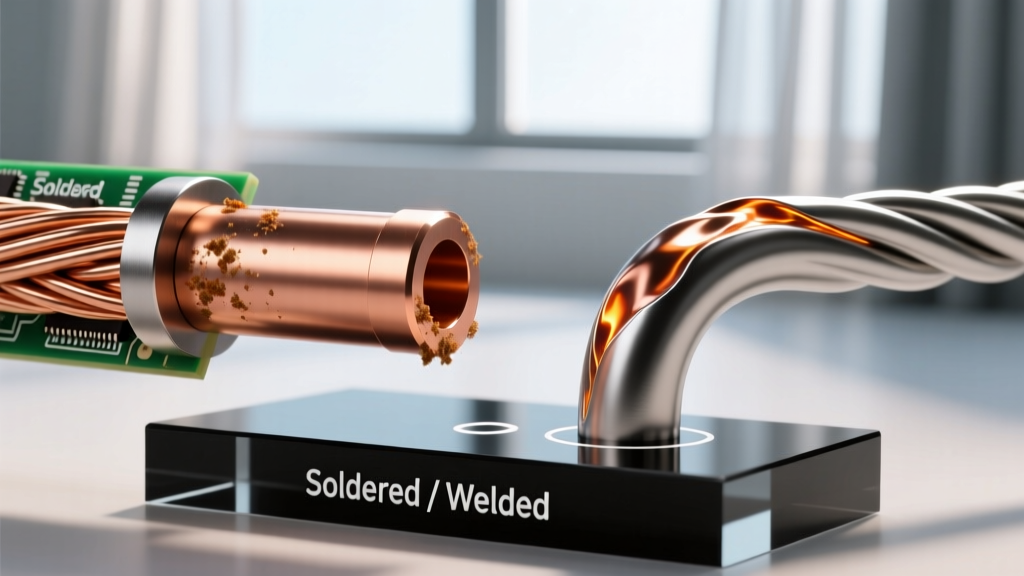
Brass, an alloy primarily composed of copper and zinc, has been a cornerstone of plumbing, electrical terminals, and decorative hardware for centuries. However, from a metallurgical perspective, brass soldering presents a unique and historically dangerous challenge: zinc volatility. Pure zinc boils at 907°C (1665°F). When early metalworkers applied high heat to join brass components, the zinc would vaporize, creating toxic zinc oxide fumes (leading to 'metal fume fever') and leaving behind a porous, weakened joint known as dezincification.
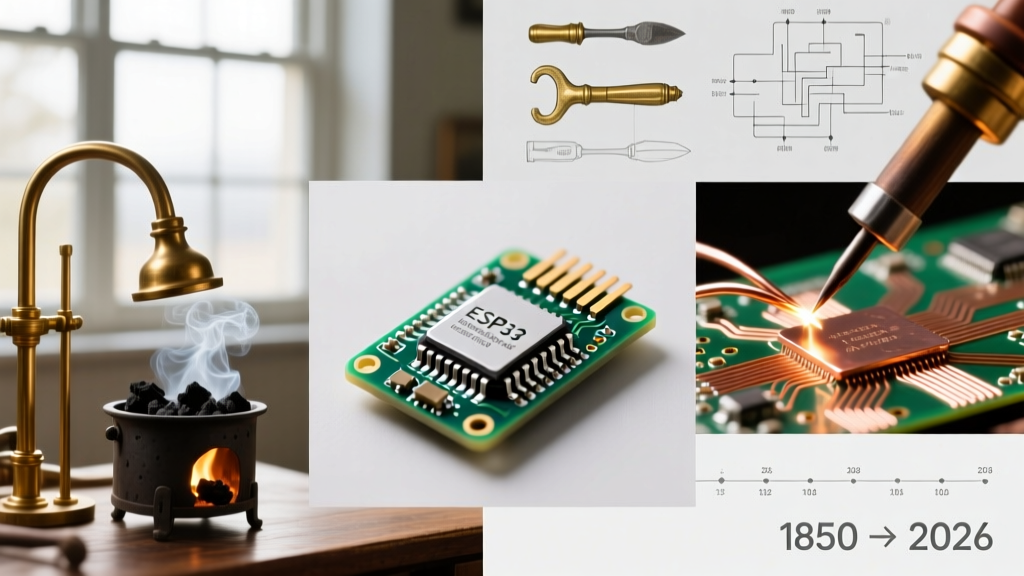
The evolution of brass soldering is not just a history of better torches; it is a timeline of chemical innovation, moving from toxic, high-heat speltering to the precise, low-temperature, lead-free methodologies we use in 2026. Understanding this evolution is critical for modern DIYers and professionals to select the right alloys, fluxes, and heat sources for today's advanced brass alloys, including modern Eco-Brass.
'The history of joining copper-zinc alloys is defined by the struggle to melt a filler metal without boiling the base metal's zinc content.' — Archives of Metallurgical Engineering
The Early Days: Charcoal, Blowpipes, and Spelter
Before the advent of compressed gases, 18th and 19th-century artisans relied on mouth-blown blowpipes and charcoal blocks to concentrate the heat of oil lamps or alcohol flames. The filler metal of choice was spelter, an early brazing alloy consisting of roughly 50% copper and 50% zinc, sometimes with trace tin.
The Flaws of Historical Speltering
- Excessive Heat Requirements: Spelter melts around 900°C (1652°F), dangerously close to the boiling point of the zinc in the base brass.
- Massive Fuming: The historical brass soldering process produced thick, white clouds of zinc oxide. Artisans frequently suffered from respiratory distress.
- Flux Limitations: Early fluxes were limited to borax and sal ammoniac, which struggled to dissolve the tenacious zinc oxide layer that formed instantly upon heating, leading to high rates of 'cold joints' and flux inclusions.
The 20th Century Shift: Oxy-Acetylene and Leaded Solders
The industrial revolution brought compressed gases. The oxy-acetylene torch, patented in the early 1900s, allowed for localized, high-intensity heating. Concurrently, the plumbing and electrical industries shifted toward soft soldering using lead-tin (Pb-Sn) alloys, which melted at much lower temperatures (around 183°C to 250°C), entirely bypassing the zinc fuming issue.
For decades, 50/50 lead-tin solder paired with aggressive zinc-chloride paste fluxes was the undisputed standard for brass plumbing fittings and electrical lugs. While effective and easy to use, the reliance on lead posed severe long-term health and environmental risks, particularly in potable water systems.
The Modern Era (2026): Induction, Eco-Brass, and Lead-Free Silver Alloys
Today, the landscape of brass soldering has been radically transformed by environmental regulations and advanced heating technologies. According to the Environmental Protection Agency (EPA), the transition to strictly lead-free solders in plumbing has forced the industry to adopt Tin-Silver (Sn-Ag) and Tin-Copper (Sn-Cu) alloys.
The Rise of Eco-Brass (C89833)
In 2026, standard leaded free-machining brass (C36000) has been largely replaced in plumbing and hardware by Eco-Brass (silicon or bismuth-bearing copper alloys). Bismuth alters the grain structure of the brass, making it highly susceptible to liquid metal embrittlement if paired with the wrong solder. Modern brass soldering requires Sn-Ag-Cu (SAC) alloys to prevent micro-cracking in Eco-Brass joints, a nuance that historical solderers never had to consider.
Portable Induction Heating
While butane and MAP-Pro torches remain popular, 2026 has seen a massive surge in portable 120V induction soldering stations (priced between $150 and $300). Induction heating uses high-frequency alternating magnetic fields to generate eddy currents directly inside the brass fitting. This heats the metal from the inside out, melting the solder instantly without scorching the external flux or risking ambient zinc fuming.
Historical vs. Modern Brass Soldering: A Technical Comparison
To understand how far the craft has come, review this comparison matrix of historical versus modern 2026 methodologies:
| Feature | 19th Century (Speltering) | Mid-20th Century (Lead-Tin) | 2026 Modern (Sn-Ag / Induction) |
|---|---|---|---|
| Heat Source | Charcoal / Blowpipe | Oxy-Acetylene / Propane | MAP-Pro / 120V Induction |
| Filler Metal | Spelter (Cu-Zn) | 50/50 Pb-Sn | 95/5 Sn-Ag (Stay-Brite #8) |
| Melting Point | ~900°C (1652°F) | ~215°C (419°F) | ~221°C (430°F) |
| Flux Chemistry | Borax / Sal Ammoniac | Zinc Chloride Paste | Organic Acid / Fluoride blends |
| Zinc Fuming Risk | Extreme (Toxic) | None | None |
| Joint Tensile Strength | High (but brittle) | Low (Prone to creep) | High (Excellent shear strength) |
Buyer's Guide: Choosing the Right Modern Setup for Brass
Whether you are repairing antique brass instruments, assembling custom water-cooling loops, or soldering heavy-gauge electrical lugs, selecting the right 2026 equipment is paramount. The American Welding Society (AWS) strictly differentiates between soldering (below 450°C/840°F) and brazing (above 450°C). For true brass soldering, stick to the following recommendations.
1. Heat Sources: Torches vs. Induction
- For Heavy Lugs & Plumbing (Bernzomatic TS8000): Priced around $55, this torch utilizes MAP-Pro gas to reach flame temperatures of 3,730°F. Its swirl combustion chamber focuses heat into a tight pencil point, allowing you to heat a 1/2-inch brass valve body in under 15 seconds without overheating adjacent PTFE seals.
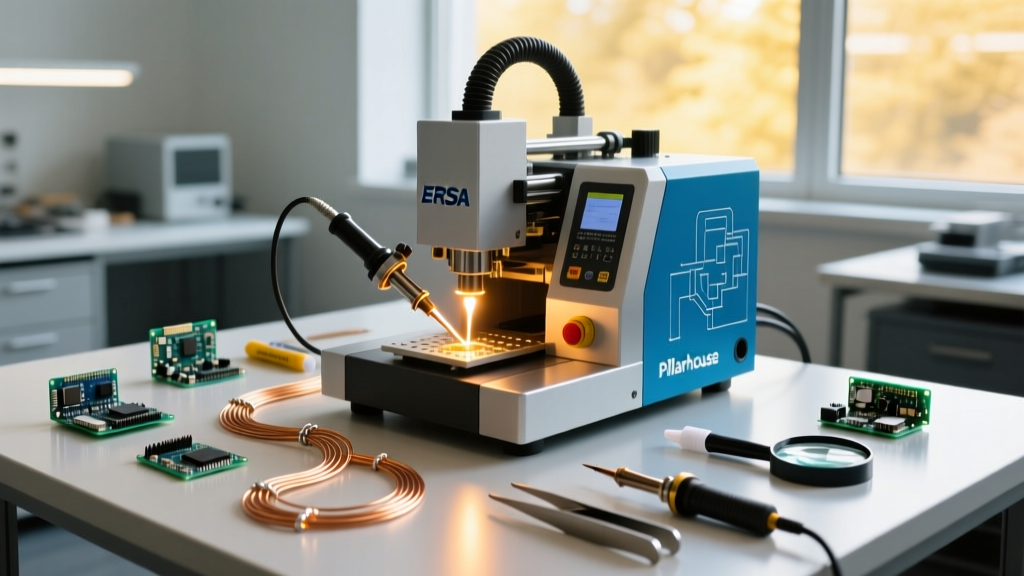
- For Precision & Electronics (Master Appliance MT-76): At $35, this butane micro-torch offers a pinpoint flame ideal for soldering small brass terminals on PCBs or delicate brass model parts without warping the base material.
- For Production & Clean Joints (Portable 1000W Induction Heater): Costing roughly $220, modern handheld induction coils are the ultimate 2026 upgrade for brass. They eliminate open flames, making them safe for soldering brass fittings near flammable materials or finished woodwork.
2. Modern Alloys: The Silver Advantage
Do not use standard plumbing tin-copper solder on brass; it exhibits poor wetting on zinc-rich surfaces. Instead, use a silver-bearing tin alloy.
- Harris Stay-Brite #8: The gold standard for brass soldering. Composed of 95% Tin and 5% Silver, it melts at 430°F (221°C). The silver content drastically improves capillary action and wetting on brass, creating a joint with a tensile strength of up to 14,000 PSI. Expect to pay around $25 per 1/2 oz spool.
- Kester 245 Sn96.5/Ag3.5: A lead-free, no-clean core wire excellent for brass electrical lugs where post-solder flux cleaning is difficult. Priced at $30 per pound.
3. Flux Selection: Breaking the Zinc Oxide Barrier
Brass oxidizes rapidly under heat. Standard rosin flux is entirely inadequate for brass soldering. You need an aggressive organic acid or mild inorganic flux.
- Superior Flux #30 (Zinc Chloride Base): Priced at $12 per pint, this is a heavy-duty liquid flux that chemically strips zinc oxide at 350°F. Warning: It is highly corrosive and must be neutralized with a baking soda/water solution post-soldering to prevent long-term green corrosion (verdigris).
- Harris Stay-Clean Liquid Flux: A slightly milder alternative that still provides excellent capillary draw for Sn-Ag alloys on brass, favored by HVAC technicians for brass Schrader valves.
Common Failure Modes: Lessons from the Past
Despite modern advancements, DIYers still encounter joint failures. Here are the most common edge cases and how to avoid them:
The 'Cold Lap' Inclusion
The Cause: Applying the solder to the torch flame rather than the brass. The solder melts and drops onto the unheated brass surface, bonding superficially without capillary penetration.
The Fix: Heat the brass fitting until the flux bubbles and turns clear. Remove the flame, touch the solder wire to the brass joint line. If the brass is hot enough, capillary action will instantly wick the solder deep into the joint.
Thermal Shock Cracking
The Cause: Quenching a freshly soldered brass joint with a wet rag to speed up cooling. Brass is highly susceptible to thermal shock, which can induce micro-fractures in the heat-affected zone (HAZ), leading to catastrophic leaks under pressure.
The Fix: Always allow brass soldered joints to air-cool naturally to room temperature before testing or quenching.
Bismuth Embrittlement in Eco-Brass
The Cause: Using a high-bismuth solder (like some specialized low-temp plumbing solders) on modern Eco-Brass fittings. The bismuth migrates into the brass grain boundaries, causing the joint to shatter under mechanical stress.
The Fix: Always verify your brass alloy. If working with modern lead-free plumbing brass, strictly use Sn-Ag (Tin-Silver) alloys and avoid any filler metals containing bismuth or cadmium.
Conclusion
The evolution of brass soldering reflects a broader shift in materials science—from the brute-force, high-heat methods of the 19th century to the precise, chemically optimized techniques of 2026. By understanding the metallurgical quirks of copper-zinc alloys, and by leveraging modern Sn-Ag solders and targeted induction or MAP-Pro heating, today's makers and technicians can achieve joints that are stronger, safer, and far more reliable than anything historical artisans could have imagined. For further reading on copper alloy properties and joining standards, consult the Copper Development Association technical resources.