
The High Stakes of Sweating Copper in 2026
Soldering water pipes—commonly known in the trade as 'sweating' copper—is a foundational plumbing skill that separates DIYers who eventually flood their basements from those who build lasting, leak-free systems. While push-to-connect fittings like SharkBite have gained traction for quick repairs, properly soldered Type L and Type M copper joints remain the gold standard for permanent, high-pressure residential and commercial water lines. In 2026, the landscape of soldering water pipes has evolved. Stricter enforcement of the EPA's Safe Drinking Water Act means lead-based solders are entirely banned for potable water, and modern flux formulations require precise heat management to avoid corrosive pinhole leaks down the line.
To cut through the noise, we convened a virtual panel of three master plumbers and HVAC veterans with a combined 75 years of field experience. Their mandate? To provide an uncompromising, no-fluff roundup of the exact tools, alloys, and field techniques required for flawless copper soldering today.
The 2026 Expert Torch Matrix: Propane vs. MAP-Pro vs. Oxy-Acetylene
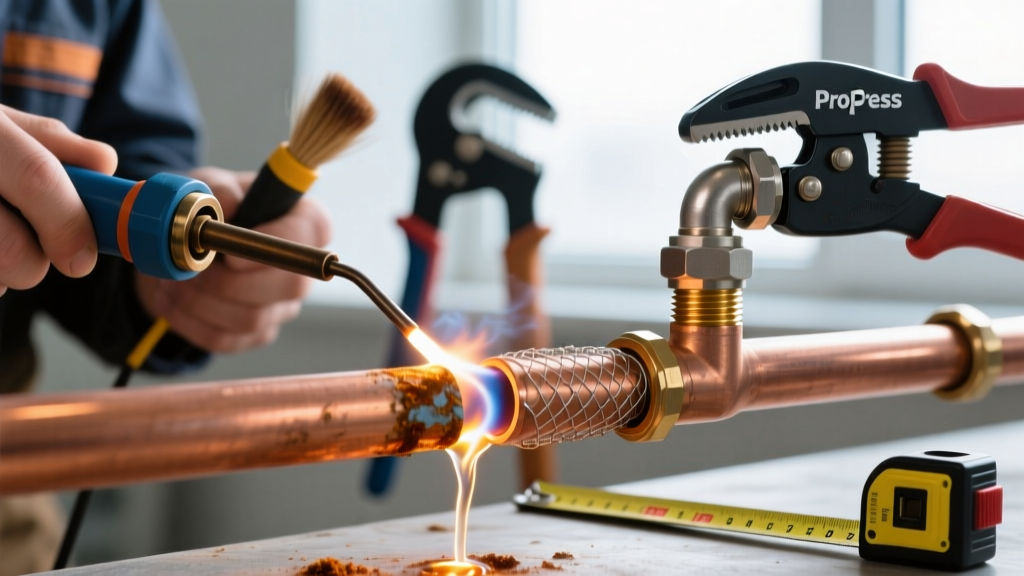
Choosing the right torch is the first critical decision when soldering water pipes. The wrong fuel-to-oxygen ratio or BTU output will result in 'cold joints' (where solder fails to wick into the capillary space) or 'burnt flux' (which destroys the chemical cleaning action and causes oxidation). Here is how our expert panel ranks the current market leaders.
| Fuel Type | Top 2026 Model | Max Flame Temp | Price Range | Best Application |
|---|---|---|---|---|
| Propane | Worthington 336841 | 3,600°F | $35 - $45 | 1/2' to 3/4' residential lines; tight budgets. |
| MAP-Pro | Bernzomatic TS8000 | 3,730°F | $65 - $80 | 3/4' to 1-1/4' lines; faster heat-up, less hand fatigue. |
| Oxy-Acetylene | TurboTorch Extreme | 5,500°F | $350 - $500 | 2'+ mains, commercial jobs, heavy copper masses. |
Expert Insight: 'For 90% of residential repipes, the Bernzomatic TS8000 with MAP-Pro is the undisputed king,' notes Sarah Jenkins, a 20-year master plumber. 'It hits the sweet spot between aggressive heat output and portability. Propane simply takes too long to heat a 1-inch copper tee, increasing the risk of water boiling inside the pipe and ruining the joint.'
Flux and Solder: Navigating Modern Lead-Free Mandates
Gone are the days of 50/50 tin-lead solder. Today, soldering water pipes for human consumption requires alloys that meet strict 'lead-free' definitions (containing no more than 0.2% lead). However, not all lead-free solders behave the same way under the torch.
The Solder Alloys: 95/5 vs. Silver-Bearing
- 95/5 Tin-Antimony (e.g., Oatey Safe Flo): Melting at roughly 452°F to 464°F, this is the standard for residential water lines. The 5% antimony adds structural rigidity and prevents the tin from leaching. It flows beautifully but requires careful heat control to avoid 'wiping' the joint.
- Silver-Bearing Lead-Free (e.g., Harris Stay-Clean): Containing 2% to 5% silver, this alloy melts slightly higher (around 480°F) and creates a significantly stronger metallurgical bond. Our experts unanimously recommend silver-bearing solder for high-vibration areas (near water hammer arrestors or pump discharge) and lines subjected to extreme thermal expansion.
Flux Selection: The Unsung Hero
Flux chemically cleans the copper and prevents oxidation during heating. For potable water lines, water-soluble fluxes are mandatory to ensure easy flushing post-installation.
- Superior #30 Water-Soluble Flux: A favorite among commercial plumbers. It cleans aggressively but washes out completely when the system is pressurized, eliminating the risk of internal corrosion.
- Oatey No. 95 Tinning Flux: Contains a small amount of powdered solder. It's excellent for vertical joints or overhead sweating, as the tinning agent helps 'grab' the pipe and hold the molten solder in place against gravity.
Overcoming the 'Wet Pipe' Curse: Expert Prep Protocols
The absolute enemy of soldering water pipes is residual moisture. Even a single drop of water turning to steam inside a joint will blow out the molten solder, creating a catastrophic pinhole leak. While shutting off the main and opening valves is step one, gravity often traps water in low-lying pipes. Here is the expert-approved protocol for bone-dry prep:
- Ditch the Wire Brush for Emery Cloth: Standard wire brushes leave micro-grooves in the copper that trap excess flux, leading to external pinhole corrosion years later. Use 120-grit emery cloth to polish the outside of the pipe and the inside of the fitting to a bright, mirror-like shine.
- The White Bread Dam: If water continues to weep from a lower pipe joint, ball up a piece of plain white bread (strictly no seeds or grains) and shove it into the pipe upstream. The bread acts as a temporary dam, absorbing moisture and allowing you to solder. Once the joint cools and the water is turned back on, the bread dissolves completely and flushes out through the aerators.
- Heat Sink Pastes: When soldering near existing soldered joints or sensitive valves, apply a thermal barrier like Jet Lube Kool Gel. This prevents the heat from traveling down the pipe and melting adjacent joints, a common failure mode known as 'sweating the sweat.'
Troubleshooting: Failure Modes in the Field
Even seasoned pros encounter bad joints. Recognizing the visual cues of a failing solder joint is critical before the drywall goes up.
'A perfect joint has a clean, bright silver ring at the edge of the fitting. If you see a dull, grayish bead that looks like a bubble, that is a cold joint. The capillary action failed, and the solder just sat on the outside. Cut it out and start over.' — Marcus T., Commercial Pipefitter
Common Edge Cases and Fixes
- Flux Burn (Black Soot): If the copper turns black and sooty around the joint, you used too much heat or left the torch on too long. The flux has burned off, meaning oxidation has compromised the seal. Fix: Let it cool, disassemble, re-clean with emery cloth, and re-flux.
- Solder Wicking Past the Joint: This happens when the pipe is overheated. The solder becomes too fluid and runs down the outside of the pipe rather than being drawn into the fitting. Fix: Use a damp rag to wipe the excess immediately (wearing heavy leather gloves) and adjust your flame to a softer, wider brush.
Safety and Code Compliance
Soldering water pipes involves open flames near wooden studs and drywall. OSHA fire safety standards for welding and cutting dictate strict protocols for hot work. In 2026, no professional should sweat a pipe without a fiberglass flame protector (like Paco Wool) tucked behind the joint, and a pressurized pump sprayer filled with water kept within arm's reach. Furthermore, always verify your local Uniform Plumbing Code (UPC) requirements regarding flux clean-up; many municipalities now require a mandatory 24-hour flush of newly soldered potable lines before final inspection to ensure water safety standards are met.
Final Verdict
Soldering water pipes is an exercise in thermal management and chemical preparation. By upgrading to a MAP-Pro torch like the TS8000, sticking to water-soluble fluxes, utilizing 95/5 or silver-bearing lead-free alloys, and mastering the 'bread trick' for wet lines, you can achieve factory-grade joints that will outlast the building itself. Respect the heat, prep the copper meticulously, and let capillary action do the heavy lifting.