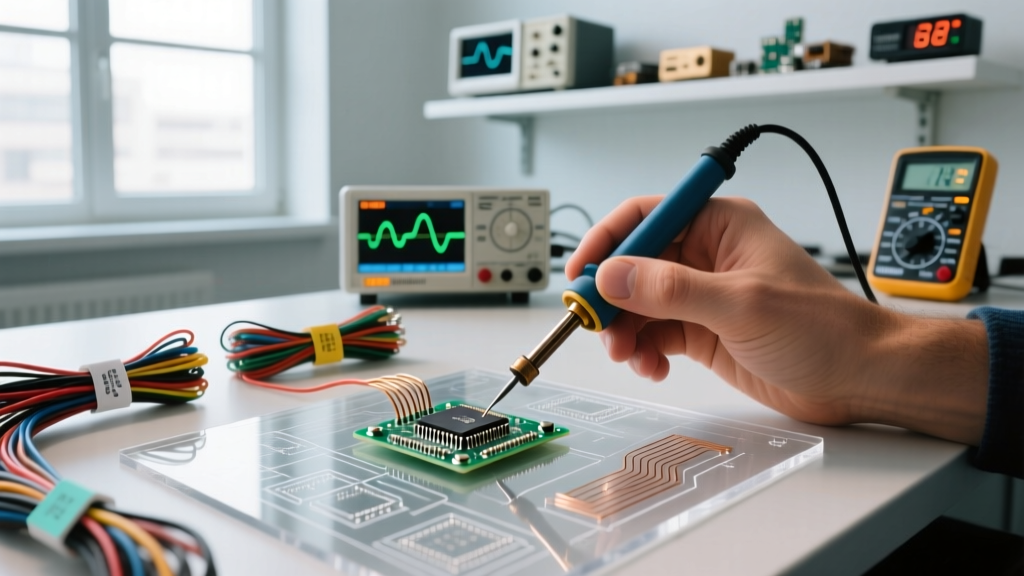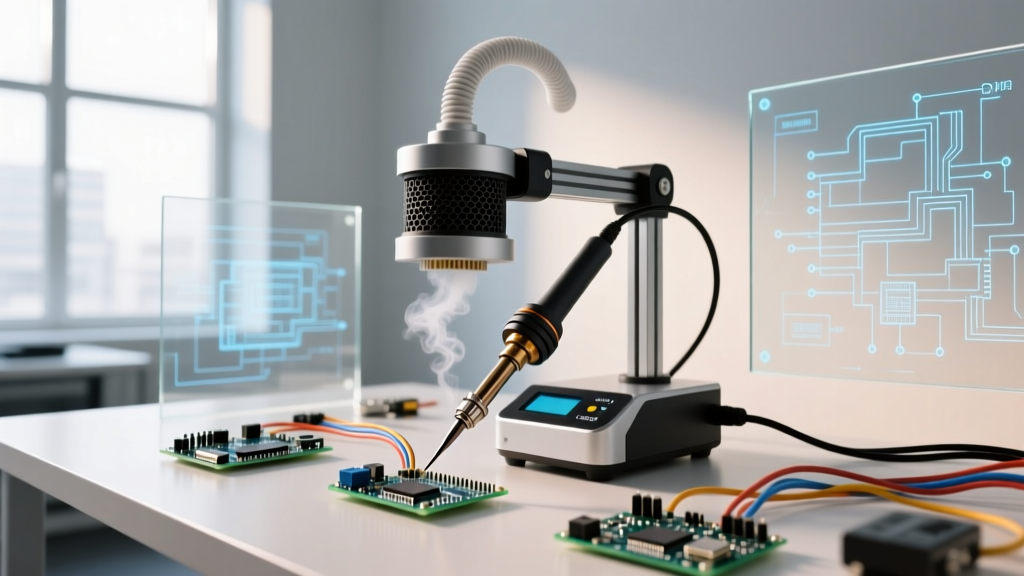

The Invisible Hazard: Why Soldering Fume Extraction is Non-Negotiable
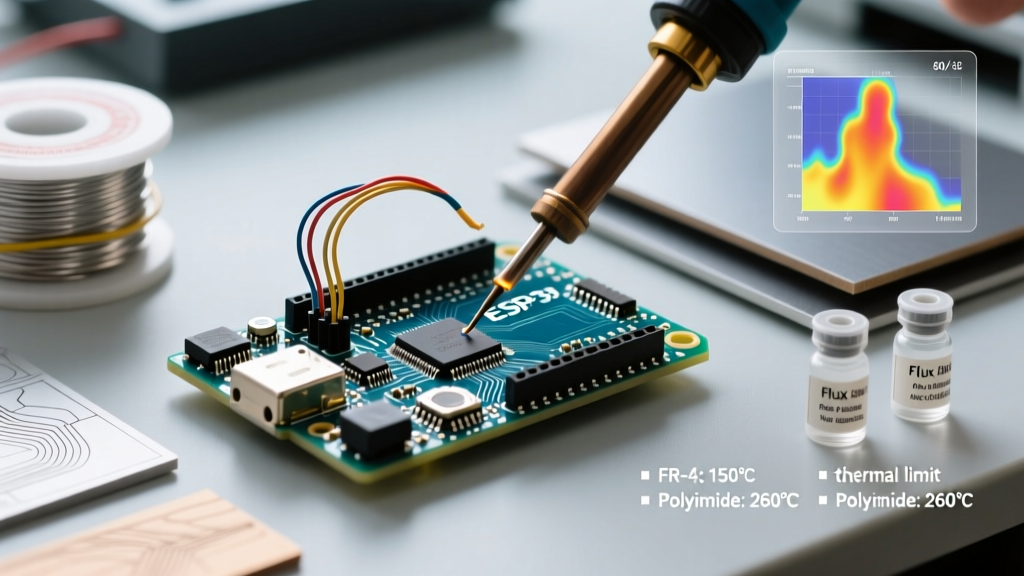
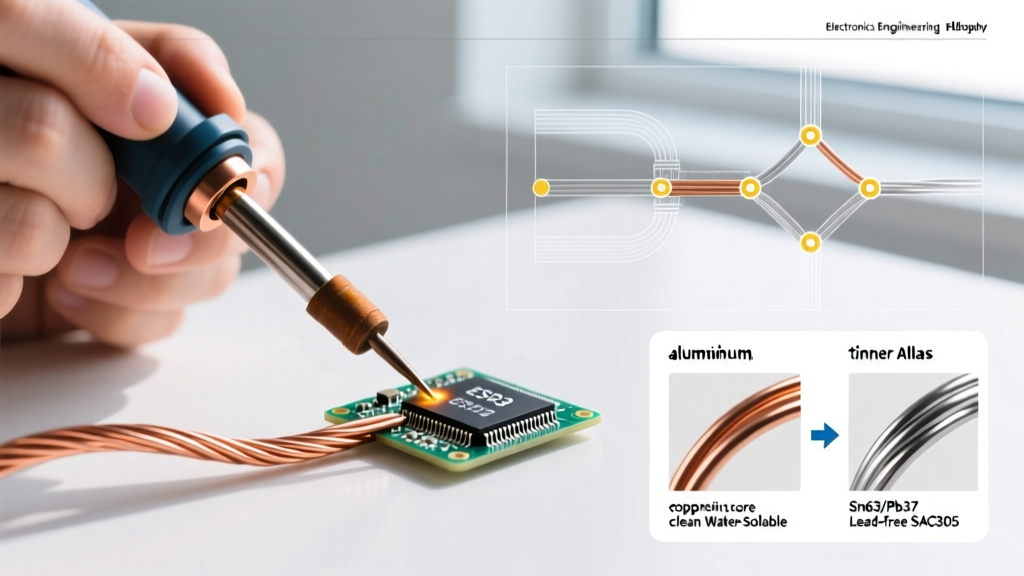
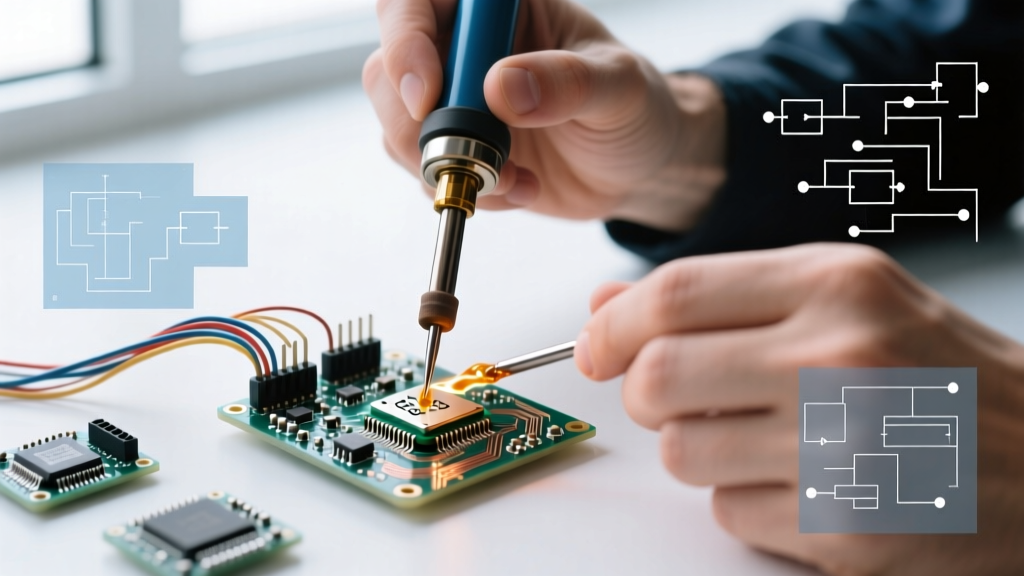
As the electronics industry has fully transitioned to lead-free alloys like SAC305 (Sn96.5/Ag3.0/Cu0.5), soldering temperatures have climbed from 315°C to over 380°C. This thermal increase drastically accelerates the aerosolization of flux chemicals. When rosin-based (colophony) fluxes are heated, they release a complex plume of particulate matter and volatile organic compounds (VOCs), including formaldehyde, benzene, and toluene.
According to the UK Health and Safety Executive (HSE), colophony is a known respiratory sensitizer. Repeated exposure without proper extraction can lead to occupational asthma, chronic bronchitis, and severe contact dermatitis. For professional labs and serious hobbyists, a dedicated soldering ventilation system is not an optional accessory; it is a critical piece of personal protective equipment (PPE). In 2026, with stricter indoor air quality (IAQ) standards being adopted globally, understanding the mechanics of fume extraction is essential for protecting your long-term health.
2026 Buyer's Matrix: Top Fume Extractors Compared
The market for fume extractors is segmented into three tiers: hobbyist benchtop units, professional source-capture systems, and industrial ducted arrays. Below is a comparative matrix of the most reliable models available in 2026, evaluated on airflow, filtration depth, and real-world pricing.
| Model | System Type | Max CFM | Filtration Stages | Noise Level | 2026 Est. Price | Best Application |
|---|---|---|---|---|---|---|
| Hakko FA-400 | Ambient Benchtop | 87 CFM | 2 (Pre-filter + Carbon) | 55 dBA | $75 | Light hobbyist, occasional through-hole |
| Metcal BVX-101 | Source-Capture Arm | 75 CFM | 3 (Pre, HEPA, Carbon) | 58 dBA | $480 | Prototyping labs, single-operator SMD |
| Weller WFE 2 DX | Dual-Arm Source | 2x 80 CFM | 4 (Pre, HEPA, Gas, Particle) | 62 dBA | $1,250 | Professional repair, dual-station benches |
| Pace ARM-EVAC 150 | Heavy-Duty Source | 135 CFM | 3 (HEPA + Deep Carbon Bed) | 68 dBA | $890 | Continuous production, high-temp lead-free |
Decoding the Specs: CFM, Static Pressure, and Capture Velocity
When shopping for a soldering ventilation system, manufacturers heavily market CFM (Cubic Feet per Minute). However, CFM alone is a misleading metric if you do not account for static pressure and capture velocity.
- CFM (Airflow Volume): This measures how much air the fan can move in an open environment. A high CFM is useless if the system cannot pull air through dense HEPA and carbon filters.
- Static Pressure: Measured in inches of water gauge (in. wg), this dictates the fan's ability to overcome the resistance of multi-stage filters and flexible extraction arms. Systems like the Pace ARM-EVAC 150 use high-static-pressure brushless motors to maintain airflow even as filters load with particulates.
- Capture Velocity: The speed of the air at the exact point where the fume is generated. OSHA's ventilation guidelines recommend a capture velocity of 100 to 150 feet per minute (fpm) for soldering operations to prevent the thermal plume from escaping into the operator's breathing zone.
The 3-Stage Filtration Standard
Never rely on a single-stage carbon filter for electronics work. A compliant, professional-grade system must utilize a three-stage approach:
- Stage 1: Pre-Filter (Particulate). Catches large dust, hair, and macro-flux splatter. This protects the expensive downstream filters and should be replaced or vacuumed monthly.
- Stage 2: True HEPA (Particulate). Captures 99.97% of particles down to 0.3 microns. This is critical for trapping the microscopic aerosolized flux and metallic oxides that cause lung irritation.
- Stage 3: Activated Carbon (Gas/VOC). Adsorbs the invisible, odorous VOCs and aldehydes. The effectiveness here is dictated by the weight of the carbon. A hobbyist unit might have 50 grams of carbon dust; a professional Weller unit contains several pounds of deep-bed activated carbon granules.
Ergonomic Placement: The Inverse Square Law of Suction
The most common failure mode in professional labs is not a bad machine, but poor nozzle placement. Airflow follows the inverse square law: if you double the distance from the extraction nozzle to the soldering tip, the capture velocity drops by a factor of four.
Expert Rule of Thumb: The extraction nozzle must be positioned no more than 4 to 6 inches (10-15 cm) away from the solder joint. It should be placed slightly below and to the side of the joint to intercept the natural upward thermal draft of the fume plume without disrupting the iron's temperature or pulling heat away from the PCB pad.
Using flexible, articulating arms (often called 'elephant trunks') allows operators to maintain this tight capture zone. Avoid positioning the nozzle directly above the joint, as this pulls the hot, toxic plume directly past your face and nose on its way to the filter.
Maintenance Schedules and Failure Modes
A neglected fume extractor is worse than no extractor at all. When activated carbon reaches its adsorption capacity, it becomes saturated. In high-humidity environments or when exposed to certain flux chemistries, a saturated carbon bed can begin to off-gas, releasing concentrated VOCs back into the room.
Recommended 2026 Maintenance Intervals
- Pre-Filters: Inspect every 2 weeks. Replace every 1-2 months. (Cost: $10-$15)
- HEPA Filters: Replace every 6-9 months under daily use, or when the machine's static pressure alarm triggers. (Cost: $80-$120)
- Carbon/Gas Filters: Replace every 4-6 months. Do not wait until you 'smell' the flux; by the time your olfactory nerves detect rosin, the carbon has already failed. (Cost: $60-$150 depending on bed depth)
Pro Tip: Many modern units, including the Weller WFE series, feature digital filter-life monitoring that calculates remaining capacity based on actual fan runtime and RPM load, rather than a simple calendar timer.
Frequently Asked Questions (FAQ)
Can I just use a PC fan and a carbon filter sheet?
While a DIY inline fan with a carbon sheet is better than nothing, it is fundamentally flawed for daily work. PC fans lack the static pressure required to pull air through dense HEPA media, meaning you are likely only filtering large particles while blowing unfiltered VOCs directly across your workspace. For under $100, a dedicated unit like the Hakko FA-400 offers vastly superior safety and airflow dynamics.
Do I need a ventilation system if I only use 'lead-free' or 'rosin-free' solder?
Yes. The primary respiratory hazard in soldering is not the lead (which does not vaporize at soldering temperatures); it is the flux. Even 'no-clean' or water-soluble fluxes contain activators, solvents, and synthetic resins that produce harmful aldehydes and acidic gases when subjected to 350°C+ heat. Extraction is mandatory regardless of the alloy.
Are ozone generators safe for cleaning soldering room air?
Absolutely not. Ozone (O3) is a severe respiratory irritant and a known lung toxin. While ozone can neutralize odors, using an ozone generator in an occupied soldering space violates basic occupational safety standards. Always rely on mechanical HEPA filtration and chemical adsorption (activated carbon) rather than chemical oxidation.
How do I handle ventilation for hot air rework stations?
Hot air rework generates a much larger, higher-velocity thermal plume than a standard soldering iron. Standard 75 CFM benchtop extractors will be overwhelmed. For BGA rework or extensive hot-air desoldering, you must use a high-CFM overhead hood or a source-capture system rated for at least 150 CFM, positioned to catch the wide dispersal pattern of the exhaust.