
Beyond the Toy: Why Mobile Nodes Matter in Home Automation
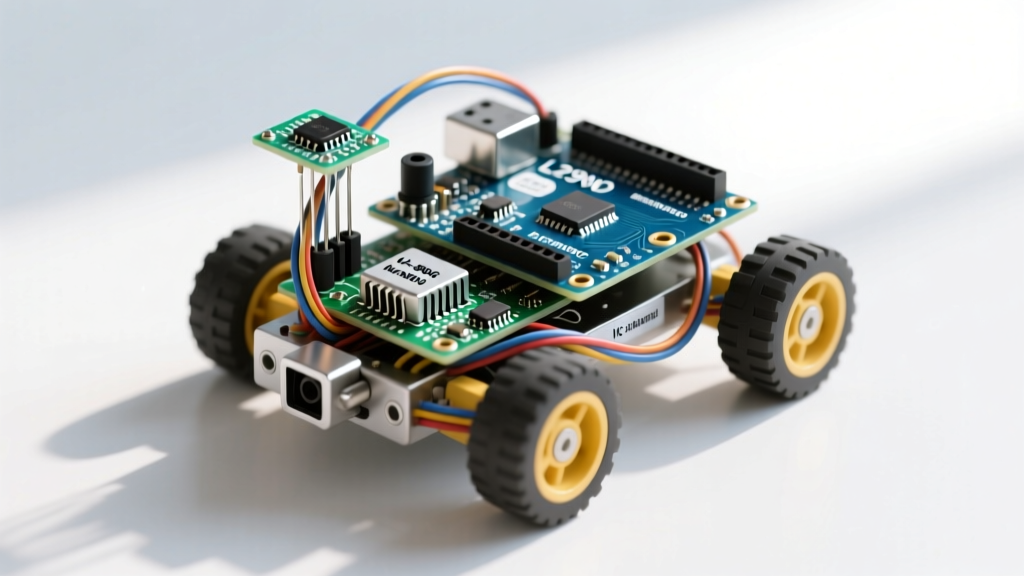
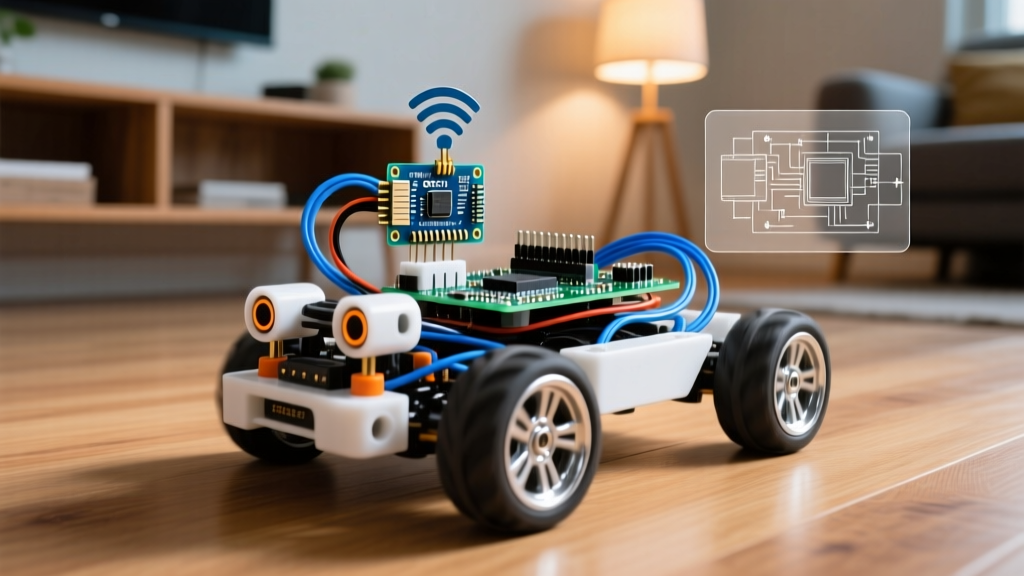
When most makers search for arduino car projects, they are met with Bluetooth-controlled RC rovers or basic line-following robots. While excellent for learning motor control, these builds rarely intersect with practical home automation. In 2026, the true frontier of smart home technology isn't just static sensors on walls; it is mobile sensor nodes. By adapting standard arduino car project architectures, we can build an autonomous Home Patrol Rover—a mobile environmental and security monitor that integrates seamlessly with Home Assistant via MQTT.
This guide elevates the traditional microcontroller car build into a functional home automation asset. Instead of relying on a handheld remote, this rover runs on scheduled automations, leaving its charging dock at 2:00 AM to patrol the kitchen for methane leaks, measure living room humidity gradients, and map perimeter obstacles before returning to base.
Bill of Materials (BOM) & 2026 Pricing
To ensure reliability and avoid the common pitfalls of entry-level kits, we are bypassing the ubiquitous but inefficient L298N motor driver. Instead, we use a MOSFET-based driver and high-precision Time-of-Flight (ToF) sensors.
| Component | Specific Model | Est. Cost (2026) | Purpose |
|---|---|---|---|
| Microcontroller | ESP32-WROOM-32 DevKit V4 | $6.50 | Wi-Fi/MQTT processing & I/O |
| Motor Driver | SparkFun TB6612FNG (1A Dual) | $5.95 | Efficient PWM motor control |
| Chassis | 4WD Acrylic Rover w/ TT Motors | $18.00 | Base platform & locomotion |
| Obstacle Sensor | Pololu VL53L1X ToF Breakout | $11.95 | Millimeter-accurate distance mapping |
| Environmental | Bosch BME280 (I2C) | $4.50 | Temp, humidity, barometric pressure |
| Gas Sensor | MQ-4 Methane/CNG Module | $3.20 | Kitchen gas leak patrol |
| Power Supply | 2S 7.4V 1500mAh LiPo | $16.00 | Main traction & logic power |
| Voltage Regulator | Pololu D24V50F5 Buck (5V) | $12.50 | Stable 5V for ESP32 & sensors |
Total Estimated Build Cost: ~$78.60
Hardware Architecture & Power Management
The most frequent failure mode in DIY arduino car projects is the logic brownout. Standard kits use the L298N bipolar H-bridge, which suffers from a ~2V voltage drop. When the TT motors stall or draw peak current (up to 800mA per motor), the voltage sags, instantly resetting the ESP32 and corrupting the Wi-Fi stack.
The TB6612FNG Solution
By utilizing the SparkFun TB6612FNG Hookup Guide architecture, we leverage MOSFETs with an on-resistance of just 0.5 ohms. This eliminates the massive voltage drop and heat generation. We power the TB6612FNG VMOT pin directly from the 2S LiPo (7.4V nominal, 8.4V fully charged). The VCC logic pin is tied to the ESP32's 3.3V output.
Isolating the Logic Rail
Do not power the ESP32 directly from the LiPo via the onboard AMS1117 linear regulator; the thermal dissipation will trigger over-temperature shutdowns. Instead, wire the Pololu D24V50F5 switching buck converter to step the 7.4V down to a clean 5V, feeding the ESP32 DevKit's 5V pin. This guarantees stable logic levels even during aggressive skid-steering maneuvers.
Firmware: ESPHome and MQTT Integration
To integrate our rover into a broader home automation ecosystem, we bypass custom Arduino IDE C++ spaghetti code and use ESPHome. ESPHome compiles YAML configurations directly to the ESP32, exposing the car's telemetry and motor controls as native Home Assistant MQTT Integration entities.
esphome:
  name: patrol-rover-01
  platform: ESP32
  board: esp32dev

wifi:
  ssid: 'SmartHome_IoT'
  password: 'your_secure_password'

mqtt:
  broker: '192.168.1.50'
  topic_prefix: 'homeassistant/rover01'

# Motor PWM Configuration
output:
  - platform: ledc
    pin: GPIO27
    id: pwm_a1
  - platform: ledc
    pin: GPIO26
    id: pwm_a2

# I2C Sensor Bus
i2c:
  sda: GPIO21
  scl: GPIO22
  scan: true

sensor:
  - platform: bme280
    temperature:
      name: 'Rover Ambient Temp'
    humidity:
      name: 'Rover Humidity'
    address: 0x76
  - platform: vl53l1x
    name: 'Forward Obstacle Distance'
    update_interval: 100ms
Expert Note on I2C Capacitance: When wiring the BME280 and ESPHome VL53L1X Documentation sensors on a moving chassis, keep I2C traces under 30cm. The vibration and wire movement can introduce capacitance spikes, causing I2C bus lockups. Solder 4.7k pull-up resistors directly to the breakout boards if you experience dropped packets.
Navigational Edge Cases: Mapping the Home Perimeter
Odometry—the calculation of position based on wheel rotations—is notoriously unreliable on indoor surfaces. Hardwood floors and area rugs cause wheel slip, meaning a command to drive forward 2 meters might result in 1.8 meters of actual travel.
Pro-Tip: Instead of relying on dead-reckoning for room-to-room transitions, use the VL53L1X ToF sensor to detect baseboards and doorframes. By programming a wall-hugging algorithm (maintaining exactly 150mm from the left wall via PID control), the rover can navigate hallways without cumulative drift.
Automating the Patrol Route in Home Assistant
With the ESP32 exposing motor controls as MQTT services, we can write a Home Assistant automation to execute the nightly patrol.
- 02:00 AM: HA triggers the Undock sequence. The rover reverses 300mm to clear the charging contacts.
- 02:01 AM: Rover navigates to the Kitchen zone. The MQ-4 sensor samples the air for 60 seconds. If CH4 levels exceed 2000 PPM, HA triggers a critical push notification and sounds the smart home alarms.
- 02:05 AM: Rover moves to the Living Room, logging the BME280 humidity data to InfluxDB to help the smart HVAC system balance overnight dehumidification.
- 02:15 AM: Rover follows the right-hand wall back to the charging dock, using an IR beacon (TSOP38238) for the final 10cm alignment.
Frequently Asked Questions (FAQ)
Can I use a standard 18650 Li-Ion cell holder instead of a LiPo?
Yes, but you must use high-discharge cells (like the Samsung 25R or Sony VTC6). Standard protected 18650s have internal BMS cutoffs that will trip when four TT motors draw a combined 2A+ stall current, instantly killing power to the ESP32.
How do I handle Wi-Fi dead zones in the garage or basement?
Implement a Return-to-Base on Signal Loss failsafe in your ESPHome YAML. Use the wifi.signal_strength sensor. If the RSSI drops below -75dBm for more than 10 seconds, halt the patrol route and execute a 180-degree pivot to retrace the path toward the nearest mesh access point.
Is the MQ-4 sensor power-hungry?
The MQ-4 requires a continuous heating element to detect methane, drawing roughly 150mA. To preserve battery life during long standby periods, wire the MQ-4 VCC through a logic-level MOSFET (like the IRLZ44N) controlled by a GPIO pin, allowing the ESP32 to power the heater only during active kitchen patrols.