
The Physics of 40kHz Ultrasonic Ranging
The HC-SR04 sensor Arduino ecosystem has dominated hobbyist robotics for over a decade. Priced between $1.50 and $3.00 in 2026, it remains the most accessible non-contact distance measurement tool available. However, treating it as a simple plug-and-play module leads to erratic readings in real-world deployments. To master the HC-SR04, you must first understand the acoustic physics driving it.
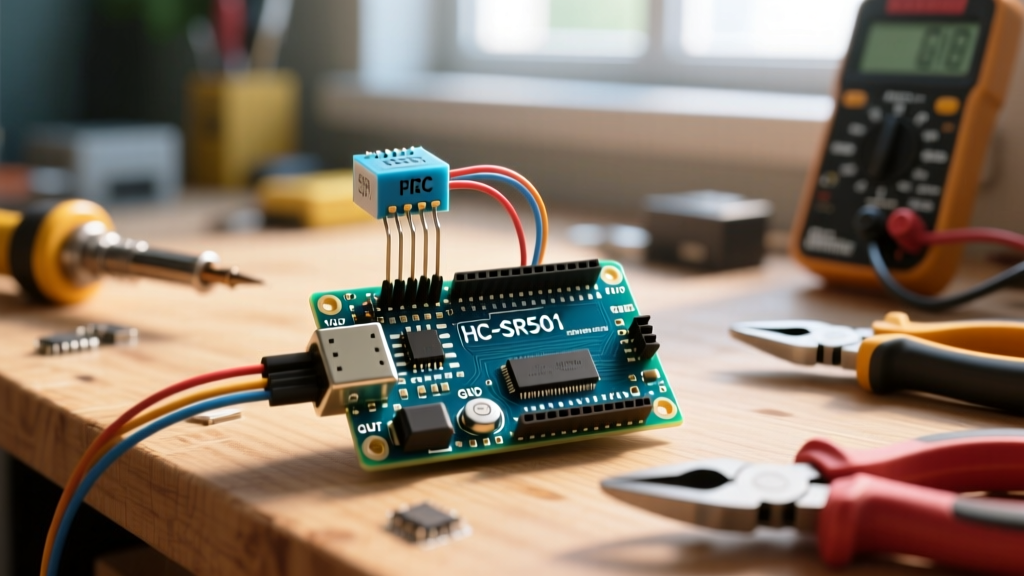
The module utilizes two piezoelectric transducers operating at a resonant frequency of 40kHz. When the trigger pin receives a 10-microsecond HIGH pulse, the transmitter emits an eight-cycle ultrasonic burst. This sound wave travels through the air, strikes an object, and reflects back to the receiver. By measuring the time-of-flight (ToF) of this echo, the microcontroller calculates the distance.
According to Georgia State University's HyperPhysics acoustic principles, the speed of sound in dry air at 20°C is approximately 343 meters per second. Because the sound wave travels to the object and back, the distance formula is Distance = (Time × Speed of Sound) / 2.
Hardware Pinout and Logic-Level Translation
A critical mistake in modern HC-SR04 sensor Arduino projects involves logic-level mismatches. The HC-SR04 is strictly a 5V logic device. While this works natively with the 5V Arduino Uno (ATmega328P), it poses a severe risk to 3.3V microcontrollers like the ESP32 or Arduino Nano 33 IoT.
Feeding the 5V Echo pin directly into an ESP32 GPIO will eventually degrade or destroy the silicon. You must implement a voltage divider on the Echo line.
| HC-SR04 Pin | Arduino Uno (5V) | ESP32 (3.3V) | Notes |
|---|---|---|---|
| VCC | 5V | 5V | Requires stable 5V; 3.3V causes brownouts. |
| Trig | Any Digital Pin | Any Digital Pin | 3.3V logic from ESP32 is sufficient to trigger the 5V module. |
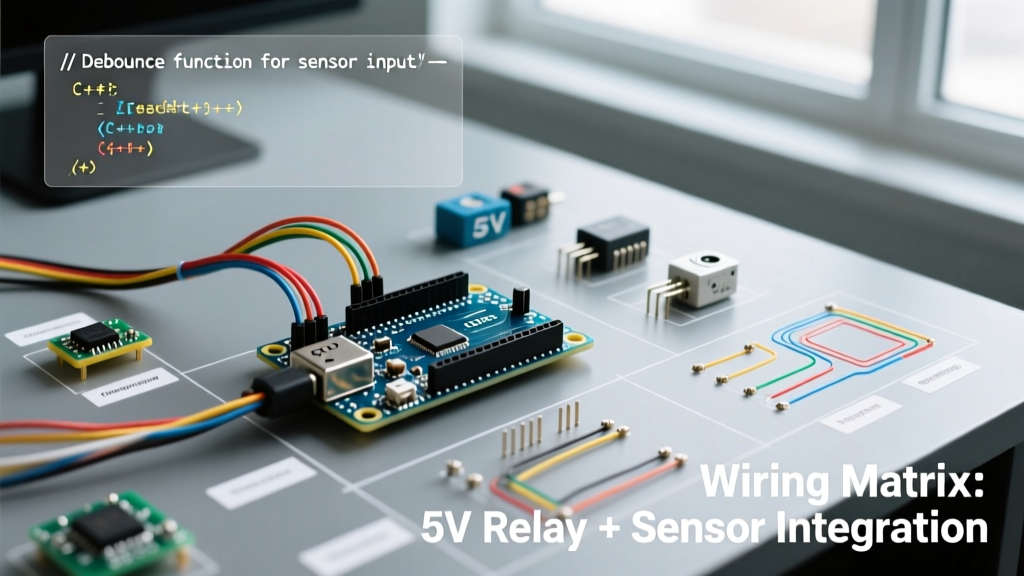
| Echo | Any Digital Pin | Voltage Divider | Use a 1kΩ and 2kΩ resistor divider to drop 5V to ~3.3V. |
| GND | GND | GND | Common ground is mandatory for signal reference. |
Moving Beyond Blocking Code: The NewPing Approach
The standard Arduino tutorial for the HC-SR04 relies on the pulseIn() function. As noted in the official Arduino language reference, pulseIn() is a blocking function. It halts all other microcontroller operations while waiting for the echo, with a default timeout of 1 second. If the sound wave scatters and never returns, your entire robotics loop freezes for a full second—a catastrophic failure in collision-avoidance systems.
For production-grade firmware in 2026, we use the NewPing library, which leverages hardware timer interrupts to read the echo pin asynchronously.
#include <NewPing.h>

#define TRIGGER_PIN  9
#define ECHO_PIN     10
#define MAX_DISTANCE 400 // Max distance to ping (in cm)

NewPing sonar(TRIGGER_PIN, ECHO_PIN, MAX_DISTANCE);

void setup() {
  Serial.begin(115200);
  // Setup timer2 interrupt to ping every 50ms (20Hz)
  sonar.timer2_init(echoCheck, 50000);
}

void loop() {
  // Main loop remains completely free for motor control or networking
  if (sonar.check_timer()) {
    unsigned int uS = sonar.ping_result;
    Serial.print("Distance: ");
    Serial.print(uS / US_ROUNDTRIP_CM);
    Serial.println("cm");
  }
}

void echoCheck() {
  sonar.ping_result = sonar.ping_timer();
}
This event-driven architecture ensures your main loop() can handle Wi-Fi stacks, PID motor controllers, or display refresh rates without missing a beat.
Advanced Calibration: Compensating for Thermal Drift
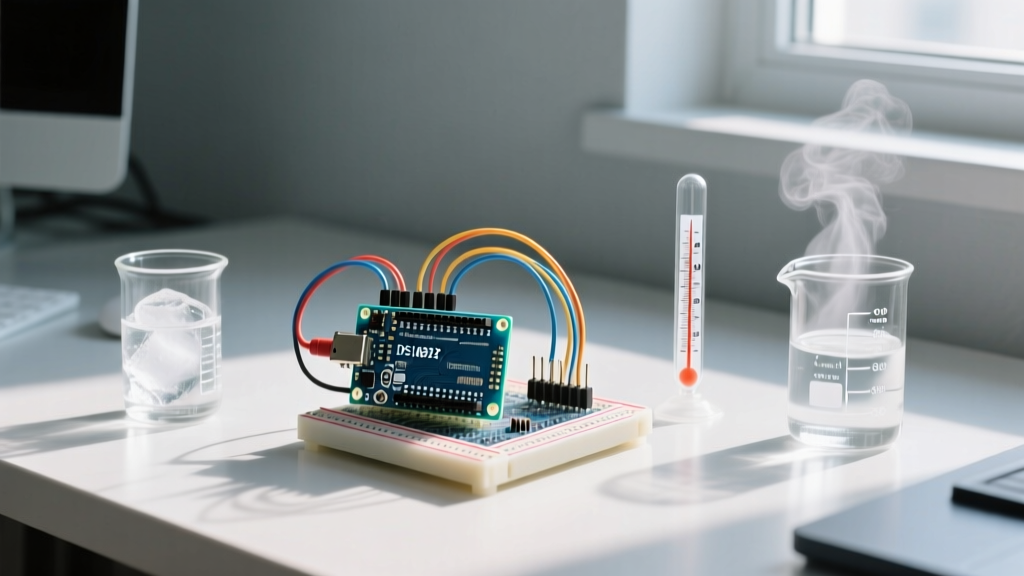
The most overlooked variable in HC-SR04 integration is ambient temperature. The speed of sound is not a universal constant; it fluctuates based on air density and temperature. The formula for the speed of sound in dry air is v = 331.3 + (0.606 × T), where T is the temperature in Celsius.
Expert Insight: If your HC-SR04 is calibrated for 20°C (343 m/s) but operates in an unheated warehouse at 0°C (331 m/s), you introduce a 3.5% measurement error. At a 4-meter distance, your sensor will report an object is 14 centimeters closer than it actually is, potentially causing a robotic arm to crash into a pallet.
To achieve millimeter-level accuracy, integrate a digital temperature sensor like the DS18B20 or the onboard temperature reading of an ESP32 to dynamically adjust the US_ROUNDTRIP_CM constant in your code before calculating the final distance.
Real-World Failure Modes and Edge Cases
Even with perfect code and thermal calibration, acoustic physics imposes hard limitations on the HC-SR04. Understanding these edge cases separates hobbyists from professional embedded engineers.
- The 2cm Blind Zone: The transmitter and receiver are physically separated. If an object is closer than 2cm, the echo returns before the transmitter has finished its 8-cycle burst, or the receiver's blanking circuit is still deafened by the transmit vibration. Never use the HC-SR04 for proximity detection under 3cm.
- Specular Reflection on Angled Surfaces: The 40kHz beam has a 15-degree divergence cone. If it strikes a smooth, hard surface (like glass or polished metal) at an angle greater than 15 degrees, the sound wave reflects away from the receiver entirely, resulting in a false out-of-range maximum distance reading.
- Acoustic Absorption: Soft, porous materials like acoustic foam, heavy curtains, or winter clothing absorb high-frequency sound waves. The HC-SR04 will consistently under-report distances or fail to detect these objects.
- Multi-Sensor Crosstalk: If you deploy four HC-SR04 modules on a chassis, firing them simultaneously will cause the receiver on Sensor A to detect the echo from Sensor B's transmitter. You must implement a round-robin firing sequence with a minimum 30-millisecond delay between sensor pings to allow acoustic dissipation.
Hardware Troubleshooting: Power Supply Noise
A frequent cause of ghost readings—where the sensor reports random, impossibly short distances—is power rail noise. The HC-SR04's internal oscillator and the high-current pulse required to drive the piezoelectric transmitter create significant voltage ripple on the 5V rail. If you are sharing this 5V rail with servo motors or a Wi-Fi module, the voltage droop will reset the HC-SR04's internal logic mid-measurement.
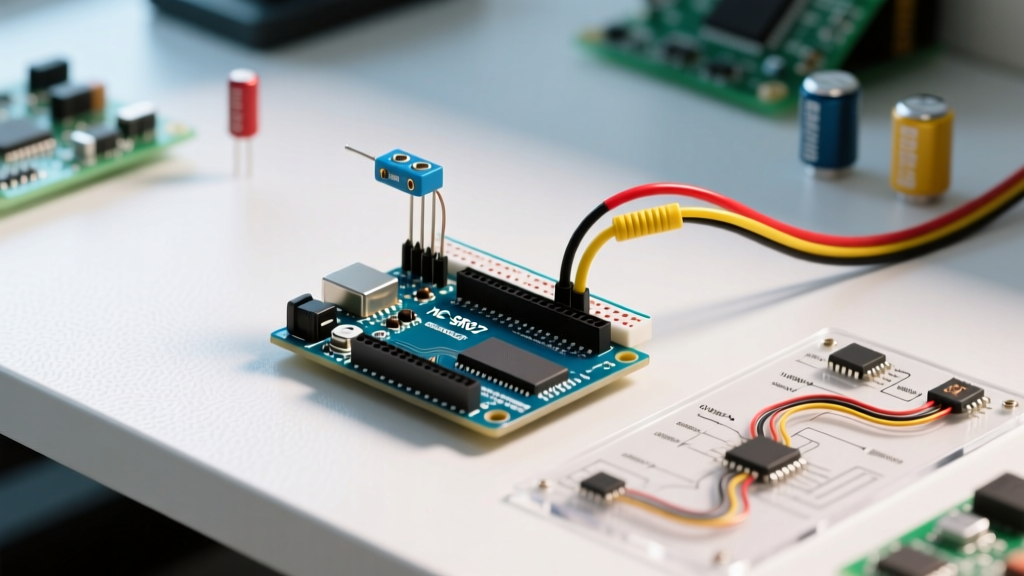
The Fix: Place a 100µF electrolytic capacitor and a 0.1µF ceramic capacitor in parallel directly across the VCC and GND pins of the HC-SR04. This local energy reservoir stabilizes the voltage during the transmit burst, eliminating 90% of unexplained erratic readings in complex robotic assemblies.
When to Upgrade from the HC-SR04
While the HC-SR04 is exceptional for sub-$3 educational projects, industrial applications in 2026 demand higher reliability. If your project requires IP67 waterproofing, immunity to acoustic noise, or a narrow beam angle for detecting thin wires, upgrade to the MaxBotix LV-MaxSonar-EZ series (approximately $35) or transition to a Time-of-Flight (ToF) LiDAR module like the TF-Luna ($12), which uses infrared light and is entirely immune to temperature drift and acoustic absorption.