
In the Arduino ecosystem, boolean is a legacy typedef historically mapped to an 8-bit unsigned integer (uint8_t), whereas bool is a native C++ primitive data type. For modern 32-bit microcontrollers like the Espressif ESP32 and Raspberry Pi RP2040, you should exclusively use bool. Using bool ensures standard C++ compliance, optimal memory alignment, and seamless compatibility with third-party libraries. This guide is designed for embedded developers and hobbyists migrating codebases from 8-bit AVR boards to 32-bit architectures.
Key Takeaways
booleanis an Arduino-specific legacy alias;boolis the standard C++ primitive.- On 32-bit MCUs,
boolprevents memory alignment penalties and compiler warnings. - Always use
boolwhen writing new firmware for the Espressif ESP32 and Raspberry Pi RP2040.
The Core Difference: Arduino boolean vs Standard bool
Understanding the distinction between these two data types requires looking at the history of the Arduino IDE. The original Arduino core introduced boolean to make programming more approachable for beginners who were unfamiliar with C++ syntax. However, as the ecosystem expanded to 32-bit architectures, this non-standard type created friction with professional toolchains.
Arduino boolean: A non-standard, Arduino-specific typedef historically defined as an 8-bit unsigned integer (uint8_t) in older AVR cores, but mapped to the native C++ bool in newer 32-bit cores. It exists solely for backward compatibility with legacy sketches.
Standard bool: A fundamental, native data type introduced in the C++98 standard that represents a binary truth value (true or false). Its memory size is implementation-defined but typically occupies 1 byte, ensuring strict type safety and compiler optimization across architectures.
According to the Arduino Language Reference, the boolean type is retained purely for backward compatibility. Modern C++ compilers strictly enforce type checking on bool, catching logical errors at compile time that uint8_t aliases might silently pass.
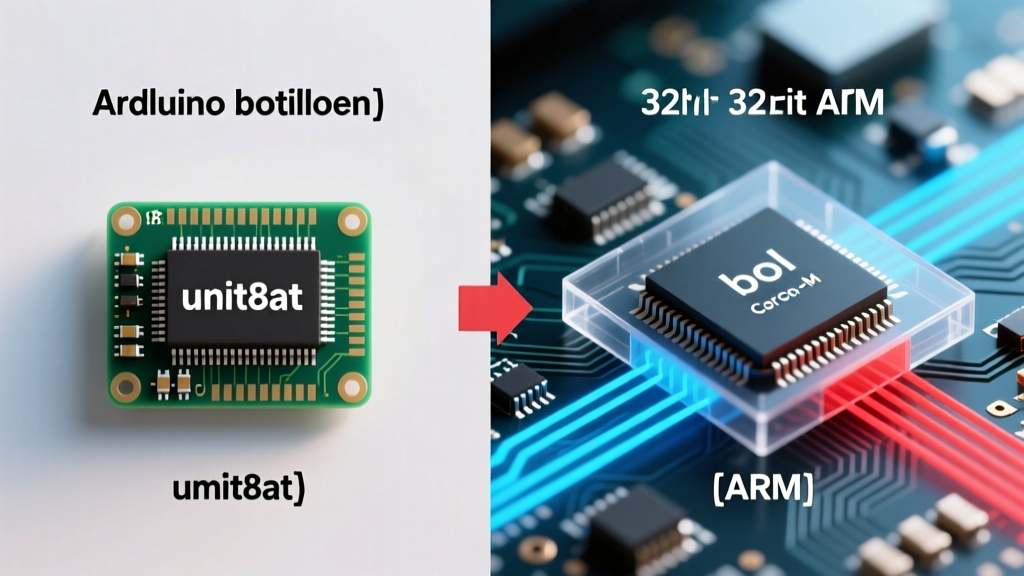
Memory Footprint and Alignment on 32-Bit MCUs
Memory alignment dictates how data is arranged and accessed in the CPU registers. On 8-bit AVR microcontrollers, memory is accessed in 1 byte chunks, making the historical 1 byte footprint of boolean perfectly efficient. On 32-bit architectures, the CPU reads memory in 4-byte blocks.
Espressif ESP32 Architecture
The Espressif ESP32 operates on a 32-bit Xtensa LX6 or RISC-V architecture, typically clocked at 240 MHz. When you use standard bool, the Espressif ESP-IDF compiler aligns the variable to the natural 4-byte boundary of the 32-bit bus. Using legacy Arduino types can occasionally trigger strict-aliasing warnings in the Espressif toolchain, complicating over-the-air (OTA) update builds.
Raspberry Pi RP2040 Architecture
The Raspberry Pi RP2040 features dual ARM Cortex-M0+ cores running at 133 MHz. The Pico C/C++ SDK strictly adheres to standard C++ conventions. As documented in the Raspberry Pi Pico SDK manual, utilizing native bool ensures that boolean arrays pack efficiently into memory without triggering padding inefficiencies during struct compilation.
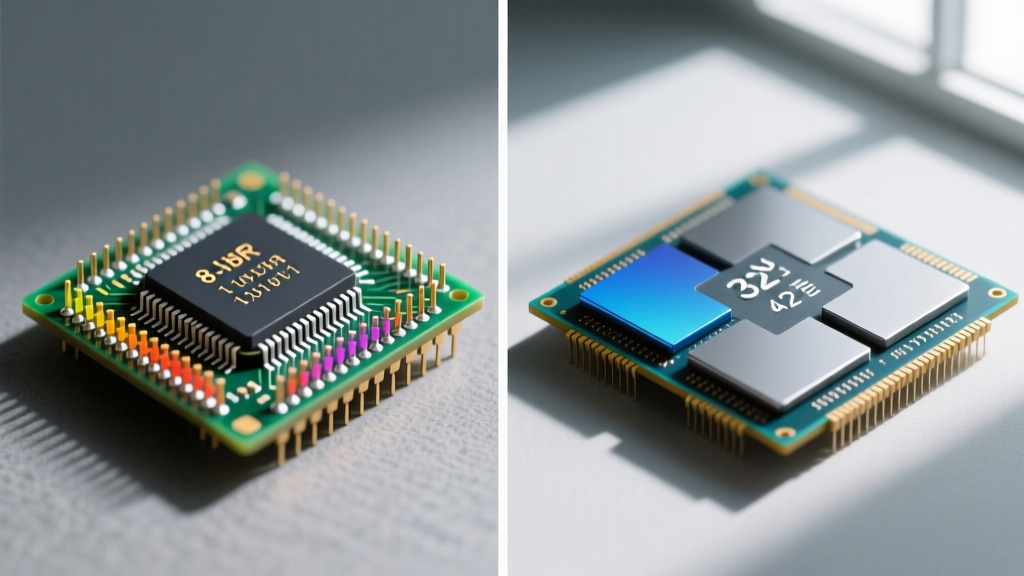
Compatibility Matrix: AVR vs ESP32 vs RP2040
When porting code across different microcontroller families, understanding how the compiler treats these variables is critical. The following table outlines the technical behavior of both types across major platforms.
| Feature | 8-bit AVR (Arduino Uno) | Espressif ESP32 | Raspberry Pi RP2040 |
|---|---|---|---|
boolean Underlying Type |
uint8_t |
bool (via Arduino core alias) |
bool (via Arduino core alias) |
bool Underlying Type |
bool (C++ native) |
bool (C++ native) |
bool (C++ native) |
| Memory Size | 1 byte | 1 byte (aligned to 4-byte boundary) | 1 byte (aligned to 4-byte boundary) |
| Strict Type Checking | No (allows implicit int casting) | Yes | Yes |
| Recommended for New Code | No (Use bool) |
No (Use bool) |
No (Use bool) |
Migration Checklist for Modern Microcontrollers
If you are updating an older sketch to run on an Espressif ESP32 or Raspberry Pi RP2040, follow this systematic checklist to ensure type safety and optimal memory usage.
- Search and Replace: Use your IDE to find all instances of
booleanand replace them withbool. - Check Structs: Review all C++
structdefinitions. Groupboolvariables together to minimize 4-byte alignment padding waste. - Update Function Signatures: Ensure all library headers and function parameters explicitly declare
boolinstead ofuint8_tfor logical flags. - Enable Compiler Warnings: Turn on
-Walland-Wextrain your platformio.ini or Arduino IDE preferences to catch implicit conversion errors. - Verify External Libraries: Check third-party libraries for legacy
booleanusage. Fork and update them if they generate strict-aliasing warnings on 32-bit cores.
Frequently Asked Questions
Is Arduino boolean the same as bool?
On modern 32-bit cores, boolean is simply a macro alias for bool. However, on legacy 8-bit AVR boards, boolean was defined as uint8_t. To maintain cross-platform consistency and standard C++ compliance, you should always use bool.
How much memory does a boolean take in Arduino?
A standard bool occupies exactly 1 byte of memory across almost all Arduino-compatible architectures. However, on 32-bit microcontrollers like the Espressif ESP32, the compiler may pad the memory address to a 4-byte boundary depending on how the variable is grouped inside structs or classes.
Should I use bool or boolean in ESP32?
You should exclusively use bool when programming the Espressif ESP32. The Espressif ESP-IDF C++ Guide mandates standard C++ types to ensure compatibility with the FreeRTOS kernel and to prevent strict-aliasing compiler errors during optimization.
Conclusion and Next Steps
The distinction between boolean and bool represents the evolution of the Arduino ecosystem from an educational 8-bit platform to a professional 32-bit development environment. While boolean remains in the language for legacy support, standard bool provides the type safety, memory alignment, and compiler optimization required for modern microcontrollers like the Espressif ESP32 and Raspberry Pi RP2040. As your immediate next step, run a static analysis tool like clang-tidy on your current codebase to automatically flag and replace all non-standard boolean typedefs before your next firmware deployment.