
The Great Microcontroller Divide: Genuine vs. Clone
When evaluating a board Arduino Uno R3 for your workbench, the market presents a stark dichotomy. On one side, you have the genuine, premium-tier boards manufactured by Arduino and its licensed partners, typically retailing between $27.00 and $32.00. On the other, a flood of budget clones from overseas marketplaces priced aggressively between $8.00 and $14.00. In the 2026 component market, the ATmega328P supply chain has long stabilized, yet the architectural differences between premium and budget boards remain profound. This guide strips away the silkscreen to compare the actual silicon, passives, and real-world failure modes of both tiers.
The Premium Tier: Genuine Architecture and Native USB
The genuine Arduino Uno R3 is engineered for reliability, educational consistency, and advanced prototyping. According to the official Arduino hardware documentation, the premium board relies on a dual-MCU architecture that provides significant hidden advantages.
The ATmega16U2 USB-to-Serial Bridge
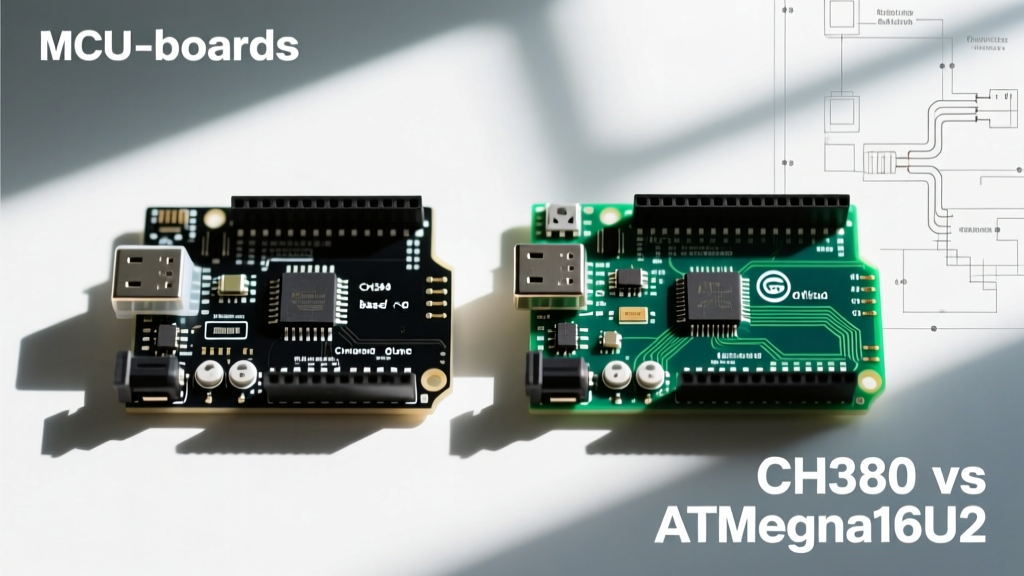
Instead of a dedicated USB-TTL converter chip, genuine boards use a secondary microcontroller: the ATmega16U2. This chip is flashed with LUFA (Lightweight USB Framework) firmware. Because it is a fully programmable MCU, the genuine board can enumerate as a native USB Human Interface Device (HID). This means you can reflash the 16U2 to make your Uno act as a native keyboard, mouse, MIDI controller, or joystick without requiring a USB Host Shield. Budget boards completely lack this capability.
Power Delivery: NCP1117ST50T3G
The premium board utilizes the ON Semiconductor NCP1117ST50T3G linear voltage regulator. This component boasts a robust thermal design and can handle up to 1A of continuous current. While the board's resettable PTC polyfuse limits USB draw to 500mA, the NCP1117's low dropout voltage (typically 1.0V at 500mA) and excellent thermal dissipation into the 1.6mm FR4 PCB copper pours ensure the board remains cool even when powering moderate peripheral loads.
The Budget Tier: Anatomy of a CH340 Clone
Budget clones achieve their $10 price point by substituting expensive, programmable silicon with cheap, single-purpose ASICs and downgrading passive components. While they are perfectly adequate for blinking an LED or reading a potentiometer, their compromises become glaringly obvious under load.
The CH340G / CH340C UART Bridge
Clones replace the ATmega16U2 with the WCH CH340G (or the newer CH340C). This is a hardwired USB-to-UART bridge. It cannot act as an HID device. Furthermore, the CH340 requires specific, signed drivers on Windows environments. While modern Windows 11 builds often fetch these via Windows Update, enterprise environments with strict driver-signing enforcement frequently block the CH341SER driver, resulting in 'Code 10' Device Manager errors.
Power Delivery: AMS1117-5.0
The ubiquitous AMS1117-5.0 LDO found on 95% of clone boards is a major bottleneck. It has a higher typical dropout voltage (1.1V to 1.3V) and a lower thermal threshold. Mounted on a thinner 1.2mm PCB with inadequate thermal vias, the AMS1117 will trigger internal thermal shutdown if you attempt to draw more than 300mA continuously from the 5V rail.
Component-Level Comparison Matrix
| Feature | Premium (Genuine) | Budget (Clone) |
|---|---|---|
| Primary MCU | ATmega328P-PU (Microchip) | ATmega328P-PU (Often re-marked) |
| USB Interface | ATmega16U2 (Native HID capable) | CH340G / CH340C (UART only) |
| 5V Regulator | NCP1117ST50T3G (1A, Low Dropout) | AMS1117-5.0 (800mA, High Heat) |
| PCB Substrate | 1.6mm FR4, ENIG/HASL finish | 1.2mm FR4, cheap HASL finish |
| Crystal Oscillator | 16MHz SMD (Tight ppm tolerance) | 16MHz Cylindrical/SMD (High drift) |
| Typical Price (2026) | $27.00 - $32.00 | $8.00 - $14.00 |
Real-World Failure Modes and Edge Cases
To truly understand the E-E-A-T (Experience, Expertise, Authoritativeness, and Trustworthiness) of board selection, we must look at how these boards fail in the field. Here are three specific edge cases where budget boards fall short.
1. The AMS1117 Thermal Throttling Trap
Imagine you are building a robotic arm using four SG90 micro servos powered directly from the Uno's 5V pin. Each servo draws roughly 150mA under stall conditions. A genuine board's NCP1117 will handle this 600mA load (provided you bypass the USB PTC fuse by using the barrel jack with a 7.5V supply). A clone board's AMS1117, however, will heat up rapidly. Within 45 seconds, the silicon junction will exceed 125°C, triggering thermal shutdown. Your servos will jitter, reset, or freeze entirely. Rule of thumb: Never draw more than 200mA from a clone board's 5V rail.
2. Crystal Oscillator Drift and Baud Rate Errors
Serial communication relies on precise timing. Genuine boards use high-quality SMD crystals with tight load capacitance matching. Budget clones often use cheap, uncalibrated tuning-fork crystals. As the ambient temperature in your enclosure rises, the clone's clock frequency drifts. At standard 9600 baud, this is unnoticeable. But if you push your Serial monitor to 115200 baud or higher for high-speed data logging, the timing drift causes framing errors, resulting in corrupted data packets and 'garbage' characters in your terminal.
3. Recycled Silicon and Flash Degradation
While the Microchip ATmega328P is rated for 10,000 flash write cycles, ultra-cheap $5 boards arriving from unverified marketplaces frequently utilize harvested, recycled MCUs desoldered from e-waste. These chips may already have 8,000 write cycles on them. Developers using these boards for rapid firmware iteration often experience 'bricked' bootloaders or corrupted flash memory within weeks of heavy use.
Decision Framework: Which Board Should You Buy?
Your purchasing decision should be dictated by your project's deployment environment and your troubleshooting tolerance.
Buy the Budget Clone If:
- Classroom & Education: You are outfitting a lab with 30 stations where boards will be subjected to accidental short circuits and physical abuse.
- Simple Prototyping: Your project only involves low-power I2C sensors (BME280, MPU6050) and basic logic testing on a breadboard.
- Embedded Deployment: You plan to use the Uno solely as a development platform, but will eventually migrate your code to a bare ATmega328P chip on a custom PCB.
Buy the Premium Genuine Board If:
- Native USB HID: Your project requires the board to act as a custom macro keypad, MIDI instrument, or game controller.
- High-Speed Serial: You are logging data at 250k+ baud rates where crystal oscillator stability is non-negotiable.
- Peripheral Power: You need to power moderate loads (like a string of WS2812B NeoPixels or a small relay module) directly from the onboard 5V regulator.
- Commercial Prototyping: You are building a proof-of-concept for a client and cannot afford the debugging time associated with CH340 driver conflicts or thermal LDO shutdowns.
Pro-Tip for Windows Users: If you must use a CH340 clone board in a secure corporate environment, always download the official WCH CH341SER driver directly from the manufacturer rather than relying on third-party driver aggregators. As noted in SparkFun's comprehensive CH340 driver guide, using outdated or modified INF files can lead to persistent port enumeration failures on modern Windows builds.
Final Verdict
The budget vs premium board Arduino Uno R3 debate ultimately comes down to the value of your time. The $20 premium you pay for a genuine board buys you native USB capabilities, robust thermal headroom, and zero driver friction. However, for pure logic testing and low-power sensor integration, the $10 CH340 clone remains an undeniable workhorse of the DIY electronics world. Choose the tool that matches your project's power and data requirements, and design your power rails accordingly.