
The Evolution of the Arduino Nano With WiFi
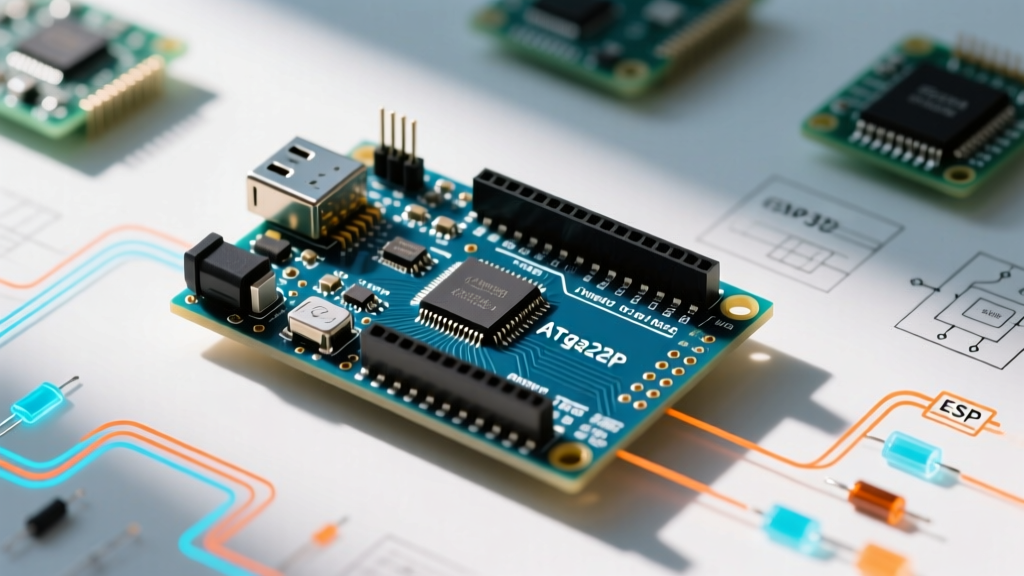
For over a decade, the classic Arduino Nano (based on the ATmega328P) has been the gold standard for compact, breadboard-friendly prototyping. However, its complete lack of native wireless connectivity historically forced makers into awkward, unreliable workarounds. If you are designing a connected project and searching for an Arduino Nano with WiFi in 2026, the ecosystem has dramatically shifted. We have finally moved past the era of hot-gluing ESP-01 serial transceivers to the back of a classic Nano and dealing with AT-command firmware crashes.
Today, the market offers native, integrated System-on-Chip (SoC) solutions and official IoT boards that maintain the beloved 18-pin DIP form factor while packing serious wireless capabilities. This guide breaks down the current ecosystem, comparing official Arduino hardware against high-value market clones, and addresses the critical engineering hurdles—specifically voltage logic shifts—that catch experienced developers off guard.
The Official Contenders: Arduino's Native IoT Lineup
Arduino LLC has addressed the WiFi gap by releasing specialized boards that keep the exact physical footprint of the classic Nano (0.7 x 1.8 inches) but swap the aging AVR architecture for modern ARM processors paired with dedicated WiFi modules.
1. Arduino Nano 33 IoT
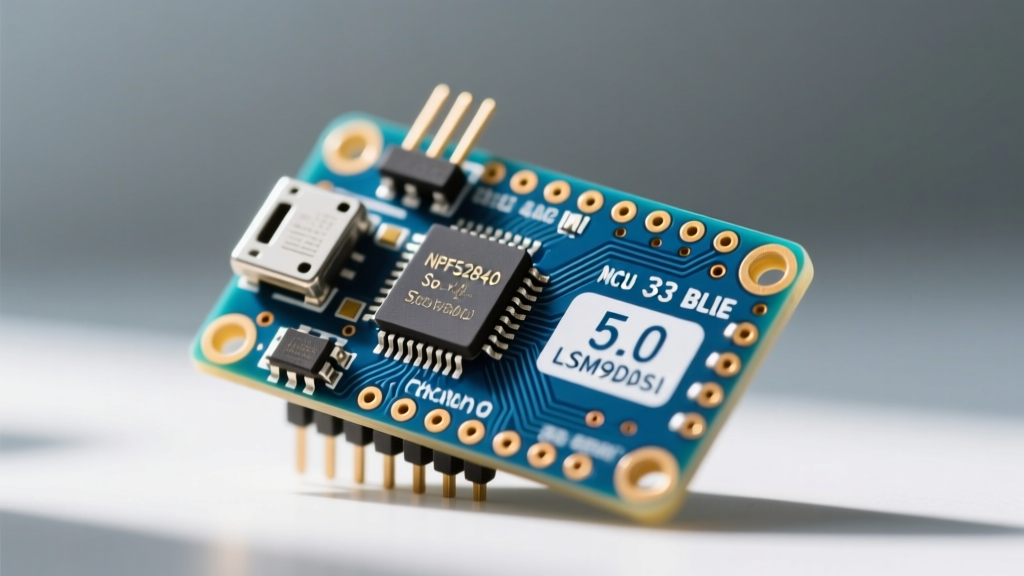
The Nano 33 IoT was Arduino's first true answer to the connected Nano demand. It pairs a Microchip SAMD21G18A (ARM Cortex-M0+ running at 48MHz) with a u-blox NINA-W102 WiFi/BLE module. The NINA-W102 is internally based on an ESP32 chip, but it runs custom firmware designed to interface seamlessly with the Arduino WiFiNINA library.
- Flash / SRAM: 256KB / 32KB
- Wireless: 802.11 b/g/n (2.4GHz) + Bluetooth 4.2
- Average Price: $22.00 - $24.50
- Best For: Native Arduino IoT Cloud integration without writing custom ESP32 firmware.
Failure Mode Alert: The NINA-W102 module occasionally suffers from firmware corruption during aggressive power cycling. You must keep the Arduino IDE WiFi101/WiFiNINA Firmware Updater tool handy to re-flash the module's internal ESP32 if it stops responding to AT commands over the internal SPI bus.
2. Arduino Nano RP2040 Connect
Released to leverage the massive Raspberry Pi RP2040 ecosystem, this board swaps the SAMD21 for a dual-core ARM Cortex-M0+ running at 133MHz. It retains the NINA-W102 for WiFi but adds a crucial security feature: an ATECC608A cryptographic co-processor. This chip handles TLS/SSL handshakes and secure key storage in hardware, offloading the main MCU and drastically reducing the time required to establish secure MQTT connections.
- Flash / SRAM: 2MB (External QSPI) / 264KB
- Wireless: 802.11 b/g/n + Bluetooth 4.2
- Average Price: $27.00 - $29.00
- Best For: MicroPython developers and projects requiring secure, hardware-accelerated TLS cloud connections.
For a complete pinout and schematic reference, consult the official Arduino Nano RP2040 Connect documentation.
The Market Reality: ESP32-C3 'Nano' Clones
While official boards offer premium support and hardware security, the open-source hardware market has flooded with ultra-cheap alternatives. The most prominent in 2026 is the ESP32-C3 Nano (often sold under names like 'SuperMini C3' or 'NodeMCU-C3 Nano').
These boards map the pins of the ESP32-C3 RISC-V SoC directly to the classic Nano footprint. Because the ESP32-C3 handles WiFi natively (without a secondary host MCU), the BOM cost is drastically lower.
- MCU: 32-bit RISC-V single-core @ 160MHz
- Flash / SRAM: 4MB / 400KB
- Wireless: WiFi 4 (2.4GHz) + Bluetooth 5 (LE) with Mesh support
- Average Price: $3.00 - $5.50 (via AliExpress / Amazon multi-packs)
The ESP32-C3 architecture represents a massive leap in efficiency. According to Espressif's technical specifications, the C3 variant is specifically optimized for high-throughput, low-power IoT edge nodes, making it vastly superior to the NINA-W102 for battery-operated deployments.
The Legacy Trap: Classic Nano + ESP-01
You will still find legacy tutorials suggesting you wire an ESP-01 module to the TX/RX pins of a classic 5V ATmega328P Nano using a voltage divider. Do not do this in 2026.
The ATmega328P has only 2KB of SRAM. Parsing JSON payloads from modern REST APIs or managing MQTT keep-alive packets via serial AT commands will routinely trigger stack overflows and memory fragmentation. Furthermore, the ESP-01 requires a dedicated 3.3V LDO capable of delivering 300mA+ spikes during RF transmission; the classic Nano's onboard AMS1117-5.0 cannot supply this, leading to brownout resets. Deprecate this architecture in favor of native SoC boards.
Critical Engineering Hurdle: The 5V to 3.3V Migration
The most common point of failure when upgrading to any Arduino Nano with WiFi is ignoring logic level voltages. The classic Nano operates at 5V logic. Every modern WiFi-enabled Nano (Official IoT boards and ESP32 clones) operates at 3.3V logic.
Engineering Warning: Feeding a 5V signal from a legacy sensor (like an HC-SR04 ultrasonic sensor or a 5V I2C LCD) directly into the GPIO pins of an ESP32-C3 or the SAMD21/RP2040 will permanently degrade or destroy the silicon. The absolute maximum rating for these MCU pins is typically 3.6V.
How to Bridge the Voltage Gap
If your project relies on legacy 5V shields or sensors, you must implement bidirectional logic level shifting. Do not rely on simple resistor voltage dividers for high-speed buses like I2C or SPI, as the RC time constant will corrupt the data edges.
- For I2C / SPI (High Speed): Use a dedicated IC like the TXS0108E or TXB0108. These handle edge-rate acceleration and bidirectional data flow without pull-up conflicts.
- For Simple GPIO / UART: Use a BSS138 N-channel MOSFET level shifter breakout. It is cheap, reliable, and safely translates 5V down to 3.3V for serial debugging lines.
For a deeper understanding of voltage thresholds and VIH/VIL tolerances, review the SparkFun Logic Levels Tutorial.
Ecosystem Comparison Matrix
| Board Architecture | Host MCU | WiFi Implementation | Logic Level | Deep Sleep Current | Avg. Price (USD) |
|---|---|---|---|---|---|
| Classic Nano + ESP-01 | ATmega328P (AVR) | Serial AT Bridge | 5V (Nano) / 3.3V (ESP) | ~15mA (Poor) | $9.00 (Combined) |
| Nano 33 IoT | SAMD21 (ARM M0+) | NINA-W102 (SPI) | 3.3V | ~25µA (Host+Module) | $23.00 |
| Nano RP2040 Connect | RP2040 (Dual M0+) | NINA-W102 (SPI) | 3.3V | ~30µA (Host+Module) | $28.00 |
| ESP32-C3 Nano Clone | ESP32-C3 (RISC-V) | Native SoC | 3.3V | ~5µA (Native) | $4.00 |
Power Profiling: Deep Sleep and Battery Deployments
If your WiFi Nano project is tethered to a USB wall wart, power efficiency is a secondary concern. However, for remote environmental sensors running on 18650 Li-Ion cells, deep sleep architecture dictates your maintenance interval.
Boards utilizing the NINA-W102 module (Nano 33 IoT and RP2040 Connect) face a unique power challenge. The NINA module can enter a low-power standby mode drawing roughly 15µA. However, the host MCU (SAMD21 or RP2040) must also be instructed to enter its deepest sleep state via the ArduinoLowPower library. If the host MCU remains idle instead of sleeping, it will draw an additional 3mA to 12mA, draining a 2000mAh battery in a matter of weeks rather than years.
Conversely, the ESP32-C3 Nano handles power management internally. By utilizing the esp_deep_sleep_start() API in the ESP-IDF or Arduino-ESP32 core, the entire SoC powers down, leaving only the RTC memory active. This yields a true system-level deep sleep current of 5µA to 8µA, making it the undisputed champion for battery-powered, form-factor-constrained WiFi nodes.
Final Verdict: Selecting Your Board
The definition of an 'Arduino Nano with WiFi' depends entirely on your development priorities. If you require hardware-backed TLS security, seamless Arduino IoT Cloud provisioning, and premium build quality, the Nano RP2040 Connect is worth the $28 premium. If you are deploying a fleet of 50+ battery-powered environmental sensors and need to minimize BOM costs while maximizing deep-sleep efficiency, the ESP32-C3 Nano clones offer unbeatable value—provided you respect the 3.3V logic boundaries and design your PCBs accordingly.