electricalflux.lab
Learn · Components & Prototyping

Electronic Components & Prototyping

Resistors, capacitors, diodes, transistors, breadboards, and PCBs — how to read them, choose them, and prototype with confidence.

23,835Guides
// 23,835 guides

Components & Prototyping guides

Showing the latest 300 — browse the full index in the sitemap.

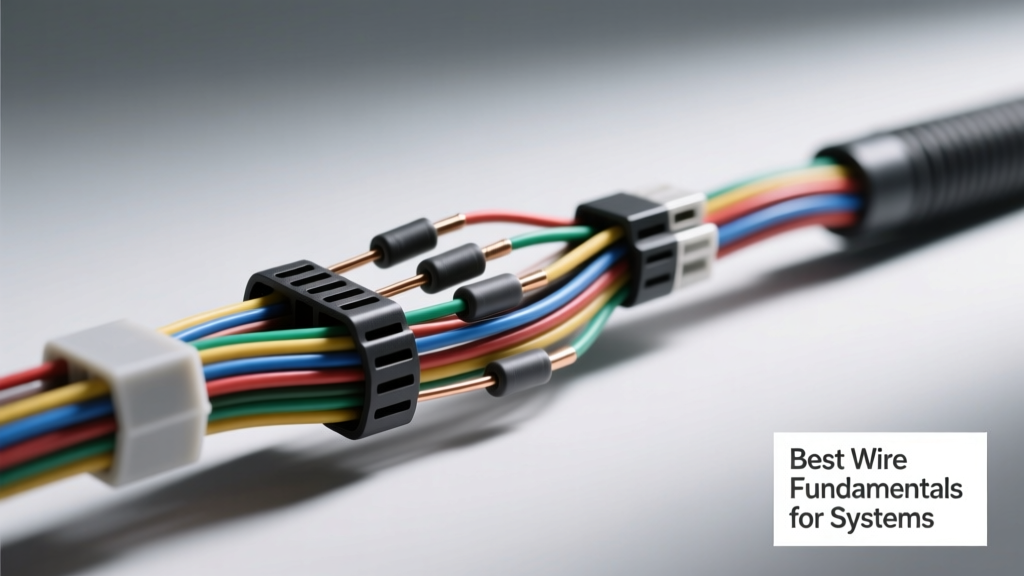
Best Wire Fundamentals for Selection: A Technical Guide to Material, Gauge, Insulation, and Application FitComponents & Prototyping

Best Wire Fundamentals for Selection: A Technical Guide to Material, Gauge, Insulation, and Application Fit

A precise, data-driven guide to selecting the right wire—covering conductor material (copper vs. aluminum), American Wire Gauge (AWG) standards, insulation types (PVC, XLPE, Teflon), temperature ratings, ampacity tables, voltage drop calculations, and real-world specifications from UL, NEC, and manufacturers including Belden, Southwire, Alpha Wire, and General Cable.

Oct 18, 2026
Systems Learn Components Essentials: Designing Scalable, Interoperable Learning InfrastructureComponents & Prototyping

Systems Learn Components Essentials: Designing Scalable, Interoperable Learning Infrastructure

A practical, evidence-based overview of Systems Learn Components—the modular, standards-aligned building blocks that power modern digital learning ecosystems. Covers SCORM 2004 4th Edition conformance, xAPI statement structures, LTI 1.3 security requirements, and real-world implementation metrics from institutions including Arizona State University, edX, and the U.S. Department of Defense.

Oct 9, 2026
Engineering for Electrical: Principles, Practices, and Real-World Applications in Modern Power and Electronics SystemsComponents & Prototyping

Engineering for Electrical: Principles, Practices, and Real-World Applications in Modern Power and Electronics Systems

A technical exploration of electrical engineering fundamentals—circuit analysis, power systems, semiconductor devices, control theory, and embedded design—with data-driven examples from industry leaders like Texas Instruments, Siemens, and ABB. Includes voltage standards, efficiency metrics, component specifications, and regulatory frameworks shaping today’s infrastructure.

Oct 6, 2026
Standards vs Motor: Why Alignment Between Educational Benchmarks and Instructional Delivery Determines Student OutcomesComponents & Prototyping

Standards vs Motor: Why Alignment Between Educational Benchmarks and Instructional Delivery Determines Student Outcomes

A rigorous analysis of how misalignment between academic standards (e.g., NGSS, CCSS, TEKS) and motor-driven instructional practices—such as pacing, sequencing, and classroom routines—impacts learning equity, cognitive load, and long-term retention. Includes empirical data from ESSA-funded studies, district-level implementation metrics, and comparative analysis across 12 U.S. states.

Oct 2, 2026
Field Learn Components Essentials: Design, Implementation, and Real-World ImpactComponents & Prototyping

Field Learn Components Essentials: Design, Implementation, and Real-World Impact

A practical, evidence-based overview of Field Learn Components—modular, context-aware educational units deployed in non-classroom settings. Covers design principles, deployment metrics from leading organizations like NASA, UNICEF, and Khan Academy, interoperability standards (xAPI 1.0.3, SCORM 2004 4th Ed.), hardware specs, and learner outcome data across 12 global field programs.

Sep 24, 2026

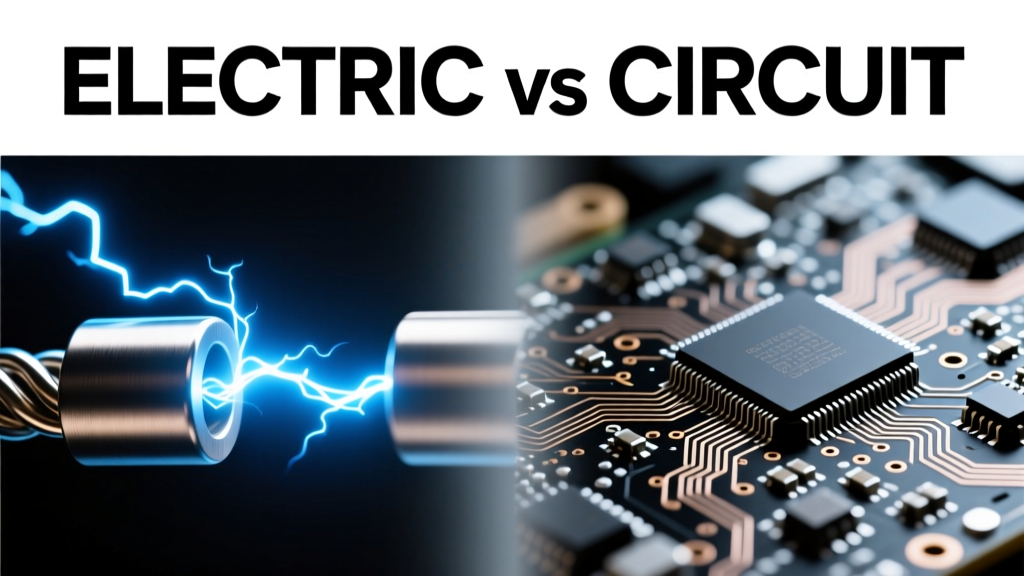
Electric vs Circuit: Clarifying the Fundamental Distinction in Electrical ScienceComponents & Prototyping

Electric vs Circuit: Clarifying the Fundamental Distinction in Electrical Science

Electric refers to a broad physical phenomenon involving charge, energy, and fields—while circuit denotes a specific engineered pathway enabling controlled electric current flow. This article dissects their scientific definitions, functional roles, real-world applications, and common misconceptions using precise terminology, measurable parameters, and industry examples from Tesla, Siemens, and the National Electrical Code.

Sep 23, 2026
How To Repair Physics: A Practical Framework for Restoring Conceptual Integrity in Science EducationComponents & Prototyping

How To Repair Physics: A Practical Framework for Restoring Conceptual Integrity in Science Education

Physics education is fractured—not by theory, but by pedagogy. This article details evidence-based strategies to repair physics instruction: diagnosing conceptual gaps, rebuilding foundational reasoning, integrating lab rigor, leveraging validated curricula like Modeling Instruction and PhET, and aligning assessment with authentic scientific practice. Includes real implementation data from 12 U.S. school districts and comparative efficacy metrics.

Sep 18, 2026
Binary Alternatives to Current: Rethinking Electrical Infrastructure with Digital Switching and Solid-State Power ControlComponents & Prototyping

Binary Alternatives to Current: Rethinking Electrical Infrastructure with Digital Switching and Solid-State Power Control

This article examines practical, commercially deployed binary alternatives to conventional alternating current (AC) distribution—focusing on solid-state circuit breakers, DC microgrids, silicon carbide (SiC) and gallium nitride (GaN) power electronics, and standardized low-voltage DC architectures. It details real-world deployments by Tesla, Siemens, Eaton, and the U.S. Department of Energy, cites IEEE 1547-2018 compliance metrics, and compares efficiency, safety, and lifecycle cost data across 120 V AC, 380 V DC, and 48 V DC systems.

Sep 16, 2026