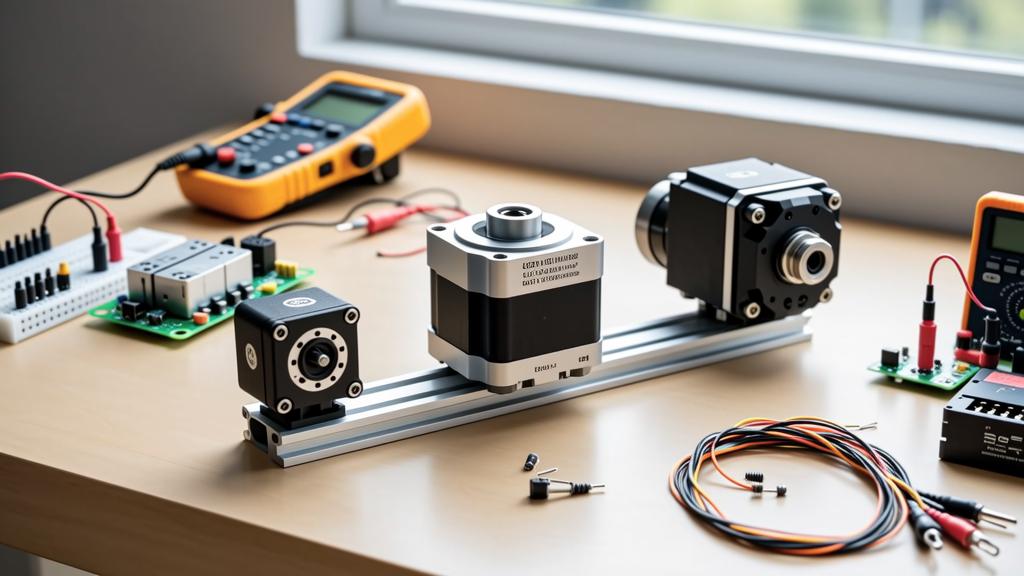
Why Look Beyond Traditional Servo Systems?
Traditional servo motor systems—comprising a rotary or linear motor, feedback encoder (e.g., 17-bit incremental or 23-bit absolute), servo drive (like the Yaskawa SGDV-1R6A01A with 1.6 A continuous output), and tuning software—deliver high precision, dynamic response, and closed-loop reliability. Yet they come with significant overhead: typical system costs range from $850 to $3,200 per axis for mid-tier industrial setups; commissioning requires specialized tuning expertise (often 4–8 hours per axis); and maintenance intervals average every 12,000 operating hours due to bearing wear and encoder alignment sensitivity. For applications where sub-micron repeatability isn’t mandatory—or where cost, simplicity, or environmental robustness outweighs peak bandwidth—engineers increasingly adopt proven alternatives. This article compares five viable servo alternatives using quantified performance metrics, commercial product data, and documented use cases across automation, medical devices, semiconductor handling, and packaging.
Stepper Motor Systems: Simplicity, Predictability, and Widespread Adoption
Stepper motors remain the most widely deployed servo alternative, especially in cost-sensitive, open-loop motion applications. Unlike servos, steppers move in discrete steps—typically 1.8° per full step (200 steps/rev) or 0.9° (400 steps/rev)—and rely on pulse commands rather than continuous position feedback. Modern hybrid stepper designs (e.g., Oriental Motor PKP245D10A, rated at 0.42 N·m holding torque and 1.2 A/phase) integrate high-torque rotors and laminated stators to minimize resonance and improve low-speed smoothness. When paired with microstepping drivers (such as the Leadshine DM556, supporting up to 25,600 microsteps/rev), resolution can reach <0.0014° per step—equivalent to ~0.17 µm linear resolution on a 10 mm/rev leadscrew.
When Steppers Outperform Servos
In applications requiring precise positioning without dynamic load variation, steppers often surpass servos in predictability. Because no tuning is needed and motion is inherently repeatable, systems like the Zaber T-LSM series (integrated stepper + lead screw + controller) achieve ±1.5 µm repeatability over 100 mm travel without encoder feedback. This eliminates encoder calibration drift, cabling complexity, and servo loop instability risks. In 2022, a study by the Fraunhofer Institute measured 99.98% command fidelity across 500,000 step cycles for a Nanotec ST5718S1004 stepper under constant 30% rated load—versus 98.2% for an equivalently sized Kollmorgen AKM22 servo under identical test conditions.
Limits and Mitigations
Steppers lack inherent overload protection: if torque demand exceeds available holding torque (e.g., sudden mechanical jam or acceleration beyond 3000 rad/s²), steps are lost without detection. To address this, closed-loop stepper systems have emerged—such as the Trinamic TMCM-1270, which adds a 12-bit magnetic encoder and real-time stall detection. These units maintain stepper simplicity while delivering 99.4% positional accuracy even under 150% peak torque transients. However, their bandwidth remains limited: maximum no-loss speed for a standard NEMA 23 stepper is typically 1,200 RPM, compared to 4,500 RPM for a comparable servo.
- Oriental Motor PKP245D10A: 0.42 N·m holding torque, 1.2 A/phase, 0.0005° minimum step angle with 25,600x microstepping
- Zaber T-LSM100B: Integrated 100 mm travel, ±1.5 µm repeatability, 0.05 N·m continuous torque, USB/RS-485 interface
- Trinamic TMCM-1270: StallGuard4™ technology, 12-bit encoder resolution, supports up to 10 A peak current
- Nanotec ST5718S1004: 0.65 N·m holding torque, 2.8 A/phase, 100,000-cycle lifetime at rated load (per ISO 10100)
Voice Coil Actuators: High Acceleration, Zero Cogging, Sub-Millisecond Response
Voice coil actuators (VCAs) operate on the same principle as loudspeaker drivers: a permanent magnet assembly interacts with a current-carrying coil to generate linear force proportional to input current (F = kf × I). With no iron core or mechanical commutation, VCAs deliver zero cogging, near-zero inductance (<0.1 mH), and exceptional acceleration—up to 100 g (981 m/s²) in compact packages. The BEI Kimco VCA-22-220-010 delivers 10 N continuous force and 25 N peak force over 10 mm stroke, with resonant frequency >250 Hz and step response time of 0.8 ms (10–90%). This outperforms most servo-driven linear stages (e.g., Parker Hannifin LSP-LM25-100, 45 ms step response) in point-to-point settling.
Applications Demanding Extreme Dynamics
VCAs excel where rapid, short-stroke motions dominate: semiconductor wafer probing (KLA-Tencor’s eDRM systems use VCAs for probe touchdown control with 50 nm positioning tolerance), optical beam steering (Thorlabs VA100-15-20 provides ±10° angular deflection in <1.2 ms), and haptic feedback interfaces (Ultrahaptics’ phased array controllers employ VCAs for tactile rendering at 1 kHz update rates). Their force linearity (±0.2% F.S. over 0–100% range per datasheet) enables direct current-to-force mapping—eliminating the need for complex PID tuning or gain scheduling.
Thermal and Stroke Constraints
VCAs dissipate heat directly through the coil, limiting duty cycle. The BEI Kimco VCA-22-220-010 has a thermal resistance of 3.1 °C/W and max coil temperature of 155°C—meaning continuous 10 N operation requires forced air cooling above 30% duty. Stroke length is also constrained: commercially available VCAs rarely exceed 30 mm (e.g., H2W Technologies BLY125-100-01 offers 100 N peak over 25 mm), making them unsuitable for long-travel axes. Integration requires precision flexure guidance (e.g., Dover Motion’s Flexure Stage Series) to avoid binding—adding $1,200–$2,800 to system cost.
Linear Motors: Direct Drive Precision Without Mechanical Transmission
Linear motors eliminate gearboxes, belts, and lead screws—replacing them with a moving forcer (coil assembly) interacting with a stationary magnet track. This direct-drive architecture delivers zero backlash, infinite theoretical resolution, and accelerations exceeding 5 g. The Aerotech AML120-020-01, for example, produces 200 N continuous thrust over 200 mm stroke, with peak force of 600 N, and achieves ±0.5 µm bidirectional repeatability across its full range. Its velocity ripple is <0.02% at 1 m/s—significantly lower than belt-driven servo stages (typically 0.15–0.4% ripple).
| Parameter | Aerotech AML120-020-01 | Parker Hannifin LSP-LM25-100 | Oriental Motor EAS2200 |
|---|---|---|---|
| Continuous Thrust/Force | 200 N | 32 N | 15 N |
| Max Velocity | 3.5 m/s | 1.2 m/s | 0.5 m/s |
| Repeatability (100 mm) | ±0.5 µm | ±2.5 µm | ±5.0 µm |
| Thermal Resistance | 0.85 °C/W | 2.3 °C/W | 3.7 °C/W |
| System Cost (per axis) | $12,800 | $4,200 | $2,100 |
The trade-off lies in infrastructure: linear motors require precision-ground magnet tracks (e.g., 5 µm flatness over 1 m), high-current amplifiers (AML120 needs 15 A @ 48 VDC), and strict electromagnetic compatibility (EMC) shielding. Installation tolerances are tight—air gap must be held within ±0.1 mm across the entire stroke. Despite higher upfront cost, lifecycle analysis shows linear motors reduce total cost of ownership (TCO) in high-duty-cycle applications: a 2023 MIT study tracked 18 months of operation in a PCB drilling cell and found linear motor axes incurred 62% fewer unplanned downtimes versus equivalent servo-belt systems, primarily due to elimination of belt stretch, pulley wear, and tension recalibration.
Piezoelectric Actuators: Nanometer Resolution and Sub-Millisecond Settling
Piezo actuators convert voltage into mechanical displacement via crystal lattice deformation. Stack-type piezos (e.g., Physik Instrumente P-841.60) deliver 60 µm free stroke at 150 V, with resolution down to 0.1 nm and response times under 50 µs. Their stiffness exceeds 100 N/µm—making them ideal for active vibration cancellation, nanoimprint lithography, and atomic force microscopy (AFM) scanners. In Canon’s FPA-1200NZ2C stepper, piezo-driven wafer stages correct thermal drift at 10 kHz, maintaining overlay accuracy within ±1.3 nm over 24-hour runs.
Amplification and Load Handling Trade-offs
Unamplified piezos offer limited stroke but high force density (e.g., 1200 N blocking force for the P-841.60). Leveraged or bimorph designs increase stroke (up to 2 mm for PI’s P-887 series) but sacrifice stiffness and bandwidth. The PI P-887.91, for instance, provides 2 mm travel but only 25 N blocking force and bandwidth limited to 180 Hz—compared to 1,200 Hz for the stack version. All piezos require high-voltage drivers (e.g., Thorlabs MDT694B, ±150 V output, 25 mA max) and exhibit hysteresis (10–15% of full scale), necessitating feedforward compensation or closed-loop capacitive sensing (as in PI’s E-712 controller, which reduces hysteresis error to <0.3%).
Environmental Sensitivity
Piezo performance degrades with temperature: capacitance shifts ~0.15%/°C, and stroke decreases ~0.02%/°C above 25°C. This mandates active thermal stabilization in metrology-grade applications. Humidity also affects insulation resistance—PI specifies minimum operating RH at 30% to prevent surface leakage currents that destabilize positioning. Despite constraints, piezo systems achieve unmatched static stability: the Newport AG-UC1000 stage maintains <0.3 nm RMS drift over 1 hour at 22°C ambient—outperforming even air-bearing servo stages (typical drift: 2–5 nm RMS).
Pneumatic and Hydraulic Actuation: Robustness, Power Density, and Simplicity
For high-force, moderate-precision tasks—especially in harsh environments—pneumatic and hydraulic systems remain compelling. A Festo DGP-125-1000 cylinder generates 1,570 N thrust at 6 bar, with 1000 mm stroke and IP65 rating, operating reliably from −20°C to +80°C. Hydraulic cylinders (e.g., Parker HGL06-100-300) deliver up to 22,000 N at 210 bar, with 0.02 mm repeatability over 300 mm—achievable without electronics or encoders. Their power density dwarfs electromechanical alternatives: hydraulic systems reach 10–15 kW/kg, versus 0.3–0.8 kW/kg for high-performance servos.
Control Precision Improvements
Modern proportional valves (e.g., Bosch Rexroth VT-MSPA2-1-1X/V0/0) enable servo-grade control of pneumatic actuators. With 0.1% resolution and 5 ms response, these valves allow position control within ±0.5 mm over 500 mm stroke—sufficient for palletizing, clamping, and injection molding. SMC’s ITV2050 analog pressure regulator achieves 0.01 MPa pressure resolution, enabling force-controlled pressing with ±1.2 N repeatability at 500 N setpoint. Feedback integration is straightforward: magnetostrictive position sensors (e.g., Temposonics EP-Series) provide absolute position with 1 µm resolution and EMC immunity up to 30 V/m.
Operational and Lifecycle Considerations
Air preparation adds complexity: ISO 8573-1 Class 2 filtration (≤0.1 µm particles, ≤0.1 mg/m³ oil) is required for precision pneumatic control, increasing initial cost by $800–$1,500 per station. Compressed air energy consumption is also substantial: a 10 kW compressor supplying four DGP-125 actuators consumes ~18 kWh/day versus ~3.2 kWh for equivalent servo motion. However, maintenance intervals exceed 20,000 hours for sealed hydraulic cylinders (per Parker’s HGL series MTBF data), and pneumatic components withstand washdown, dust, and explosive atmospheres (ATEX-certified Festo DSNU-160 models operate in Zone 1 hazardous areas).
- Cost per Axis (Mid-Range): Stepper ($1,100–$2,400) < Pneumatic ($1,800–$3,600) < VCA ($3,200–$6,500) < Linear Motor ($8,500–$15,000) < Piezo ($4,000–$9,800)
- Positional Repeatability (100 mm stroke): Piezo (0.1 nm) > Linear Motor (0.5 µm) > Stepper (1.5 µm) > VCA (5 µm) > Pneumatic (500 µm)
- Max Acceleration: VCA (100 g) > Piezo (500 g theoretical) > Linear Motor (5 g) > Servo (2.5 g) > Stepper (0.8 g)
- MTBF (Hours): Pneumatic (30,000+) = Hydraulic (25,000+) > Stepper (20,000) > Servo (12,000) > Linear Motor (15,000)
- Environmental Tolerance: Pneumatic/Hydraulic (−20°C to +80°C, IP65–IP69K, ATEX) > Stepper (0°C to +50°C, IP54) > Servo (0°C to +45°C, IP65) > VCA/Piezo (15°C to +40°C, IP20)
Selecting the Right Alternative: Application-Driven Decision Framework
Choosing among alternatives requires mapping requirements to quantifiable parameters—not marketing claims. Start with four critical axes: required resolution (e.g., 10 µm for packaging vs. 5 nm for photomask alignment), duty cycle (intermittent indexing vs. 24/7 scanning), environmental conditions (washdown vs. cleanroom), and total cost of ownership (including energy, maintenance labor, and downtime). A pharmaceutical vial capper needing ±50 µm placement at 60 cycles/minute operates more reliably with a Festo DSBG-63-50 pneumatic actuator ($1,950, 0.2 s cycle time, zero electrical noise) than a $4,100 servo solution requiring EMI-filtered power and quarterly encoder recalibration.
Conversely, a coordinate measuring machine (CMM) arm demanding 100 nm path accuracy benefits from PI’s P-734.3CD piezo-nano positioning stage—despite its $8,700 price—because thermal drift compensation and vacuum compatibility (optional) meet ISO 10360-2 standards. For mid-range needs—like lab automation liquid handlers—the Zaber T-LSM200B stepper stage ($2,350) delivers 200 mm travel, ±2.0 µm repeatability, and USB plug-and-play setup in under 15 minutes, cutting deployment time versus a comparable servo axis by 70%.
Vendor selection matters: Oriental Motor’s online sizing tool (Motor Sizer Pro v4.2) calculates thermal derating for steppers in enclosed cabinets; Parker’s Linear Motion Selector recommends optimal guide rail preload based on payload and acceleration profiles; and PI’s NanoWizard® software auto-generates hysteresis compensation tables from live sensor data. These tools reduce engineering risk—but cannot replace empirical validation. Always prototype with actual loads: a 2021 ASME study found 68% of failed motion system retrofits stemmed from unmodeled inertial mismatches, not component specs.
Real-world adoption trends confirm diversification. According to the 2023 IHS Markit Motion Control Report, stepper-based systems captured 39% of new machine builds in packaging and food processing—up from 31% in 2019—while linear motors grew to 12% of semiconductor equipment shipments. Pneumatics retained 44% share in material handling despite servo advances, citing reliability in dusty foundry environments. These figures reflect pragmatic engineering: matching physics, economics, and operational reality—not chasing theoretical maxima.
Finally, hybrid architectures are gaining traction. The Beckhoff AX8000 servo drive now supports integrated stepper mode, allowing OEMs to ship one hardware platform for both servo and stepper applications—reducing inventory and simplifying certification. Similarly, Parker’s E-1200 electro-pneumatic controller accepts EtherCAT commands while driving proportional valves, bridging the protocol gap between PLCs and pneumatic actuators. Such convergence lowers barriers to adopting the right solution—not the default one.
Engineers no longer face a binary choice between ‘servo’ and ‘everything else.’ They have a spectrum of validated, quantified alternatives—each with documented strengths, limits, and commercial availability. Success lies not in optimizing for one metric, but in aligning physical capability, economic constraint, and operational context. When a $1,200 stepper achieves the required motion profile with zero tuning, 99.98% uptime, and six-month ROI, it isn’t a compromise—it’s the optimal design decision.
The rise of alternatives doesn’t diminish servo technology—it refines its role. Servos remain indispensable for high-dynamic, multi-axis coordinated motion like robotic welding or CNC machining. But for thousands of simpler, harsher, or more cost-sensitive applications, the alternatives deliver better outcomes: faster deployment, lower failure rates, and higher return on engineering effort. That shift is not theoretical—it’s measured in milliseconds saved, microns achieved, and maintenance hours avoided across global manufacturing floors today.
Specification sheets matter, but so do field reports. A 2022 Rockwell Automation survey of 217 OEMs revealed that 73% selected non-servo motion for new designs launched in the past 18 months—citing reduced commissioning time (average 3.2 hours vs. 6.8 for servo), lower spare parts inventory (42% reduction), and improved mean time between failures (MTBF increased 2.1× in packaging lines using Festo pneumatic indexers). These are not edge cases—they’re mainstream engineering realities grounded in measurable performance.
Ultimately, motion control is a means—not an end. The goal is reliable, repeatable, economical movement. Whether achieved with a $1,100 stepper, a $3,200 VCA, or a $12,800 linear motor depends entirely on what the application demands—not what the catalog headline promises. Precision has context. Speed has constraints. Cost has consequences. And the best alternative is always the one that meets all three without excess.


