
The Diagnostic Divide: Why One Multimeter Isn't Enough
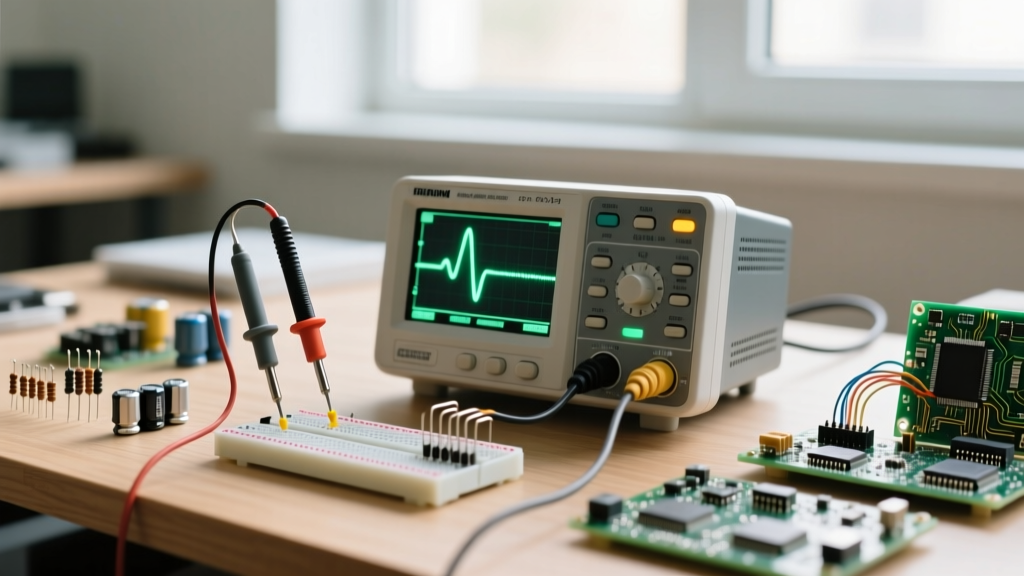
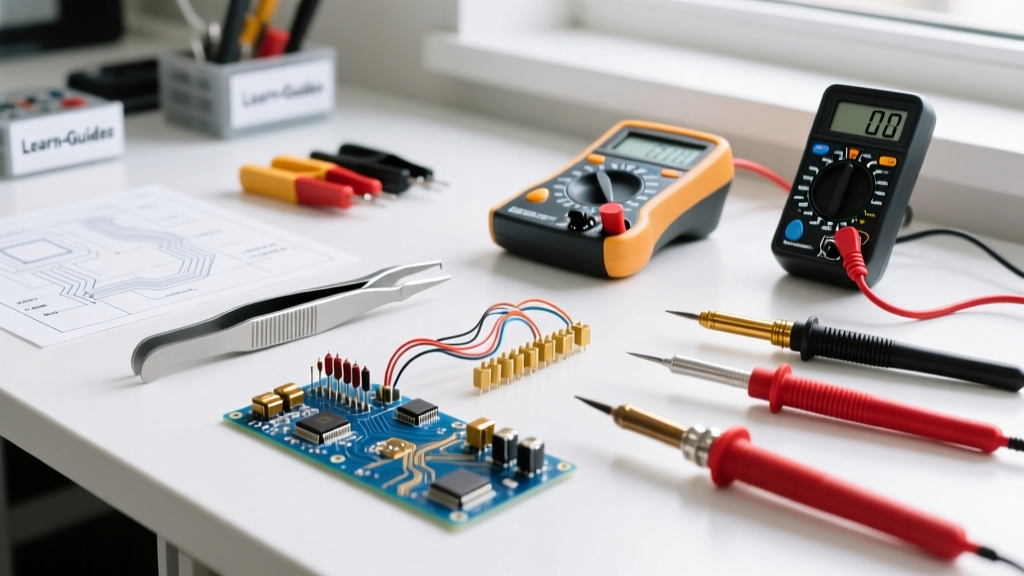
Every seasoned electronics engineer and serious DIY hobbyist knows the frustration of a bin full of unmarked transistors and a reel of SMD capacitors with lost labels. While a standard digital multimeter (DMM) is the undisputed king of checking continuity and basic DC voltage, it falls critically short when you need to deeply characterize electronic components. Active and passive parts require fundamentally different diagnostic approaches, signal types, and test frequencies to verify their health and true specifications.
When sorting through your inventory of electronic components, active and passive parts dictate the test gear you must use. Passive components (resistors, capacitors, inductors) do not introduce energy into a circuit; they dissipate or store it. Testing them requires alternating current (AC) signals at specific frequencies to measure complex impedance. Active components (transistors, diodes, integrated circuits) can amplify or switch signals and require external power. Testing them demands DC biasing, curve tracing, and junction analysis. In 2026, relying solely on a DMM's basic diode-test mode is a recipe for designing circuits with degraded or counterfeit silicon.
Expert Insight: A standard multimeter applies roughly 1mA at a few volts to test a diode. This will tell you if a junction is shorted or open, but it will completely miss a power MOSFET with a degraded gate oxide or a high-frequency RF transistor with excessive leakage. You need specialized tools to see the full picture.
Top Tool Recommendations for the 2026 Workbench
Based on extensive bench testing, teardowns, and real-world repair scenarios, here are the premier tools for identifying, sorting, and verifying both active and passive components.
1. DER EE DE-5000 LCR Meter (Best for Passives)
For passive components, an LCR (Inductance, Capacitance, Resistance) meter is mandatory. The DER EE DE-5000 remains the undisputed value champion for benchtop passive testing. Priced around $135 to $150, it offers 0.05% basic accuracy and test frequencies up to 100kHz.
Why it matters: Aluminum electrolytic capacitors in switching power supplies operate at high frequencies. Testing their Equivalent Series Resistance (ESR) at the standard 120Hz will give you a falsely optimistic reading. The DE-5000 allows you to test at 100kHz, revealing the true ESR and Dissipation Factor (D) of aging capacitors. It also features Open/Short calibration to nullify the parasitic capacitance and inductance of your test leads, a critical step when measuring picofarad-level ceramic capacitors.
2. Peak Atlas DCA75 Semiconductor Analyzer (Best for Actives)
When dealing with active components, the Peak Atlas DCA75 (approx. $125) is a bench staple. Unlike basic component testers that just spit out a pinout, the DCA75 performs deep semiconductor analysis. It automatically identifies BJTs, MOSFETs, JFETs, and diodes, mapping their exact pinouts (EBC, GDS, KAC).
Deep Dive Features: It measures the DC current gain (hFE) of bipolar transistors at configurable collector currents, allowing you to match pairs for audio amplifier differential stages. For MOSFETs, it measures the threshold voltage (Vgs(th)) and gate capacitance, which is vital for selecting the right driver IC. If you are repairing vintage audio gear or designing custom analog pedals, the DCA75's ability to match active components is unparalleled.
3. BSIDE ADM20 Smart Tweezers (Best for SMD Passives)
Surface-mount technology dominates modern PCB design, and probing a 0402 capacitor with standard alligator clips is impossible. The BSIDE ADM20 Smart Tweezers (approx. $55) solve this with gold-plated, replaceable tweezer tips that auto-detect whether you are probing a resistor, capacitor, or inductor.
Practical Application: Operating at frequencies from 40Hz to 100kHz, the ADM20 provides rapid LCR readings directly on the PCB. It is particularly useful for in-circuit troubleshooting where desoldering a component is risky. The integrated OLED screen displays the primary value (e.g., capacitance) and the secondary value (e.g., ESR or Q factor) simultaneously.
4. TC1 Mega328 Transistor Tester (Best Budget Identifier)
If you are a hobbyist sorting through massive bags of scavenged through-hole components, the TC1 Mega328-based tester (approx. $25 to $35) is the ultimate budget identifier. Featuring a ZIF (Zero Insertion Force) socket, you simply drop in any 3-pin component and press the test button.
Limitations to Note: While excellent for identifying NPN vs. PNP transistors and finding the pinout of unmarked SCRs and TRIACs, the TC1 struggles with very low-ESR MLCCs and high-voltage MOSFETs. It is a sorting tool, not a precision diagnostic instrument.
Component Testing Comparison Matrix
| Tool Model | Primary Target | Key Measurement Capabilities | 2026 Price Range | Best Use Case |
|---|---|---|---|---|
| DER EE DE-5000 | Passives | L, C, R, ESR, D, Q (up to 100kHz) | $135 - $150 | Benchtop power supply repair, audio crossover design |
| Peak Atlas DCA75 | Actives | hFE, Vgs(th), Vf, Leakage, Pinout | $120 - $130 | Transistor matching, semiconductor failure analysis |
| BSIDE ADM20 | SMD Passives | Auto LCR, ESR, Phase Angle | $50 - $60 | In-circuit SMD troubleshooting, 0402/0603 sorting |
| TC1 Mega328 | Through-Hole Mixed | Basic Pinout, hFE, Vbe, C | $25 - $35 | Scavenged part sorting, quick through-hole checks |
Mastering Calibration and Fixture Compensation
A common pitfall among beginners when testing electronic components is ignoring fixture compensation. According to Analog Devices' technical documentation on impedance measurement, the test leads and fixtures introduce parasitic series resistance, series inductance, and parallel capacitance.
When measuring a 10pF ceramic capacitor, the stray capacitance of your test leads (often 20pF to 50pF) will completely overwhelm the Device Under Test (DUT). To fix this, you must perform an Open/Short calibration:
- Open Calibration: Leave the test leads disconnected. The meter measures and subtracts the parallel stray capacitance and conductance of the fixture.
- Short Calibration: Short the test leads together at the exact point where the DUT will be connected. The meter measures and subtracts the series resistance and inductance of the leads.
Skipping this step renders any high-frequency or low-value passive measurements entirely useless.
Diagnosing Real-World Failure Modes
Understanding how to use these tools requires knowing how components actually fail in the wild. Here is a breakdown of common failure modes and the tools required to catch them.
Passive Failures: The Silent Killers
- Electrolytic Capacitor Drying: The liquid electrolyte evaporates over time due to heat, causing the ESR to spike while the nominal capacitance remains largely unchanged. A standard capacitance meter will say the cap is 'good', but an LCR meter testing ESR at 100kHz will flag it as dead.
- MLCC Flex Cracking: Multilayer Ceramic Capacitors (MLCCs) are brittle. If a PCB flexes during assembly or operation, microscopic cracks can form between the internal electrode layers, leading to intermittent shorts or massive capacitance drops. Smart tweezers are required to test these in-situ.
Active Failures: Thermal and Electrical Stress
- MOSFET Gate Punch-Through: Electrostatic discharge (ESD) or voltage spikes can breach the ultra-thin silicon dioxide gate layer. This creates a high-resistance short between the Gate and Source. A standard DMM diode test might not catch a partial breakdown, but the Peak Atlas DCA75 will flag the abnormal gate leakage current.
- BJT Thermal Runaway Damage: Bipolar Junction Transistors that operate near their thermal limits often suffer from internal wire bond degradation or silicon hot-spotting. This manifests as a shift in the base-emitter voltage (Vbe) and a severe drop in hFE. By comparing the hFE of a suspect transistor against a known-good reference using a semiconductor analyzer, you can confirm thermal degradation.
Frequently Asked Questions
Can I test a capacitor while it is still soldered to the PCB?
Generally, no. In-circuit testing of passive components is highly unreliable because the surrounding circuitry (parallel resistors, semiconductor junctions) will skew the impedance readings. While smart tweezers can sometimes identify a dead short or a completely open component in-circuit, for accurate LCR and ESR measurements, you must desolder at least one leg of the component to isolate it from the circuit. For deeper insights into safe testing protocols, refer to the Fluke guide on LCR meter fundamentals and safety.
Why does my multimeter show a continuously changing resistance when testing a capacitor?
When a DMM applies a DC voltage to test resistance, the capacitor begins to charge. The meter interprets this charging current as a dropping resistance value until the capacitor is fully charged and the current drops to zero (showing an open circuit or 'OL'). This is normal behavior for DC testing but tells you nothing about the capacitor's health, leakage, or ESR. You need an AC-based LCR meter for true characterization.
Are cheap Mega328 component testers safe for sensitive RF transistors?
No. Budget ZIF-socket testers apply unregulated test voltages that can sometimes exceed the maximum gate-source threshold (Vgs) of sensitive, low-voltage RF MOSFETs or GaN transistors, potentially damaging them. Always reserve budget testers for rugged, through-hole power components and use precision semiconductor analyzers for delicate or high-frequency active silicon.