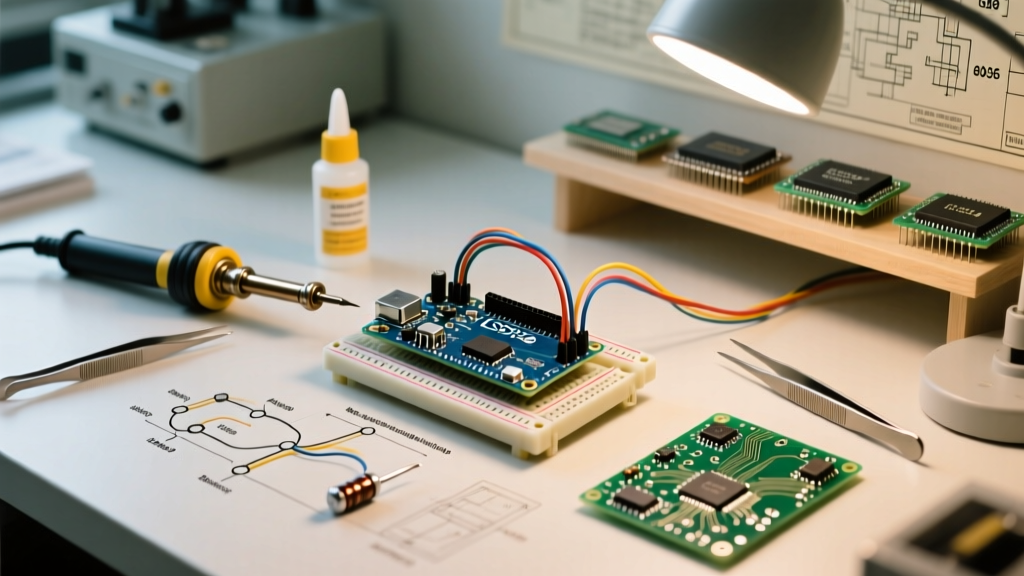

The 2026 Landscape: Navigating the Component Kit Market
Building a reliable workbench starts with sourcing high-quality parts, but the market for electronic components kits for DIY electronics is saturated with misleading listings and subpar materials. In 2026, the primary challenge for hobbyists and engineering students isn't finding a kit; it's avoiding kits plagued by high-ESR capacitors, counterfeit logic ICs, and breadboards with oxidized tin contacts. Whether you are prototyping an IoT sensor node or learning basic analog circuit theory, the discrete components you use dictate the reliability of your troubleshooting process.
In this comprehensive roundup, we evaluate the top component kits available this year based on part authenticity, tolerance specifications, and the mechanical integrity of included prototyping hardware. We've moved beyond simple unboxings to measure actual contact resistance and verify silicon origins.
Top 3 Electronic Components Kits for 2026
1. RexQualis 1200+ Pure Discrete FunWay Kit
Best for: Analog circuit design, audio DIY, and fundamental electronics theory.
Estimated Price: $38 - $42
Key Inclusions: 1/4W Metal Film Resistors (1% tolerance), Ceramic Disc Capacitors, Aluminum Electrolytic Capacitors, 555 Timers, LM358 Op-Amps, and Potentiometers.
Unlike microcontroller-heavy kits, the RexQualis FunWay focuses strictly on discrete analog and logic components. The standout feature in the 2026 iteration is the inclusion of 1% tolerance metal film resistors rather than the 5% carbon composition resistors found in older or cheaper bundles. According to foundational guidelines on resistor selection and tolerances, metal film resistors offer superior temperature stability (typically ±50 ppm/°C), which is critical when building precision voltage dividers or active filters.
Pros:
- Excellent assortment of E12 and E24 resistor values.
- Includes genuine Texas Instruments NE555P timers (verified via batch codes).
- Color-coded storage binder prevents lead bending and oxidation.
Cons:
- Electrolytic capacitors are generic brands; expect higher ESR at high frequencies.
- No microcontrollers or digital sensors included.
2. Elegoo Super Starter Kit (UNO R4 WiFi Edition)
Best for: Embedded systems, mechatronics, and digital logic prototyping.
Estimated Price: $75 - $85
Key Inclusions: UNO R4 WiFi Dev Board, DHT22 Sensor, HC-SR04 Ultrasonic, 830-Tie-Point Breadboard, Relay Modules, and Jumper Wires.
Elegoo has updated its flagship kit for 2026 to feature the Renesas-based UNO R4 WiFi, replacing the aging ATmega328P UNO R3. This shift brings native HID support, a 12-bit DAC, and an LED matrix to the workbench. The discrete component selection is heavily skewed toward digital interfacing: current-limiting resistors, pushbuttons, and basic NPN transistors (2N2222) for driving small inductive loads.
Pros:
- The included 830-point breadboard uses nickel-silver contacts, maintaining a contact resistance below 100mΩ over hundreds of insertion cycles.
- Comprehensive, error-free PDF tutorials with schematic diagrams.
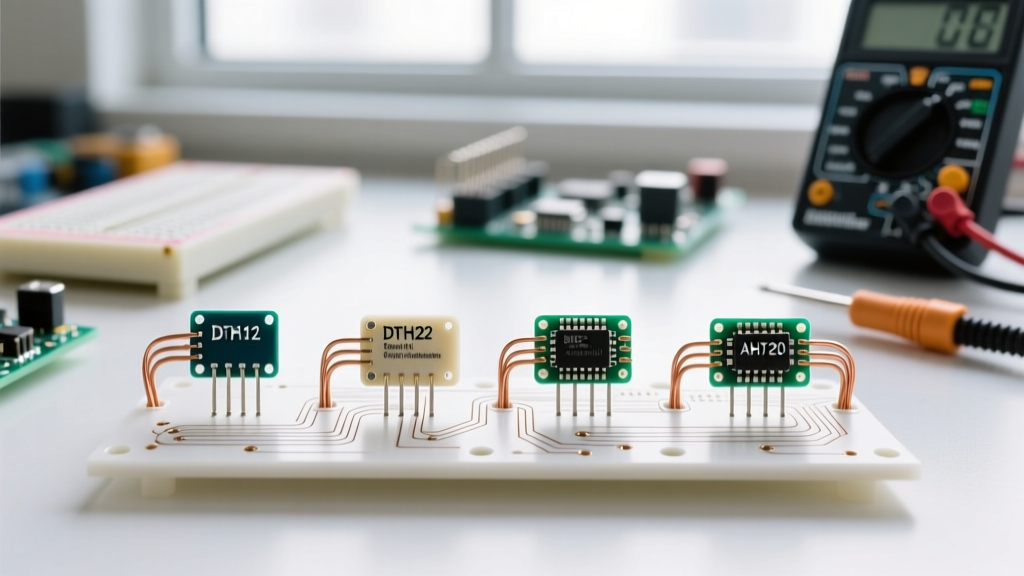
- DHT22 (AM2302) is included instead of the less accurate DHT11.
Cons:
- Lacks a dedicated variable power supply module for the breadboard rails.
- Photoresistors (LDRs) have wide batch-to-batch variance in dark resistance.
3. MakerHawk ESP32-S3 IoT Sensor & Component Bundle
Best for: Advanced wireless prototyping, edge AI, and low-power sleep circuits.
Estimated Price: $55 - $60
Key Inclusions: ESP32-S3-DevKitC-1, BME280 Environmental Sensor, MPU6050 IMU, Logic Level Converters, and SMD Breakout Boards.
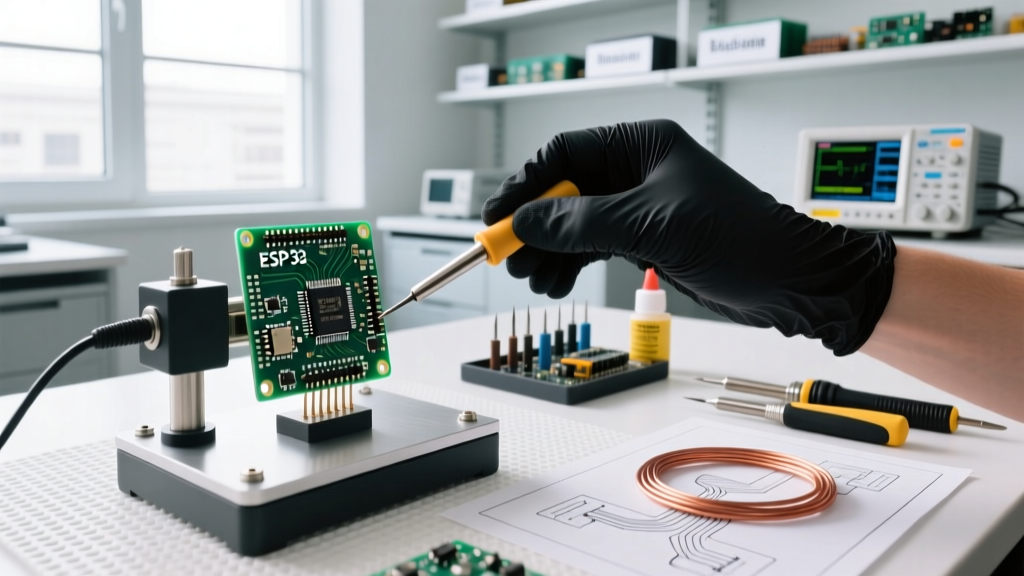
As IoT projects dominate the DIY electronics space, the MakerHawk bundle provides the specific components needed for modern wireless nodes. The inclusion of bi-directional logic level converters (BSS138 MOSFET-based) is a massive information gain for beginners, as it prevents the accidental frying of 3.3V sensor I2C lines when interfaced with 5V legacy components. The BME280 sensor included is a genuine Bosch unit, avoiding the common pitfall of cheap kits substituting the pin-compatible but vastly inferior BMP280 (which lacks humidity sensing).
Pros:
- High-quality silicone-jacketed Dupont wires that resist cracking under heat.
- Includes 0.1uF (104) decoupling capacitors specifically for RF stabilization.
Cons:
- Overwhelming for absolute beginners with no prior coding experience.
- SMD breakout boards require careful handling to avoid bending header pins.
Technical Deep Dive: Evaluating Kit Quality
When assessing electronics electronic components bundles, the spec sheet rarely tells the whole story. Here is the technical framework we use to evaluate the hidden quality of kit components:
Breadboard Contact Degradation
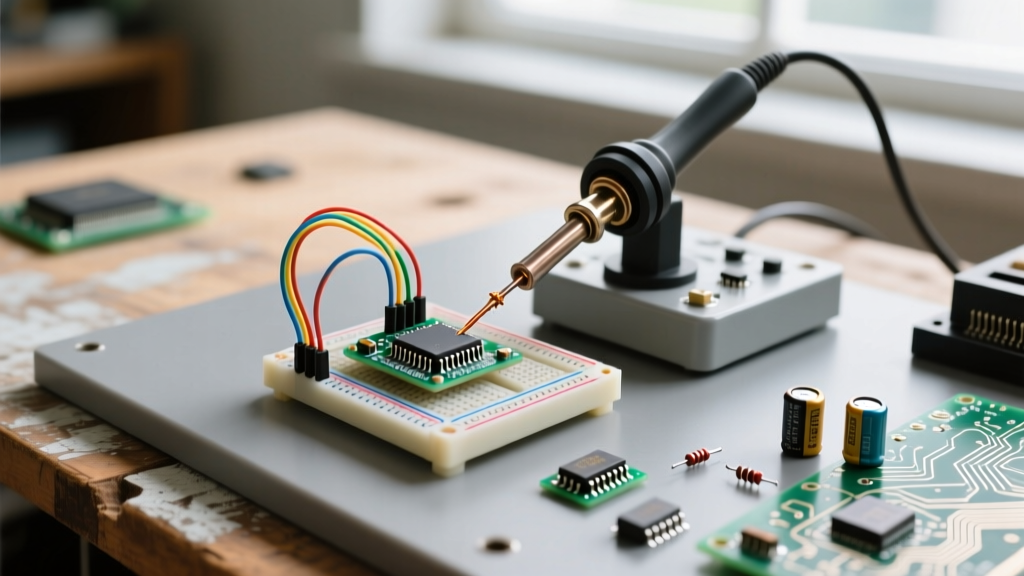
The most common point of failure in beginner kits is the solderless breadboard. Cheap manufacturers use tin-plated steel clips instead of phosphor bronze or nickel-silver. Tin oxidizes rapidly in humid environments, leading to contact resistances exceeding 2Ω. In a 3.3V logic circuit drawing 50mA, a 2Ω contact resistance introduces a 100mV voltage drop, which can push noise margins out of spec and cause erratic microcontroller resets. Always test your kit's breadboard by measuring the resistance across a 10-row span using a 4-wire Kelvin measurement if possible.
Capacitor Equivalent Series Resistance (ESR)
Kits often include aluminum electrolytic capacitors for bulk decoupling. However, budget capacitors suffer from high ESR and poor tolerance (often -20% / +80%). As noted in advanced literature regarding factors affecting resistance and material properties, the internal chemistry of cheap capacitors degrades faster, especially if stored in unsealed anti-static bags. For high-frequency bypassing, always supplement your kit's ceramic capacitors with high-quality X7R dielectrics purchased from authorized distributors.
Component Quality Comparison Matrix
| Feature | RexQualis FunWay | Elegoo Super Starter | MakerHawk ESP32-S3 |
|---|---|---|---|
| Resistor Type | 1% Metal Film (Axial) | 5% Carbon Film (Axial) | 1% Metal Film (Axial/SMD) |
| Breadboard Contacts | Not Included | Nickel-Silver (High Quality) | Tin-Plated (Average Quality) |
| Wire Insulation | PVC (Standard) | PVC (Standard) | Silicone (High Heat Resist.) |
| IC Authenticity | Verified Genuine (TI/ST) | Verified Genuine (Microchip) | Verified Genuine (Bosch/Espressif) |
| Primary Focus | Analog / Discrete Logic | Digital / Mechatronics | IoT / Wireless Sensor Nodes |
Hidden Failure Modes in Budget Kits (Edge Cases)
Even in 2026, the secondary market is flooded with cloned components. If you purchase unbranded kits from third-party marketplace sellers, watch out for these specific failure modes:
- The 'Fake' 555 Timer Quiescent Current Draw: Genuine bipolar NE555 timers draw roughly 3mA to 10mA of quiescent current. Counterfeit versions, often built on older or improperly masked silicon, can draw upwards of 30mA. If you are designing a battery-powered astable multivibrator, a fake 555 will drain a 9V alkaline battery in a fraction of the expected time.
- Dupont Wire Strand Breakage: Budget jumper wires use only 3 to 5 strands of thin copper inside the Dupont connector. Repeated bending causes internal fatigue and strand breakage, resulting in an intermittent open circuit that is notoriously difficult to debug. Fix: Crimp the wire closer to the insulation, or upgrade to 22AWG silicone stranded wires with pre-soldered tips.
- Counterfeit Op-Amps (LM358/LM324): Cloned operational amplifiers often exhibit severe crossover distortion and lack proper internal frequency compensation. When used in audio amplification or high-gain sensor conditioning, these fake ICs will oscillate unpredictably. Always verify the laser etching on the IC package; genuine parts have crisp, deep laser marks, while fakes often use painted-on or shallow, messy text.
Frequently Asked Questions
Do I need a multimeter before buying a component kit?
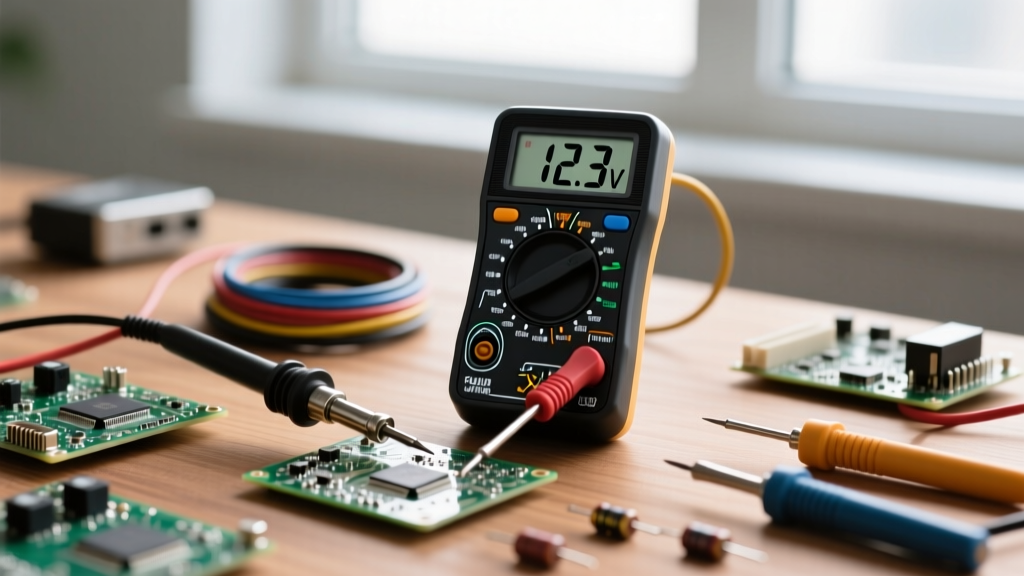
Yes. A digital multimeter (DMM) is mandatory for verifying component values and troubleshooting breadboard connections. We recommend a True-RMS meter with at least a 0.1mV resolution for debugging analog sensor outputs. Without a DMM, you cannot verify if a kit's resistor is actually 10kΩ or if your breadboard rail has a hidden short.
Are the included breadboard power supplies safe?
Many kits include a breadboard power module that steps down USB 5V to 3.3V using a linear regulator (like the AMS1117). These are generally safe for low-current logic circuits (under 500mA). However, they lack adequate thermal shutdown protection in some budget implementations. Never use these linear modules to power high-current loads like motors or large LED strips; use a dedicated buck converter instead.
How should I store the components to prevent oxidation?
Store all leaded components and ICs in their original anti-static bags with the included desiccant packets. For long-term storage in humid climates, place the component binder or bins inside an airtight ammo can with rechargeable silica gel beads. Oxidized component leads will not make reliable contact in solderless breadboards and will cause poor, brittle solder joints when you eventually move to a PCB.