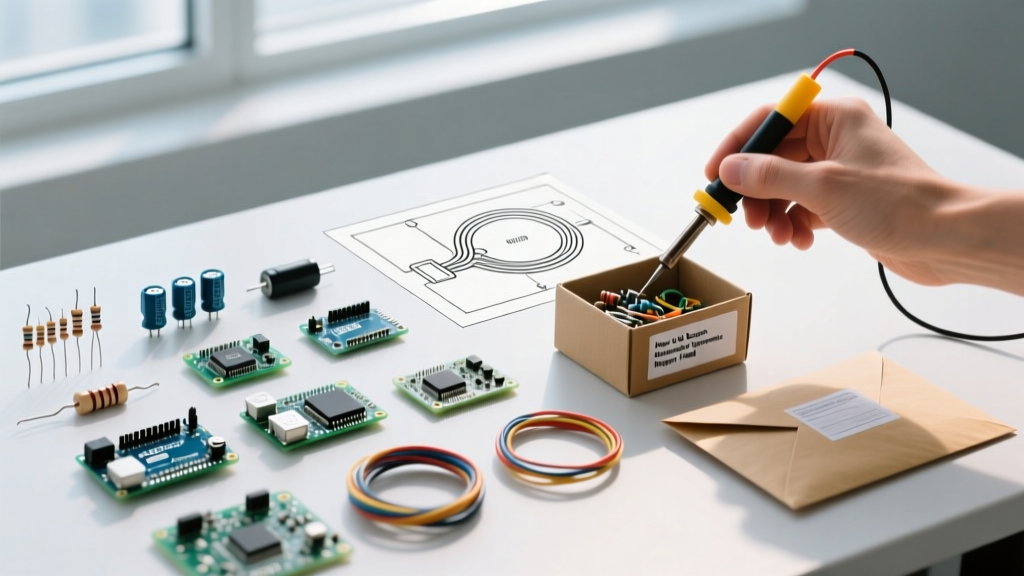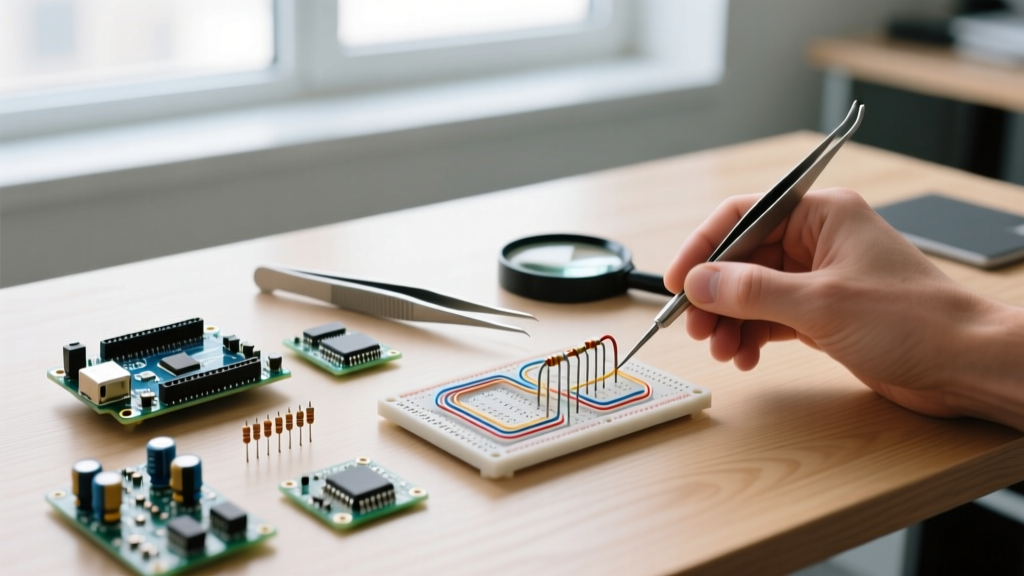

The Reality of Electronic Surplus in the Modern Supply Chain
Following the severe allocation periods and supply chain whiplash of the early 2020s, many small manufacturers, university labs, and advanced DIY makers found themselves with heavily overstocked inventories. When production runs change or prototypes are abandoned, these leftover reels, trays, and cut-tapes become 'excess.' However, liquidating this inventory is not as simple as listing it on an auction site. The secondary market is highly regulated, deeply technical, and driven by strict authentication standards.
Understanding how excess electronic components buyers evaluate, authenticate, and price surplus parts is a fundamental skill for lab managers and hardware engineers. A reel of Texas Instruments TPS5430DDAR buck converters might fetch 60 cents on the dollar from one buyer, while being rejected entirely by another due to a broken moisture barrier bag. This guide breaks down the mechanics of surplus valuation, the tiers of buyers, and the exact protocols required to liquidate electronic inventory without taking a massive loss.
The Four Tiers of Excess Electronic Components Buyers
Not all buyers operate with the same risk tolerance or business model. The secondary market is segmented into four distinct tiers, each with specific requirements for excess inventory.
| Buyer Tier | Primary Business Model | Typical Payout Range | Minimum Order / Effort | Best Suited For |
|---|---|---|---|---|
| Franchised Distributors | Restocking authorized inventory for original manufacturers. | 70% - 85% (minus 15-25% restocking fee) | High (Must prove chain of custody) | Large OEMs returning unopened, recent DC stock. |
| Independent Brokers | Arbitrage; buying low to fulfill spot-market allocation shortages. | 30% - 70% (Highly dependent on demand) | Medium ($1,000+ total BOM value) | Labs and makers with high-demand ICs, FPGAs, and MCUs. |
| Surplus Platforms / B2B | Peer-to-peer or managed marketplace liquidation. | 50% - 90% (Retail pricing, but slow turnover) | Low (Individual reels or trays accepted) | DIYers, small labs, and hobbyists with mixed cut-tape. |
| E-Waste Reclaimers | Precious metal extraction (gold, palladium, copper). | $2 to $15 per pound | Low (Bulk weight) | Obsolete, damaged, or unverified counterfeit-suspect parts. |
According to the Electronic Components Industry Association (ECIA), franchised distributors are increasingly strict about taking back excess stock. Unless you can provide the original invoice proving the parts were purchased directly from them, they will usually reject the return to avoid the risk of introducing counterfeit components into their authorized supply chain. For most small labs and makers, Independent Brokers and Surplus Platforms are the most viable routes for liquidation.
Valuation Fundamentals: What Dictates the Price?
When excess electronic components buyers assess your inventory, they do not just look at the manufacturer part number (MPN). They evaluate the physical and environmental history of the components. Three primary factors dictate the final payout:
1. The Date Code (DC) Penalty
The Date Code indicates when the component was manufactured. In the eyes of the secondary market, silicon does not 'expire,' but the solderability of the leads does. Over time, oxidation builds up on the copper or tin-lead finishes.
- DC < 2 Years: Considered 'fresh.' Buyers will pay top market rates.
- DC 2 to 5 Years: Subject to a 10% to 20% discount. Buyers assume they will need to perform a solderability test or send the parts to a third-party facility for re-tinning.
- DC > 5 Years: Heavy discount (40%+) or outright rejection. Many automotive and aerospace buyers strictly forbid the use of parts older than 24 months per IPC guidelines.
2. The Moisture Sensitivity Level (MSL) Trap
This is where most amateur sellers lose their entire investment. Surface-mount components are categorized by MSL ratings (1 through 6) based on how quickly they absorb ambient humidity. If an MSL 3 part (like a standard STM32 microcontroller) is exposed to room air for more than 168 hours, moisture penetrates the plastic encapsulation. During reflow soldering, this moisture turns to steam, causing the 'popcorn effect'—micro-fractures inside the IC.
Excess buyers will demand to see the Humidity Indicator Card (HIC) inside the Moisture Barrier Bag (MBB). If the 10% dot on the HIC has turned from blue to pink, the floor life has been breached. The buyer must now pay a facility to 'bake' the components at 40°C to 125°C for up to 48 hours to drive out the moisture. This baking process costs roughly $0.05 to $0.10 per unit, which the buyer will deduct directly from your payout.
3. Packaging Integrity
How the parts are packaged drastically affects their resale value to automated assembly houses.
- Full, Unopened Reels: Command the highest premium. They can be loaded directly into pick-and-place machines.
- Cut Tape: Loses 15% to 30% of its value. Assembly houses hate cut tape because it requires manual splicing or hand-soldering.
- Trays / Tubes: Valued normally, provided the antistatic coating on the tubes hasn't degraded and the tray stackers are intact.
Step-by-Step Liquidation Protocol for Makers and Labs
To maximize your return when approaching excess electronic components buyers, you must present your inventory professionally. Follow this exact protocol before submitting a Request for Quote (RFQ).
- Conduct a Granular Inventory Audit: Do not just list '1000x TI Op-Amps.' Export your BOM to a spreadsheet. Record the exact MPN, Manufacturer, Date Code, Lot Code, and Quantity. Note whether the parts are on a continuous reel or cut tape.
- Inspect the Moisture Barrier Bags (MBB): Verify that the vacuum seal is tight. Look through the plastic to check the Humidity Indicator Card. If the bag is punctured, note it in your RFQ. Transparency prevents the buyer from rejecting the shipment upon receipt.
- Capture Macro Photography: Take high-resolution, well-lit photos of the physical labels on the reels and bags. Buyers use these photos to cross-reference the lot codes and 2D barcodes against manufacturer databases to verify authenticity. The Electronic Resellers Association International (ERAI) frequently publishes alerts on how counterfeiters clone labels; providing clear, original photos proves your stock is legitimate.
- Consolidate and Protect: If you are shipping loose trays or tubes, wrap them in IPC-compliant ESD shielding bags (MIL-PRF-81705 Type III). Never use standard pink poly bags for high-value ICs, as they only offer static shielding, not ESD protection.
- Submit to Multiple Brokers: Send your spreadsheet to at least three independent surplus buyers. Pricing in the secondary market fluctuates weekly based on global allocation shortages. A specific FPGA that is worth 20 cents on the dollar in March might be worth 80 cents in April if a major automotive plant faces a shortage.
Edge Cases and Failure Modes in Surplus Selling
Even with perfect preparation, sellers often encounter specific failure modes when dealing with the secondary market. Be aware of these edge cases:
The 'Programmable' Deduction: If you are selling microcontrollers or CPLDs that have been programmed or flash-tested by your lab, buyers will discount them heavily. Erasing the flash memory requires specialized gang programmers and adds labor costs. Always explicitly state if ICs have been powered on or programmed.
Counterfeit Paranoia: The secondary market is hyper-vigilant about counterfeit parts. If you bought your excess components from an unauthorized marketplace (like AliExpress or unverified eBay sellers) and are now trying to sell them to a reputable broker, they will likely reject the lot. Reputable buyers use X-ray fluorescence (XRF) and decapsulation testing to verify silicon die markings. If you cannot prove a clean chain of custody back to an authorized distributor, your parts will be categorized as 'high-risk' and priced at scrap value.
Connector and Passive Devaluation: While a reel of specialized RF connectors or automotive-grade MCUs holds its value well, passive components (standard 0402 resistors, generic ceramic capacitors) are virtually worthless on the secondary market. The market is so saturated with passives that brokers will often only buy them if they are bundled as 'lot filler' alongside high-value silicon.
Summary
Navigating the world of excess electronic components buyers requires a shift in mindset: you are no longer just selling parts; you are selling verified, environmentally secure manufacturing readiness. By understanding the penalties associated with Date Codes, respecting the strict rules of Moisture Sensitivity Levels, and presenting your inventory with rigorous documentation, makers and small labs can successfully recapture capital from their surplus bins and fund their next generation of hardware prototypes.