
Why a Static 'All Electronic Components List PDF' is Dead in 2026
For decades, hobbyists, makers, and engineering students have searched for a definitive all electronic components list PDF to pin above their workbenches. The idea was simple: a single, printable document containing every resistor, capacitor, transistor, and integrated circuit needed to build anything from a basic LED flasher to a complex IoT sensor node. However, as we navigate the electronics landscape in 2026, relying on a static PDF is no longer just inefficient—it is a liability.
The global semiconductor supply chain has fundamentally shifted. Component lifecycles are shorter, package sizes have migrated heavily toward 0402 and 0201 SMD (Surface Mount Device) standards, and older through-hole staples like the classic DIP-8 NE555 timer are becoming premium-priced legacy parts. Furthermore, a static PDF cannot warn you about real-time stockouts, alert you to counterfeit batches flooding third-party marketplaces, or integrate with your EDA (Electronic Design Automation) software.
Instead of hunting for an outdated document, this guide will teach you how to build, categorize, and maintain a dynamic all electronic components list. We will cover the essential inventory every DIY lab needs, how to generate your own up-to-date PDF Bill of Materials (BOM) using modern tools, and how to source parts safely.
The Core DIY Lab Inventory: What Actually Belongs on Your List
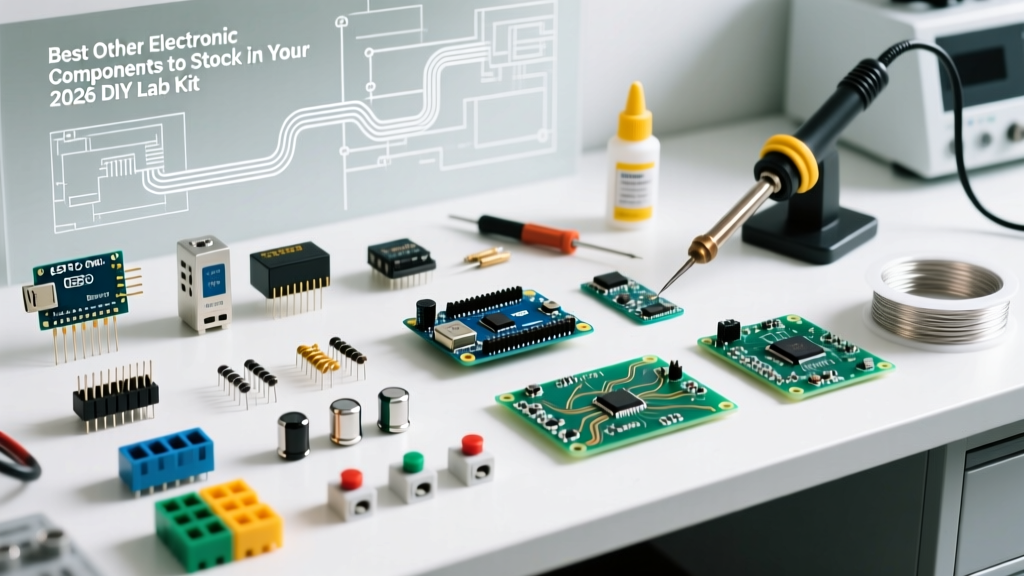
Before you can generate a comprehensive PDF, you must define what belongs in your physical inventory. A common mistake beginners make is purchasing cheap, 1000-piece 'assorted component kits' from online marketplaces. These kits often contain 5% tolerance carbon film resistors, low-grade electrolytic capacitors with high ESR (Equivalent Series Resistance), and counterfeit voltage regulators that fail catastrophically under load.
Below is the foundational matrix for a professional-grade DIY lab. This data forms the core of your personalized all electronic components list PDF.
| Category | Component / Part Series | Package / Form Factor | Est. Cost (2026) | Primary DIY Use Case & Notes |
|---|---|---|---|---|
| Passive (Resistors) | Yageo RC Series (1% Metal Film) | 0603 & 0805 SMD | $0.002 - $0.008 / ea | Current limiting, pull-ups/pull-downs. Stick to the E24 series for general use. |
| Passive (Capacitors) | Samsung / Murata X7R & C0G/NP0 | 0603 SMD (100nF, 10uF) | $0.005 - $0.02 / ea | Decoupling (X7R) and precision timing/filters (C0G). Avoid Y5V dielectrics entirely. |
| Active (Discrete) | 2N7000 (N-Channel MOSFET) | TO-92 & SOT-23 | $0.05 - $0.12 / ea | Low-side switching for relays, LEDs, and small motors. Logic-level gate threshold. |
| Active (Linear IC) | TI LM317 / LM7805 | TO-220 (Through-Hole) | $0.45 - $0.80 / ea | Adjustable and fixed linear voltage regulation. Always buy from authorized distributors. |
| Logic / Digital | SN74HC595 (Shift Register) | SOIC-16 & DIP-16 | $0.15 - $0.35 / ea | Expanding microcontroller GPIO pins to control multiple LEDs or relays via SPI. |
| Electromechanical | Omron B3F Tactile Switches | 6x6mm Through-Hole | $0.08 - $0.15 / ea | User input. High tactile feedback and long mechanical life (1M+ cycles). |
Deep Dive: The Capacitor Dielectric Trap
When building your list, pay strict attention to capacitor dielectrics. Many generic PDFs simply list '10uF Capacitor'. In reality, a 10uF X7R ceramic capacitor will lose up to 50% of its capacitance when a DC bias voltage is applied. For power supply filtering in modern 3.3V microcontroller circuits, you must either use higher voltage-rated X7R caps (e.g., a 16V rated cap on a 3.3V rail) or switch to tantalum/polymer capacitors. Your component list must specify the dielectric and voltage rating, not just the capacitance.
How to Generate Your Own Dynamic Component List PDF
Rather than manually typing out a Word document, professional DIYers and hardware startups use EDA tools to generate an accurate, real-time all electronic components list PDF directly from their schematic designs. This ensures that the PDF you take to your workbench or send to a supplier exactly matches your circuit.
Step 1: Centralize Your Schematic Libraries
Using an open-source tool like KiCad, create a local library of your most-used components. Assign each symbol a specific footprint and link it to a real-world Manufacturer Part Number (MPN). For example, do not just create a symbol named 'Resistor_10k'. Create one named 'Resistor_10k_0603_Yageo_RC0603FR-0710KL'. This upfront effort is what allows automated PDF generation later.
Step 2: Leverage the Octopart API for Real-Time Data
Static PDFs fail because they don't show stock levels. By integrating the Octopart API into your BOM generation script (using Python or KiCad's interactive BOM plugins), you can append real-time pricing, stock availability across DigiKey, Mouser, and LCSC, and datasheet links directly into your exported PDF. This transforms a simple list into a powerful procurement dashboard.
Step 3: Exporting and Formatting the BOM
When your schematic is complete, export the BOM to CSV, then use a script to render it into a clean, multi-page PDF. Your final PDF should include:
- Reference Designators: (e.g., R1, R2, C4) mapped to physical board locations.
- MPN & Manufacturer: Exact part numbers to avoid counterfeit substitutions.
- Substitution Rules: Acceptable alternates (e.g., 'Any 10k 1% 0603 Resistor' vs 'Must be Texas Instruments SN74HC595N').
- Moisture Sensitivity Level (MSL): Critical for SMD components requiring baking before reflow soldering.
Sourcing & Pricing Realities for DIYers in 2026
Having the perfect all electronic components list PDF is useless if you buy from unauthorized brokers. The secondary market is currently saturated with counterfeit analog ICs and recycled microcontrollers. A notorious example is the LM2596 buck converter module; independent teardowns frequently reveal counterfeit chips that lack internal thermal shutdown, leading to board fires.
Expert Warning: Never source critical safety or power-management ICs from Amazon, AliExpress, or eBay. Always verify the official datasheet and purchase from authorized distributors like DigiKey, Mouser, Farnell, or directly from LCSC's verified manufacturer stores. The $0.30 you save on a fake voltage regulator will cost you a $40 custom PCB and hours of debugging.
Strategic Bulk Buying vs. On-Demand
For passives (resistors, capacitors, generic diodes), buy in bulk reels of 5,000 from LCSC or DigiKey. The cost per unit drops to fractions of a penny, and having a fully stocked 0603 and 0805 drawer prevents project stalls. For specialized ICs (microcontrollers, sensor hubs, specialized RF modules), adopt an on-demand sourcing model. Add them to your project-specific BOM PDF and order only what you need, plus a 10% attrition buffer for soldering mistakes.
Frequently Asked Questions (FAQ)
Can I just use a pre-made all electronic components list PDF from a university?
You can, but it is not recommended. University lab lists are often tailored to specific legacy curriculum requirements (heavy on through-hole 74LS logic families and large DIP packages) and do not reflect modern SMD-centric DIY prototyping or current 2026 market availability.
How do I organize my physical components to match my PDF list?
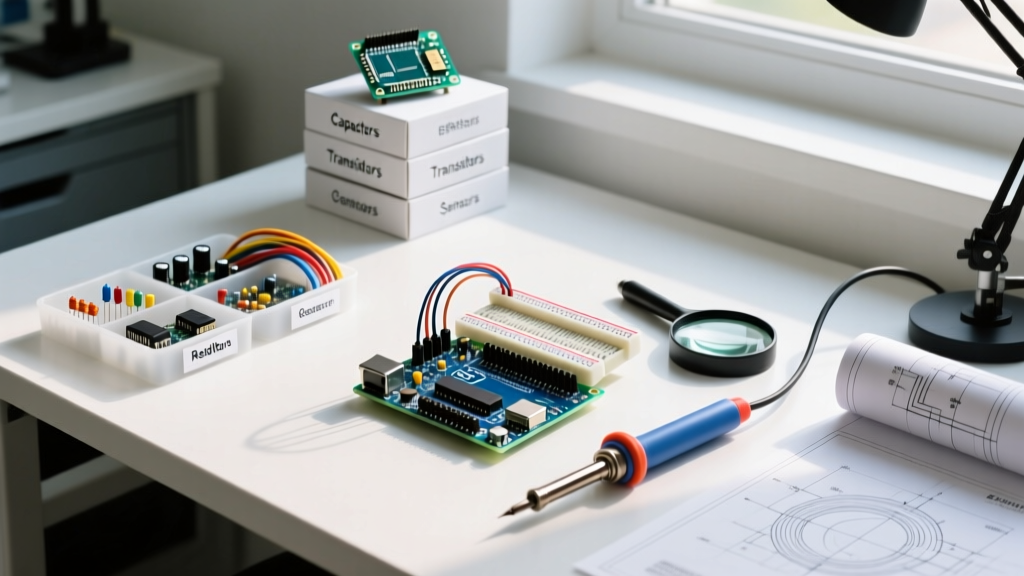
Use modular, stackable drawer cabinets (like the Akro-Mils 64-drawer systems). Label each drawer not just with the value (e.g., '10k Ohm'), but with the package size and dielectric/spec (e.g., '10k 1% 0603'). This perfectly mirrors the granularity required in your digital BOM PDF.
What software is best for generating the PDF BOM?
For pure DIYers, KiCad's native 'Interactive HTML BOM' plugin is excellent, and you can print the resulting HTML page to a PDF. For advanced users managing complex projects, Altium Designer's ActiveBOM or standalone tools like PartBox offer superior PDF formatting and direct supplier API integration.
Final Thoughts
The search for the perfect all electronic components list PDF is a rite of passage for electronics enthusiasts. By shifting your mindset from a static, one-size-fits-all document to a dynamic, API-driven BOM workflow, you future-proof your lab. Focus on stocking high-quality, modern SMD passives, respect the nuances of component dielectrics, and rigorously vet your supply chain. Your workbench—and your finished projects—will be vastly superior for it.