
The Hidden Bottleneck in Project-Based Learning Labs
In modern electrical engineering education and advanced maker spaces, Project-Based Learning (PBL) is the gold standard. Whether students are designing autonomous rovers or hobbyists are prototyping custom IoT sensor nodes, success relies on immediate access to physical components. However, traditional procurement models consistently fail in these dynamic environments. A 14-week robotics curriculum can grind to a halt in week six if the lab runs out of L298N motor drivers or 0603 10kΩ pull-up resistors.
To eliminate these disruptions, forward-thinking lab managers and R&D directors are adopting electronic component vendor managed inventory (VMI). By shifting the burden of forecasting and replenishment to the supplier, prototyping labs can maintain optimal stock levels, reduce administrative overhead, and ensure that project-based learning remains uninterrupted. As we navigate the stabilized but complex supply chain landscape of 2026, implementing VMI is no longer just for high-volume PCB assembly houses; it is a critical strategy for educational and prototyping environments.
What is Electronic Component Vendor Managed Inventory?
At its core, VMI is a supply chain agreement where the supplier assumes responsibility for maintaining an agreed-upon inventory level at the buyer's location. According to the Association for Supply Chain Management and Investopedia, the vendor monitors the buyer's stock via Electronic Data Interchange (EDI) or API integrations and automatically generates replenishment orders when levels drop below a predefined threshold.
In the context of electronic components, this means your distributor (e.g., Digi-Key, Mouser, Arrow) has real-time or near-real-time visibility into your lab's component bins. When a student pulls the last reel of 100nF X7R ceramic capacitors, the system automatically triggers a shipment from the vendor's warehouse, often utilizing consignment models where the lab only pays for the components once they are consumed.
Traditional Procurement vs. VMI: A 50-Student Lab Comparison
To understand the operational impact, consider a university prototyping lab supporting 50 electrical engineering students across three concurrent PBL courses. Below is a comparative analysis based on 2026 operational benchmarks.
| Metric | Traditional Procurement | Vendor Managed Inventory (VMI) |
|---|---|---|
| Admin Hours / Week | 8-12 hours (manual counting, PO creation) | 1-2 hours (exception handling only) |
| Stockout Incidents / Semester | 4-7 critical project delays | 0-1 (mitigated by safety stock buffers) |
| Expedited Shipping Costs | $800 - $1,200 (next-day air for missing ICs) | $0 - $150 (standard ground replenishment) |
| Dead Capital (Obsolete Parts) | 22% of inventory budget | 4% of inventory budget (vendor absorbs risk) |
| Capital Tied Up in Stock | $15,000 - $25,000 | $2,000 - $5,000 (consignment models) |
Step-by-Step Implementation for Engineering Labs
Transitioning to electronic component vendor managed inventory requires a structured approach. You cannot simply hand over your entire Bill of Materials (BOM) to a distributor and expect magic. Here is the technical blueprint for implementation.
Step 1: The ABC Inventory Classification
Begin by auditing your historical consumption data. Apply the Pareto principle (80/20 rule) to categorize your components:
- Class A (High Turnover, Low Cost): Passives (resistors, capacitors), standard diodes (1N4007), and basic connectors. These are prime candidates for VMI.
- Class B (Medium Turnover, Medium Cost): Standard microcontrollers (e.g., ATmega328P, STM32F103), voltage regulators (LM7805, AMS1117), and op-amps. Include these in VMI but with stricter minimum/maximum thresholds.
- Class C (Low Turnover, High Cost): FPGAs, specialized RF modules, and high-end ADCs. Keep these on traditional manual procurement to avoid tying up the vendor's consignment capital.
Step 2: Physical Infrastructure and Smart Bins
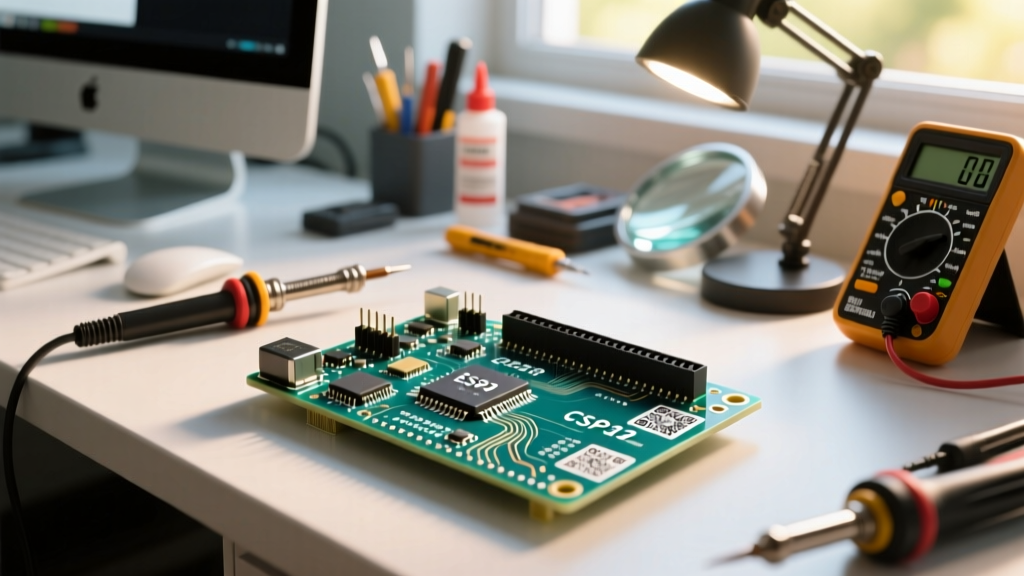
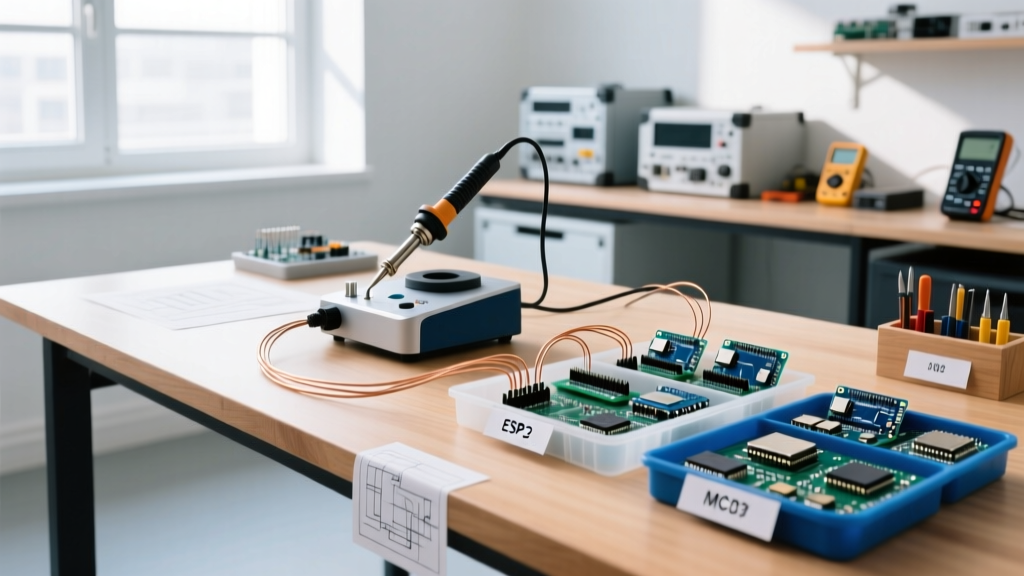
For VMI to work, the vendor needs accurate consumption data. While dual-bin Kanban systems work for through-hole DIP components, surface-mount device (SMD) reels require modern hardware. Many advanced labs in 2026 utilize weight-based smart bins. By placing component reels on HX711 load cells connected to an ESP32 microcontroller, the system calculates the exact number of remaining components based on the tare weight of the reel and the unit weight of the component. When the weight drops below the reorder point, the ESP32 pushes a webhook to the lab's ERP system.
Step 3: API Integration and EDI Handshakes
Your lab management software (such as Odoo, Snipe-IT, or a custom university portal) must communicate with the vendor. Utilize the vendor's RESTful API to automate the handshake. For example, mapping your internal SKU to the vendor's Manufacturer Part Number (MPN) ensures that when an STM32F407VGT6 hits its minimum threshold, the API automatically generates a draft Purchase Order, which is then auto-approved based on predefined budget constraints.
Navigating Edge Cases and Failure Modes
While VMI streamlines operations, it introduces specific edge cases that lab managers must proactively engineer against. Industry reports from the IPC (Association Connecting Electronics Industries) consistently highlight that supply chain resilience requires anticipating vendor-side failures, not just buyer-side consumption.
The 'Ghost Stock' Phenomenon
In a busy PBL environment, students frequently grab a handful of 0805 LEDs or a strip of pin headers without scanning a barcode or logging the withdrawal. This creates 'ghost stock'—the software says you have 500 units, but the bin is empty. Solution: Implement mandatory RFID scanning at the lab exit using readers like the Zebra MC3300, paired with RFID-tagged component bins. Alternatively, enforce a 'check-out' policy where project kits are pre-kitted based on the lab's approved BOM, rather than allowing open grazing from the VMI bins.
Silent Silicon Revisions and Obsolescence
A critical failure mode in electronic component VMI occurs when a vendor automatically replenishes an End-of-Life (EOL) part with a newer revision. While the vendor considers it a functional drop-in replacement, the new IC might have a different internal register map or a slightly altered pinout that breaks the students' existing PCB footprints. Solution: Lock your BOM revisions in the VMI contract. Mandate that the vendor must obtain written engineering approval from the lab director before substituting any active semiconductor or microcontroller, even if the datasheet claims backward compatibility.
Global Allocation Shortages
As noted in McKinsey's semiconductor supply chain insights, geopolitical disruptions and fab capacity constraints can still cause sudden allocation shortages. If a specific power management IC goes on 52-week lead times, the VMI system will fail to replenish. Solution: Design PBL projects with modular power architectures. Ensure your lab's reference designs can accept both a TI TPS62160 and an equivalent Analog Devices part via alternate footprint pads on the prototyping PCB, and register both MPNs in the VMI system as interchangeable.
Pro-Tip for Lab Managers: Do not include custom-manufactured parts (like specific PCB stencils or custom-wound inductors) in your VMI agreement. Restrict VMI strictly to catalog off-the-shelf (COTS) components to ensure the vendor can actually guarantee replenishment SLAs.
Financial Realities and ROI
Setting up electronic component vendor managed inventory requires upfront capital. Expect to spend between $2,500 and $6,000 on physical infrastructure (smart bins, load cells, RFID gates) and roughly $1,500 to $3,000 on API integration and ERP configuration. However, the Return on Investment (ROI) is typically realized within two academic semesters.
By eliminating expedited shipping fees (which routinely cost $60 to $120 per emergency order) and reclaiming 10 hours of administrative labor per week, the system pays for itself rapidly. More importantly, in a project-based learning environment, the true ROI is measured in educational outcomes: students spend their time debugging I2C buses and optimizing PID controllers, rather than waiting three weeks for a backordered MOSFET to arrive from overseas.