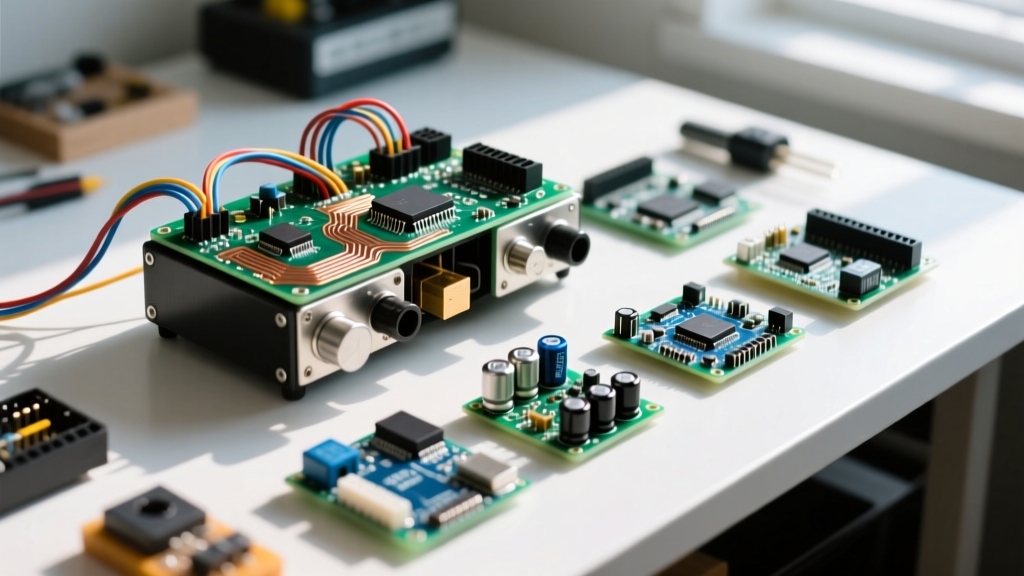

The 2026 Landscape for Sourcing Component Electronic Parts
As we navigate through 2026, the global semiconductor supply chain has largely stabilized from the severe allocation crises of the early 2020s. However, the proliferation of gray-market brokers and sophisticated counterfeit operations means that procurement engineers and DIY hobbyists alike must exercise extreme vigilance. Sourcing authentic component electronic parts is no longer just about finding the lowest price; it is about risk mitigation, lifecycle management, and ensuring long-term reliability in your printed circuit board assemblies (PCBAs).
Whether you are procuring surface-mount device (SMD) resistors for a high-volume IoT deployment or sourcing specialized microcontrollers for an aerospace prototype, this comprehensive buying guide will equip you with the frameworks needed to evaluate distributors, spot fraudulent silicon, and optimize your Bill of Materials (BOM) costs without sacrificing quality.
The Tiered Approach to Authorized Distribution
Not all suppliers operate with the same chain-of-custody guarantees. When purchasing component electronic parts, you must categorize vendors into three distinct tiers based on your project's risk tolerance and volume requirements.
Tier 1: Franchised and Authorized Distributors
These companies hold direct contracts with original component manufacturers (OCMs). They offer full traceability, manufacturer warranties, and strict climate-controlled storage (crucial for moisture-sensitive devices like BGA ICs). Examples include Mouser Electronics, Digi-Key, Arrow, and Avnet. Expect to pay a 5% to 15% premium over gray-market rates, but the zero-counterfeit guarantee is invaluable for mission-critical designs.
Tier 2: High-Volume Asian Catalog Distributors
Platforms like LCSC and WIN SOURCE have matured significantly by 2026, offering aggressive pricing on passive components and Asian-market silicon (e.g., GD32, WCH). While they offer excellent value for prototyping and consumer electronics, buyers must strictly filter for 'Authorized' or 'Direct from Manufacturer' badges to avoid commingled inventory.
Tier 3: Independent Brokers and the Gray Market
Brokers do not hold direct franchise agreements. They source from excess inventory, factory overruns, and sometimes unverified channels. Only use Tier 3 brokers for legacy, end-of-life (EOL) parts when Tier 1 stock is depleted, and always mandate third-party testing (like X-ray or decapsulation) before accepting delivery.
Authorized Distributor Comparison Matrix
The following table breaks down the primary authorized distributors for component electronic parts based on their strengths, pricing models, and ideal use cases in 2026.
| Distributor | Inventory Depth | Cut-Tape Premium | FAE Support | Best Use Case |
|---|---|---|---|---|
| Mouser Electronics | Massive (Newest NPI) | High ($0.10-$0.25/part) | Moderate | Rapid prototyping, NPI evaluation |
| Digi-Key | Massive (Broad Catalog) | Moderate ($0.05-$0.15/part) | High | Mid-volume production, academic research |
| Arrow Electronics | Deep (Production Focus) | Low (Reel-focused) | Very High | High-volume production, supply chain kitting |
| LCSC | High (Asian/Passives) | Minimal | Low | Cost-sensitive consumer IoT, hobbyist scale |
Spotting Counterfeit Component Electronic Parts
According to data tracked by the Electronic Resellers Association International (ERAI), counterfeit reporting remains a persistent issue, particularly for high-demand analog ICs, power management modules, and legacy microcontrollers. In 2026, counterfeiters have moved beyond simple 'blacktopping' (sanding off original markings and reprinting them) to sophisticated die-swapping.
Common Failure Modes of Fake Silicon
- Die Size Mismatch: A fake STM32F103C8T6 might contain a smaller, lower-specification die (like an STM32F0) re-marked as the more expensive F1 variant. It will pass basic continuity tests but fail under complex DSP loads.
- Thermal Runaway: Counterfeit power regulators, such as fake Texas Instruments TPS5430DDAR buck converters, often use substandard copper leadframes and inferior doping. They function at room temperature but enter thermal runaway and short-circuit when ambient temperatures exceed 65°C.
- Wire Bond Sweep: X-ray inspection frequently reveals 'wire sweep' in fake BGAs, where the internal gold bonding wires are touching, causing latent short circuits that only manifest after thermal cycling during reflow soldering.
⚠️ The 'Blacktopping' Red Flag Test:
If you suspect a batch of ICs has been resurfaced, apply a small amount of acetone or isopropyl alcohol (IPA) to a cotton swab and rub the top of the chip vigorously. Authentic laser-etched markings will not degrade. If the black coating smears or the white text begins to fade, you are holding a resurfaced counterfeit part that violates SAE AS5553 counterfeit avoidance standards.
Lifecycle Management and Obsolescence Planning
When designing a product meant for a 5-to-10-year production run, selecting component electronic parts requires looking at their lifecycle status. Utilizing databases like SiliconExpert or Octopart is mandatory for modern hardware engineering.
Step-by-Step: Evaluating a Second-Source Alternate
Never design a board with a single-source critical IC unless absolutely necessary. When evaluating a drop-in replacement (second source), follow this validation protocol:
- Pin-to-Pin Verification: Do not rely solely on the datasheet's pinout diagram. Download the IBIS models for both the primary and alternate parts to ensure impedance and parasitic capacitance match on high-speed data lines.
- Timing and Threshold Analysis: Check the logic high/low threshold voltages (VIH/VIL). A primary part might trigger at 2.0V, while the alternate triggers at 2.4V, causing logic errors in mixed-voltage domains.
- Thermal Profile Matching: Ensure the thermal resistance (θJA) is identical. If the alternate part has a higher θJA, your existing PCB copper pour heatsinking will be insufficient, requiring a board respin.
Cost Optimization Without Sacrificing Reliability
Procurement teams often make the mistake of buying 'Cut Tape' for production runs to save on minimum order quantities (MOQs). However, the hidden costs of cut tape can destroy your margins.
Reel vs. Cut Tape Economics
When buying passive component electronic parts (like 0402 or 0603 MLCC capacitors), authorized distributors charge a 'cut fee' and a per-part premium for breaking a full reel. For a 10,000-unit production run, buying cut tape can add $500 to $1,000 in unnecessary BOM costs. Furthermore, cut tape lacks the structural integrity for automated pick-and-place machines, leading to feeder jams and a 2% to 4% increase in assembly line downtime.
Pro-Tip for 2026: Always purchase full, factory-sealed reels (typically 4,000 or 10,000 units for passives) for production. If you need 5,500 parts, buy one full reel and a small cut-tape strip for the overage, or negotiate a 'partial reel' fee with your contract manufacturer (CM), who likely has the remainder in their vending machine inventory.
Frequently Asked Questions (FAQ)
Is it safe to buy component electronic parts from AliExpress or eBay for prototyping?
For low-stakes hobby prototyping (e.g., blinking LEDs, basic Arduino shields), yes. However, never use marketplace-sourced parts for medical, automotive, or industrial designs. The risk of receiving recycled, pulled-from-PCB, or counterfeit components is exceptionally high on open consumer marketplaces.
How do I handle moisture-sensitive devices (MSDs) during procurement?
Always verify that the distributor ships MSDs (like FPGAs and large BGAs) in sealed moisture barrier bags (MBBs) with desiccant and humidity indicator cards (HICs). If the HIC shows the card has turned from blue to pink (indicating >10% humidity exposure), you must bake the components at 125°C for 24 hours before reflow soldering to prevent the 'popcorn effect' (internal steam explosion).
What is a 'Last Time Buy' (LTB) and how should I calculate it?
An LTB is the final purchase order you can place before a manufacturer discontinues a part. To calculate your LTB quantity, forecast your annual production volume, multiply by the remaining years of product support, and add a 15% buffer for field replacements and warranty repairs. Store these parts in a nitrogen-purged dry cabinet to extend their shelf life beyond the standard 2-year factory limit.
Final Thoughts on Strategic Sourcing
Sourcing component electronic parts in 2026 requires a blend of engineering rigor and supply chain skepticism. By prioritizing authorized channels for critical silicon, rigorously testing gray-market acquisitions, and designing for second-source flexibility, you can protect your hardware from latent failures and costly production delays. Treat your BOM not just as a shopping list, but as the foundational DNA of your product's reliability.